Can Guinea Pigs Eat Strawberries? Portions and Vitamin C
Guinea pigs can eat strawberries, and they are one of the better fruit choices because they are high in vitamin C, which guinea pigs cannot make for themselves. The limit is one small strawberry or half a large one, once or twice a week, and the leafy green tops are safe and actually better than the fruit.
The vitamin C point is the reason guinea pig diets differ from every other small pet. Guinea pigs, like humans and unlike rabbits, lack the enzyme to synthesise ascorbic acid and must get it from food, and deficiency causes scurvy with symptoms that appear within weeks. Strawberries help with that, but they are not the solution. This guide covers portions, the tops, sugar, and what actually supplies vitamin C.
Guinea pigs can eat strawberries once or twice a week, one small berry or half a large one. They are high in vitamin C, which guinea pigs cannot produce and must get from food. The green tops are safe and lower in sugar than the fruit. Bell pepper is a far better daily vitamin C source than any fruit.
| Item | Guidance |
|---|---|
| Strawberry portion | 1 small or half a large berry |
| Frequency | Once or twice a week |
| Green tops and leaves | Safe; lower sugar than the fruit |
| Under 4 months | No fruit; hay, pellets, mild greens only |
| Vitamin C need | 10 to 30 mg daily |
| Best daily source | Bell pepper, especially red and yellow |
| Total fruit | Under 5 percent of intake |
Are Strawberries Safe for Guinea Pigs?
Yes. Strawberries are non-toxic to guinea pigs and contain useful vitamin C, roughly 59 milligrams per 100 grams, which is more than an orange by weight. A single medium strawberry supplies around 7 milligrams, a meaningful contribution toward the daily requirement.
The limitation is sugar. Strawberries are around 5 percent sugar, which is low for a fruit but still high for an animal whose gut is built for grass and hay, and guinea pigs are prone to digestive upset, obesity, and dental problems when sweet food displaces fibre.
Acidity is the second issue and is specific to strawberries and other berries. The acid can cause mouth sores and lip irritation in some guinea pigs, particularly if fed frequently, and a guinea pig with sore or crusted lips after fruit should have it withdrawn. The guide to apples for guinea pigs covers a similar case.
How Many Strawberries Can They Have?
One small strawberry, or half a large one, once or twice a week. That is the portion most guinea pig vets and rescue organisations settle on, and it fits within the general guideline that fruit and other sweet treats should stay under about 5 percent of total intake.
Spread it out rather than concentrating it. Half a berry twice a week is easier on the gut than a whole berry in one sitting, and it also gives more opportunities for the interaction that most owners are actually after when they hand over a treat.
Guinea pigs under about four months should not have fruit at all. Young animals have developing gut flora and need unlimited hay, alfalfa-based pellets, and mild greens rather than sugar, and fruit can be introduced gradually after that. Introduce any new food with a small piece and wait 24 hours to check droppings before repeating.
Can They Eat the Whole Strawberry?
Yes, including the green top. Strawberry leaves and the calyx are safe, lower in sugar than the fruit, and contain useful fibre, and many guinea pigs prefer them. Feeding the tops instead of the berry is a genuinely good way to give a treat without the sugar.
Do not peel, do not remove seeds, and there is no part of a strawberry that needs removing. Wash thoroughly, though, because strawberries consistently rank among the fruits with the highest pesticide residue, and a guinea pig weighs about a kilogram, so residues matter more than they do for a person.
Strawberry plant leaves from the garden are also safe if they are unsprayed, and the whole plant is a reasonable thing to grow for guinea pigs. Wild strawberry leaves are equally fine. Avoid anything from a plant treated with pesticide or fertiliser. The guide to grapes for guinea pigs covers a fruit with roughly triple the sugar.
Why Do Guinea Pigs Need Vitamin C?
Because they cannot make it. Guinea pigs lack a functional gene for L-gulonolactone oxidase, the enzyme that converts glucose into ascorbic acid, and so must take vitamin C in through diet, exactly like humans and a small number of other species including some bats and most primates.
The requirement is roughly 10 to 30 milligrams daily for a healthy adult, and higher for pregnant, ill, or growing animals, with some vets recommending up to 50 milligrams for a sick guinea pig. Deficiency produces scurvy, and the symptoms appear within weeks rather than months.
Scurvy signs include reluctance to move, a rough dull coat, swollen or painful joints, bleeding gums, loose teeth, poor wound healing, weight loss, and diarrhoea. It is common enough in pet guinea pigs to be one of the conditions vets look for first, and it is entirely preventable through diet.
What Is the Best Vitamin C Source?
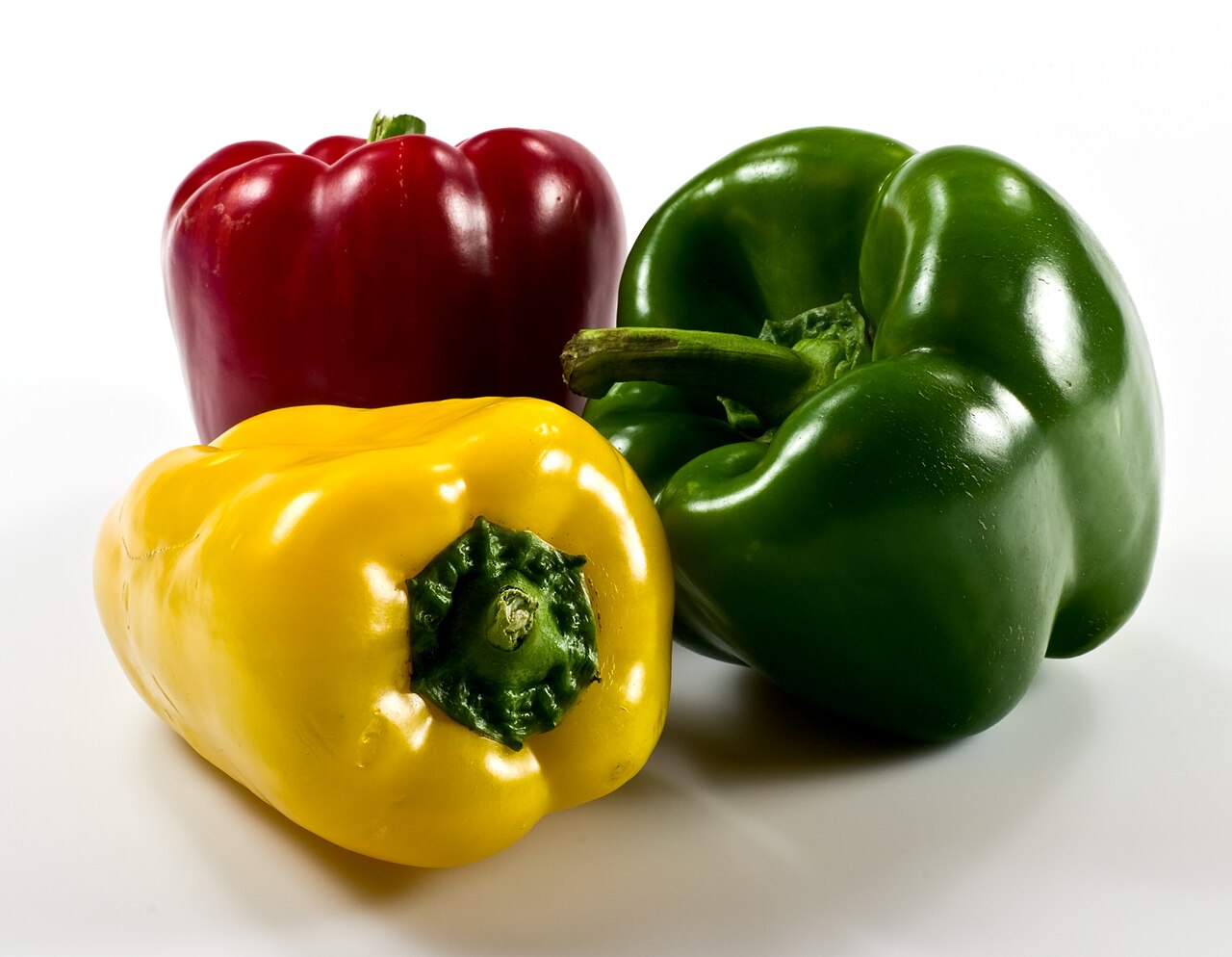
Bell pepper, by a wide margin. Red bell pepper contains around 128 milligrams of vitamin C per 100 grams, more than double a strawberry and roughly three times an orange, and guinea pigs generally love it. A slice or two daily covers the requirement comfortably.
Yellow and green peppers are also excellent, with yellow the highest of all in some measures. Other strong sources include parsley, kale, broccoli, cilantro, and turnip greens, though kale and parsley are high in calcium and should be rotated rather than fed daily because of bladder stone risk.
Pellets contain added vitamin C but cannot be relied on alone. Ascorbic acid degrades with exposure to light, heat, and air, so a bag of pellets loses potency over the months it sits open, and pellets should be bought in small quantities, stored sealed and dark, and used within a few weeks of opening. Fresh vegetables daily are the dependable route.
What Fruits Are Bad for Guinea Pigs?
Avocado is the clearest case and should never be given, since persin is toxic to guinea pigs and the fat content is far too high regardless. Rhubarb is toxic in leaf and stalk both, and contains oxalates at dangerous levels.
Seeds and pits matter. Apple seeds, pear seeds, and the pits of cherries, peaches, plums, and apricots contain cyanogenic compounds and must be removed before feeding the flesh. Citrus is safe in very small amounts and high in vitamin C but acidic enough to cause mouth sores, so it is generally not worth it.
Dried fruit of any kind is best avoided, since drying concentrates sugar several-fold, and the same applies to fruit juice. Beyond fruit, guinea pigs should never have iceberg lettuce, onion, garlic, potato, chocolate, dairy, meat, bread, or any human processed food. Muesli-style mixes are also poor, since guinea pigs selectively eat the sugary parts.
What Should a Guinea Pig Actually Eat?
Hay, overwhelmingly, and it should be available at all times. Grass hay such as timothy, orchard, or meadow makes up around 80 percent of intake and is what keeps the gut moving and grinds down continuously growing teeth. A guinea pig without hay for a day is already at risk.
Fresh vegetables come next, at roughly one cup daily per guinea pig, split across several types, with bell pepper featuring most days for the vitamin C. Leafy greens including romaine, green leaf lettuce, cilantro, and small amounts of kale or parsley fill out the rest.
Pellets are a supplement at about an eighth of a cup daily for an adult, plain and timothy-based rather than a colourful mix, with alfalfa-based pellets for animals under six months. Fresh water at all times in a bottle or heavy bowl. Guinea pigs are also highly social and should be kept in pairs or groups, which is a legal requirement in several countries. The guinea pig sounds guide covers reading their condition day to day.
What About Bladder Stones?
Calcium is the other dietary constraint and it pulls against the vitamin C advice. Guinea pigs are prone to bladder stones and sludge, formed largely from calcium carbonate, and several of the best vitamin C vegetables are also high in calcium, which is why kale, parsley, spinach, and dandelion greens are recommended in rotation rather than daily.
Bell pepper is the useful exception. It is high in vitamin C and low in calcium and oxalates, which is exactly why it comes out ahead of every fruit and most greens as the daily staple. Romaine and green leaf lettuce are similarly low-risk fillers.
Water intake matters as much as diet. Guinea pigs that drink well flush the urinary tract more effectively, and a heavy open bowl encourages more drinking than a bottle in most animals. Signs of stones include blood in the urine, straining, squeaking while urinating, and a hunched posture, and any of them warrants a vet promptly since stones can obstruct.
How Do You Introduce New Foods?
One at a time, in a small piece, with two or three days between introductions. Guinea pig gut flora adapts slowly, and adding several new items at once makes it impossible to tell which one caused a problem if droppings change.
Watch the droppings, which are the daily health readout. Normal droppings are firm, oval, and uniform; soft, clustered, or reduced droppings mean something is wrong, and a guinea pig that stops producing droppings or stops eating needs a vet the same day, since gut stasis progresses fast in a small animal.
Remove uneaten fresh food within a few hours, especially in warm weather, since spoiled vegetables cause digestive upset and attract flies. Flystrike is a genuine risk in outdoor hutches in summer and is a veterinary emergency. Rescue organisations and exotic vets publish current feeding charts worth checking against, and the RSPCA (rspca.org.uk) maintains detailed guinea pig care guidance. The guinea pig breeds guide covers differences between varieties, and the tomato guide covers another common fruit question.
Related reading: can rabbits eat strawberries.
Related reading: can guinea pigs eat broccoli.
Frequently Asked Questions
Can guinea pigs eat strawberries?
Yes, one small strawberry or half a large one, once or twice a week. They are high in vitamin C, which guinea pigs cannot make themselves, but also acidic and sugary.
Can guinea pigs eat the whole strawberry?
Yes, including the green top and leaves, which are safe and lower in sugar than the fruit. Wash thoroughly, since strawberries commonly carry high pesticide residue.
Why do guinea pigs need vitamin C?
They lack the enzyme to make it, like humans, and need 10 to 30 milligrams daily. Deficiency causes scurvy within weeks, with rough coat, swollen joints, bleeding gums, and reluctance to move.
What is the best vitamin C source for guinea pigs?
Bell pepper, at around 128 milligrams per 100 grams for red, more than double a strawberry. A slice or two daily covers the requirement. Avoid vitamin C drops in water, which degrade fast.
What fruits are poisonous to guinea pigs?
Avocado and rhubarb should never be given. Apple and pear seeds and stone fruit pits contain cyanogenic compounds and must be removed. Dried fruit and juice are best avoided entirely.
What is a guinea pig’s favourite fruit?
Most take enthusiastically to strawberry, banana, and grapes, which is precisely the problem, since all three are sugary. Preference is not a guide to what should be fed.
What should guinea pigs eat most of?
Hay, at around 80 percent of intake and available at all times, plus about a cup of fresh vegetables daily including bell pepper, and a small measured portion of plain timothy pellets.

Similar Posts
Can Guinea Pigs Eat Tomatoes? Safe Parts and Portions
Ripe tomato flesh is safe for guinea pigs, but the leaves, stems and green calyx are toxic. Here is the portion size, the prep step, and the risks to watch.
Can Rabbits Eat Broccoli? The Gas Question Answered
Yes, sparingly, and leaves beat florets. Why brassicas cause gas, why rabbits cannot burp it out, portions by body weight, and the warning signs to watch for.
Guinea Pig Breeds: Complete Guide to All 13 Types
A complete guide to all 13 guinea pig breeds, what actually differs between them, and how to choose the right one.
Can Guinea Pigs Eat Blueberries?
Yes, one or two berries once or twice a week. Vitamin C and antioxidants, but sugar means portion control matters. How much is safe and what to watch for.
Guinea Pig Sounds: What Every Wheek, Purr, and Rumble Means
Guinea pig sounds decoded: wheeking, purring, rumbling, chutting, teeth chattering, and shrieking, plus the noises that mean a vet visit rather than a conversation.
Can Rabbits Eat Tomatoes? Safe Parts and What to Avoid
Ripe flesh yes, in small amounts. Leaves, stems, and green fruit are toxic. What’s safe, how much, and what solanine poisoning looks like.