Carpet Beetle vs Bed Bug: How to Tell Them Apart
Carpet beetles and bed bugs are both tiny household pests often mistaken for each other, but they are unrelated insects with completely different habits. Carpet beetles feed on fabric, hair, and stored food and do not bite people; bed bugs feed exclusively on blood and their bites are the whole reason people notice them. Confusing the two leads to the wrong treatment entirely.
The confusion is understandable at a glance: both are small, oval, brownish insects found indoors, and both can turn up in bedding. Under closer inspection they diverge on every practical point that matters, appearance, diet, whether they bite, and how you get rid of them. This guide covers how to tell them apart and what to do about each.
Carpet beetles feed on wool, fur, feathers, and stored food and do not bite people; the itching they sometimes cause comes from their shed larval hairs, not a bite. Bed bugs feed exclusively on blood and their bites appear as itchy welts, often in a line. Carpet beetles are identified by fuzzy, bristled larvae and round adult shells; bed bugs are flatter, reddish-brown, and leave dark fecal spots and blood smears on sheets.
| Feature | Carpet Beetle | Bed Bug |
|---|---|---|
| Diet | Wool, fur, feathers, stored food | Blood only |
| Bites people | No | Yes |
| Shape | Round, ladybug-like adults; fuzzy larvae | Flat, oval, apple-seed shaped |
| Found where | Closets, rugs, vents, stored clothing | Mattress seams, headboards, near sleeping areas |
| Evidence | Shed larval skins, fabric damage | Dark fecal spots, blood smears on sheets |
| Treatment | Vacuuming, laundering, targeted insecticide | Heat treatment, professional pest control |
Carpet Beetle vs Bed Bug: Key Differences at a Glance
The single most useful fact for telling them apart is diet. Carpet beetles are scavengers that eat keratin-based materials, wool, silk, fur, feathers, and pet hair, along with stored grains and cereal in kitchens, while bed bugs are obligate blood feeders that cannot survive on anything else and must feed on a warm-blooded host to reproduce.
That single difference explains almost everything else. Carpet beetles turn up in closets, under rugs, in air vents, and in stored clothing because that is where their food is; bed bugs cluster near sleeping areas, mattress seams, and headboards because that is where their food, a sleeping person, reliably is at night.
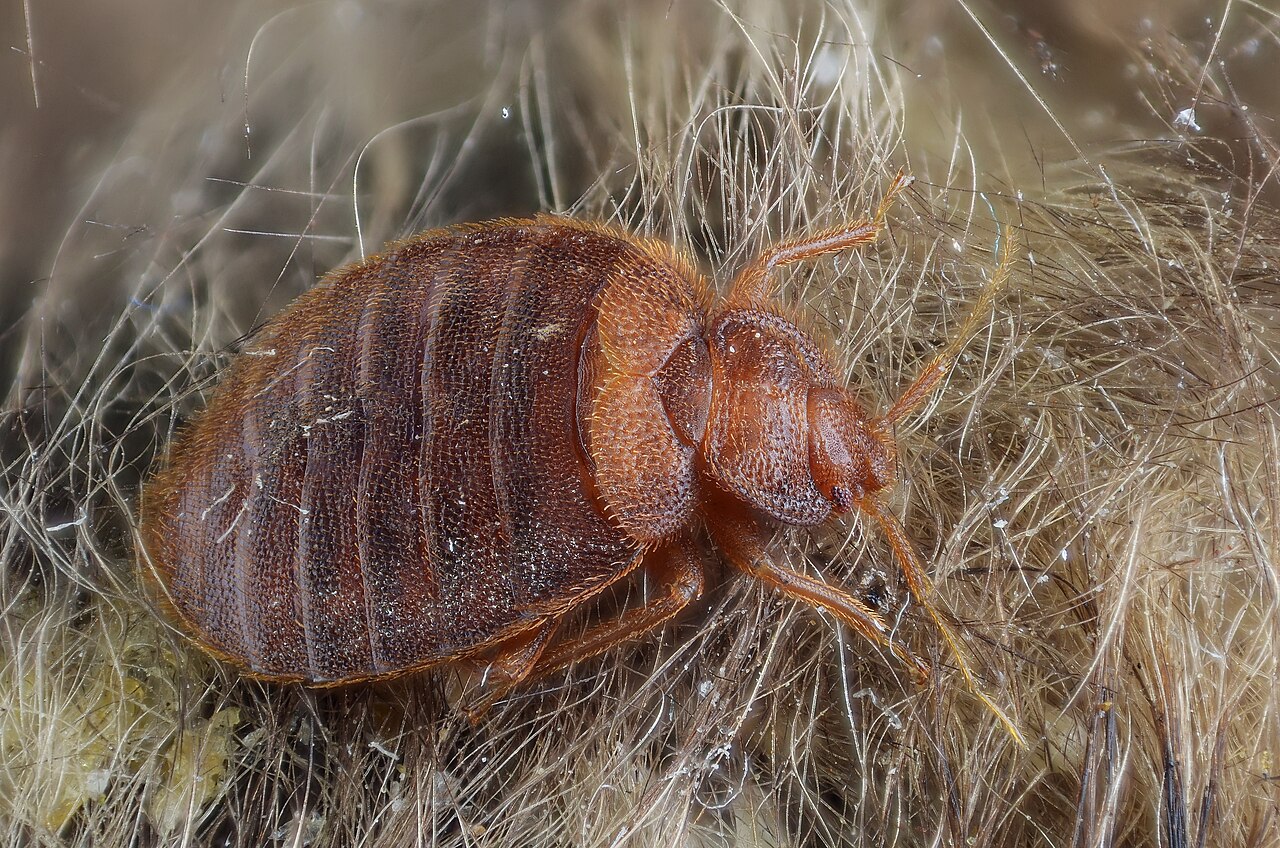
Size and shape differ too, though less reliably to an untrained eye. Adult carpet beetles are small, round, and often mottled in pattern, resembling a tiny ladybug; adult bed bugs are flat, oval, and reddish-brown, roughly the size and shape of an apple seed, and become visibly swollen and darker red after a blood meal.
Can Carpet Beetles Look Like Bed Bugs?

At a glance and to an untrained eye, yes, especially carpet beetle larvae, which are elongated, fuzzy, and brownish and can be mistaken for bed bugs by someone who has never seen either insect up close. This is the single most common source of the confusion behind the comparison.
The larvae are the more misleading stage. They are covered in bristly hairs, move slowly, and are often found in the same general areas, closets and under furniture, where a worried homeowner is already looking for bed bugs. Adult carpet beetles look far less like bed bugs once you know to look for the domed, mottled shell.
A magnifying glass resolves most confusion quickly. Extension entomologists at land-grant universities, including Purdue University’s entomology department, publish identification guides that make exactly this point: bed bugs have a flat, segmented, hairless body built for hiding in tight cracks; carpet beetle larvae are fuzzy and bristled, and adult carpet beetles are domed and patterned rather than flat. The carpet beetle larvae guide covers larval identification in detail.
Do Carpet Beetles Bite?
No. Carpet beetles have no mouthparts capable of biting skin and do not feed on blood or human tissue in any life stage. Reported “bites” from carpet beetles are almost always a skin reaction to contact with the larvae’s shed hairs, called hastisetae, which can cause itching and a mild rash resembling a bite when they brush against skin.
Bed bug bites are a genuinely different mechanism entirely: a feeding bed bug pierces skin and injects an anticoagulant while drawing blood, and the resulting bite typically appears as a red, itchy welt, often in a line or cluster of several bites close together, sometimes called “breakfast, lunch, and dinner” for the pattern.
The distinction matters for treatment. A carpet beetle skin reaction resolves with basic anti-itch care and removing the source of the shed hairs, while a real bed bug infestation requires targeted pest control regardless of how mild the bites initially seem, since the population grows quickly if untreated. The carpet beetle rash guide and bed bug bites guide cover each reaction in detail, and the tick vs bed bug guide covers a third small biting pest people often confuse with both.
Which Is Worse to Have?
Bed bugs are the more serious practical problem for most households. They are notoriously difficult to eliminate without professional treatment, reproduce quickly, and can spread between rooms and even between homes via furniture, luggage, and clothing, causing both physical discomfort and significant stress.
Carpet beetles cause real but generally slower and more contained damage, primarily to natural fiber items, wool sweaters, silk, fur, and sometimes upholstery, and an infestation left unchecked can ruin valuable clothing or heirloom textiles over months rather than posing a direct threat to people.
Neither is pleasant, but the urgency differs. A confirmed bed bug problem generally warrants immediate professional attention given how fast they multiply and spread, while a carpet beetle problem, while still worth addressing promptly, allows more time to identify the source and treat it without the same spreading risk to other rooms or neighbors.
Are Carpet Beetles Common in Homes?
Yes, carpet beetles are widespread and turn up in a large share of homes at some point, since their larvae feed on materials present in almost every household, wool clothing, feather pillows, pet hair, and lint that accumulates in vents and under furniture. Their presence in small numbers is not unusual and does not indicate a serious problem on its own.
A few adult beetles seen near a window, drawn in by light or pollen from outdoor flowers, is a different and far less concerning situation than active larvae found feeding inside stored clothing, since adults often wander in from outside without establishing an indoor population at all.
What separates a minor nuisance from a real infestation is finding larvae, shed larval skins, or fabric damage in an ongoing way, rather than an occasional adult beetle. The presence of the insect alone is not diagnostic; the evidence of active feeding is.
Does Having Carpet Beetles Mean Your Home Is Dirty?
No. Carpet beetles are drawn to natural fiber materials and organic debris regardless of how clean a home is kept, and their presence relates more to what is stored, wool blankets, old feather pillows, taxidermy, dried flowers, than to general cleanliness or hygiene.
Clutter and undisturbed storage do make an infestation easier to establish and harder to notice, since larvae prefer dark, undisturbed spots like the back of a closet or under a rarely moved rug, but a tidy home with wool sweaters in a cedar-free closet can still attract them.
Regular vacuuming, particularly along baseboards, under furniture, and inside closets, along with periodically airing and inspecting stored wool and fur items, is the practical prevention step, and it addresses habitat and food access rather than a hygiene failing.
What Attracts Each One?
Carpet beetles are drawn to keratin-based materials specifically: wool, silk, feathers, fur, leather, and pet hair, along with stored dry goods like cereal, pasta, and pet food in kitchens and pantries. Natural light and flowering plants outdoors also attract adults, which is why they often enter through windows in spring.
Bed bugs are drawn to entirely different cues, carbon dioxide from breathing, body heat, and specific chemical compounds in human sweat and skin, all of which signal a live host nearby. They are not attracted to dirt or food debris at all, since blood is their only food source.
This is why cleaning alone solves a carpet beetle problem in a way it cannot solve a bed bug problem: removing the fabric food source genuinely starves out carpet beetles, while a spotless bedroom offers no defense against bed bugs if a host, meaning a sleeping person, is present.
What Kills Each One?
For carpet beetles, thorough vacuuming of affected areas including cracks, baseboards, and under furniture, followed by laundering or dry cleaning any infested fabric items, addresses most household cases without pesticide. Targeted insecticide labeled for carpet beetles can supplement this in persistent cases, applied to cracks and crevices rather than broadly.
Bed bugs are considerably harder to eliminate with home methods alone. Heat treatment, either whole-room professional heat treatment or laundering and drying items at high heat for at least 30 minutes, kills bed bugs at all life stages, while over-the-counter sprays frequently fail against established infestations due to widespread pesticide resistance in bed bug populations.
Freezing infested items that cannot be heat-treated, at 0°F for several days, is an alternative for bed bugs, though it requires a dedicated freezer and careful timing. For an established bed bug infestation, professional pest control is the reliable option in most cases rather than a DIY-only approach, and fecal spotting, covered in the bed bug poop identification guide, is often the first confirming evidence homeowners find.
Do They Go Away on Their Own?
Carpet beetles can effectively resolve on their own if the food source is removed, since larvae that run out of wool, fur, or feathers to feed on will die off or move elsewhere, making source removal a genuinely complete solution in many cases rather than a temporary fix.
Bed bugs essentially never resolve without intervention, since they can survive extended periods without feeding, up to several months for adults in cool conditions, and a small residual population reliably rebuilds once a host becomes available again. Waiting them out is not a viable strategy.
This difference is the practical bottom line of the whole comparison: a carpet beetle problem responds to cleaning and source removal, while a bed bug problem requires active, targeted treatment because the insect’s entire survival strategy is built around outlasting exactly this kind of passive approach.
What Smell Do Carpet Beetles Hate?
Cedar and certain essential oils, including lavender, eucalyptus, and clove, are commonly cited as carpet beetle deterrents, and cedar closets and cedar blocks have been used for this purpose for generations, though the effect is more repellent than lethal and works better as prevention than as a cure for an active infestation.
These scent-based methods work best combined with the physical steps that actually remove the insects and their food source, vacuuming, laundering, and periodic inspection, rather than as a standalone solution. A cedar block in a closet full of undisturbed larvae feeding on a wool sweater will not solve the problem by itself.
Scent deterrents have essentially no relevance to bed bugs, which are not meaningfully repelled by cedar or common essential oils and require the heat or chemical treatment methods described above instead. Using the wrong deterrent for the wrong pest wastes time while the real problem continues.
Frequently Asked Questions
Do carpet beetles bite like bed bugs?
No. Carpet beetles cannot bite; skin irritation comes from contact with shed larval hairs. Bed bugs genuinely bite and feed on blood, leaving itchy welts often in a line.
How can you tell carpet beetle larvae from bed bugs?
Carpet beetle larvae are elongated and covered in bristly hairs; bed bugs are flat, smooth, and oval-shaped like a small apple seed. A magnifying glass resolves most confusion.
Which is worse, carpet beetles or bed bugs?
Bed bugs are generally the more serious problem, reproducing quickly and requiring professional treatment. Carpet beetles cause slower fabric damage and often resolve once the food source is removed.
Do carpet beetles mean your home is dirty?
No. They are drawn to specific materials like wool, fur, and feathers regardless of general cleanliness, not to dirt or poor hygiene.
What kills carpet beetles?
Thorough vacuuming, laundering infested fabric, and targeted insecticide in cracks and crevices for persistent cases. Removing the food source alone often resolves it.
Do carpet beetles or bed bugs go away on their own?
Carpet beetles can, if the fabric food source is removed. Bed bugs essentially never resolve without active treatment and can survive months without feeding.