Indigo Bunting Song: How to Recognize It by Ear
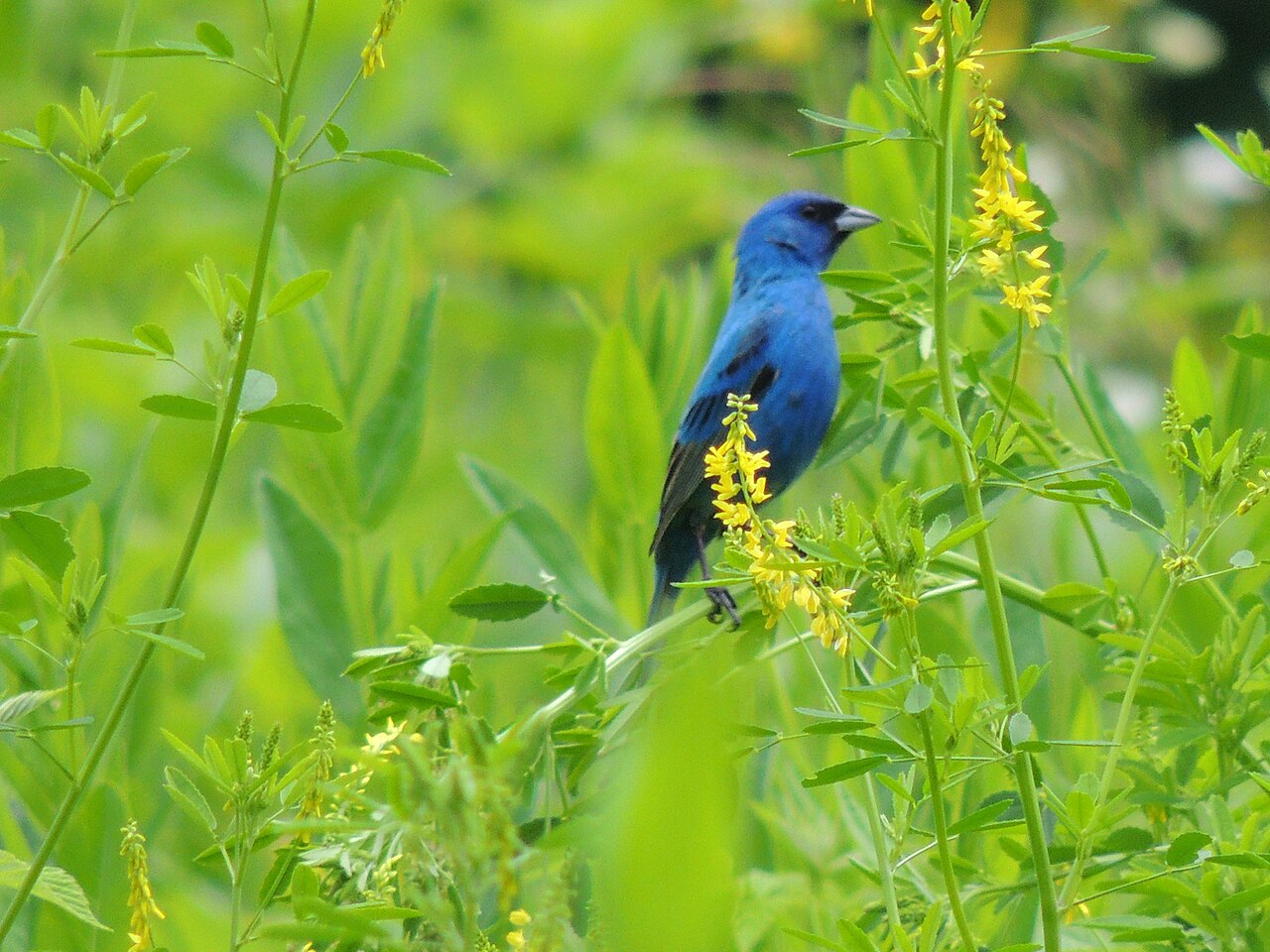
The indigo bunting song is a fast, bright string of paired notes, high and sweet, that a male repeats from the top of a tree or a wire all summer. Many people know the indigo bunting song long before they see the singer, because the bird sits high against the sky and looks dark from below.
The indigo bunting song is a quick, high, sweet warble of paired notes, remembered as “fire fire, where where, here here, see it see it.” Only males sing it, from treetops and wires, spring into late summer. His calls are single notes, a sharp spit near the nest and a buzzy zeet in flight.
What the Indigo Bunting Song Sounds Like
The indigo bunting song sounds like a run of doubled notes, each pair pitched higher or lower than the one before. Birders remember it as “fire fire, where where, here here, see it see it.” The whole phrase is short and high. The barred owl call, remembered as “who cooks for you,” is learned the same way, as a rhythm with words attached.
A male typically sings one main song pattern, repeated from his perch with short pauses. A song is built from several short phrases, and a few males switch or sing two patterns later in life. The Cornell Lab recordings of indigo bunting sounds let you hear the doubling clearly before you go out.
Young males copy the song of the adult males around them. That copying makes neighbors sound alike, so a small neighborhood of males can share nearly the same version, while males a few hundred yards away often sing differently. Bird sound identification works best by pattern, and the doubled notes of the indigo bunting are one of the clearest patterns of summer.
Indigo Bunting Calls and What They Mean
Indigo bunting calls are single notes, and each one carries a different message. The sharp “spit” or “chip” is the alarm note. Parents give it near the nest when a cat, a person or a jay comes too close. A steady run of these chips from low in a thicket means you are standing near a nest, so step back.
Female indigo buntings call but rarely sing. Their sharp chip is the sound you hear most from them while they tend the nest.
The flight call is a short, buzzy “zeet” that keeps birds in contact as they move. You hear it overhead on spring and fall nights, when buntings migrate in the dark.
When and Where You Hear Indigo Buntings Sing
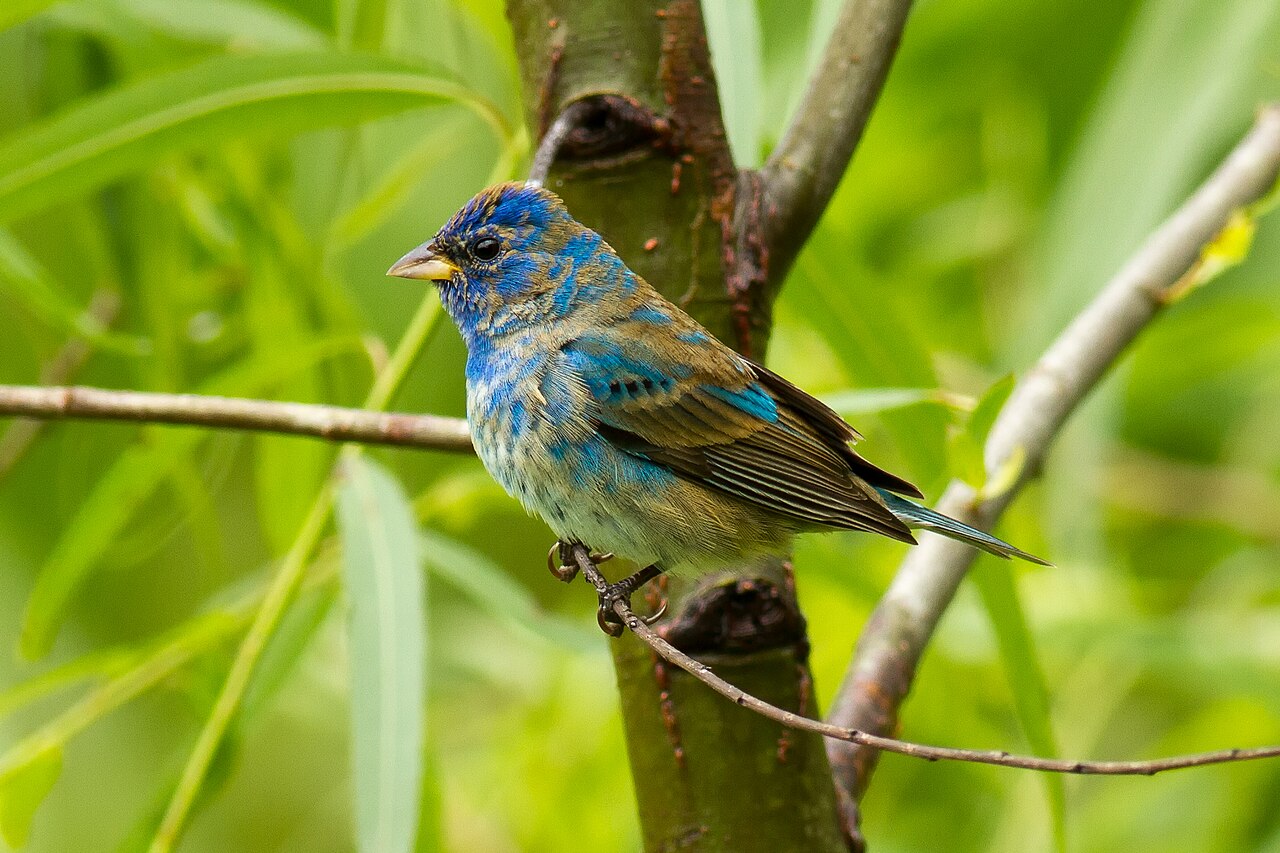
You hear indigo buntings sing from the day males return north in spring until late summer. Most songbirds go quiet after nesting, but the bunting keeps going. He sings through the midday heat as well, long after the dawn chorus is over.
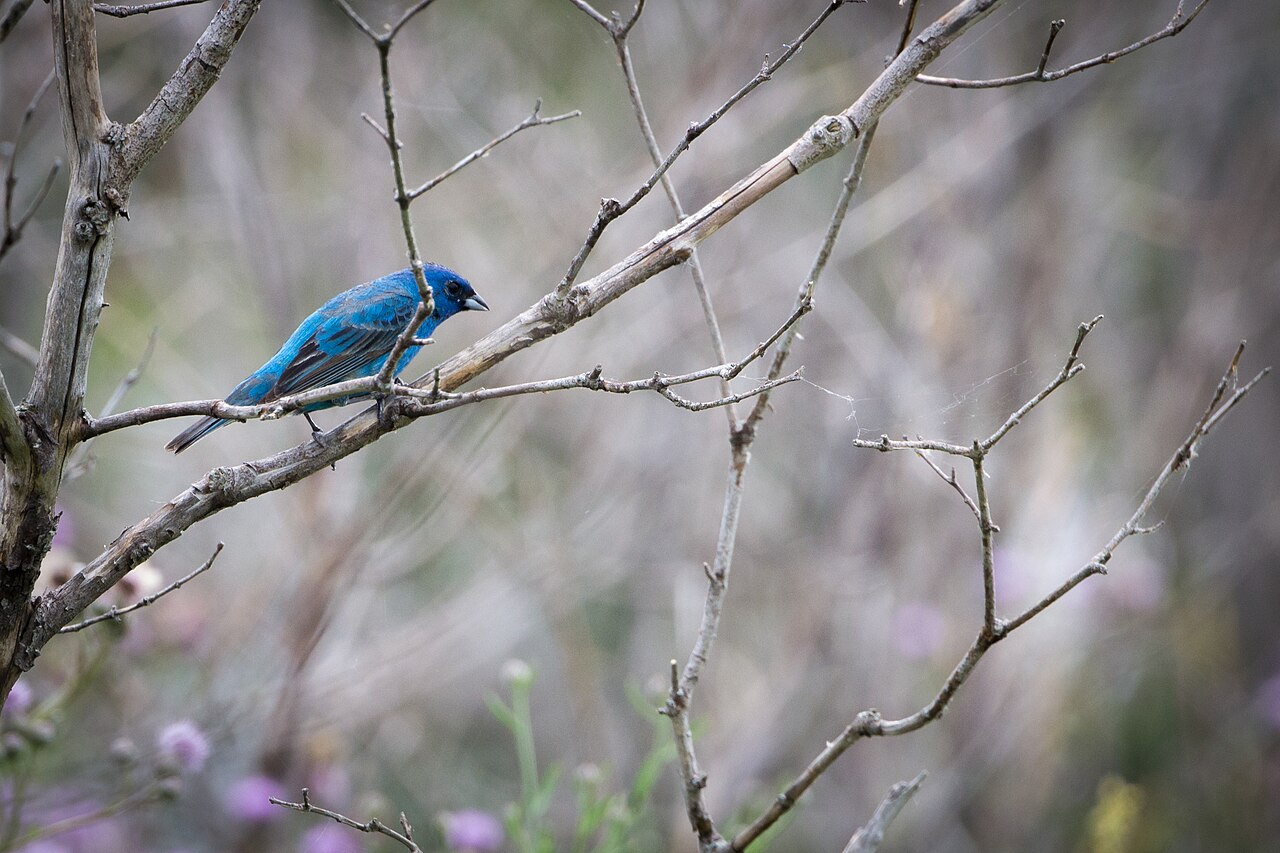
Look for him at brushy field edges, roadsides, overgrown clearings and power line cuts.
Singing holds territory. Each burst tells rival males the patch is taken, and it carries well across open ground. The male cardinal song does the same job, but cardinals whistle loud, clear slurred phrases instead of quick pairs.
Four summer singers get mixed up with the indigo bunting by ear. Goldfinch, house finch and painted bunting never sing neat pairs. The lazuli bunting does, but its song is longer and less repetitive, and it breeds in the West. The two species meet on the Great Plains and even interbreed there. Painted buntings share some southern fields with indigo buntings.
| Species | Song pattern | How it differs from indigo bunting |
|---|---|---|
| Indigo bunting (Passerina cyanea) | Quick, high paired notes | The reference song, neat pairs at changing pitch |
| American goldfinch (Spinus tristis) | Long, rambling, canary-like twitter | A long run of twittering notes and trills, not a steady string of pairs |
| Lazuli bunting (Passerina amoena) | High, paired phrases | Closest match, longer and less repetitive, a western bird |
| Painted bunting (Passerina ciris) | Sweet, continuous warble | Notes more slurred together than the crisp pairs of the indigo bunting |
| House finch (Haemorhous mexicanus) | Long, jumbled warble | Rambles on and ends in a buzzy note |
Frequently Asked Questions
How rare is it to see an Indigo Bunting?
Not rare. Indigo buntings are common breeders across the eastern and central US from late April or May into September. They winter in Mexico, Central America and the Caribbean, so the song falls silent in US fields from fall to spring.
What attracts Indigo Buntings to your yard?
Two things draw them in. Small seeds such as nyjer or thistle in a tube feeder help, and so do shrubby, weedy edges for cover and nesting. A tall snag or wire near those edges gives a male a song perch. Skip pesticides, because the parents feed insects to their young.
Sources
- All About Birds (Cornell Lab), Indigo Bunting Sounds
- All About Birds (Cornell Lab), Indigo Bunting Overview
- Audubon Guide to North American Birds, Indigo Bunting
- Birds of the World (Cornell Lab), Indigo Bunting Sounds
- University of Michigan Deep Blue, Indigo Bunting Song Study