Titmouse Sounds: 6 Calls and What Each One Means
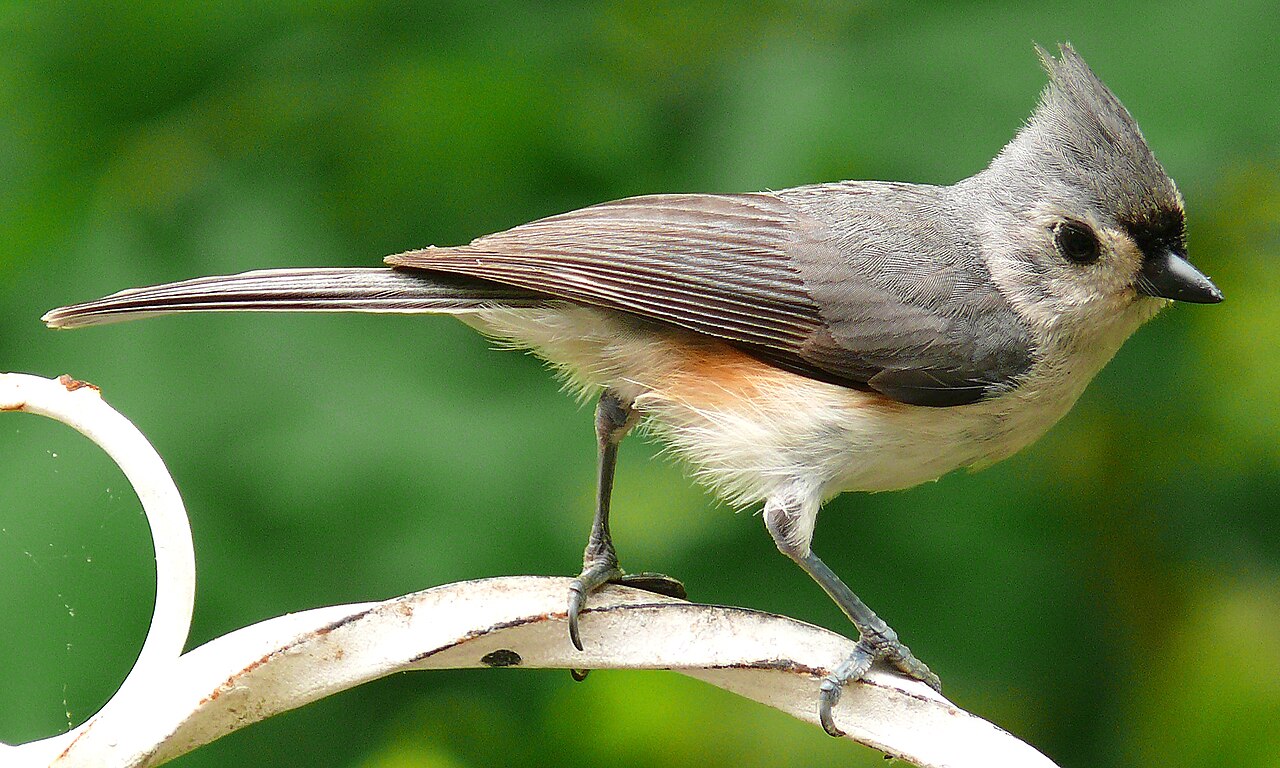
A titmouse sounds like a small bird shouting a name: peter peter peter, clear and whistled, repeated three to six times from a bare branch. That single phrase is the tufted titmouse song, and it is the loudest thing coming out of a 6 in (15 cm) gray bird with a crest. Learn it and you will hear titmice everywhere from January through midsummer.
The rest of the repertoire is scratchier and much less famous. Titmice scold with a harsh, nasal rasp that sounds like a chickadee with a sore throat, they trade thin contact notes while moving through a feeding flock, and they produce a surprising range of variations between individual birds. Researchers have logged dozens of distinct song types in a single population, so the bird in your yard may not sound quite like the recording you looked up.
The tufted titmouse makes a clear whistled peter peter peter song and a harsh, nasal scolding call. Males sing most from late winter through spring, often before dawn. Both sexes give the raspy scold year round when a predator appears or when they squabble at a feeder.
| Sound | What it sounds like | Main season | What it means |
|---|---|---|---|
| Peter song | Clear whistled pee-ter pee-ter | January to July | Territory and mate attraction |
| Scolding call | Harsh nasal tsee-day-day-day | Year round | Alarm, mobbing, feeder disputes |
| Contact notes | Thin high tsee or see-see | Year round | Keeping the pair or flock together |
| Chatter | Fast jumbled run of notes | Late winter to spring | Close range courtship and conflict |
| Begging calls | Buzzy insistent squeals | May to July | Nestlings and fledglings asking for food |
| Hawk mimic alarm | Thin descending whistle | Year round | High level threat overhead |
What Bird Sounds Like It Is Saying Peter Peter Peter?
That is the tufted titmouse (Baeolophus bicolor), and it is the most reliable mnemonic in eastern backyard birding. The song is a two note whistled phrase with the stress on the first syllable, repeated in a series: PEE-ter PEE-ter PEE-ter. Each phrase lasts roughly half a second, the series runs two to four seconds, and the bird often sings from an exposed perch near the top of a tree.
Carolina wrens are the usual mix up, since they shout a loud three part tea-kettle tea-kettle from similar perches. Wren song is faster, richer, and more rolling. Northern cardinals whistle too, but their phrases slur and bend in pitch rather than holding two flat notes. If the phrase is clean, two syllables, and sounds mildly indignant, it is a titmouse.
What Sound Does a Titmouse Make When It Is Not Singing?
Most titmouse vocalizations are not the peter song at all. The workhorse sound is a scold: a harsh, buzzy, nasal series often written as tsee-day-day-day, delivered with the crest raised. It comes out at feeders, during territorial spats, and whenever a titmouse decides you are standing too close to its sunflower seed supply.
Between those extremes sit soft contact notes, thin and high, exchanged constantly by pairs working the same patch of woods. In winter mixed flocks these notes are the glue holding chickadees, nuthatches, kinglets, and titmice together as a single moving unit, and the titmouse is usually the loudest voice in it.
Why Do They Call It a Titmouse?
The name has nothing to do with mice. It comes from Old English tit, meaning something small, and mase, an old word for a small bird. Over centuries mase drifted into the familiar word “mouse” and the spelling followed. The plural is titmice, which is grammatically odd and entirely historical.
This matters for identification searches, because photo results for the scientific name Mus musculus will return actual rodents. The bird genus is Baeolophus, which covers five North American species: tufted, black-crested, oak, juniper, and bridled titmouse.
The Scolding Call and What Triggers It
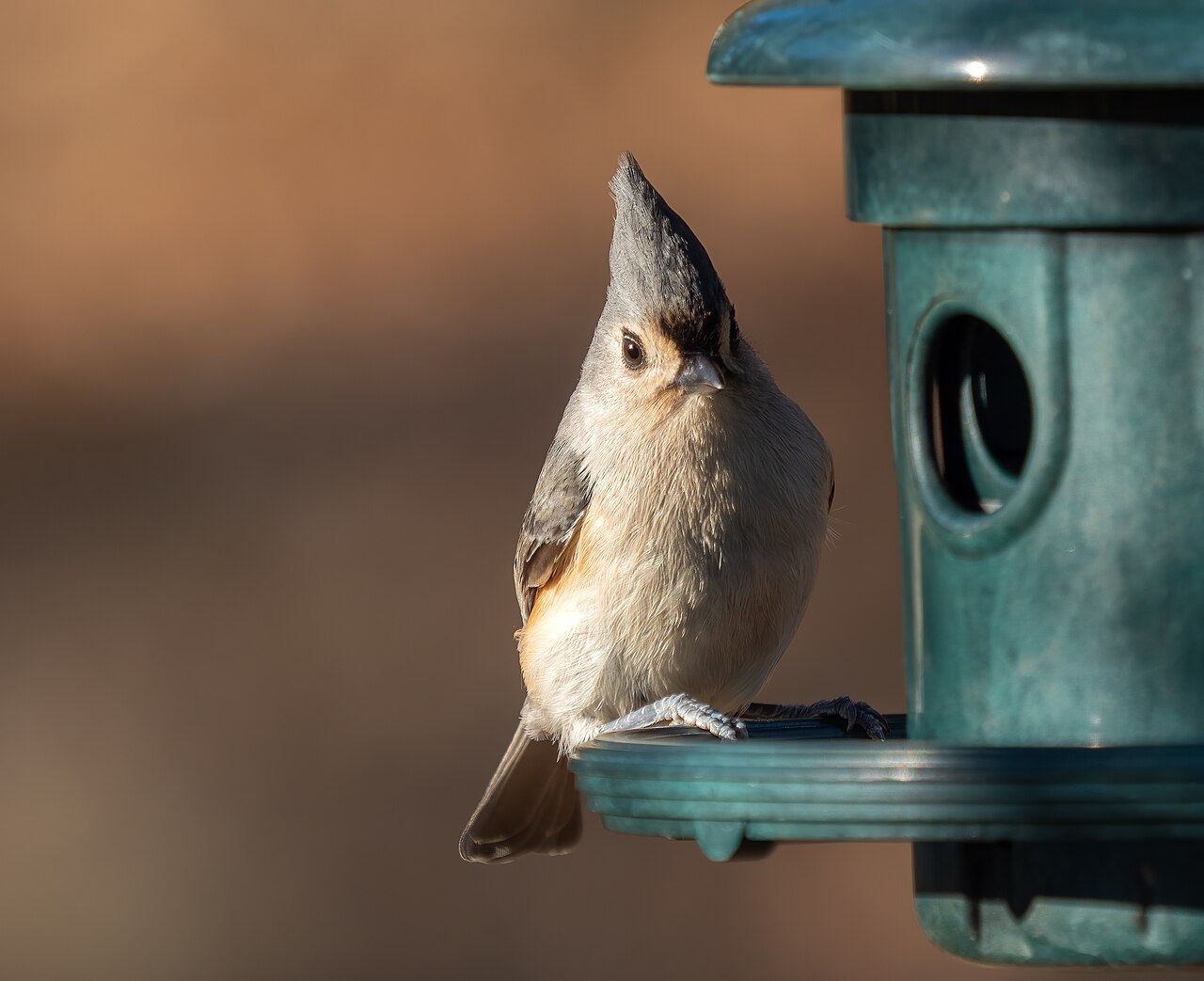
Titmice scold more readily than almost any bird at a feeder. The call is loud for the bird’s size, carries 150 ft (45 m) through woodland, and recruits other species fast. When a screech owl is discovered roosting in daylight, the titmouse scold is usually what assembles the mob of chickadees, jays, and nuthatches that follows.
Scold intensity scales with threat. A squirrel on the platform feeder gets a few rasps. A sharp-shinned hawk gets a continuous barrage until the hawk leaves. Titmice also use a thin, descending, hard to locate whistle for aerial predators, the same acoustic trick chickadees use, which makes the caller difficult for a hawk to pinpoint.
Tufted Titmouse Mating Call and Courtship Sounds
Pair formation runs from late January into March, and the peter song does the heavy lifting. Males sing at a higher rate at dawn, sometimes starting 20 minutes before sunrise, and will counter sing with neighboring males across a shared boundary for several minutes at a stretch.
Close range courtship is quieter and stranger. Paired birds exchange a fast, jumbled chatter during mate feeding, when the male passes a seed or caterpillar to the female. There is no elaborate display flight and no drumming. If you hear chatter plus a flutter of wings in dense cover in early spring, you are listening to a pair, not a fight.
Titmouse Call at Night: What You Are Actually Hearing
Titmice do not call at night. They roost in cavities, old woodpecker holes, nest boxes, and dense evergreen cover, and they stay quiet from dusk until first light. Dawn singing can start early enough in spring to feel nocturnal, but true darkness belongs to other birds.
A whistled or screaming call after dark is far more likely to be an eastern screech owl, a great horned owl, or a barred owl working a territory. Compare the barred owl call and barn owl sounds before concluding that a songbird is awake. If the sound is a chittering or squeaking rather than a whistle, check bat sounds as well.
Chickadee vs Titmouse Song: Telling the Flockmates Apart
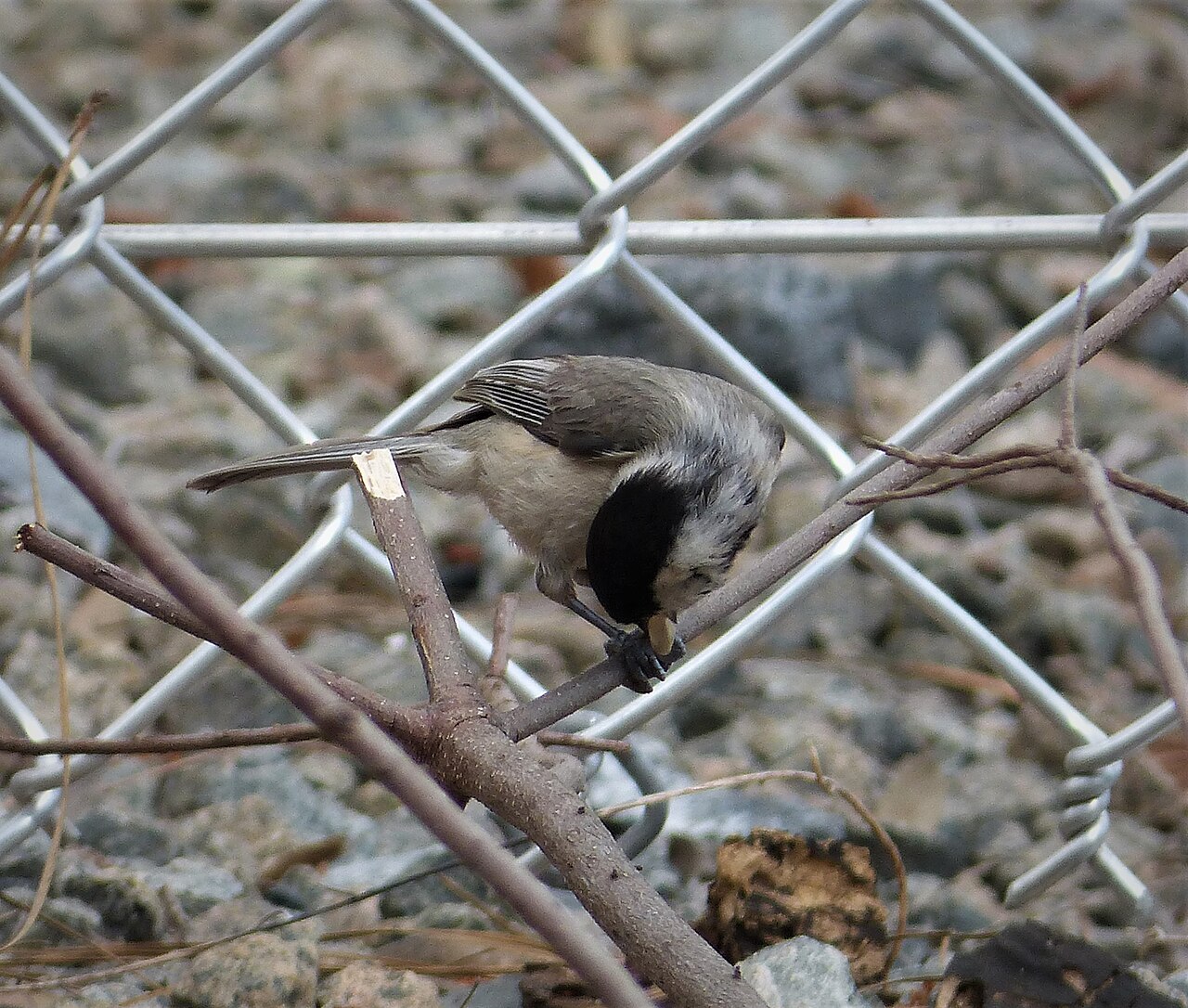
These two travel together all winter, and their scolds are genuinely similar. The split is cleanest on song. A black-capped chickadee whistles a simple two note fee-bee that drops in pitch, high then lower, with no repetition. A titmouse whistles a two syllable phrase at a steadier pitch and repeats it several times. Carolina chickadees sing a four note version instead.
On the scold, the chickadee’s chick-a-dee-dee-dee is cleaner and more musical, while the titmouse rasp is harsher and more nasal. Body size helps if you get a look: the titmouse is noticeably bigger with a pointed gray crest that no chickadee has.
Titmouse Call Variation Between Individuals
One titmouse does not sound like every titmouse. Studies of song variation have documented more than 20 distinct song types within single populations, with individual males holding a personal repertoire of several variants they switch between during a morning. Some phrases lose the second syllable entirely and become a flat repeated whistle.
Regional differences add another layer. Birds in the southern part of the range tend to deliver faster series, and the black-crested titmouse of Texas sings a rougher, more buzzy version altogether. If a whistled phrase almost matches your recording but not exactly, individual variation is the likeliest explanation. The Cornell Lab’s Tufted Titmouse species account carries a representative set of these variants.
Oak, Juniper, and Black-Crested Titmouse Sounds
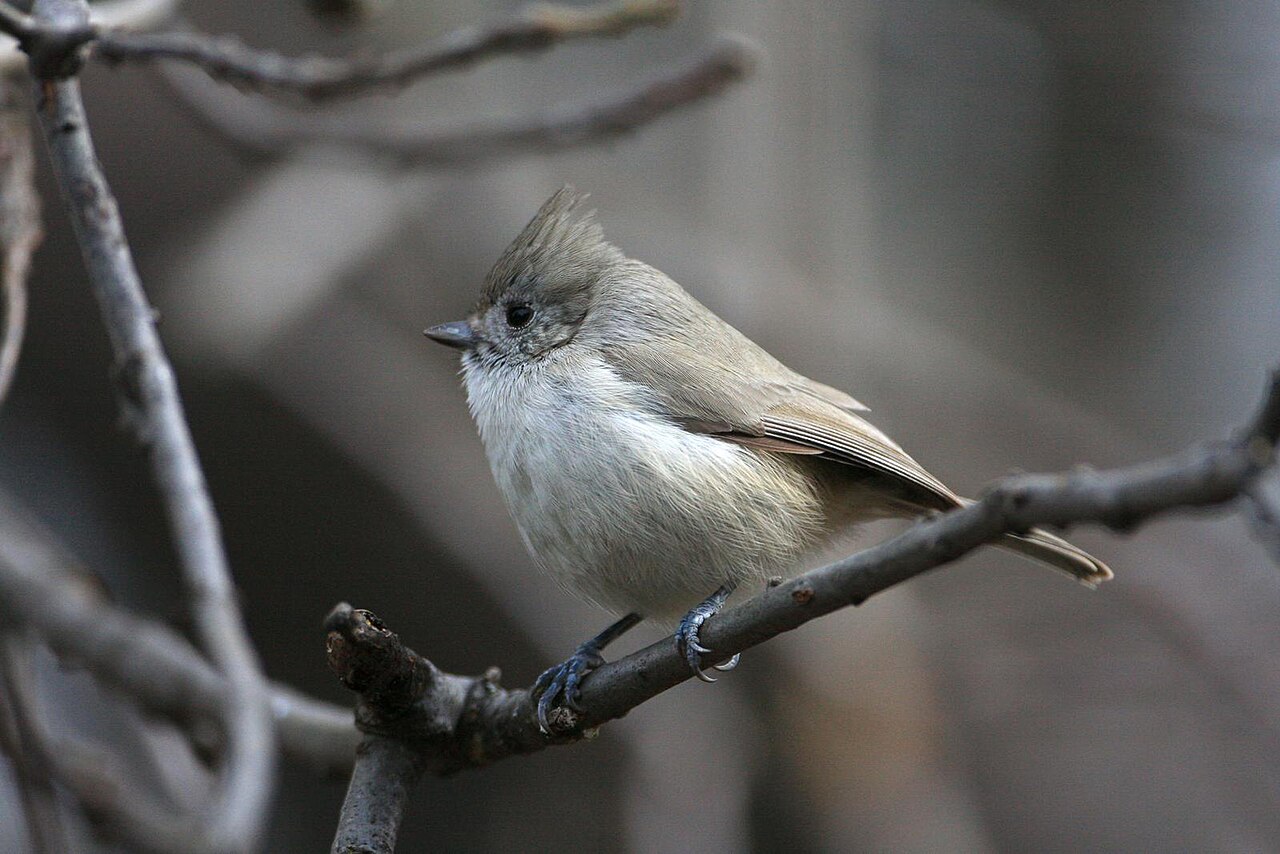
West of the Rockies the voices change. The oak titmouse (Baeolophus inornatus) of California gives a scratchy, rhythmic series rather than a clean whistle, closer to tsick-a-dee-dee with a wheezy quality. Juniper titmice of the Great Basin sound similar but rougher and more rapid.
The black-crested titmouse of central Texas is the closest to the tufted in structure, with a faster and burrier delivery, and the two hybridize where their ranges meet, producing intermediate singers. Geography is the first filter for any titmouse sound identification: if you are in California, the peter song is not an option.
Begging Calls of Young Titmice
From May into July, cavity nests broadcast their contents. Nestlings give a buzzy, insistent squeal that spikes every time an adult lands at the hole. Once fledged, young birds follow their parents for two to three weeks giving a harsher, flatter version of the call almost continuously.
Titmice are also one of the few songbirds where young sometimes stay with parents into the following winter, so a persistent begging bird in autumn is not necessarily an error. For a different family’s take on the same acoustic problem, hear how a downy woodpecker’s sounds change through the nesting season.
Using Titmouse Calls Around the Yard
Titmice respond strongly to playback, which makes them tempting to call in. Keep it brief. Repeated playback during the breeding season pulls a male off his nest territory, drains energy, and can expose the nest. Thirty seconds is plenty, then let the bird be.
Attracting them honestly is easy: sunflower seed, peanuts, a water source, and a nest box with a 1.25 in (3.2 cm) entrance hole. A quiet yard with mature trees will usually hold a pair year round. If your problem is the opposite and you need birds away from a structure, our notes on bird deterrent sound explain what actually works and what is marketing.
Frequently Asked Questions
What is the most obnoxious bird call in a yard full of titmice?
Among titmice themselves, the sustained scold wins. A bird that spots a cat can rasp without pause for ten minutes at close range. Blue jays and house wrens are louder overall, but the titmouse scold is pitched to cut through, which is exactly why other species respond to it.
Does the female titmouse call too?
Yes. Females give the full range of scolds, contact notes, and chatter, and they also sing the peter song, though far less often and usually more softly than males. Voice cannot be used to sex a titmouse, and the sexes look alike, so behavior during nesting is the better clue.
What bird call sounds like a scream in titmouse habitat?
A real scream is not a titmouse. In eastern woods the usual sources are blue jays imitating red-shouldered hawks, eastern screech owls at dusk, or a red fox in winter. Titmouse alarm stays raspy and buzzy, never piercing or drawn out like a scream.
Why is a titmouse singing in January?
Because the breeding season starts acoustically long before it starts biologically. Males begin claiming territory in midwinter, when leafless trees let song carry farthest. Singing peaks again in March and April, then tapers through July. A warm late January morning routinely produces full peter songs.
Are there titmouse song lyrics people actually use?
The standard mnemonic is peter peter peter, sometimes written here here here or pete pete pete. These are learning aids, not fixed phrases, and birds with shortened song types will not match them. Treat the mnemonic as a starting point and then listen for the repeated two syllable structure.
How far away can you hear a tufted titmouse?
The peter song carries 300 ft (90 m) or more through open woodland on a calm morning, and the scold travels about half that. Thin contact notes fade within 50 ft (15 m), which is why flocks sound quiet until something alarms them and the whole group starts rasping at once.