7 Bugs That Look Like Mosquitoes (And Which Ones Bite)
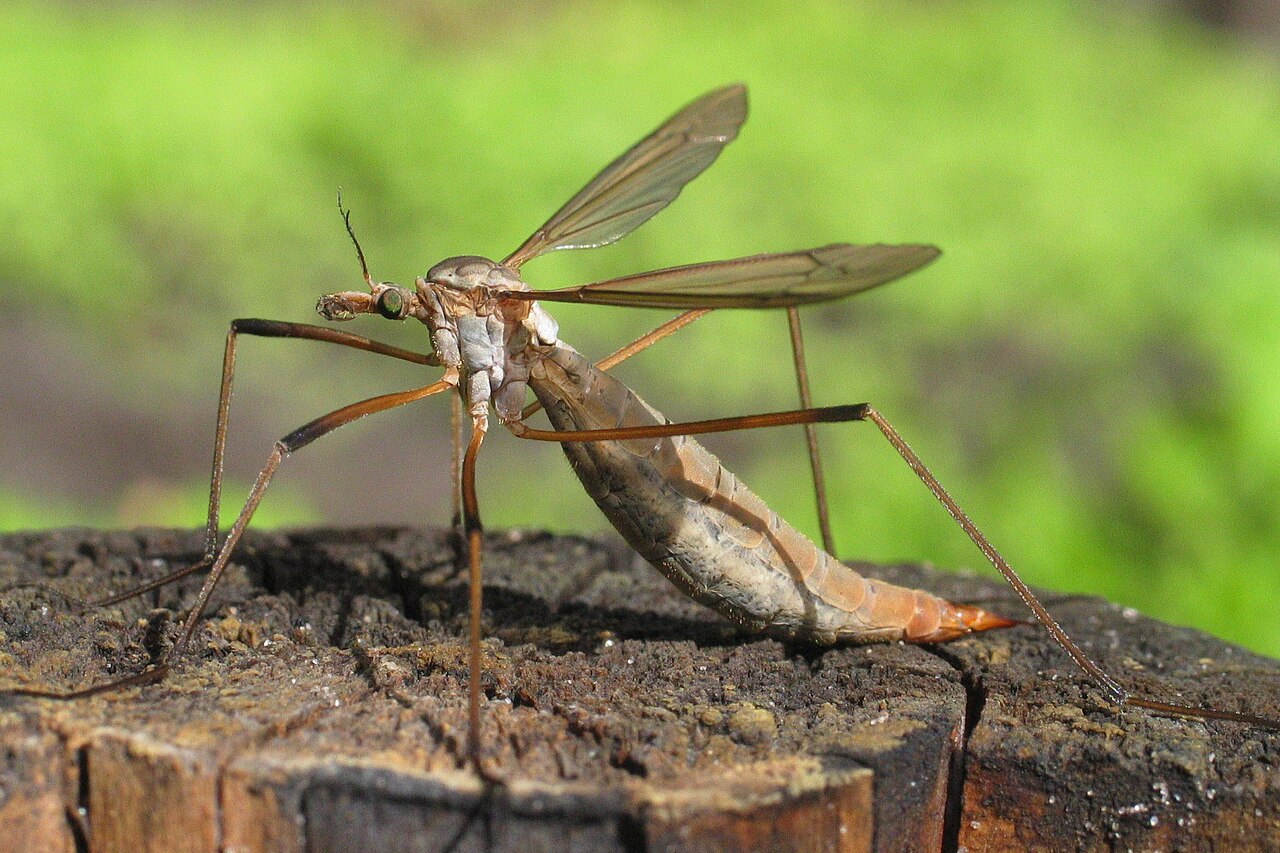
If you have found a large insect that looks like a mosquito with long dangling legs, it is almost certainly a crane fly, and it cannot bite you. Mosquito lookalikes are common in houses, garages and porch lights across the United States, and the useful news is that none of the usual suspects pierces skin. Only true mosquitoes in the family Culicidae have the needle-like mouthpart for that.
Telling them apart takes two seconds once you know what to look at: the mouth, the wings and the way the insect flies. The guide below runs through the seven bugs that get mistaken for mosquitoes most often in US homes, with size, range and whether each one can do anything to you.
Crane flies, non-biting midges, phantom midges, winter crane flies, fungus gnats, drain flies and mayflies all look like mosquitoes but cannot bite. None has the piercing proboscis mosquitoes use to draw blood. A real mosquito is small, holds a visible straight needle in front of its head, and lands quietly on skin.
Which Mosquito Lookalikes Actually Bite?
None of them. Every insect in the table below lacks the piercing proboscis, so the worst a crane fly or midge can do indoors is bump into a lamp. The only things in a US yard that genuinely bite and look vaguely mosquito-like are mosquitoes themselves and, in the South, biting midges in the family Ceratopogonidae.
| Insect | Size | Key feature | Bites? | US range |
|---|---|---|---|---|
| Crane fly (Tipula spp.) | 1 to 2.5 in (25 to 65 mm) legspan | Very long trailing legs, one pair of wings | No | Nationwide, peaks in spring and fall |
| Non-biting midge (Chironomidae) | 0.1 to 0.5 in (3 to 12 mm) | Feathery antennae, swarms over water | No | Nationwide near lakes and rivers |
| Phantom midge (Chaoborus spp.) | 0.2 to 0.4 in (5 to 10 mm) | Nearly transparent body, no proboscis | No | Nationwide, ponds and reservoirs |
| Winter crane fly (Trichoceridae) | 0.2 to 0.3 in (4 to 8 mm) | Flies in cold months, dancing swarms | No | Northern and central states |
| Fungus gnat (Bradysia spp.) | 0.1 to 0.2 in (2 to 5 mm) | Walks on houseplant soil, weak flier | No | Nationwide, indoors year round |
| Drain fly (Clogmia albipunctata) | 0.1 to 0.2 in (2 to 5 mm) | Fuzzy moth-like wings held like a roof | No | Nationwide, bathrooms and kitchens |
| Mosquito (Culicidae) | 0.1 to 0.3 in (3 to 7 mm) | Straight rigid proboscis, scaled wings | Yes, females | Nationwide |
Crane Flies: The Giant Insect That Looks Like a Mosquito

Crane flies are the reason this question gets asked at all. A European crane fly (Tipula paludosa) or one of the native Tipula species has a slim body, two long wings and six legs that trail behind it like loose threads, and at a legspan of 1 to 2.5 in (25 to 65 mm) it reads as a monstrous mosquito. Nicknames like mosquito hawk, skeeter eater and giant mosquito all attach to this one insect, and all three are wrong.
Adult crane flies have no biting mouthparts. Most live only 10 to 15 days, feed on nectar or nothing at all, and spend that time mating. The reason crane flies fly so badly is the body plan: long legs and a weak thorax make them poor steerers, so they drift, stall against walls and lose legs easily. Our full profile of the crane fly covers the larvae, which live in lawn soil and are the stage that can damage turf.
Non-Biting Midges: Mosquito Lookalikes in Swarms
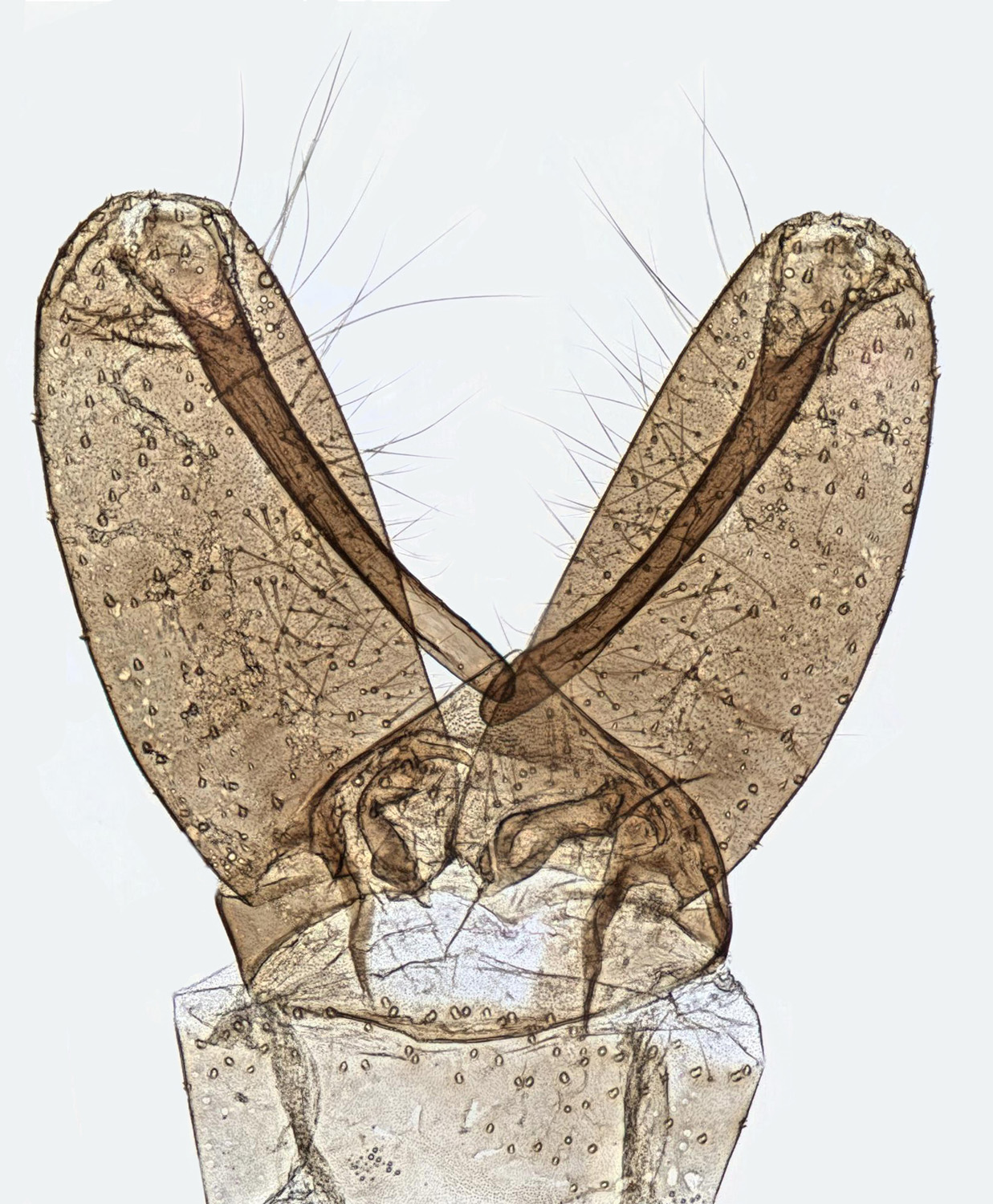
Non-biting midges in the family Chironomidae are the lookalike people meet in clouds rather than one at a time. They emerge from lake and river sediment in enormous numbers, form mating swarms over shorelines and parking lots at dusk, and settle on siding and screens in grey masses. Up close, males show feathery plumed antennae no mosquito has, and the mouth is a soft stub instead of a needle.
They matter ecologically far more than they bother anyone. Midge larvae, the red bloodworms sold as fish food, are a staple for freshwater fish and shorebirds, and their presence is used as a water quality indicator. If you live near water in the Great Lakes region or along the Gulf, a spring swarm on the porch is Chironomidae, not a mosquito hatch.
Phantom Midges and Winter Crane Flies
Phantom midges (Chaoborus spp.) are the closest thing to a true mosquito twin. They sit in the same superfamily, hold their legs the same way and rest at a similar angle, but the adult has no functional piercing mouth. Their larvae are the transparent glassworms that hang in pond water and eat mosquito larvae, which makes the group a genuine mosquito predator at the stage nobody notices.
Winter crane flies (family Trichoceridae) explain the other common report, a mosquito-like insect dancing in a sunbeam in January. They are active near freezing, swarm in loose columns over leaf litter and snow, and often drift into garages and basements. Both groups are harmless, and both are a strong clue that you are looking at a lookalike rather than a mosquito whenever the temperature is too low for mosquito activity.
Fungus Gnats and Drain Flies: Small Lookalikes Indoors
The small dark insect rising off a houseplant when you water it is a fungus gnat, not a mosquito. Fungus gnats are weak fliers with long legs, and they breed in wet potting soil, so the population tracks your watering habits. Let the top inch (2.5 cm) of soil dry between waterings and the cycle breaks. Gnats as a group include several unrelated families with the same silhouette.
Drain flies are mistaken for mosquitoes mostly in bathrooms, where they appear on tile at night. They are fuzzier and broader than any mosquito, hold their wings over the body like a tiny roof, and breed in the organic film inside slow drains and traps. The fix is mechanical: brush the drain wall and flush it. See drain flies for the full treatment, and damselflies for a much larger insect that also gets called a mosquito relative by mistake.
How to Tell a Real Mosquito From a Lookalike in Five Seconds
Three checks settle it. First, size and legs: anything with a legspan over an inch is a crane fly, because mosquitoes top out near 0.3 in (7 mm). Second, the mouth: only a mosquito carries that visible forward-pointing needle. Third, behavior: a mosquito approaches skin quietly and lands to feed, while a lookalike bounces off walls, hangs on a curtain or swarms in a column over open ground.
Season and location narrow it further. Cold weather points to winter crane flies, lakeside swarms to Chironomidae, houseplants to fungus gnats, and bathroom tile to drain flies. If something actually bit you, it was a mosquito or a biting midge, and the Centers for Disease Control and Prevention publishes the current guidance on mosquito-borne disease. For control without spraying, birds that eat mosquitoes cut local populations, and stink bug lookalikes follow the same identification logic.
Frequently Asked Questions
Are crane flies harmful to humans?
No. Crane flies have no biting or stinging mouthparts, carry no disease to people, and do not damage food or fabric indoors. The only harm attributed to the group comes from larvae of a few species feeding on grass roots, which can thin a lawn in a wet year. Adults in the house are a nuisance only.
What is a crane fly good for?
Crane fly larvae break down decaying leaves and plant matter in soil and stream beds, which recycles nutrients, and both larvae and adults are food for birds, bats, fish, frogs and spiders. A spring crane fly hatch is one of the first large insect meals available to songbirds feeding nestlings.
Do crane flies eat mosquitoes?
No, despite the nicknames mosquito hawk and skeeter eater. Adult crane flies mostly do not feed at all, and when they do it is on nectar. Phantom midge larvae and dragonfly nymphs are the real mosquito eaters in standing water, along with mosquitofish and many birds and bats.
Is it safe to sleep with a crane fly in my room?
Yes. A crane fly cannot bite, sting or lay eggs on you, and it will not go near your bed deliberately. It will bump around a lit lamp and then settle on a wall or ceiling once the room is dark. If it bothers you, cup it in a glass and put it outside.
What kills crane flies instantly?
Almost anything, which is the point: crane flies are so fragile that a swat, a vacuum nozzle or a glass and a piece of card ends it, and household insecticides work on contact. None of that is necessary. Since adults live about two weeks and cannot harm you, turning off the porch light does more than any spray.