Turkey Vulture Spiritual Meaning: 7 Signs and What Each One Means
Seeing a turkey vulture traditionally means that something in your life has finished and is ready to be cleared away. The turkey vulture spiritual meaning is built almost entirely on what the bird actually does: it finds what has died, consumes it, and leaves the landscape clean. Across traditions the reading is purification, release and the end of a cycle rather than death itself.
That makes the turkey vulture (Cathartes aura) one of the few birds whose folklore matches its biology this closely. Its scientific name translates roughly as purifying breeze, and both Native American and Egyptian traditions treated vultures as sacred rather than foul. Below, each tradition is kept separate, and the common situations, a bird circling, perched on your roof, appearing repeatedly, or showing up in a dream, are handled one at a time.
The turkey vulture is a symbol of purification, release and renewal: a sign that something has run its course and clearing it out is the next step. Native American traditions associate the vulture with cleansing and protection, Egyptian religion linked vultures to maternal gods, and seeing one circling is widely read as a call to let go rather than as an omen of death.
| Situation | Traditional meaning |
|---|---|
| Vultures circling overhead | A cycle closing; patience while something resolves |
| Turkey vulture on your roof or chimney | Clear out what is stagnant in the home |
| A single vulture crossing your path | Trust that what you need will be provided without force |
| Seeing one repeatedly | A release you keep postponing |
| A group feeding near your property | Practical warning: a dead animal nearby, and a cleanup crew at work |
| Finding a dead turkey vulture | Interruption of a natural ending, often read as unresolved grief |
| Turkey vulture in a dream | Transformation already underway, not one to fear |
Do Turkey Vultures Symbolize Anything?
Turkey vultures symbolize purification and renewal in nearly every tradition that mentions them. The symbolism rests on their role as scavengers: they locate carrion by smell, which is rare among birds, and their digestive system neutralizes bacteria that would sicken other animals. A bird that removes disease from the landscape earns the meaning it carries.
The secondary symbolism comes from flight. Turkey vultures ride thermals for hours with barely a wingbeat, holding their wings in a shallow V and rocking from side to side. That effortlessness is read as a lesson about conserving energy and letting conditions carry you. Compare the very different symbolism of vultures as a wider group, which varies more by culture.
Turkey Vulture Symbolism in Native American Tradition

Among Native American nations the vulture is most often a cleanser and a protector. Cherokee tradition records the buzzard, the common regional name for the turkey vulture, as a figure in the creation story who shaped the mountains and valleys of the southern Appalachians with his wings when he grew tired of flying over soft mud.
In parts of the Southwest and Mexico, vulture feathers were used in purification and healing practice, and the bird was credited with carrying away sickness. Pueblo traditions associate it with ritual cleansing after contact with the dead. Specific teachings differ by nation and are not interchangeable, so there is no single Native American meaning for the bird any more than there is for the bear.
What Does God Say About Vultures in the Bible?
The Bible classes vultures among the unclean birds that are not to be eaten, in the lists of Leviticus 11 and Deuteronomy 14. That classification is dietary law rather than moral judgment, and it groups the vulture with eagles, hawks and owls. The bird’s habit of eating carrion put it outside the clean category by definition.
Elsewhere the imagery is used plainly. Job 39 describes the keen sight of the bird of prey, and Matthew 24:28 gives the saying that wherever the body is, there the vultures will gather, used as a sign that an outcome is unmistakable. Christian folk reading tends to focus on that gathering image: the consequence arrives, visibly, after the fact.
Which Gods Are Associated With Vultures?
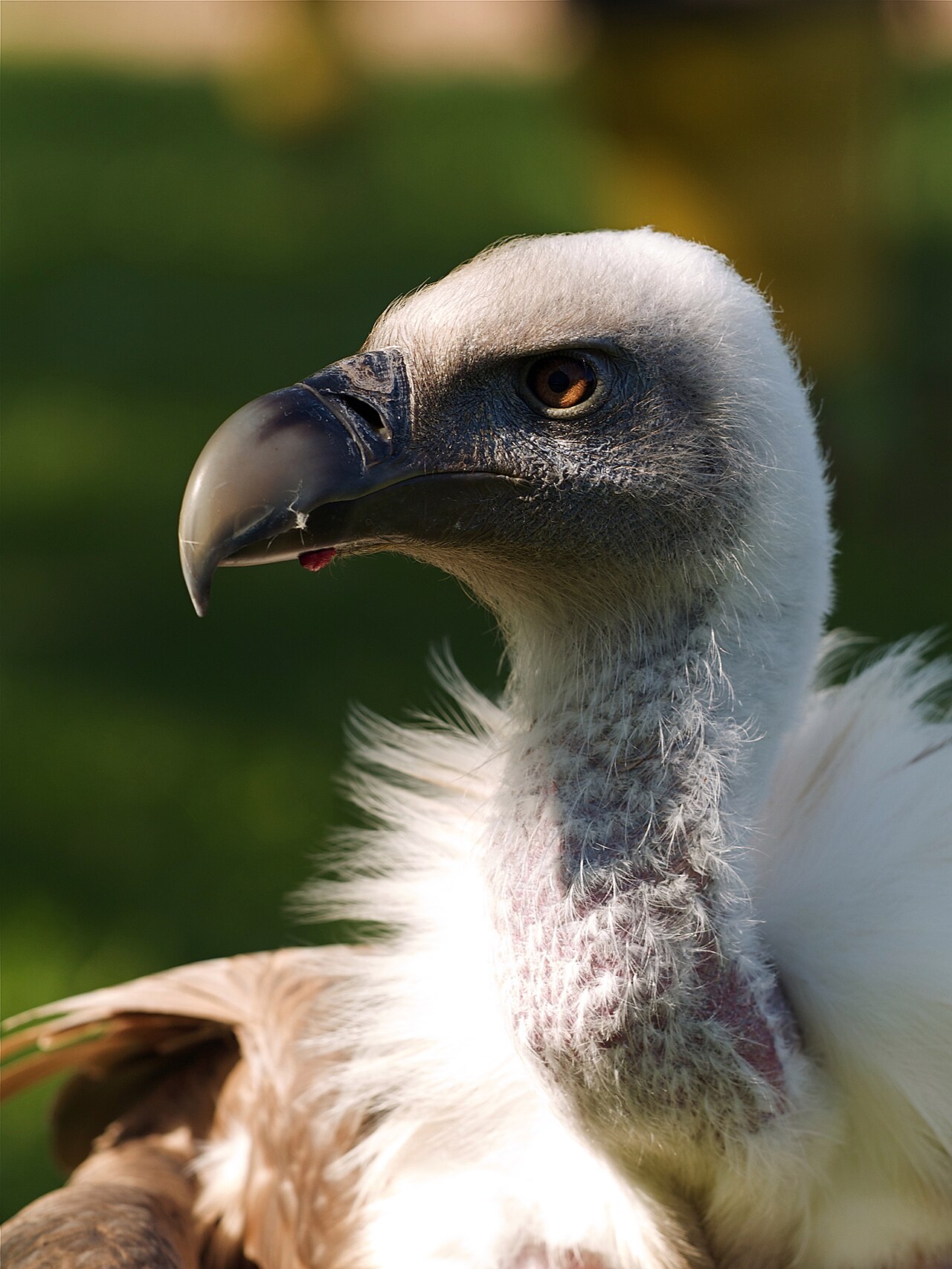
Egyptian religion gives vultures the highest status of any tradition. Nekhbet, the white vulture goddess, was patron of Upper Egypt and protector of the pharaoh, and the hieroglyph for mother was a vulture. Mut, whose name means mother, was depicted with vulture wings. Egyptians observed vultures caring for their young and read the bird as maternal rather than morbid.
Greek tradition linked vultures to prophecy, since augurs read their flight, and to Ares as a bird of the battlefield. Maya tradition included a vulture deity in the day signs, and Tibetan Buddhist practice treats vultures as the agents of sky burial, carrying the body back into the world. In none of these is the vulture an evil figure.
East Asian and Tibetan Views of the Vulture
Chinese and Japanese symbolism rarely features vultures, because the carrion birds in those traditions are the crow and the kite. Where vultures do appear, in Buddhist contexts, they are tied to the teaching on impermanence and to the charnel ground as a place of practice rather than horror.
Tibetan sky burial, still practiced in parts of Tibet, relies on griffon vultures to consume the body, and the birds are regarded as dakinis performing a final act of generosity. The reading transfers cleanly to the American turkey vulture in modern practice: the bird is a participant in a necessary process, not a predator waiting for one.
What Does It Mean Spiritually When a Vulture Visits You?
A vulture that appears close to you is read as confirmation that an ending is already complete and you are the one still holding on. The message in contemporary spiritual practice is specific: stop feeding the thing that has died, whether that is a role, a resentment or a plan that no longer fits.
A second reading comes from the vulture’s feeding strategy. It does not hunt or compete for a kill, it waits and finds. Encounters are therefore interpreted as reassurance about provision without struggle, in deliberate contrast to the forceful symbolism of the bald eagle. Both birds share a continent and carry opposite lessons.
What Vultures Circling Overhead Means
Vultures circling is the single most searched vulture sign, and the traditional reading is a cycle closing above you. Because the birds circle while gaining height rather than while targeting something, the interpretation leans toward patience: the situation is resolving, and your part is to wait for the lift rather than to flap.
There is no folklore anywhere that reads circling vultures as a sign of imminent human death, despite the cartoon version. The behavior has a plain explanation: a group riding the same column of warm air is called a kettle, and kettles form over fields, parking lots and south facing slopes between mid morning and late afternoon. Spring and fall kettles can hold dozens of birds on migration.
A Turkey Vulture on Your Roof, Fence or Chimney
A vulture perched on the house is read as a prompt about the home itself: something inside has gone stale and wants clearing, from a cluttered room to an unspoken family issue. The bird’s position above the household is traditionally taken as the message being about the household rather than about you alone.
Practically, turkey vultures perch on roofs, towers and dead trees in the morning to sun themselves, holding the wings open in a posture called horaltic to dry dew and warm up. A roosting group that returns nightly can damage shingles and leave droppings, and the birds are federally protected, so deterrence must be non lethal: effigies, spotlights and removing perch access all work.
Seeing a Turkey Vulture Repeatedly
Repeated sightings are interpreted as a release you keep postponing. Where a single encounter is a note, a pattern is treated as insistence, and the usual advice in contemporary practice is to name the specific thing you have not let go of rather than to treat the sign as general.
Turkey vultures are creatures of routine. They use the same communal roost for years, leave it on the same thermals each morning and patrol the same roads for roadkill, so a daily sighting at the same hour is a commuting bird on a fixed route. In much of the southern US they are present year round; northern birds arrive in March and leave in October.
Finding a Dead Turkey Vulture
Finding a dead vulture inverts the symbolism. The bird whose role is to resolve endings has itself been interrupted, and the traditional reading points to grief that has not been allowed to finish, or to a process someone has blocked.
The causes are usually vehicle strikes at roadkill, lead poisoning from gut piles and spent ammunition, or secondary poisoning from rodenticides. Turkey vultures are protected under the Migratory Bird Treaty Act, so possessing feathers or remains is illegal without a permit. Report clusters of dead birds to your state wildlife agency; the US Fish and Wildlife Service at fws.gov lists the contacts.
Turkey Vultures in Dreams
A turkey vulture in a dream is generally read as transformation already in motion. Dream interpreters in this tradition distinguish by what the bird is doing: soaring means the change is going well and needs no intervention, perched and watching means a decision is waiting on you, feeding means an ending is being processed rather than threatened.
A vulture pursuing you in a dream is usually read not as danger but as avoidance, the thing you will not look at following you. Fear in the dream is treated as information about your relationship to the ending, not about the bird. Dream readings of birds in general tend to follow the same logic.
Turkey Vulture as Spirit Animal, Totem and Power Animal
As a spirit animal, the turkey vulture is assigned to people who do the work others avoid: hospice nurses, cleanup crews, estate handlers, anyone who arrives after the crisis and restores order. The qualities named are patience, resourcefulness, a strong stomach for reality and the ability to find value in what has been discarded.
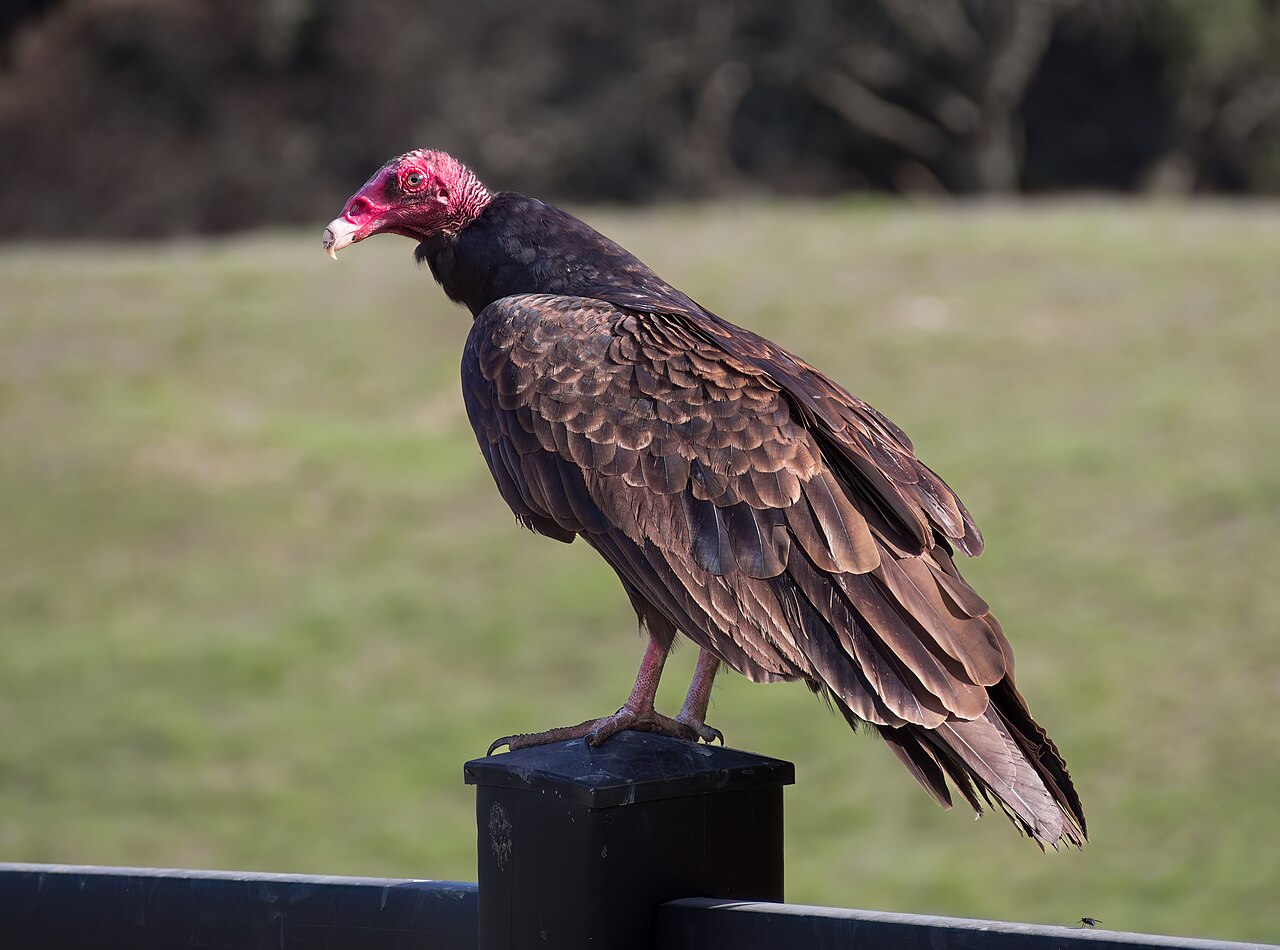
As a totem it stands for efficiency without waste, and as a power animal it is called on for releasing, decluttering and recovering from loss. The turkey vulture is distinct from the symbolism of the wild turkey, which is about abundance and harvest; the two birds share a name only because early colonists thought the vulture’s bare red head looked like a turkey’s.
Related reading: Wild Turkey Spiritual Meaning.
Frequently Asked Questions
What does seeing a vulture mean spiritually?
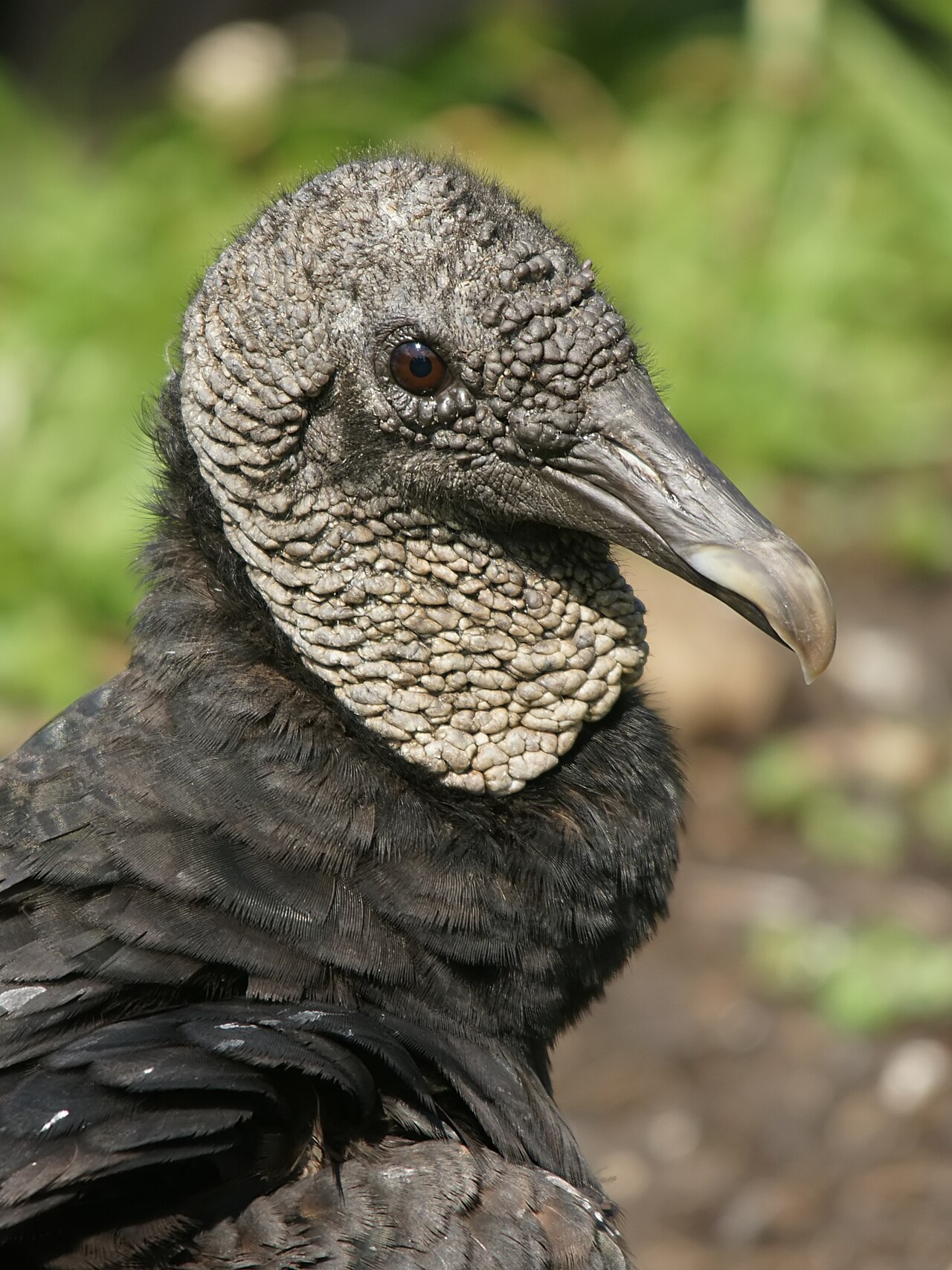
Seeing a vulture spiritually signals purification and the close of a cycle. The common reading is that something has ended and needs clearing rather than reviving. Colors reported in search terms, black, brown, red or white vultures, reflect normal age differences in turkey vultures or separate species, and traditions do not assign them separate meanings.
What does the word “vulture bird” mean?
Vulture refers to about 23 species of large scavenging birds in two unrelated groups: New World vultures including the turkey vulture and condors, and Old World vultures of Africa, Europe and Asia. The two groups look alike because of convergent evolution, not shared ancestry. Buzzard is the common American nickname for the turkey vulture.
How rare is it to see a turkey vulture?
Not rare at all. The turkey vulture is one of the most widespread birds in the Americas, with a population estimated in the millions and a range from southern Canada to Tierra del Fuego. In most of the lower 48 states you can see one over a highway on almost any warm afternoon.
Do turkey vultures recognize humans?
Turkey vultures do learn to recognize individual people and vehicles, particularly at roosts and rehabilitation centers where the same keepers appear daily. Captive birds greet familiar handlers and avoid strangers. In the wild they mainly learn places and routines rather than faces, including which roads reliably produce food.
Would a turkey vulture pick up a small dog?
No. A turkey vulture cannot carry prey in its feet; its talons are blunt and built for walking, not gripping, and it has no capacity to lift a dog. Turkey vultures almost never kill living animals. Reports of birds carrying off pets involve large eagles, and even those are uncommon.
Are turkey vultures friendly?
Turkey vultures are not aggressive toward people and will not attack. Cornered birds defend themselves by vomiting, which is effective and memorable. Hand raised individuals in education programs are often described as curious and gentle, but wild birds keep their distance and should be left to do so.