Blue Dragonfly Symbolism: What It Means When One Visits
A blue dragonfly hovering close at a meaningful moment is hard to ignore. Blue dragonflies are a familiar summer sight near ponds across the US, and blue dragonfly symbolism adds its own message to the dragonfly’s old theme of change.
Japan, several Native American nations and old European and Celtic folklore each saw the dragonfly in their own way, and the old European view was far darker than the gentle modern one.
A blue dragonfly stands for calm, clarity and honest communication. When one visits, it is a positive sign that a change is underway and that you can meet it with a clear head and an honest voice. After a loss, it is read as a greeting from a loved one who is at peace.
What Does a Blue Dragonfly Symbolize?
Blue adds calm to the dragonfly’s core theme of change, along with clarity and honest speech. Dragonfly symbolism in general is about transformation. Blue slows that message down. Change is coming, and you can meet it with a level head.
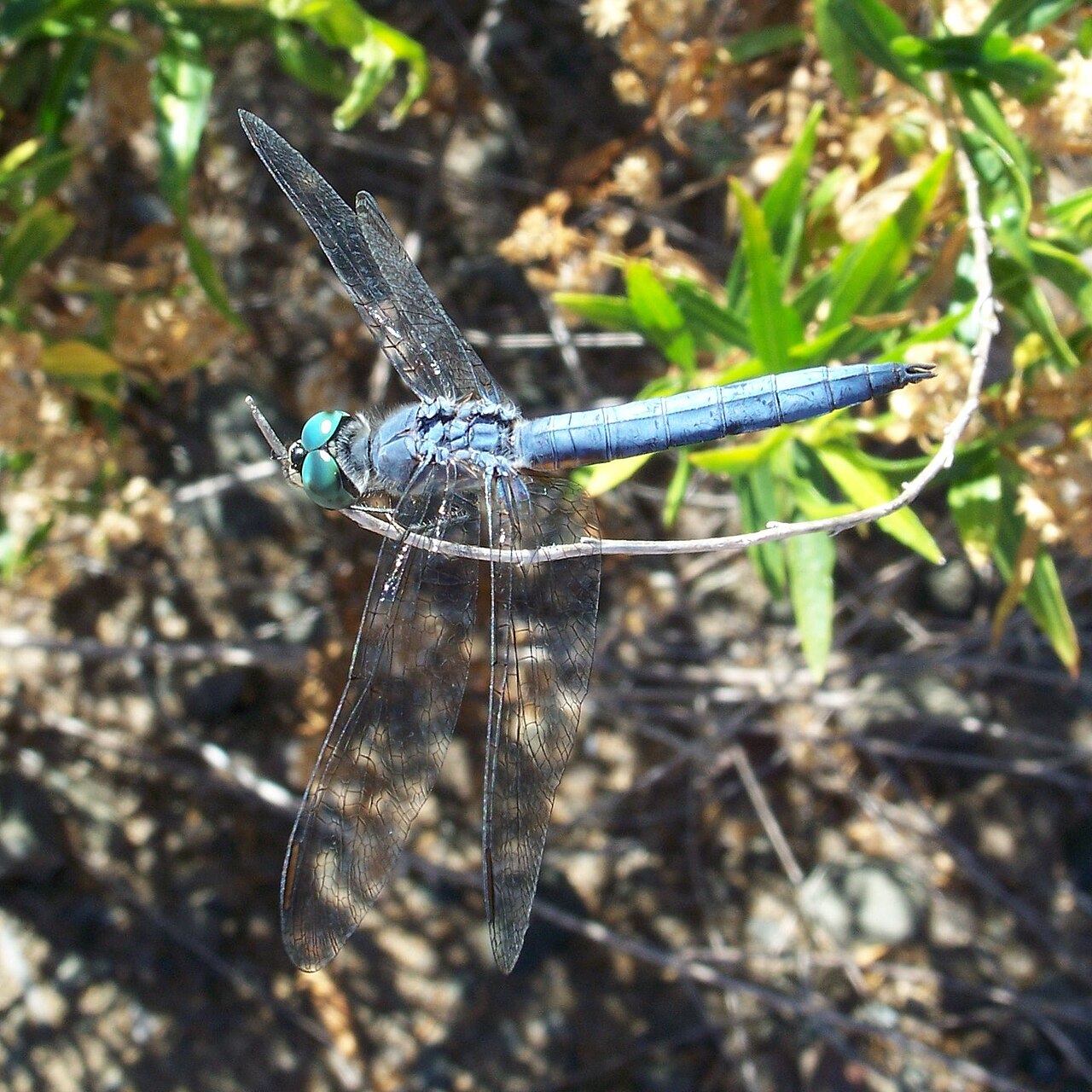
A blue dragonfly also asks you to see a situation as it is, not as you fear it might be. The blue dasher (Pachydiplax longipennis), a powder blue skimmer found at ponds across most of the US, fits the idea well. It perches in the open and watches everything around it.
In the modern chakra system, blue is the color of the throat chakra, the energy center tied to voice and self expression. A blue dragonfly therefore points to a conversation you have been avoiding. Shade matters as well. Light blue carries a gentler message of peace and emotional balance, while deep blue points to intuition and depth.
The Blue Dragonfly as Spirit Animal and Totem
As a spirit animal, the blue dragonfly stands for transformation and life in the present moment. A dragonfly hovers and changes direction in an instant, all without wasted motion. It also stands for illusion, because its wings and body shift color as the light changes. The blue version adds the reminder to stay calm while everything moves.
Water ties the whole reading together. A dragonfly begins life underwater and climbs a reed to reach the air, so it bridges the world of emotions and the bright surface where everyone can see you. People who carry the blue dragonfly as a totem adapt fast. They sense the mood in a room before anyone speaks.
The totem has a shadow side. Restlessness is the first risk, a habit of darting from plan to plan without ever landing. The second is avoiding depth, keeping every conversation light so nobody sees what sits under the surface. The blue dragonfly asks you to dive back into the water now and then.
Seeing a Blue Dragonfly: Sign, Omen or Message?
Most modern readings treat a blue dragonfly visit as a positive omen, not a warning. It points to a change that is already underway and tells you to meet it with a clear head. Joy and lightness come with it. A visit on a hard day is a nudge to drop your shoulders and breathe.
Repeated sightings carry more weight. When a blue dragonfly turns up day after day, it marks a decision you keep postponing. Act on the change you already know you need to make. A dragonfly landing on you is the most personal version of the message, a direct invitation to trust the moment.
Biology explains the timing. Dragonflies appear suddenly on warm, sunny days, near water, and wherever small insects swarm in the air. A new pond, a wet spring or a mosquito hatch brings them in numbers.
Where You See It: Home, Garden, Window and Dreams
The place where a blue dragonfly appears shapes its message. Indoors it speaks about home, outdoors about growth, and at a threshold about news. Dreams add their own layer.
In the House A blue dragonfly in the house is a message about home and family. It asks for honesty about the emotional climate under your roof. If tension has been building, now is the time for a calm conversation.
In the Garden or at a Pond In the garden or at a pond, a blue dragonfly signals renewal and a healthy, settled phase. Baby dragonflies, called nymphs, grow up underwater, so a garden pond with plants draws adults back every summer to hunt and lay eggs. A visit means your space is alive and in balance.
At the Window A blue dragonfly at the window marks a threshold. News is on its way, or a decision is about to arrive. Keep your mind clear so you see it for what it is.
In a Dream A blue dragonfly in a dream points to emotions rising to the surface. It follows a stretch of confusion and signals clarity ahead.
Blue Dragonfly Meaning in Love and Relationships
In love, a blue dragonfly asks for honest conversation. Blue is the color of speech, so the message is to say what you really feel instead of hinting at it.
It also asks you to let go of an illusion. Sometimes the illusion is about a partner, and sometimes about a crush who never matched the picture in your head. The dragonfly has eyes that wrap around its head. Use that wide view and look at the person, not the story.
Dragonflies pair up in tandem flight, the male holding the female as the two fly as one. Some people read a tandem pair as a sign of partnership and harmony. For singles, the blue dragonfly brings lightness. Stay open and let a connection come without forcing it.
Blue Dragonfly After a Death: Grief and Remembrance
After a death, many people read a blue dragonfly as a visit or greeting from a loved one. Grieving people describe a dragonfly that hovers close or returns to the same spot for days. The calm blue adds its own comfort, a sense that the person you lost is at peace.
The grief parable of the water bugs and the dragonfly carries this idea to children. A colony of water bugs watches its members climb a stem and vanish above the surface, and none ever returns. One finally climbs, becomes a dragonfly and finds it cannot pass back through the water to explain. Doris Stickney retold the story in her book Water Bugs and Dragonflies, written to explain death to young children.
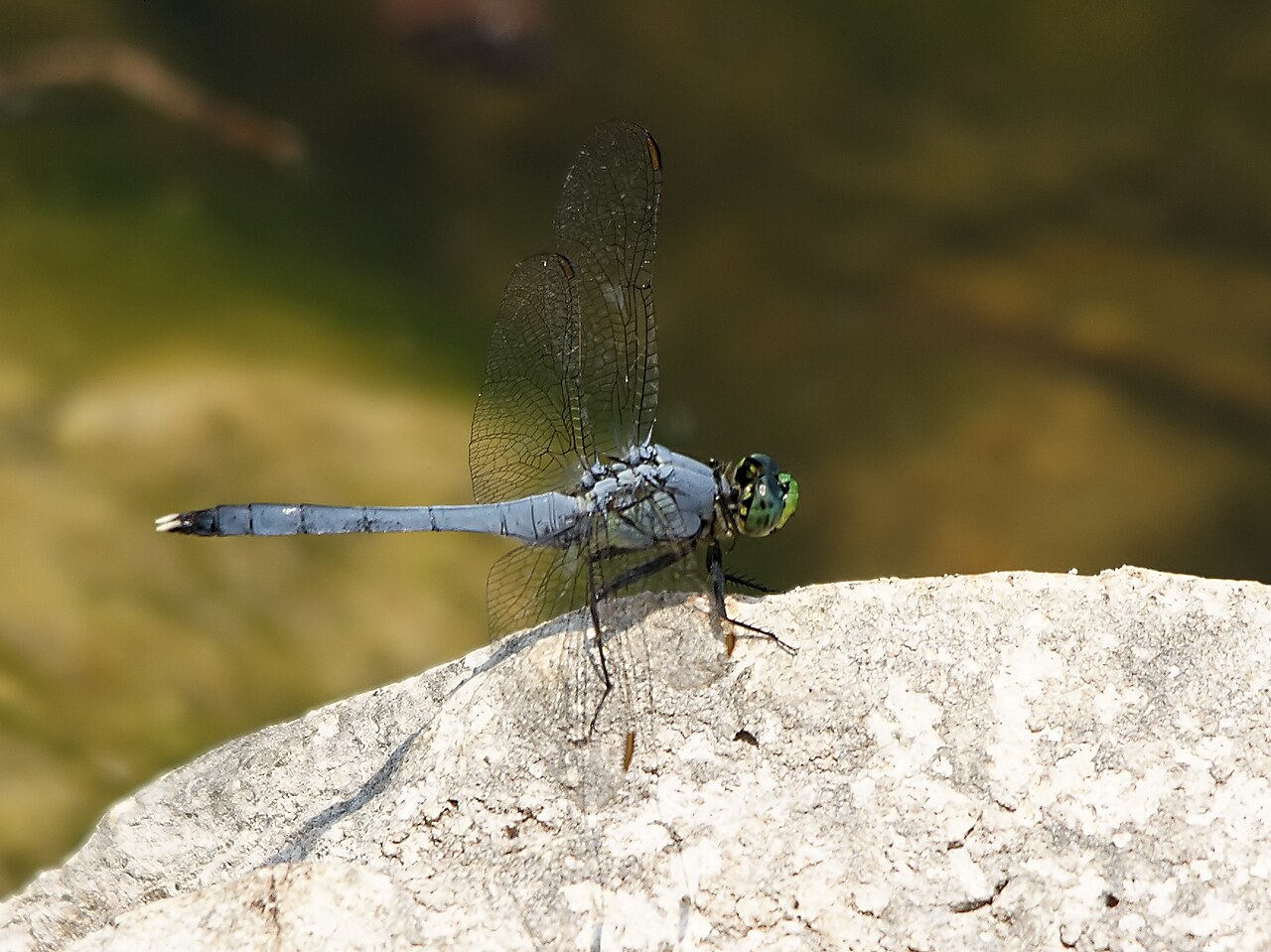
Dragonflies appear on memorial cards and keepsake jewelry for the same reason. A memorial garden with a small pond invites real ones to return. The male eastern pondhawk (Erythemis simplicicollis), pale blue and fond of resting low on leaves, is a frequent guest at such ponds in the East.
Is a Blue Dragonfly a Sign From God or Angels?
Scripture names no dragonfly, yet Christian readers link it to resurrection and new life. The insect leaves the water, splits its old skin and rises into the air in a new body. That change mirrors Paul’s language of a new, raised body in 1 Corinthians 15. A blue dragonfly at a hard moment becomes a reminder that death is not the last word.
As an angel sign, the blue dragonfly arrives in answer to prayer. People who pray for comfort or reassurance and then see one take it as the reply. Blue adds peace to that message. It says you are heard and you can rest. Blue butterflies carry the same angel reading of comfort after loss.
Dragonfly Symbolism in Japan
Japan holds the dragonfly in high honor. Akitsushima, meaning dragonfly island, is an old poetic name for the country, recorded in the Nihon Shoki chronicle. The name comes from a legend in which Emperor Jimmu looked over the land from a hill and compared its shape to dragonflies.
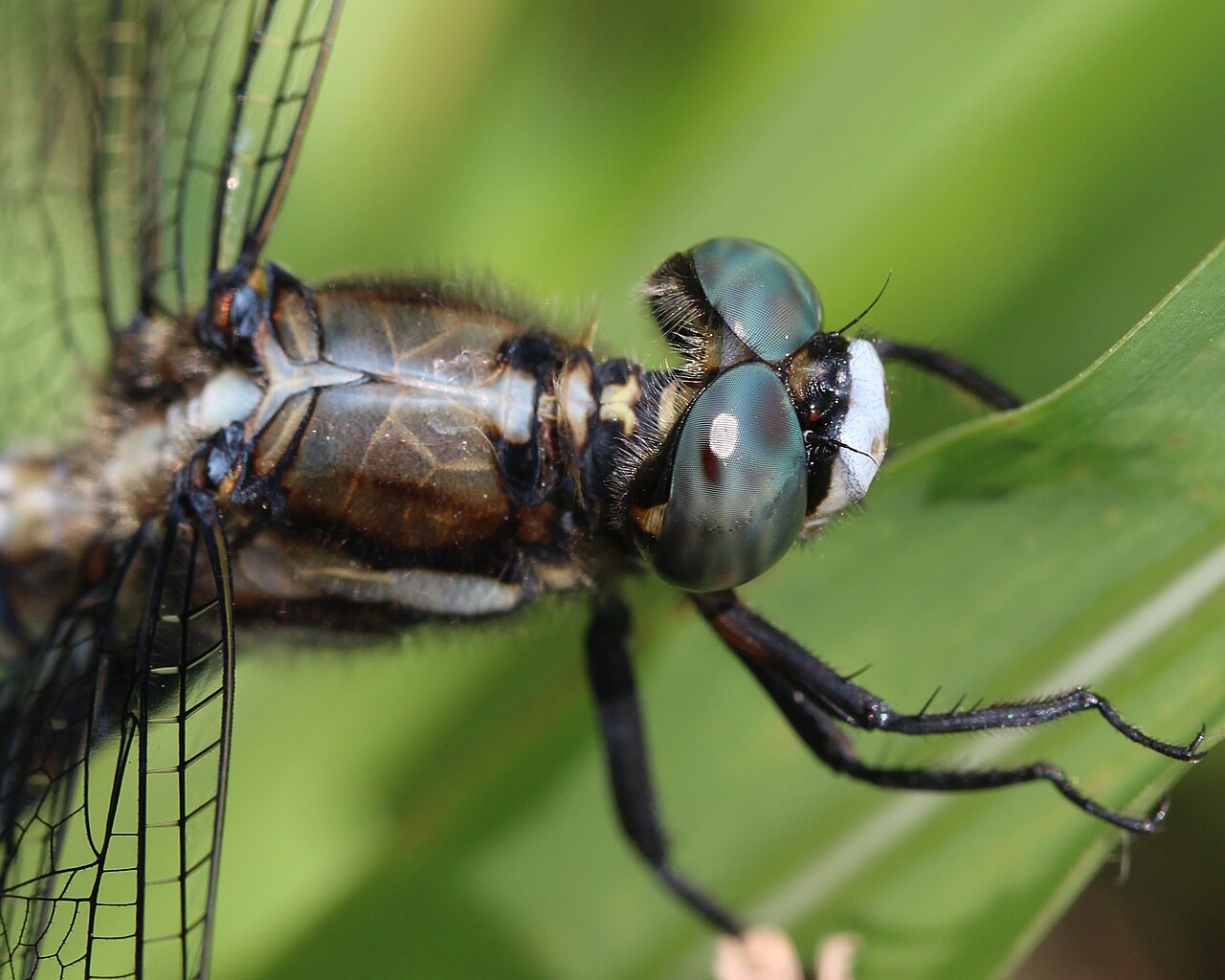
Samurai called the dragonfly kachimushi, the victory insect. It darts forward and never seems to retreat, so warriors wore it on helmets and sword fittings as a charm for courage.
Red dragonflies belong to autumn in Japan and connect to ancestors returning home. For a blue example, look to the shiokara tombo (Orthetrum albistylum speciosum), a blue grey skimmer common over rice fields. Its name echoes shiokara, a Japanese salted seafood dish. The usual explanation is the white powder that covers mature males.
Native American Dragonfly Meanings
Native American dragonfly meanings differ by nation. In Navajo tradition the dragonfly is a symbol of pure water, and the motif turns up in Southwestern art and jewelry.
The Zuni use the dragonfly as a motif on pottery, where it sits beside water and rain imagery. In Hopi rock art and on Pueblo necklaces, the dragonfly is often shown in a stylized double barred cross form.
Zuni tradition gives renewal its own story. In a tale recorded by Frank Hamilton Cushing in Zuñi Folk Tales (1901), two children left behind during a famine make a toy from a cornstalk, it comes alive as a dragonfly and brings back the blessing of the Corn Maidens, so the harvest returns.
European and Celtic Folklore and the Old Wives’ Tale
The old wives’ tale calls the dragonfly the devil’s darning needle, sent to sew shut the lips of liars and children who talk back. The name is recorded in English by the early 1800s and was long common in North America, where parents used it to keep children quiet. Some versions have it sewing up ears or eyes as well.
Other English folk names cast it as a threat. Horse stinger is the best known, even though the insect cannot sting. Celtic languages tie it to snakes and needles. In Welsh it is gwas y neidr, the adder’s servant, and in Irish snáthaid mhór, the big needle. In Swedish folklore the devil uses the dragonfly to weigh souls.
The gentle blue meaning of calm and clarity is modern, while the old European view is dark and full of fear. The emperor dragonfly (Anax imperator), a large bright blue hawker over European ponds, shows how far the image has traveled, from the devil’s needle to a symbol of peace.
Blue vs Other Dragonfly Colors
Blue calms and clarifies, while red energizes and connects to ancestors. Every color shifts the dragonfly’s message of change. Blue tells you to move through it with a clear head and an honest voice. Red tells you to act with passion and remember where you came from.
Green dragonflies stand for growth and health. Purple dragonflies point to intuition and spiritual insight. Mixed blue and green bodies, like the male common green darner (Anax junius) with its green thorax and blue abdomen, combine healing with honest speech.
| Shade of blue | Example species | Where you see it | Modern reading |
|---|---|---|---|
| Powder blue | Blue dasher (Pachydiplax longipennis) | Ponds across most of the US | Calm and clarity |
| Pale blue | Eastern pondhawk (Erythemis simplicicollis) | Ponds in the eastern US | Peace after loss |
| Bright blue | Emperor (Anax imperator) | Ponds in Europe, North Africa and Asia | Truth and confidence |
| Deep slate blue | Slaty skimmer (Libellula incesta) | Ponds in the eastern US | Intuition and depth |
| Banded blue and black | Common blue damselfly (Enallagma cyathigerum) | Lakes in northern Europe, Asia and North America | Balance |
| Blue and green | Common green darner (Anax junius) | Across North America | Healing and honest speech |
Why Dragonflies Look Blue and How Rare They Are
Blue dragonflies are common, not rare, near still water in summer. Blue dragonfly species such as the blue dasher patrol ponds and slow streams across much of the US. A sunny afternoon at the right pond shows several at once. What stands out is how the blue is made. In most species it comes from wax or tiny structures, not from a blue pigment.
Skimmers like the blue dasher and the eastern pondhawk get their blue from a wax coating called pruinescence. Mature males exude a fine powdery layer over a darker body, and the wax reflects pale blue light. Darners and many damselflies make structural blue instead. Closely packed nanospheres in cells under the cuticle scatter blue light. The blue often fades after death, as many dragonfly colors do.
Dragonfly or Damselfly: Odonata and Giant Ancestors
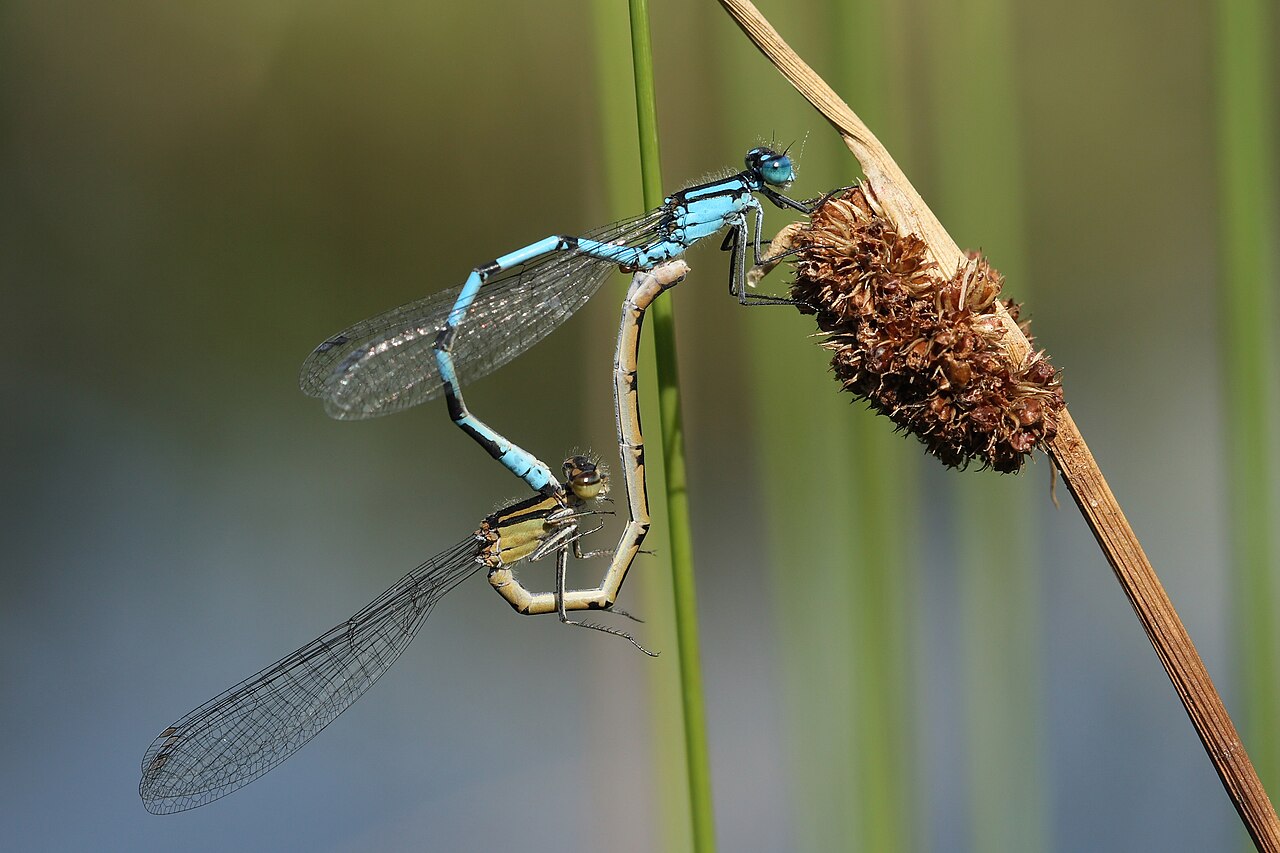
The common blue damselfly (Enallagma cyathigerum) shows the difference between the two groups. Most damselflies fold their wings along the body at rest, while dragonflies typically hold them flat and open. Featured Creatures, the University of Florida’s insect fact sheets, help with comparing species found in the Southeast.
Dragonflies (Anisoptera) and damselflies (Zygoptera) together form the order Odonata, with about 6,000 species worldwide. Their giant relatives, the griffinflies such as Meganeura, hunted about 300 million years ago with wingspans of up to about 28 in.
Frequently Asked Questions
What are the four animals of God?
The four living creatures in Ezekiel 1:10 have the faces of a man, a lion, an ox and an eagle. Revelation 4:7 repeats the image, and Christian art later linked the four to the Gospel writers Matthew, Mark, Luke and John. No dragonfly appears among them.
Do blue dragonflies stay blue all their lives?
No. Male blue dashers and eastern pondhawks emerge brown or green and turn blue only as their wax coat builds up within a few weeks of emerging. Most female eastern pondhawks stay green for life.
What does it mean when a dragonfly follows you?
A blue dragonfly that keeps pace with you signals company on a path of change and a push to keep moving forward. It also uses you as a beater, snatching the small insects your steps flush from the grass.
Why do dragonflies gather in swarms?
Some dragonflies gather in swarms to migrate. The common green darner travels north in spring and south in autumn across eastern North America, sometimes in loose groups of thousands. Spiritually, a swarm signals abundance and a change shared with others.
What is the rarest dragonfly color?
Purple and pink are the rarest dragonfly colors in North America. The roseate skimmer (Orthemis ferruginea) of the southern US is one of the few species whose mature males turn pinkish purple. Blue, red, green and brown are the common colors.
What does a dragonfly mean in feng shui?
In feng shui, the dragonfly stands for prosperity and new beginnings. Practitioners place dragonfly motifs on art or wind chimes to invite fresh energy into a home. A blue dragonfly motif adds the calm of the water element, which feng shui links to blue and black.
Explore more: Insect Spiritual Meanings: 15 Bugs and What They Signal