Tetra Fish: How Many to Keep, Cost and 6 Best Types
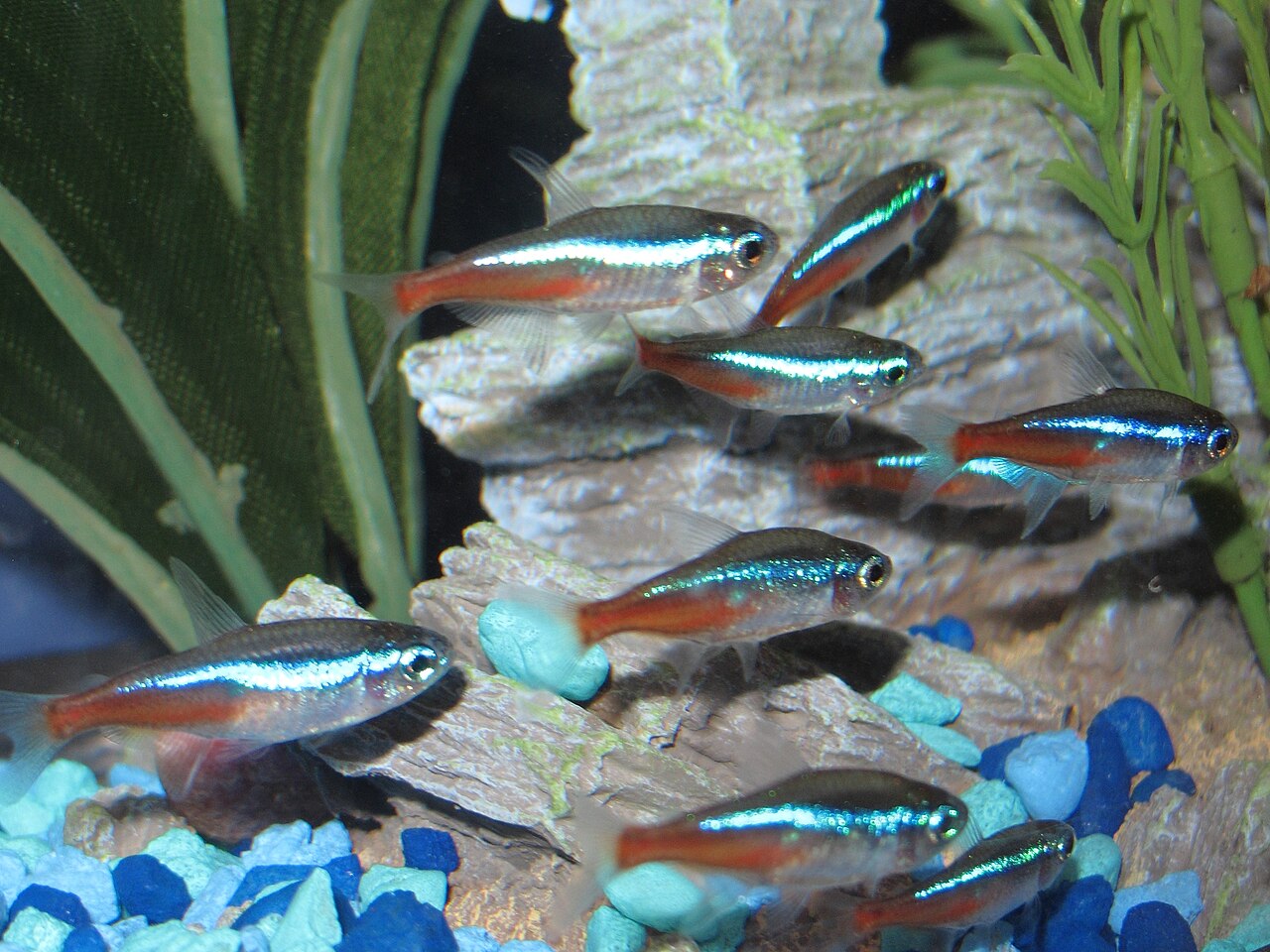
Tetra fish are small schooling freshwater fish from South America and Africa, and most species need a group of at least six to behave normally. Neon tetras (Paracheirodon innesi) cost about $2 to $4 each in US shops, which makes them one of the cheapest aquarium fish sold.
Buy one alone and it hides, pales and stops eating. Buy eight and the same fish becomes a moving band of color across the middle of the tank. That gap is why some keepers call tetras easy and others call them fragile.
Keep tetra fish in schools of six or more in a tank of at least 10 gallons, with soft, slightly acidic water at 72 to 78 F. Most species live 3 to 5 years and eat a small pinch of flake once or twice a day. Neon, ember and black skirt tetras are the best starter choices.
| Species | Adult size | Min. school | Tank | Price |
|---|---|---|---|---|
| Neon tetra (Paracheirodon innesi) | 1.5 in (4 cm) | 6 | 10 gal | $2 to $4 |
| Cardinal tetra (Paracheirodon axelrodi) | 2 in (5 cm) | 6 | 15 gal | $4 to $7 |
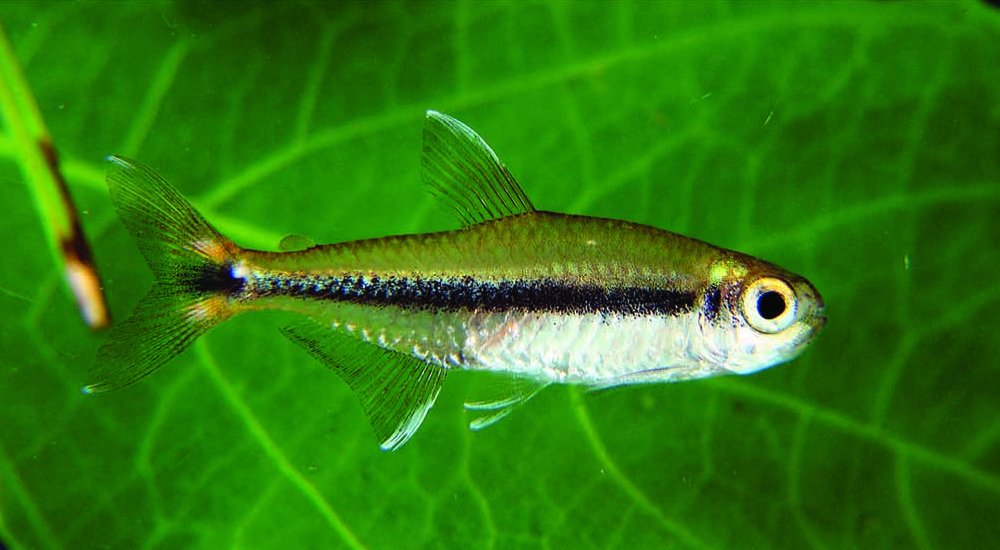
| Ember tetra (Hyphessobrycon amandae) | 0.8 in (2 cm) | 8 | 10 gal | $3 to $5 |
| Black skirt tetra (Gymnocorymbus ternetzi) | 2.5 in (6 cm) | 6 | 20 gal | $3 to $5 |
| Rummy nose tetra (Hemigrammus rhodostomus) | 2 in (5 cm) | 8 | 20 gal | $5 to $8 |
| Congo tetra (Phenacogrammus interruptus) | 3 in (8 cm) | 6 | 30 gal | $8 to $12 |
How Many Tetras Should You Keep Together?
Six is the working minimum and eight to twelve is where the behavior gets interesting. Tetras use the school to judge safety, so three fish hide in the plants while ten spread out and feed in open water. A dozen ember or neon tetras read as one shimmering mass.
Stock one species in numbers rather than one of each. Mixed singles do not school together, and the odd fish out is the one that gets nipped. In a 10 gallon tank, eight small tetras and nothing else beats four tetras plus a molly and a snail.
Are Tetras a Good Beginner Fish?
Yes, for the second tank rather than the first week. Tetras tolerate a wide range of water chemistry once settled, accept dry food without complaint, and never outgrow a standard aquarium the way a goldfish or koi does.
The catch is timing. Tetras are sensitive to ammonia and nitrite, which spike in a tank that has not finished cycling. Run the filter with a source of ammonia for three to six weeks first, then add the school, a habit most keepers pick up from their first betta.
Why Are Tetras So Hard to Keep?
The reputation comes from two specific problems. The first is neon tetra disease, an untreatable parasite (Pleistophora hyphessobryconis) that shows as a pale patch along the spine and a bending body. Remove infected fish, because the parasite spreads when tank mates eat the carcass.
The second is stock quality. Mass bred neons often arrive weakened, which is why a batch sometimes dies in two weeks while the survivors live for years. Cardinal tetras prove tougher despite costing more. Skip any shop group with a clamped or curved fish in it.
Tetra Fish Types, Colors and Price
More than 150 tetra species reach the trade, and the color falls into three camps: the blue and red striped group (neon, cardinal, green neon), the orange to red group (ember, serpae, rosy) and the monochrome group (black skirt, penguin, black neon), which is the sturdiest of the three.
Price tracks rarity, not difficulty. Common neons cost the price of a coffee while wild caught and long finned variants reach $15 or more per fish. A full school for a 10 gallon tank runs about $25, less than the food and filter you buy alongside it. Native ranges for these species are documented by the Smithsonian National Zoo.
Frequently Asked Questions
How long will tetra fish live?
Most tetras live 3 to 5 years, and cardinal tetras sometimes reach 7. Lifespan depends more on water quality than on species: swinging temperature and nitrate buildup cut a tetra’s life to a year or less. Steady temperature matters more than any supplement.
Do tetra fish need to be fed every day?
Feed once a day, six days a week, as much as the school clears in about 30 seconds. Tetras have tiny stomachs and uneaten flake is the fastest route to bad water. Adults handle a skipped day easily, and a weekly fast day is common practice.
What is the cheapest tetra fish to own?
The neon tetra, at roughly $2 to $4 per fish, followed by the black skirt and serpae tetra. Running cost stays low too: a 10 gallon tank with a sponge filter and eight fish costs a few dollars a month in electricity and food combined.
Can tetras live with bettas?
Sometimes, with the right species and space. Larger, faster tetras such as black skirt or rummy nose in a 20 gallon tank usually coexist with a calm betta, while long finned halfmoon bettas are easy targets for fin nipping. Neons in a small tank is the pairing that most often ends badly.