Water Snake vs Cottonmouth: Tell Them Apart in Two Seconds
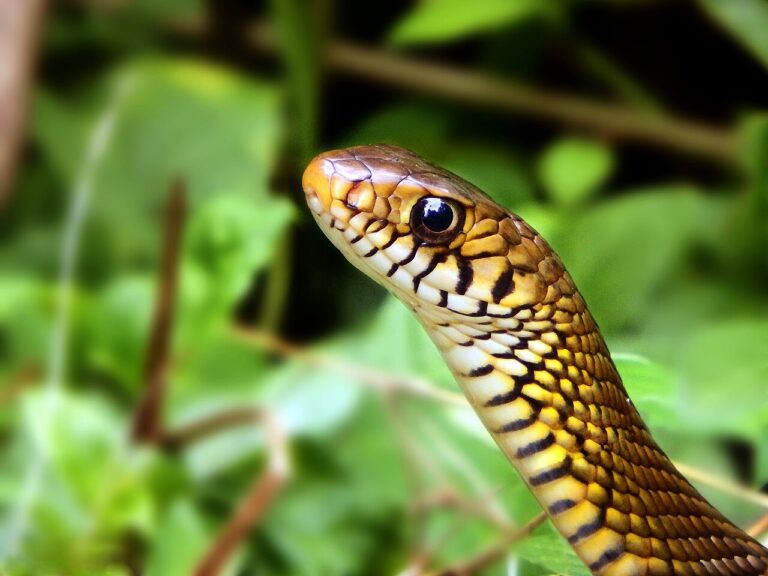
A water snake is any of about ten thick bodied, non venomous North American snakes in the genus Nerodia, and almost every one of them gets killed at some point for being a cottonmouth. They swim with the head low, bask on branches over water, eat fish and frogs, and bite hard when grabbed without injecting anything.
The useful question is never what the snake is called but whether it can hurt you. Two field marks answer that from a safe distance, and they work on every species in the group.
Water snakes in the genus Nerodia are not venomous. They have round pupils, no facial heat pits, and a head barely wider than the neck. The venomous lookalike, the cottonmouth, has slit pupils, a pit between eye and nostril, and a blocky triangular head. Both swim; only the cottonmouth rides high on the surface.
| Species | Where | Adult length | Venomous |
|---|---|---|---|
| Common or northern watersnake (Nerodia sipedon) | Northeast, Midwest, upper South | 24 to 42 in (61 to 107 cm) | No |
| Banded watersnake (Nerodia fasciata) | Southeast coastal plain | 24 to 42 in (61 to 107 cm) | No |
| Brown watersnake (Nerodia taxispilota) | Southeast rivers | 30 to 60 in (76 to 152 cm) | No |
| Diamondback watersnake (Nerodia rhombifer) | Mississippi valley, Texas | 30 to 48 in (76 to 122 cm) | No |
| Plainbelly watersnake (Nerodia erythrogaster) | South and central US | 24 to 48 in (61 to 122 cm) | No |
| Cottonmouth (Agkistrodon piscivorus) | Southeast | 24 to 48 in (61 to 122 cm) | Yes |
Are Water Snakes Usually Poisonous?
No water snake in North America is poisonous or venomous. They kill prey by grabbing and swallowing it, not by envenomating it, and they have no fangs or venom glands. People use poisonous when they mean venomous; for Nerodia both answers are the same.
The confusion is worth taking seriously anyway, because the cottonmouth shares the same ponds and is genuinely dangerous. Learning the difference protects you and spares a harmless species, the same way the coral snake rhyme sorts banded snakes in the Southeast.
How to Tell a Water Snake From a Cottonmouth

Watch how it swims. A water snake swims with most of the body underwater and only the head and a little neck showing. A cottonmouth floats high, body buoyant on the surface, head raised at an angle.
Then look at the face. Water snakes have round pupils and no loreal pit; cottonmouths have vertical pupils, a pit between eye and nostril, and a broad dark eye mask outlined in pale scales. A cornered water snake flattens its head into a triangle, so shape alone is not enough.
What Happens If a Water Snake Bites You?
You bleed. Water snake saliva carries a mild anticoagulant, so a shallow bite weeps far longer than the injury deserves, and the teeth leave curved rows of scratches rather than two punctures. Wash it, press on it, cover it, and check your tetanus status.
There is no swelling, no numbness, and no antivenom. If a bite does swell or discolor over the following hour, the snake was a pit viper and the situation is an emergency room visit, not a first aid kit.
Where Water Snakes Live and What They Eat
Every species stays close to water: rivers, swamps, farm ponds, ditches, reservoirs, and retention basins. They hunt fish, frogs, tadpoles, and salamanders, often working the shallow edges where prey concentrates, and they bask on overhanging limbs, docks, and rip rap.
Northern watersnakes released in California are now tracked as an invasive species by the state, which publishes the details at wildlife.ca.gov. In the Deep South, warm winters mean they never fully hibernate, while northern populations den from late fall to spring.
Are Water Snakes Good to Have Around?
Yes. They take slow and sick fish, keep frog numbers in check, and feed herons, otters, bass, and kingsnakes in turn. They are protected as non game wildlife in several states, and killing one at close range is how people get bitten by the venomous species they thought they were dealing with.
If you want fewer of them on a specific dock, cut the overhanging brush, clear the debris piles, and stop dumping fish waste. Repellent granules and mothballs do nothing. For the species most commonly reported in southeastern yards, see our guide to the banded water snake, and for the heaviest bodied of the group, the diamondback water snake.
Frequently Asked Questions
What smell will keep snakes away?
None reliably. Mothballs, sulfur, ammonia, garlic, and commercial granules have all failed in controlled tests, and mothballs are illegal to use that way in many states. Habitat changes work: short grass, no rodent food, no debris piles, and sealed gaps under sheds and decks.
What personality is a water snake?
That phrase comes from the Chinese zodiac, where a Water Snake year describes someone thought to be perceptive and reserved. The animal itself has no personality traits beyond a strong flight response and a willingness to bite when restrained. Individuals vary; wild caught adults rarely calm down.
What is the most aggressive snake towards humans?
No North American snake is aggressive toward people in the sense of seeking them out. Cottonmouths stand their ground and gape rather than flee, which reads as aggression. Water snakes flee, and a snake that seems to charge is simply heading for the water you are standing in front of.
What is the friendliest snake to own?
The corn snake, by a wide margin. It is captive bred, docile, eats frozen rodents, and tolerates handling for years, which is everything a wild caught water snake is not. Our overview of the corn snake covers care and temperament, and garter snakes come second for the same reasons.