Backyard Birds of New York: 15 Common Species (2026 Identification Guide)
New York State’s backyard bird community reflects a true four-season cycle of dramatic change. From the Adirondacks’ boreal forests to Long Island’s coastal scrub to urban Brooklyn’s surprising species, New York yards host 50+ regular species year-round, plus a complete turnover of migrants twice annually. The state’s position on the Atlantic Flyway makes it one of the best migration-watching locations in North America, millions of birds funnel through New York yards each spring and fall. This guide covers the 15 most common backyard birds across New York with their seasonal patterns, regional ranges, and attraction strategies for the state’s distinct climate zones (NYC vs Adirondacks vs Finger Lakes vs Long Island).
Quick Reference: 15 Common Backyard Birds of New York
| Species | Size | Key ID Feature | When in NY |
|---|---|---|---|
| Black-Capped Chickadee | 5.25″ | Black cap + white cheeks + black bib | Year-round |
| American Goldfinch | 5″ | All yellow (summer male) + black wings | Year-round |
| Northern Cardinal | 8.5″ | All red (male) + crest + black face mask | Year-round |
| Blue Jay | 11″ | Blue crest + black necklace + white below | Year-round |
| Dark-Eyed Junco | 6″ | Slate-gray + white belly + pink bill | Winter (Oct-Apr) |
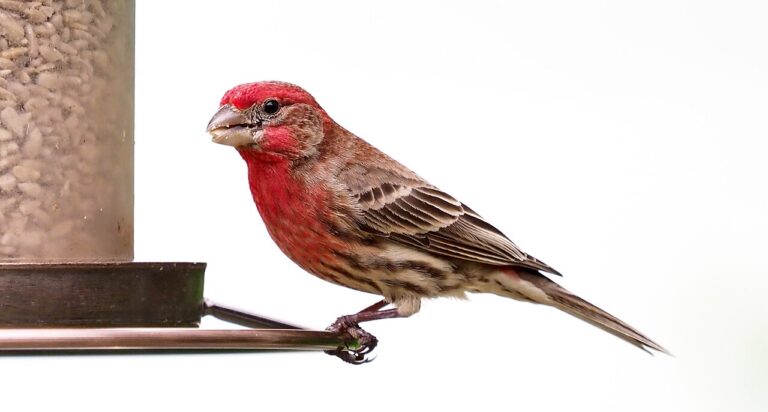
| House Finch | 5.5″ | Red head/breast (male) + streaky belly | Year-round |
| Mourning Dove | 12″ | Tan + long pointed tail + small head | Year-round |
| Tufted Titmouse | 6.5″ | Gray crest + buff flanks + black eye | Year-round |
| White-Breasted Nuthatch | 5.75″ | Gray back + black cap + walks down trees | Year-round |
| Downy Woodpecker | 6.75″ | Small + short bill + checkered wings | Year-round |
| House Sparrow | 6.25″ | Gray crown + black bib (male) | Year-round |
| Common Grackle | 12.5″ | Iridescent + keel tail + yellow eye | March-November |
| Red-Winged Blackbird | 8.5″ | Black + red shoulder patch (male) | March-November |
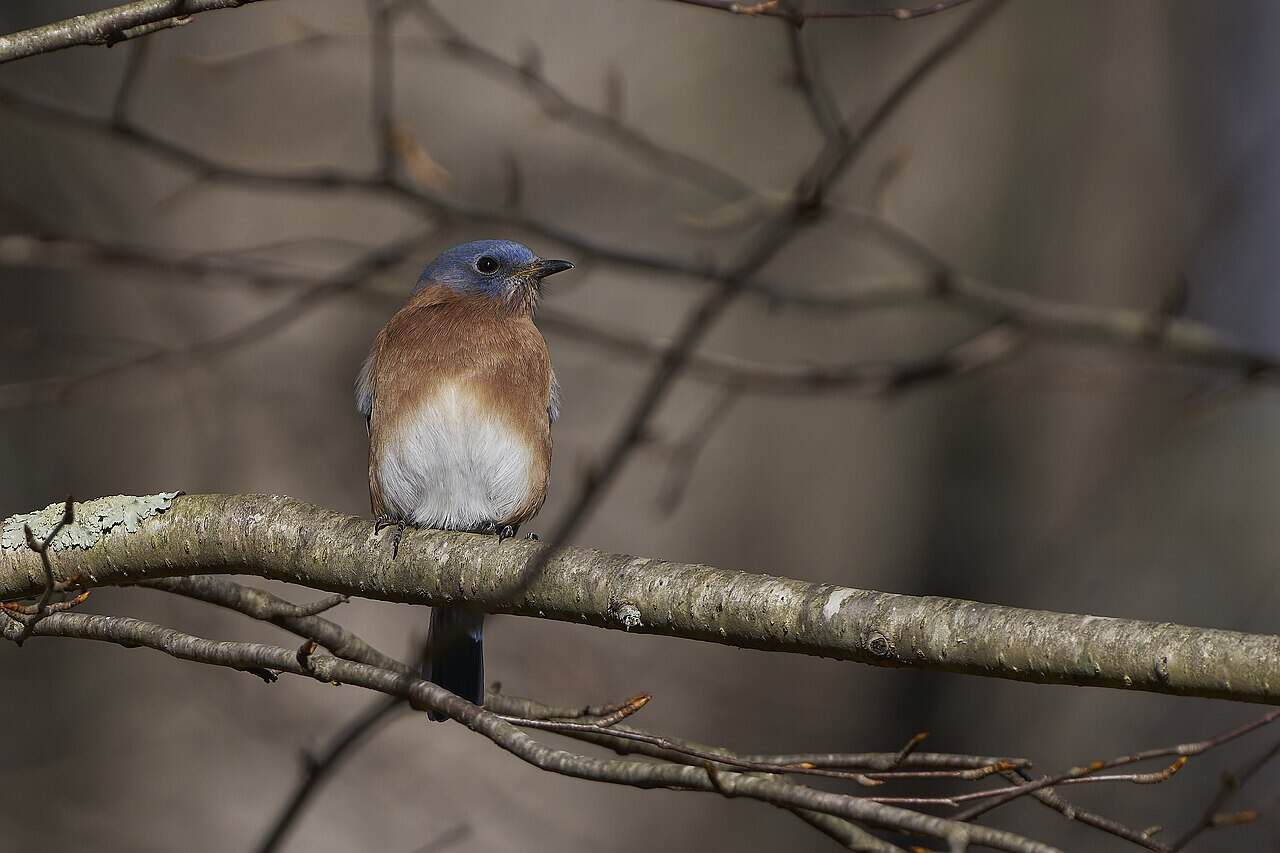
| Eastern Bluebird (state bird) | 7″ | Blue back + rust breast + white belly | Year-round (most areas) |
| American Robin | 10″ | Rust-orange breast + gray-brown back | Year-round |
Species Identification
Eastern Bluebird (State Bird)
New York’s official state bird, designated in 1970. Male Eastern Bluebirds have brilliant royal-blue heads and backs, rust-orange throats and breasts, and clean white bellies. Females are paler with brown-blue tints. Once severely declining due to nest box competition with introduced species (House Sparrows, European Starlings), Eastern Bluebird populations have rebounded through extensive nest box programs.
Range in New York: Statewide year-round in most areas. Some northern populations migrate south during severe winters.
Habitat: Open habitat with scattered trees, pastures, golf courses, parks, suburbs with old trees.
Key ID: Bright blue back + rust-orange breast + clean white belly. Eastern (not Western) form has white belly.
Where to see: Install NABS-approved bluebird nest boxes on poles in open areas. Provide mealworms (live or freeze-dried). Plant native berry-producing shrubs like Eastern Red Cedar, Winterberry Holly.
Black-Capped Chickadee
New York’s most beloved year-round small bird. Black-Capped Chickadees have a distinctive black cap, black bib (throat), white cheeks, gray back and wings, and buffy flanks. Their cheerful ‘chick-a-dee-dee-dee’ call is the soundtrack of New York winters. Often the bravest and most active species at feeders during cold weather.
Range in New York: Statewide year-round.
Habitat: Forests, parks, suburban yards, mature trees.
Key ID: Black cap + black bib + white cheeks + small size. The classic ‘chickadee’ look.
Where to see: Common at backyard feeders. Will eat sunflower seed, peanuts, and suet. Will use small nest boxes (1.125 inch hole).
Northern Cardinal
New York’s iconic red bird. Male Northern Cardinals are brilliant red overall with a pointed red crest, black face mask, and thick orange-red bill. Females are tan-brown with red highlights. Cardinals have expanded their range north over the past century, once unknown in much of New York, now common throughout the state including New York City.
Range in New York: Statewide year-round (more abundant in southern New York).
Habitat: Yards with shrubby cover, parks, woodland edges, urban areas with brush.
Key ID: Brilliant red (male) or tan-brown with red highlights (female) + pointed crest + black face mask + thick orange-red bill.
Where to see: Hopper or platform feeders with sunflower or safflower seed. Cardinals need perching surfaces and prefer dawn/dusk feeding. Native shrubs for nesting cover.
Blue Jay
New York’s familiar crested blue bird. Blue Jays have bright blue heads, wings, and backs (with black markings), white chests, and a prominent blue crest. Loud, intelligent, and dominant at feeders. They cache thousands of acorns each fall, an important factor in New York oak forest regeneration.
Range in New York: Statewide year-round.
Habitat: Forests, parks, suburban backyards with trees.
Key ID: Blue + black necklace + prominent crest + white below. The largest common blue bird in New York.
Where to see: Platform feeders with peanuts in shell, sunflower seed, and corn. Bird baths regularly. Often dominate feeders, multiple feeder stations help smaller species.
American Goldfinch
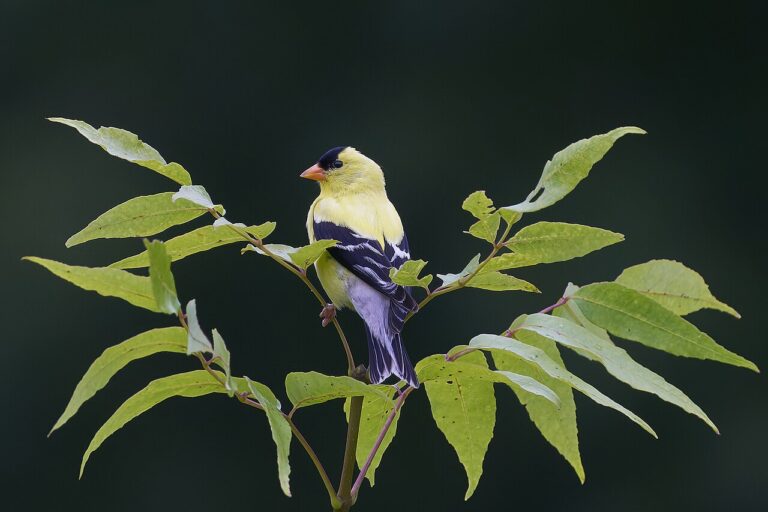
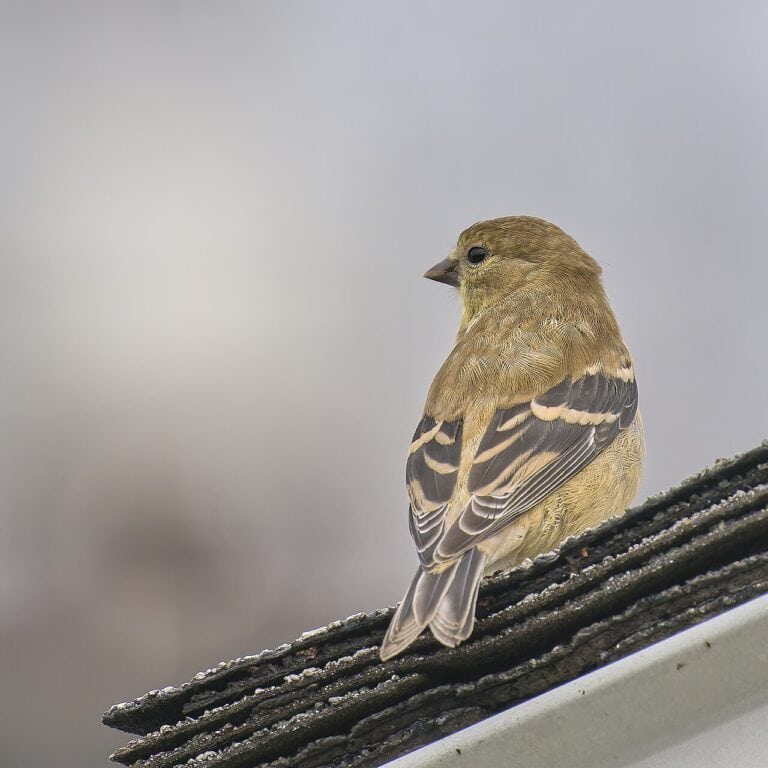
New York’s brightest summer bird. Summer male American Goldfinches are brilliant lemon-yellow overall with jet-black wings (with white wing bars) and a black cap. Females and winter birds are duller olive-brown with pale yellow. Goldfinches breed late (July-September), when most other birds are finished, to coincide with peak thistle and weed seed availability.
Range in New York: Statewide year-round.
Habitat: Open habitat with weeds, gardens, parks, suburban yards.
Key ID: Brilliant yellow (summer male) + black wings + black cap. Winter birds duller olive-brown.
Where to see: Nyjer (thistle) feeders. Will also visit sunflower feeders. Often in flocks throughout winter.
Dark-Eyed Junco
New York’s iconic winter sparrow, often called ‘snowbirds.’ New York hosts the ‘Slate-Colored’ form: uniformly slate-gray above (males darker than females), clean white belly, and a pink conical bill. White outer tail feathers flash in flight. Migrate south from northern breeding grounds for New York winters (October-April).
Range in New York: Statewide in winter; some breed in Adirondacks and higher elevations in summer.
Habitat: Forests in summer; backyards, gardens, and edges in winter.
Key ID: Slate-gray + clean white belly + pink bill + white outer tail. Ground-feeding flocks in winter yards.
Where to see: Winter feeders. Ground-feeding birds, prefer platform feeders or scattered seed. Mixed seed with millet works well.
House Finch
New York’s most common feeder finch. Male House Finches have red wash over the head, breast, and rump with brown-streaked flanks. Females are uniformly brown-streaked. Originally a Western US species, House Finches were illegally released in Long Island in the 1940s and have since spread across the entire East, including all of New York.
Range in New York: Statewide year-round.
Habitat: Urban, suburban, agricultural, anywhere with human-modified landscapes.
Key ID: Red on head/breast (male) + brown-streaked flanks. Smaller than cardinals. Conical bill.
Where to see: Tube feeders with nyjer or sunflower seed. Often in small flocks.
Mourning Dove
New York’s most widespread dove. Mourning Doves have sleek tan-brown bodies, small heads, and long pointed tails with white edges. Their distinctive whistling wing sound on takeoff is recognizable in every New York yard. Mourn-like ‘coo-coo’ call gives them their name.
Range in New York: Statewide year-round (some southward migration in severe winters).
Habitat: Open habitat, suburbs, parks, agricultural areas.
Key ID: Tan-brown + long pointed tail + small head. Whistling wing-sound in flight.
Where to see: Ground feeders or platform feeders with mixed seed, sunflower, or cracked corn. Often in pairs.
Tufted Titmouse
A range-expanding small crested bird. Tufted Titmice have clean gray back, white underparts with buff flanks, a gray crest, large black eyes, and a black forehead. Their loud ‘peter-peter-peter’ calls. Range has expanded northward dramatically over the past 50 years, once primarily a southern bird, now common throughout New York.
Range in New York: Statewide year-round, more common in southern New York.
Habitat: Mature deciduous forests, parks, suburban yards.
Key ID: Gray crest + buff flanks + black eye + small size. Distinctive crest.
Where to see: Common at backyard feeders with sunflower seed, peanuts, and suet. Often in mixed flocks with chickadees and nuthatches.
White-Breasted Nuthatch
New York’s ‘upside-down bird.’ White-Breasted Nuthatches have a blue-gray back, black cap (males) or gray cap (females), pure white face and underparts, and chestnut on the lower belly/undertail. Their distinctive habit: walking DOWN tree trunks headfirst (opposite of woodpeckers).
Range in New York: Statewide year-round.
Habitat: Mature deciduous forests, parks, mature suburban trees.
Key ID: Gray back + black/gray cap + white face + walks down trees headfirst. The descending behavior is diagnostic.
Where to see: Common at sunflower and suet feeders. Often pairs with chickadees and titmice in mixed flocks.
Downy Woodpecker
New York’s smallest and most common backyard woodpecker. Downy Woodpeckers have a clean black-and-white checkered pattern on the wings, a white back stripe, white underparts, and males have a small red patch on the back of the head. Females lack the red patch.
Range in New York: Statewide year-round.
Habitat: Forests, parks, backyards with mature trees.
Key ID: Small size (6.75 inches) + short bill (1/3 head length) + checkered pattern + small red nape (male). Smaller than Hairy Woodpecker.
Where to see: Common at suet feeders. Will also eat sunflower seed and peanuts at platform feeders.
American Robin
New York’s beloved harbinger of spring. American Robins have warm rust-orange breasts and bellies, gray-brown backs, dark heads, and white throats. Common on lawns hunting earthworms. Population is migratory, most New York robins move south for winter (though some hardy individuals overwinter).
Range in New York: Statewide (most migrate south for winter; some overwinter).
Habitat: Lawns, parks, gardens, suburban yards.
Key ID: Orange breast + gray-brown back + upright posture. The bird most people picture when thinking ‘robin.’
Where to see: Will visit mealworm feeders. Plant native berry-producing shrubs (serviceberry, hawthorn, viburnum). Robins love water, provide a bird bath.
Regional Variations Across New York
New York’s geographic diversity creates distinct backyard bird communities by region. New York City and Long Island host adapted urban species: House Sparrow, European Starling, Rock Pigeon dominate, but Northern Cardinals, Blue Jays, House Finches, and Mourning Doves thrive in residential neighborhoods. Long Island Sound and Atlantic shores add gulls, shorebirds, and (winter) wintering ducks.
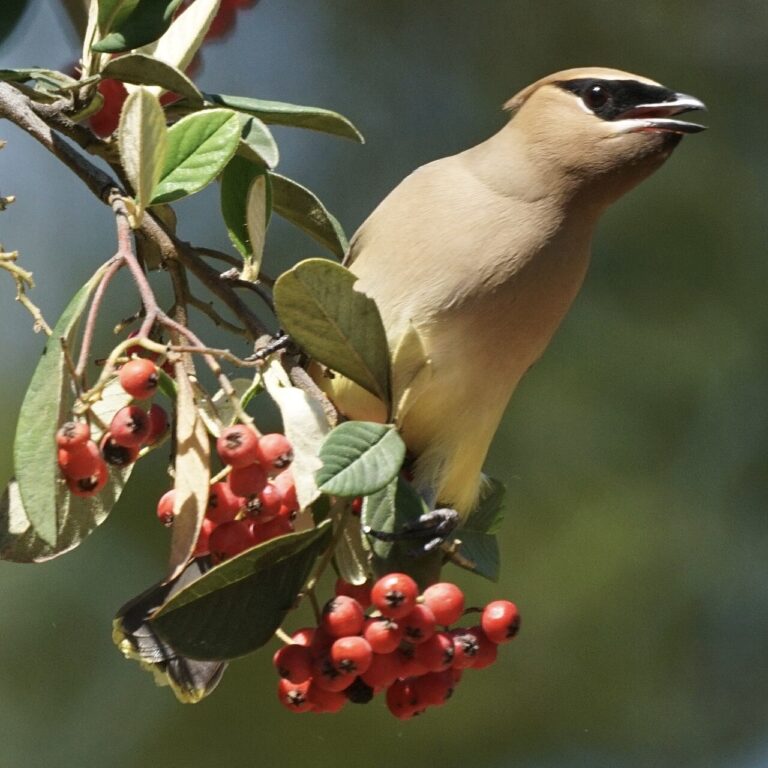
Hudson Valley and Catskills (Albany, Poughkeepsie, Kingston) maximize species diversity for typical New York yards: all the listed species plus seasonal visitors like Yellow Warbler (summer), Cedar Waxwing, Eastern Phoebe, and Hermit Thrush.
Adirondacks and far northern New York host boreal species: Boreal Chickadee, Black-Backed Woodpecker, Gray Jay, Spruce Grouse, plus winter irruptive species like Pine Grosbeak, Common Redpoll, and Bohemian Waxwing. Long winters mean year-round feeding is critical.
Finger Lakes and Western New York (Buffalo, Rochester, Syracuse) experience harsh lake-effect winters. Common winter visitors: Snow Buntings, American Tree Sparrows, Lapland Longspurs in agricultural areas. Spring migration through this region is spectacular.
Long Island’s eastern tip (Montauk, Riverhead) hosts coastal specialists: Common Eider in winter, plus migrant shorebirds. Backyard birding mixes with seashore birding in this region.
The Eastern Bluebird: New York’s Conservation Success
The Eastern Bluebird (Sialia sialis) was designated New York’s official state bird in 1970. The choice partially reflected concern over the species’ rapidly declining populations in the 1960s and 70s.
By the 1970s, Eastern Bluebirds had nearly disappeared from many New York landscapes. Competition from introduced House Sparrows and European Starlings for nest cavities, combined with pesticide use and habitat loss, drove populations down 90%+ from historical levels.
Conservation response in New York was extraordinary. The New York State Bluebird Society (founded 1982) and other organizations established ‘bluebird trails’, networks of properly-designed nest boxes spaced 100-300 feet apart in appropriate habitat. Tens of thousands of boxes were installed across the state by volunteers.
The recovery has been remarkable. Eastern Bluebird populations across New York have increased dramatically, and bluebirds are once again common in appropriate open habitats (golf courses, ranches, parks, suburbs with scattered trees). The species is a model of citizen-science-driven conservation.
Backyard birders can participate. Install NABS-approved bluebird nest boxes (1.5 inch entrance hole, important to exclude House Sparrows) on poles 5-6 feet high in open areas. Monitor boxes weekly during nesting season. Many local Audubon chapters offer mentorship for new bluebird trail operators.
How to Attract New York Backyard Birds
New York’s four-season climate creates dramatic year-round changes in backyard bird activity. Winter is the most rewarding season for feeder watching, natural food sources are scarce, so birds rely heavily on backyard feeders.
Winter feeding (November-March) requires reliable, high-energy food. Black oil sunflower seed is essential. Add suet (highest energy per gram). Peanuts (shelled, raw) attract Blue Jays, woodpeckers, chickadees, titmice, and nuthatches. Nyjer seed (in tube feeders with small ports) attracts goldfinches and Pine Siskins.
Heated bird baths are valuable during New York winters. Water freezes daily December-March in most of the state. A heated bath becomes a reliable water source unmatched by anything else, birds will visit your yard daily even when neighbors have feeders.
Spring migration (April-May) brings warblers, vireos, thrushes, orioles, and tanagers passing through. Most don’t visit feeders, but a quality water feature (especially a dripper or mister) and pesticide-free yards attract them.
Summer (June-August) is breeding season. Provide nest boxes for cavity nesters: Eastern Bluebirds (1.5 inch hole), House Wrens (1.25 inch), chickadees (1.125 inch), tree swallows. Suet consumption drops but doesn’t stop, keep some out year-round.
Fall migration (September-October) brings the migration in reverse plus winter resident arrivals. Maintain feeders to support migration energy needs.
Native plant gardening is the single most impactful long-term strategy. Native New York trees and shrubs support 10-100x more caterpillars (essential bird food for nesting) than non-native landscaping. Eastern Red Cedar, Winterberry Holly, Serviceberry, Spicebush, and native viburnums all produce both berries and host caterpillars.
Squirrel management is essential. Use squirrel baffles on pole-mounted feeders, plus weight-activated ‘squirrel-proof’ feeders for high-traffic areas. New York gray squirrels are particularly aggressive feeder raiders.
Top Native New York Plants for Backyard Birds
**Eastern Red Cedar (Juniperus virginiana):** Native conifer producing blue-gray berries that feed Cedar Waxwings (named for them), American Robins, Yellow-Rumped Warblers, and many other species. Important winter food. Provides essential winter cover for songbirds.
**Serviceberry (Amelanchier species):** Native small tree producing dark purple berries in summer. Feeds American Robins, Cedar Waxwings, Northern Cardinals, and 30+ other species. Spectacular early spring white flowers.
**Winterberry Holly (Ilex verticillata):** Native deciduous holly producing bright red berries that persist into late winter. Critical winter food when other berries are gone. Feeds American Robins, Cedar Waxwings, Eastern Bluebirds, and other late-winter birds.
**Sumac (Rhus species):** Native shrubs producing red berry clusters that feed dozens of bird species through fall and winter. Sumac is one of the most productive native plantings for New York yards, supports both seed-eaters and insectivores via the host caterpillars.
**Spicebush (Lindera benzoin):** Native shrub producing bright red berries in late summer. Feeds American Robins, Catbirds, thrushes, and migrating warblers. Host plant for Spicebush Swallowtail butterfly, caterpillars feed nesting birds.
**Northern Bayberry (Myrica pensylvanica):** Native shrub producing gray-blue berries that persist through winter. Important food for Yellow-Rumped Warblers (which can digest waxy bayberries, unique among NY warblers). Provides essential winter cover.
Related reading: Backyard Birds of Pennsylvania.
Related reading: Backyard Birds of Georgia.
Related reading: Backyard Birds of Washington.
Related reading: Backyard Birds of Tennessee.
Related reading: Backyard Birds of New Jersey.
Frequently Asked Questions
What’s the most common backyard bird in New York?
Black-Capped Chickadee, Northern Cardinal, Mourning Dove, House Finch, House Sparrow, Blue Jay, and American Goldfinch are all extremely common across New York. In winter, Dark-Eyed Juncos become abundant ground feeders. The ‘most common’ varies by season and habitat.
Do hummingbirds visit New York yards?
Yes, Ruby-Throated Hummingbirds are the only common hummingbird species in New York. They breed across the state and visit hummingbird feeders May through October. Most migrate to Central America for winter. Plant native salvias, bee balm, jewelweed, and cardinal flower to attract them.
What’s the small gray bird at my New York feeder?
Most likely Tufted Titmouse (small crest + buff flanks), Black-Capped Chickadee (black cap + white cheeks), White-Breasted Nuthatch (gray back + walks down trees), or Dark-Eyed Junco (slate gray + white belly + pink bill, winter only).
When do robins return to New York in spring?
American Robins typically return to New York in early to mid-March, though some hardy individuals overwinter throughout the state. The first arrivals are often males establishing territories. Females and the bulk of the population arrive 1-2 weeks later. Robins are often considered the official ‘sign of spring’ in New York.
What’s that bird with the red shoulder patch in spring?
Red-Winged Blackbird male, one of New York’s earliest spring arrivals (often arriving by late February). Glossy black overall with brilliant red shoulder patches edged in yellow. Females are uniformly brown-streaked (often mistaken for sparrows). They prefer wetlands and edges but visit feeders for sunflower, corn, and seed.
How do I attract Eastern Bluebirds to my New York yard?
Install a NABS-approved bluebird nest box (1.5 inch entrance hole) on a pole 5-6 feet high in an open area with scattered trees. Provide mealworms (live or freeze-dried) in a shallow dish. Plant native berry shrubs like Winterberry Holly, Eastern Red Cedar, and Serviceberry. Bluebirds prefer open habitat, they won’t use boxes in dense forests.
Do all New York birds migrate south for winter?
No, many species are year-round residents (Black-Capped Chickadee, Blue Jay, Northern Cardinal, House Sparrow, Mourning Dove, Tufted Titmouse, White-Breasted Nuthatch, Downy Woodpecker, House Finch, and more). Migrants include Common Grackle, Red-Winged Blackbird, American Robin (mostly), and most warblers/thrushes. Winter visitors arrive from further north, Dark-Eyed Juncos, American Tree Sparrows.
What’s that brilliant yellow bird in my New York yard in summer?
Most likely American Goldfinch (summer male), brilliant lemon-yellow with black wings and black cap. Yellow Warblers also visit some yards (uniformly yellow without the black wings/cap). Baltimore Orioles have a more orange-yellow with black head. Yellow-Bellied Sapsuckers visit some yards (yellow on belly, red on crown/throat).