Backyard Birds of Pennsylvania: 15 Common Species (2026 Identification Guide)
Pennsylvania’s combination of extensive forest cover (60% of the state), mountain ranges, agricultural valleys, and major urban centers (Philadelphia, Pittsburgh) creates one of the most productive backyard birding states in the Northeast. The state hosts 200+ regular bird species, with 30-50 commonly visiting suburban yards depending on region and season. Pennsylvania sits along the Atlantic Flyway, making spring and fall migration spectacular events for backyard birders, warblers, vireos, thrushes, and tanagers pass through in massive waves. This guide covers the 15 most common backyard birds across Pennsylvania with their seasonal patterns, regional ranges (Pittsburgh vs Philadelphia vs Pocono Mountains vs Lancaster farmland), and attraction strategies for the state’s four-season climate.
Quick Reference: 15 Common Backyard Birds of Pennsylvania
| Species | Size | Key ID Feature | When in PA |
|---|---|---|---|
| Black-Capped Chickadee | 5.25″ | Black cap + white cheeks + black bib | Year-round (most of state) |
| Northern Cardinal | 8.5″ | All red (male) + crest + black face mask | Year-round |
| Tufted Titmouse | 6.5″ | Gray crest + buff flanks + black eye | Year-round |
| Blue Jay | 11″ | Blue crest + black necklace + white below | Year-round |
| American Goldfinch | 5″ | All yellow (summer male) + black wings | Year-round |
| House Finch | 5.5″ | Red head/breast (male) + streaky belly | Year-round |
| Mourning Dove | 12″ | Tan + long pointed tail + small head | Year-round |
| Dark-Eyed Junco | 6″ | Slate-gray + white belly + pink bill | Winter (Oct-Apr) |
| White-Breasted Nuthatch | 5.75″ | Gray back + black cap + walks down trees | Year-round |
| Downy Woodpecker | 6.75″ | Small + short bill + checkered wings | Year-round |
| House Sparrow | 6.25″ | Gray crown + black bib (male) | Year-round |
| European Starling | 8.5″ | Iridescent black + speckled in winter | Year-round |
| Common Grackle | 12.5″ | Iridescent + keel tail + yellow eye | March-November |
| Red-Bellied Woodpecker | 9.25″ | Red cap + zebra back + tan belly | Year-round |
| American Robin | 10″ | Rust-orange breast + gray-brown back | Year-round |
Species Identification
Black-Capped Chickadee
Pennsylvania’s most beloved year-round small bird. Black-Capped Chickadees have a distinctive black cap, black bib (throat), white cheeks, gray back and wings, and buffy flanks. Their cheerful ‘chick-a-dee-dee-dee’ call is one of the most recognizable sounds of Pennsylvania winters. Among the bravest birds at feeders, often the first to arrive and last to leave during snowstorms.
Range in Pennsylvania: Northern and central Pennsylvania year-round. Replaced by Carolina Chickadee in southern parts of the state (south of approximately the Mason-Dixon-meets-Pennsylvania line).
Habitat: Forests, parks, suburban yards.
Key ID: Black cap + black bib + white cheeks + small size. Compared to Carolina: slightly larger, crisper white edges on wings, slower more varied song.
Where to see: Common at backyard feeders. Will eat sunflower seed, peanuts, and suet. Will use small nest boxes (1.125 inch hole).
Carolina Chickadee (Southern PA)
Pennsylvania’s southern chickadee. Carolina Chickadees look nearly identical to Black-Capped: black cap, black bib, white cheeks, gray back. Smaller with less white in wings, and a faster more uniform ‘chick-a-dee’ call. Range in PA is limited to southern counties, the hybrid zone with Black-Capped runs through central Pennsylvania.
Range in Pennsylvania: Southern Pennsylvania counties (south of the hybrid zone). Hybrid zone runs through central PA.
Habitat: Forests, parks, suburban yards.
Key ID: Same pattern as Black-Capped + smaller + southern range + faster song. Hybrids in central PA may be hard to distinguish.
Where to see: Same feeder preferences as Black-Capped, sunflower, peanuts, suet.
Northern Cardinal
Pennsylvania’s most iconic red bird. Male Northern Cardinals are brilliant red overall with a pointed red crest, black face mask, and thick orange-red bill. Females are tan-brown with red highlights. Cardinals pair-bond for life and stay together year-round. They’ve expanded their range north over the past century and are now ubiquitous throughout Pennsylvania.
Range in Pennsylvania: Statewide year-round.
Habitat: Yards with shrubby cover, parks, woodland edges, urban areas with brush.
Key ID: Brilliant red (male) or tan-brown with red highlights (female) + pointed crest + black face mask + thick orange-red bill.
Where to see: Hopper or platform feeders with sunflower or safflower seed. Cardinals need perching surfaces and prefer dawn/dusk feeding. Native shrubs for nesting cover.
Tufted Titmouse
Pennsylvania’s perky crested companion at feeders. Tufted Titmice have a clean gray back, white underparts with buff flanks, a pointed gray crest, large black eyes, and a small black forehead patch. Constantly active and vocal, their loud ‘peter-peter-peter’ calls fill Pennsylvania backyards year-round.
Range in Pennsylvania: Statewide year-round (range has expanded northward in recent decades).
Habitat: Mature deciduous forests, parks, suburban yards.
Key ID: Gray crest + buff flanks + black eye + small size. Distinctive crest separates from chickadees.
Where to see: Common at backyard feeders with sunflower seed, peanuts, and suet. Often in mixed flocks with chickadees and nuthatches.
Blue Jay
Pennsylvania’s familiar crested blue bird. Blue Jays have bright blue heads, wings, and backs (with black markings), white chests, and a prominent blue crest. Loud, intelligent, and dominant at feeders. They cache thousands of acorns each fall, important for Pennsylvania oak forest regeneration. Some Blue Jays migrate; others stay year-round.
Range in Pennsylvania: Statewide year-round.
Habitat: Forests, parks, suburban backyards with trees.
Key ID: Blue + black necklace + prominent crest + white below. The largest common blue bird in Pennsylvania.
Where to see: Platform feeders with peanuts in shell, sunflower seed, and corn. Bird baths regularly.
American Goldfinch
Pennsylvania’s brightest summer bird. Summer male American Goldfinches are brilliant lemon-yellow overall with jet-black wings (with white wing bars) and a black cap. Females and winter birds are duller olive-brown with pale yellow. Goldfinches breed late (July-September) to coincide with peak thistle and weed seed availability.
Range in Pennsylvania: Statewide year-round.
Habitat: Open habitat with weeds, gardens, parks, suburban yards.
Key ID: Brilliant yellow (summer male) + black wings + black cap. Winter birds duller olive-brown.
Where to see: Nyjer (thistle) feeders. Will also visit sunflower feeders. Often in flocks throughout winter.
House Finch
Pennsylvania’s most common feeder finch (now exceeding the native Purple Finch in abundance). Male House Finches have red wash over the head, breast, and rump with brown-streaked flanks. Females are uniformly brown-streaked. Originally a Western US species, House Finches spread eastward after illegal releases in the 1940s.
Range in Pennsylvania: Statewide year-round.
Habitat: Urban, suburban, agricultural areas.
Key ID: Red on head/breast (male) + brown-streaked flanks. Smaller than cardinals. Conical bill.
Where to see: Tube feeders with nyjer or sunflower seed. Often in small flocks.
Mourning Dove
Pennsylvania’s most widespread dove. Mourning Doves have sleek tan-brown bodies, small heads, and long pointed tails with white edges. Their distinctive whistling wing sound on takeoff is recognizable in every Pennsylvania yard.
Range in Pennsylvania: Statewide year-round.
Habitat: Open habitat, suburbs, parks, agricultural areas.
Key ID: Tan-brown + long pointed tail + small head. Whistling wing-sound in flight.
Where to see: Ground feeders or platform feeders with mixed seed, sunflower, or cracked corn. Often in pairs.
Dark-Eyed Junco
Pennsylvania’s classic winter sparrow, called ‘snowbirds’ by locals for their winter arrival. Pennsylvania hosts the ‘Slate-Colored’ form: uniformly slate-gray above (males darker than females), clean white belly, and a pink conical bill. White outer tail feathers flash in flight. Migrate south from northern breeding grounds for Pennsylvania winters.
Range in Pennsylvania: Statewide in winter (October-April). Some breeding in Pocono Mountains and higher elevations in summer.
Habitat: Forests in summer; backyards, gardens, and edges in winter.
Key ID: Slate-gray + clean white belly + pink bill + white outer tail. Ground-feeding flocks in winter yards.
Where to see: Winter feeders. Ground-feeding birds, prefer platform feeders or scattered seed.
White-Breasted Nuthatch
Pennsylvania’s distinctive ‘upside-down bird.’ White-Breasted Nuthatches have a blue-gray back, black cap (males) or gray cap (females), pure white face and underparts, and chestnut on the lower belly/undertail. They walk DOWN tree trunks headfirst, the opposite direction of woodpeckers and Brown Creepers.
Range in Pennsylvania: Statewide year-round.
Habitat: Mature deciduous forests, parks, mature suburban trees.
Key ID: Gray back + black/gray cap + white face + walks down trees headfirst.
Where to see: Common at sunflower and suet feeders. Often pairs with chickadees and titmice in mixed flocks.
Downy Woodpecker
Pennsylvania’s smallest and most common backyard woodpecker. Downy Woodpeckers have a clean black-and-white checkered pattern on the wings, a white back stripe, white underparts, and males have a small red patch on the back of the head. Females lack the red patch.
Range in Pennsylvania: Statewide year-round.
Habitat: Forests, parks, backyards with mature trees.
Key ID: Small size (6.75 inches) + short bill (1/3 head length) + checkered pattern + small red nape (male).
Where to see: Common at suet feeders. Will also eat sunflower seed and peanuts at platform feeders.
Red-Bellied Woodpecker
Pennsylvania’s medium woodpecker with a confusingly-named feature. Red-Bellied Woodpeckers have a red cap and nape (males) or just red nape (females), a barred black-and-white (zebra-pattern) back, and tan-buff underparts. The ‘red belly’ is actually a faint pinkish wash on the lower belly, rarely visible.
Range in Pennsylvania: Statewide year-round (expanding northward into northern PA in recent decades).
Habitat: Wooded yards, parks, forests with mature trees.
Key ID: Red cap/nape + zebra-pattern back + tan belly. The red is on the HEAD, not the belly.
Where to see: Common at suet feeders. Will also eat peanuts and sunflower seed at platform feeders.
European Starling
An introduced species (released in NYC in 1890) now ubiquitous across Pennsylvania. Breeding adults are glossy black with iridescent purple-green sheen and yellow bills. Winter birds are speckled black-and-buff with dark bills. Highly social, often in large noisy flocks. Compete aggressively with native cavity nesters.
Range in Pennsylvania: Statewide year-round.
Habitat: Cities, suburbs, agricultural areas, urban parks.
Key ID: Iridescent black (summer) or speckled (winter) + yellow bill (summer) + short tail.
Where to see: Common at suet feeders and platform feeders. Many birders consider them nuisance species. Use feeders designed to exclude larger birds if undesirable.
Regional Variations Across Pennsylvania
Pennsylvania’s distinct regions create different backyard bird communities. Western Pennsylvania (Pittsburgh region) shares many species with the Ohio Valley: Northern Cardinals, House Finches, Carolina Chickadees in extreme southwest. Allegheny Plateau elevation supports some northern species.
Eastern Pennsylvania and Philadelphia region (Lehigh Valley, Philadelphia) has high House Sparrow and European Starling populations in urban areas. Cardinals and Mourning Doves dominate suburban yards. Migration is spectacular along the Delaware River, Hawk Mountain Sanctuary (Kempton) is a world-class fall raptor watching site.
Pocono Mountains and northeastern Pennsylvania (Scranton/Wilkes-Barre region) host boreal-influence species: Black-Capped Chickadee, Purple Finch, Pine Siskin, Common Redpoll (irruption years), Black-Throated Green Warbler (summer). Winter feeders see harsh weather but reliable juncos and chickadees.
Lancaster County and South-Central PA farmland creates unique opportunities, Eastern Bluebirds thrive on Amish farms with abundant nest box installations. Wild Turkeys visit some yards. Grassland species (Eastern Meadowlark, Bobolinks) inhabit nearby farmland but rarely backyards.
Allegheny National Forest (north-central PA) hosts deep-forest species: Pileated Woodpeckers, Black-Throated Blue Warblers (summer), Hermit Thrushes. Owls (Barred Owl, Eastern Screech-Owl) become more visible in remote yards.
The Ruffed Grouse: Pennsylvania’s Hidden State Bird
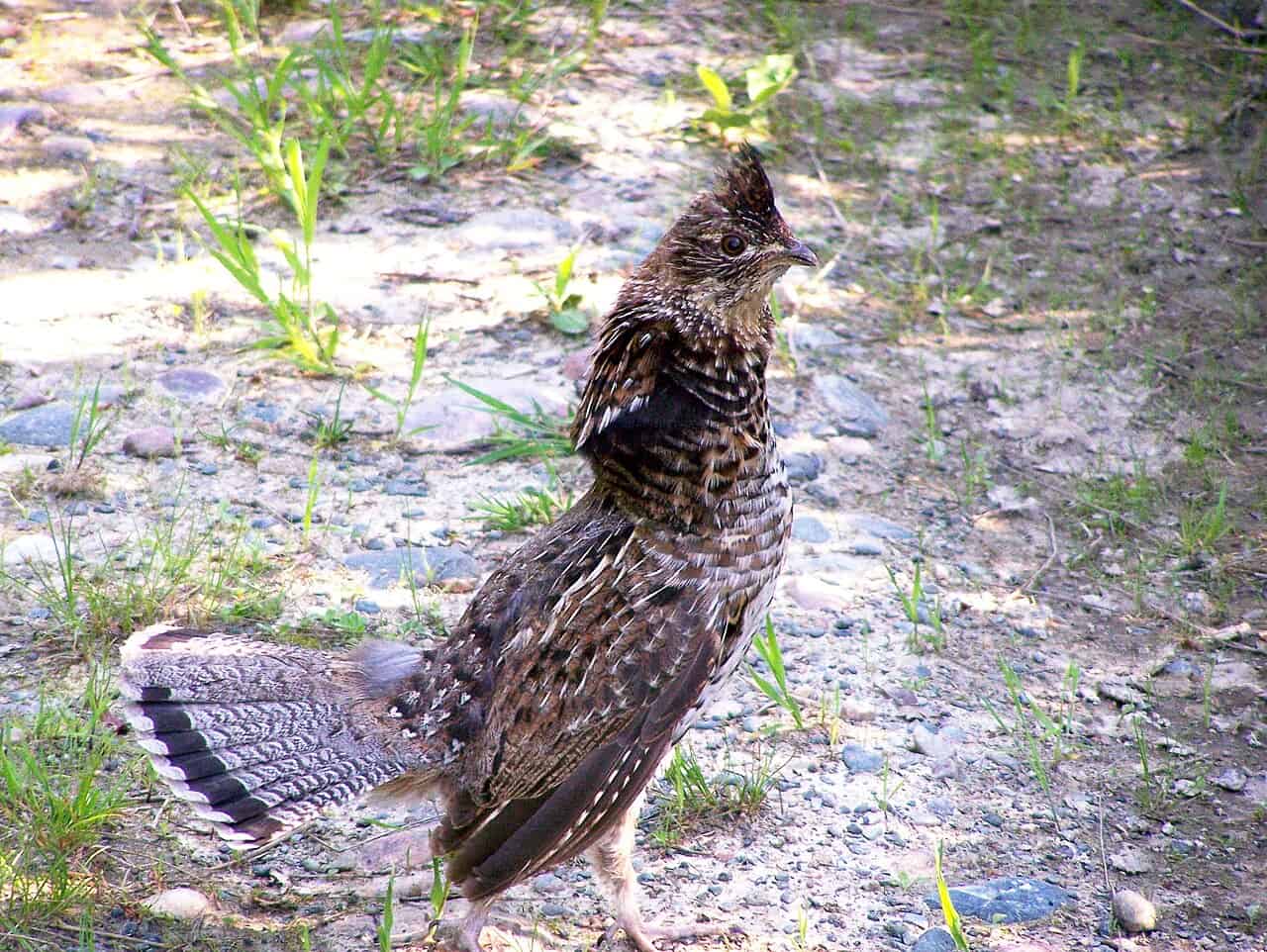
The Ruffed Grouse (Bonasa umbellus) was designated Pennsylvania’s official state bird on June 22, 1931. Unlike most states’ showy state birds, the Ruffed Grouse is rarely seen in suburban backyards, it’s a forest bird requiring large blocks of mature woodland.
Ruffed Grouse are chicken-sized birds (15-19 inches) with intricate brown-and-tan camouflage plumage. The species name comes from the dark ‘ruff’ of neck feathers males display during courtship. Males perform their famous ‘drumming’ display, beating their wings rapidly against the air on a fallen log to create a low-frequency thumping sound audible up to a quarter mile.
Pennsylvania Ruffed Grouse populations have declined significantly over the past 50 years due to changes in forest composition (mature forests with less young-growth habitat needed by grouse), West Nile virus impacts, and habitat fragmentation. From historical population peaks in the 1980s, populations are down 50-90% in many regions.
While unlikely in suburban yards, Pennsylvania residents with large rural properties bordering mature forests with thick young-growth understory may have Ruffed Grouse visiting forest edges. Listen for spring drumming displays (April-May) as an indicator of presence.
If you live in suburban or urban PA, contribute to grouse conservation by supporting Pennsylvania Game Commission habitat programs and the Ruffed Grouse Society. The species is one of Pennsylvania’s most challenging conservation success stories, recovery requires landscape-level forest management, not just backyard adaptations.
How to Attract Pennsylvania Backyard Birds
Pennsylvania’s four-season climate (cold winters, hot summers, dramatic spring/fall migrations) creates year-round backyard birding opportunities. Winter (December-March) is the most rewarding feeder-watching season, natural food sources are scarce, and birds rely heavily on backyard feeders.
Winter feeding strategy: black oil sunflower seed in tube and hopper feeders (universal favorite), suet in cage feeders (highest energy per gram, attracts woodpeckers and chickadees), peanuts (shelled, raw) for Blue Jays and chickadees, nyjer (thistle) seed in small-port feeders for goldfinches.
Heated bird baths are valuable from December through March when water freezes daily across most of Pennsylvania. A heated bath becomes a reliable water source that attracts birds from a wider radius than feeders.
Spring migration (April-May) brings warblers, vireos, thrushes, tanagers, and orioles passing through Pennsylvania. Most migrants don’t visit seed feeders but appreciate fruit (oranges, grape jelly), mealworms, and water features (especially drippers or misters).
Summer (June-August) is breeding season. Provide nest boxes for cavity-nesting species: Eastern Bluebirds (1.5 inch hole), House Wrens (1.25 inch), chickadees (1.125 inch), Tree Swallows. Suet consumption drops but continues year-round.
Native plant landscaping is the highest-impact long-term strategy. Pennsylvania-native plants support 10-100x more caterpillars (essential bird food for nesting) than non-native landscaping. Plant native oaks, cherries, viburnums, and dogwoods.
Squirrel management is essential in Pennsylvania. Eastern Gray Squirrels are extremely common and aggressive feeder raiders. Use squirrel baffles on pole-mounted feeders, plus weight-activated ‘squirrel-proof’ feeders for high-traffic stations.
Avoid pesticides if possible. Pesticides reduce insect populations that support nesting birds. Most lawn ‘pests’ (grubs, caterpillars) are actually critical food for nesting birds.
Top Native Pennsylvania Plants for Backyard Birds
**Eastern White Pine (Pinus strobus):** Pennsylvania’s state tree. Produces seeds that feed crossbills, Pine Siskins, and other finches. Provides essential winter cover for songbirds in dense, sheltered branches.
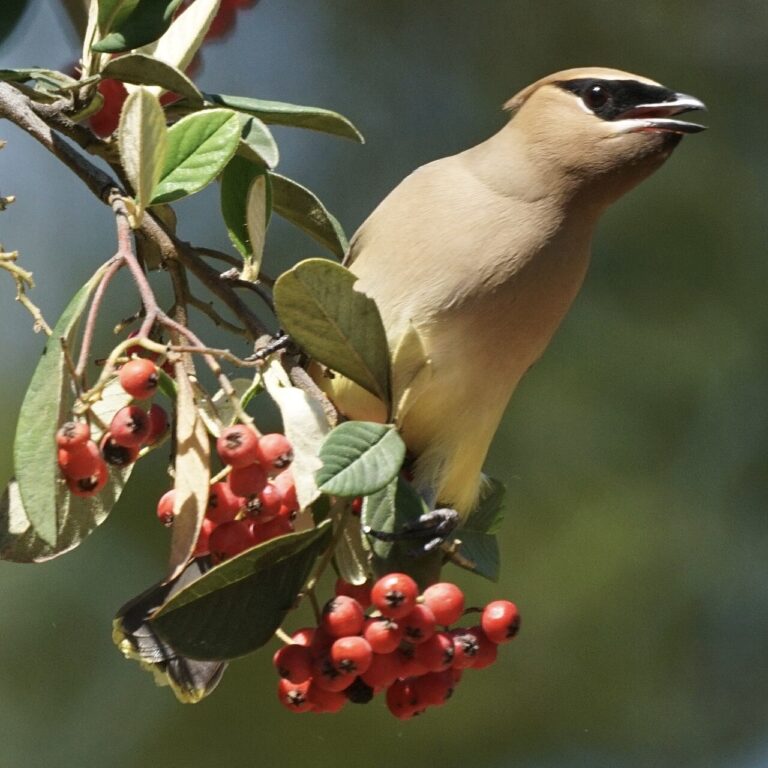
**Flowering Dogwood (Cornus florida):** Native small tree producing bright red berries in fall that feed 36+ bird species including American Robins, Cedar Waxwings, and Northern Cardinals. Spring white flowers attract pollinators that support food chains.
**Northern Red Oak (Quercus rubra) or White Oak (Q. alba):** Native oaks supporting hundreds of caterpillar species, the most productive single planting for Pennsylvania yards. Acorns feed Blue Jays, woodpeckers, and many other species.
**Serviceberry (Amelanchier species):** Native small tree producing dark purple berries in summer. Feeds American Robins, Cedar Waxwings, Northern Cardinals, and 30+ other species. Spectacular early spring white flowers.
**Black Cherry (Prunus serotina):** Native tree producing dark cherries that feed dozens of bird species. Host plant for 400+ butterfly and moth caterpillars, making it possibly the most productive native plant for supporting nesting birds.
**Winterberry Holly (Ilex verticillata):** Native deciduous holly producing bright red berries that persist into late winter. Critical winter food when other berries are gone. Feeds American Robins, Cedar Waxwings, Eastern Bluebirds, and other late-winter birds.
Related reading: Backyard Birds of Illinois.
Related reading: Backyard Birds of North Carolina.
Related reading: Backyard Birds of Arizona.
Related reading: Backyard Birds of Indiana.
Related reading: Backyard Birds of Missouri.
Frequently Asked Questions
What’s the most common backyard bird in Pennsylvania?
Black-Capped Chickadee, Northern Cardinal, Tufted Titmouse, Mourning Dove, Blue Jay, House Finch, House Sparrow, and American Goldfinch are all extremely common across Pennsylvania year-round. In winter, Dark-Eyed Juncos become abundant ground feeders. The exact most-common species varies by season and habitat.
Do I have Black-Capped or Carolina Chickadees in Pennsylvania?
It depends on your location. Black-Capped Chickadees inhabit most of Pennsylvania (northern, central, western). Carolina Chickadees inhabit southern Pennsylvania counties. The hybrid zone runs roughly through central PA. Hybrids in the overlap zone may be difficult to identify. Black-Capped is larger with crisper wing edges and a slower song.
Do hummingbirds visit Pennsylvania yards?
Yes, Ruby-Throated Hummingbirds are the only common hummingbird species in Pennsylvania. They breed across the state and visit hummingbird feeders late April through October. Most migrate to Central America for winter. Plant native salvias, bee balm, jewelweed, and cardinal flower to attract them.
What’s the small black-and-white bird on my Pennsylvania trees?
Most likely a Downy Woodpecker (small size, short bill, white back stripe, checkered wings, small red nape on male). The larger Hairy Woodpecker has the same pattern but is bigger with a longer bill. Black-and-White Warbler is striped throughout the body (not just the wings).
When do juncos arrive in Pennsylvania?
Dark-Eyed Juncos typically arrive in Pennsylvania backyards in mid to late October as winter visitors. They stay through March-early April. Some birders consider their arrival the official start of bird-feeding season in Pennsylvania. They’re ground-feeders, use platform feeders or scattered seed to attract them.
Why do I have so many House Sparrows at my Pennsylvania feeder?
House Sparrows (introduced from Europe in the 1850s) are highly adapted to human habitation and are extremely common in Pennsylvania urban and suburban yards. They aggressively dominate feeders. Strategies to reduce their dominance: use upside-down suet feeders (House Sparrows can’t easily feed upside down), feed safflower seed only (sparrows dislike it), avoid mixed seed and millet (their favorites).
How do I attract Eastern Bluebirds to my Pennsylvania yard?
Install a NABS-approved bluebird nest box (1.5 inch entrance hole) on a pole 5-6 feet high in an open area with scattered trees. Provide mealworms (live or freeze-dried) in a shallow dish. Plant native berry shrubs like Winterberry Holly, Eastern Red Cedar, and Serviceberry. Bluebirds prefer open habitat with scattered trees, not dense forests.
What’s the loud drumming sound in my Pennsylvania woods in spring?
Most likely a male Ruffed Grouse (Pennsylvania’s state bird) performing a courtship drumming display. The bird beats its wings rapidly against the air on a fallen log, creating a low-frequency thumping that accelerates and fades. Heard primarily April-May in mature Pennsylvania forests. If from a tree trunk, it’s a woodpecker drumming, Pileated Woodpecker produces the slowest, most resonant drumming of Pennsylvania woodpeckers.