Backyard Birds of New Jersey: 15 Common Species (2026 Identification Guide)
New Jersey’s compact geography from the Atlantic coast to the Highlands and Kittatinny Mountains creates surprising bird diversity for the most densely-populated US state. The state hosts 470+ recorded bird species, with 30-40 commonly visiting suburban yards depending on region and season. New Jersey’s position along the Atlantic Flyway makes spring and fall migration spectacular, Cape May (southern tip) is one of the most famous bird migration hotspots in North America. From the Pine Barrens’ specialty pine ecosystem to suburban Bergen County yards to Highlands forests, New Jersey offers distinctive backyard bird communities by region. This guide covers the 15 most common backyard birds across New Jersey with field marks, regional ranges, and proven attraction strategies for the state’s four-season climate.
Quick Reference: 15 Common Backyard Birds of New Jersey
| Species | Size | Key ID Feature | Where in NJ |
|---|---|---|---|
| American Goldfinch (state bird) | 5″ | All yellow (summer male) + black wings + black cap | Statewide year-round |
| Northern Cardinal | 8.5″ | All red (male) + crest + black face mask | Statewide year-round |
| Black-Capped Chickadee | 5.25″ | Black cap + white cheeks + black bib | Northern NJ |
| Carolina Chickadee | 4.75″ | Black cap + white cheeks (faster call) | Southern NJ |
| Tufted Titmouse | 6.5″ | Gray crest + buff flanks + black eye | Statewide year-round |
| Blue Jay | 11″ | Blue crest + black necklace + white below | Statewide year-round |
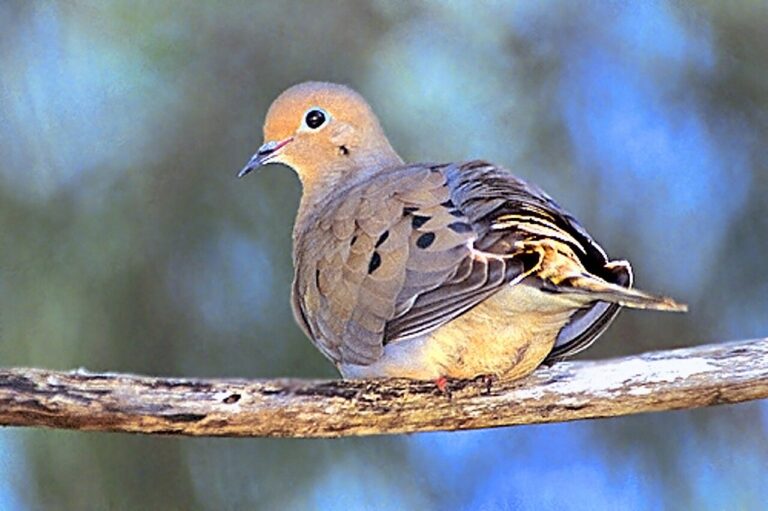
| Mourning Dove | 12″ | Tan + long pointed tail + small head | Statewide year-round |
| House Finch | 5.5″ | Red head/breast (male) + streaky belly | Statewide year-round |
| White-Breasted Nuthatch | 5.75″ | Gray back + black cap + walks down trees | Statewide year-round |
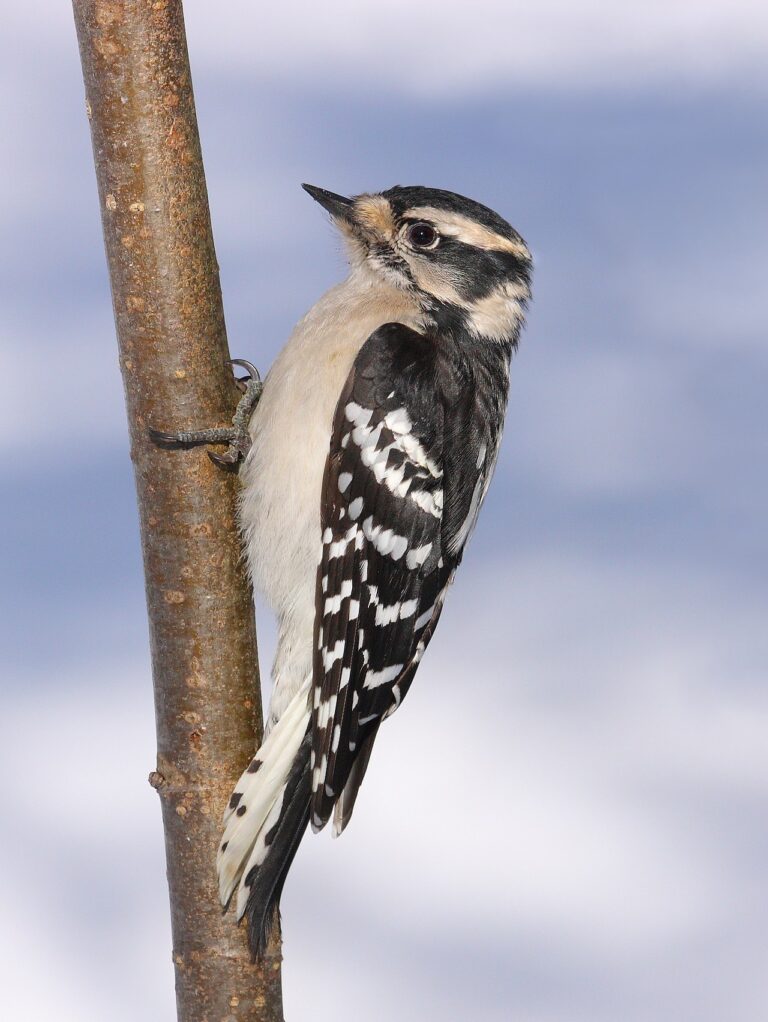
| Downy Woodpecker | 6.75″ | Small + short bill + checkered wings | Statewide year-round |
| Dark-Eyed Junco | 6″ | Slate-gray + white belly + pink bill | Winter (Oct-Apr) |
| American Robin | 10″ | Rust-orange breast + gray-brown back | Statewide year-round |
| Eastern Bluebird | 7″ | Blue back + rust breast + white belly | Statewide year-round |
| House Sparrow | 6.25″ | Gray crown + black bib (male) | Statewide year-round |
| Ruby-Throated Hummingbird | 3.5″ | Iridescent green + ruby throat (male) | Summer (May-Sep) |
Species Identification
American Goldfinch (State Bird)
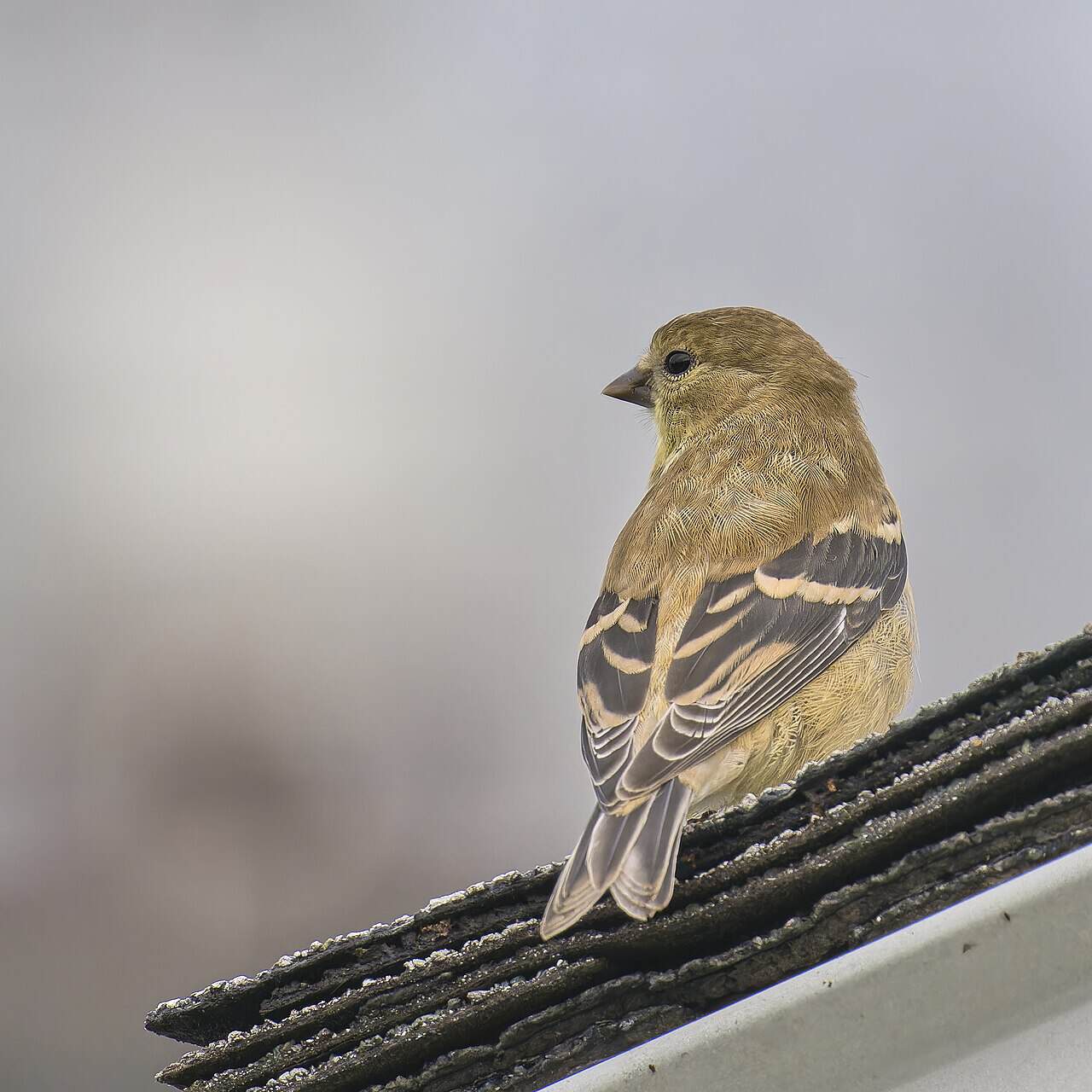
New Jersey’s official state bird, designated in 1935. Summer male American Goldfinches are brilliant lemon-yellow overall with jet-black wings (with white wing bars) and a black cap. Females and winter birds are duller olive-brown with pale yellow wash.
Range in New Jersey: Statewide year-round.
Habitat: Open habitat with weeds, gardens, parks, suburban yards.
Key ID: Brilliant yellow (summer male) + black wings + black cap. Winter birds duller olive-brown.
Where to see: Nyjer (thistle) feeders. Will also visit sunflower feeders. Often in flocks throughout winter. Plant native thistles, asters, and coneflowers.
Black-Capped vs Carolina Chickadee (NJ’s Two Chickadee Species)
New Jersey sits at the boundary between two chickadee species, making it one of the few states where backyard birders can study both. Black-Capped Chickadees occupy northern New Jersey (north of approximately I-78); Carolina Chickadees occupy southern New Jersey (south of approximately I-78). The two species look nearly identical: black cap, black bib, white cheeks, gray back. Distinguished by voice: Black-Capped sing ‘fee-bee’ two-note whistle; Carolina sing ‘fee-bee-fee-bay’ four-note pattern.
Range in New Jersey: Black-Capped in northern NJ (above approximately Trenton); Carolina in southern NJ. Some overlap in central NJ where hybrids occur.
Habitat: Wooded yards, parks, forests, both species share habitat preferences.
Key ID: Vocal identification more reliable than visual. Black-Capped Chickadees have buffier flanks; Carolinas have grayer flanks. Both visit feeders identically.
Where to see: Common at backyard feeders with sunflower seed, peanuts, and suet. Will use small nest boxes (1.125 inch hole).
Northern Cardinal
New Jersey’s beloved year-round red bird. Male Northern Cardinals are brilliant red overall with a pointed red crest, black face mask, and thick orange-red bill. Females are tan-brown with red highlights. Cardinals are nonmigratory in New Jersey, meaning the same individual birds may visit your feeders for years.
Range in New Jersey: Statewide year-round.
Habitat: Yards with shrubby cover, parks, woodland edges, urban areas with brush.
Key ID: Brilliant red + pointed crest + black face mask + thick orange-red bill (male). The most familiar red bird in NJ yards.
Where to see: Hopper or platform feeders with sunflower or safflower seed. Cardinals prefer dawn/dusk feeding. Plant native shrubs for nesting cover.
Tufted Titmouse
New Jersey’s perky crested feeder companion. Tufted Titmice have a clean gray back, white underparts with buff flanks, a pointed gray crest, large black eyes, and a small black forehead patch. Their loud ‘peter-peter-peter’ calls fill New Jersey woodlands year-round.
Range in New Jersey: Statewide year-round.
Habitat: Mature deciduous forests, parks, suburban yards.
Key ID: Gray crest + buff flanks + black eye + small size. Distinctive crest separates from chickadees.
Where to see: Common at backyard feeders with sunflower seed, peanuts, and suet. Often in mixed flocks with chickadees and nuthatches.
Blue Jay
New Jersey’s familiar crested blue bird. Blue Jays have bright blue heads, wings, and backs (with black markings), white chests, and a prominent blue crest. Loud, intelligent, and dominant at feeders. NJ Blue Jays cache thousands of acorns each fall.
Range in New Jersey: Statewide year-round.
Habitat: Forests, parks, suburban backyards with mature trees.
Key ID: Blue + black necklace + prominent crest + white below.
Where to see: Platform feeders with peanuts in shell, sunflower seed, and corn. Bird baths regularly.
Eastern Bluebird
New Jersey’s bluebird species. Male Eastern Bluebirds have brilliant royal-blue heads and backs, rust-orange throats and breasts, and clean white bellies. New Jersey has active bluebird trail networks, populations have grown substantially through nest box programs.
Range in New Jersey: Statewide year-round in most areas.
Habitat: Open habitat with scattered trees, pastures, golf courses, parks, suburbs with old trees.
Key ID: Bright blue back + rust-orange breast + clean white belly.
Where to see: Install NABS-approved bluebird nest boxes on poles in open areas. Provide mealworms. Plant native berry shrubs.
House Finch
New Jersey’s most common feeder finch. Male House Finches have red wash over the head, breast, and rump with brown-streaked flanks. Females are uniformly brown-streaked. House Finches were illegally released in Long Island in the 1940s and spread across the East, New Jersey was the epicenter of the original eastern colonization.
Range in New Jersey: Statewide year-round.
Habitat: Urban, suburban, agricultural areas.
Key ID: Red on head/breast (male) + brown-streaked flanks. Smaller than cardinals. Conical bill.
Where to see: Tube feeders with nyjer or sunflower seed. Often in small flocks.
Dark-Eyed Junco
New Jersey’s classic winter sparrow, called ‘snowbirds’ for their winter arrival. NJ hosts the ‘Slate-Colored’ form: uniformly slate-gray above, clean white belly, and pink conical bill. White outer tail feathers flash in flight.
Range in New Jersey: Statewide in winter (October-April); some breed at high elevations in NJ Highlands.
Habitat: Forests in summer (mountains); backyards, gardens, and edges in winter.
Key ID: Slate-gray + clean white belly + pink bill + white outer tail. Ground-feeding flocks in winter yards.
Where to see: Winter feeders. Ground-feeding birds, prefer platform feeders or scattered seed.
White-Breasted Nuthatch
New Jersey’s ‘upside-down bird.’ White-Breasted Nuthatches have a blue-gray back, black cap (males) or gray cap (females), pure white face and underparts, and chestnut on the lower belly. They walk DOWN tree trunks headfirst.
Range in New Jersey: Statewide year-round.
Habitat: Mature deciduous forests, parks, mature suburban trees.
Key ID: Gray back + black/gray cap + white face + walks down trees headfirst.
Where to see: Common at sunflower and suet feeders. Often in mixed flocks.
Downy Woodpecker
New Jersey’s smallest and most common backyard woodpecker. Downy Woodpeckers have a clean black-and-white checkered pattern on the wings, a white back stripe, white underparts, and males have a small red patch on the back of the head.
Range in New Jersey: Statewide year-round.
Habitat: Forests, parks, backyards with mature trees.
Key ID: Small size + short bill + checkered pattern + small red nape (male).
Where to see: Common at suet feeders.
Ruby-Throated Hummingbird
New Jersey’s only common breeding hummingbird. Male Ruby-Throated Hummingbirds have an iridescent green back and a brilliant ruby-red throat. Females have green backs with white throats. Migrate to Central America for winter.
Range in New Jersey: Statewide in summer (May-September).
Habitat: Gardens, parks, woodland edges with flowering plants.
Key ID: Iridescent green back + ruby throat (male, requires good light) + tiny size.
Where to see: Hummingbird feeders (4:1 sugar-water ratio, no red dye). Plant native flowers (cardinal flower, bee balm, native salvias).
Mourning Dove
New Jersey’s most widespread dove. Mourning Doves have sleek tan-brown bodies, small heads, and long pointed tails with white edges. Distinctive whistling wing sound on takeoff.
Range in New Jersey: Statewide year-round.
Habitat: Open habitat, suburbs, parks, agricultural areas.
Key ID: Tan-brown + long pointed tail + small head.
Where to see: Ground feeders or platform feeders with mixed seed.
Regional Variations Across New Jersey
New Jersey’s compactness still creates distinct backyard bird communities by region. Northern New Jersey (Bergen, Passaic, Sussex, Warren counties) hosts the Black-Capped Chickadee zone. Highlands forests at elevation support Hermit Thrush (winter), Pine Siskin (irruptive winter), and high-elevation breeding species in the Kittatinny Mountains. Cooler climate than southern NJ.
Central New Jersey (Middlesex, Mercer, Monmouth counties) is the chickadee overlap zone, both Black-Capped and Carolina Chickadees occur. Suburban yards host typical mid-Atlantic species. Sandy Hook on the coast is a major migration hotspot.
Southern New Jersey (Atlantic, Camden, Cumberland, Salem counties) hosts the Carolina Chickadee zone. Mild winter climate compared to northern NJ. Cape May (the southern tip) is one of North America’s most famous migration hotspots, fall hawk migration concentrates millions of birds over a small area.
Pine Barrens (Pinelands National Reserve, covering 1.1 million acres of southern NJ): hosts a distinctive pine forest community. Brown-Headed Nuthatches in some areas. Eastern Towhees abundant. Pine Warblers (summer breeding). Specialty: the Pine Barrens is the only place in the world for some plant species, and supports unique bird communities.
Atlantic coast (Sandy Hook, Long Beach Island, Cape May, Wildwood) hosts coastal specialists year-round plus spectacular migration. Yards near the coast see beach-edge species (terns, gulls, plovers) plus typical backyard birds.
Delaware Bay shoreline (Cumberland County, Cape May County) is a globally-important horseshoe crab spawning site. Spring migration brings half a million shorebirds to feed on horseshoe crab eggs, including the endangered Red Knot. Yards near the Bayshore see exceptional spring migration.
The American Goldfinch: New Jersey’s Bright State Bird
The American Goldfinch (Spinus tristis) was designated New Jersey’s official state bird in 1935. New Jersey is one of three states (with Iowa and Washington) that chose this species, though Iowa called it ‘Eastern Goldfinch’ to distinguish from Lesser Goldfinch (a western species).
Goldfinches are non-migratory year-round residents in New Jersey, meaning the same individual birds may visit feeders year-round. Summer breeding males are brilliant lemon-yellow with black caps and wings. Winter brings dramatic plumage change: both sexes molt into duller olive-brown plumage. The transition between plumages provides a great seasonal identification challenge for backyard birders.
NJ goldfinches breed late, July through September, considerably later than most songbirds. This timing coincides with peak thistle and weed seed availability. Goldfinches are strict vegetarians (unusual among songbirds), they feed their nestlings regurgitated seeds rather than insects.
Goldfinches are highly social. Winter flocks of 20-50 birds are common in New Jersey yards. Their soft, twittering flight calls are easy to learn.
Plant native thistles, asters, sunflowers, and coneflowers to attract goldfinches. Provide nyjer (thistle) seed in tube feeders with small ports. American Goldfinches are among the most reliable NJ backyard species, patient yard owners often have generations of goldfinches visiting daily for years.
How to Attract New Jersey Backyard Birds
New Jersey’s four-season climate (cold winters, hot humid summers, dramatic migrations) creates year-round backyard birding opportunities. Winter (December-March) is the most rewarding feeder-watching season, natural food sources are scarce, and birds rely heavily on backyard feeders.
Winter feeding strategy: black oil sunflower seed in tube and hopper feeders (universal favorite), suet in cage feeders (attracts woodpeckers, chickadees, and nuthatches), peanuts (shelled, raw) for Blue Jays and chickadees, nyjer (thistle) seed in small-port feeders for goldfinches.
Heated bird baths are valuable NJ equipment November-March. Water freezes regularly across most of the state. A heated bath becomes a reliable water source unmatched by anything else.
Spring migration (April-May) brings spectacular warbler waves through New Jersey. Cape May, Sandy Hook, and Garret Mountain are world-famous. Most migrants don’t visit seed feeders but appreciate fruit (oranges, grape jelly for orioles), mealworms, and water features.
Summer (June-August) is breeding season. Provide nest boxes for cavity nesters: Eastern Bluebirds (1.5 inch hole, in open areas), Black-Capped or Carolina Chickadees (1.125 inch), House Wrens (1.25 inch).
Hummingbird feeders are essential May through September. Ruby-Throated Hummingbirds breed across NJ. Use 4:1 water-to-sugar ratio, no red dye. Clean every 3-4 days during summer heat.
Native plant landscaping outperforms turfgrass dramatically. NJ-native plants support 10-100x more bird food than non-native landscaping. Plant native oaks, dogwoods, native viburnums, serviceberries.
Manage outdoor cats. NJ outdoor cats kill millions of birds annually. Keeping cats indoors is the single most effective bird protection strategy.
Avoid pesticides. Most lawn ‘pests’ (grubs, caterpillars) are actually critical food for nesting birds.
Top Native New Jersey Plants for Backyard Birds
**White Oak (Quercus alba) or Northern Red Oak (Q. rubra):** NJ-native oaks support hundreds of caterpillar species, the most productive single plantings for NJ yards. Acorns feed Blue Jays, woodpeckers, Tufted Titmice.
**Eastern Red Cedar (Juniperus virginiana):** Native conifer producing blue-gray berries that feed Cedar Waxwings, American Robins, Yellow-Rumped Warblers. Provides essential winter cover.
**Serviceberry (Amelanchier species):** Native small tree producing dark purple berries in early summer. Feeds American Robins, Cedar Waxwings, Northern Cardinals, and 30+ other species.
**Winterberry Holly (Ilex verticillata):** Native deciduous holly producing bright red berries that persist into late winter. Critical winter food. Feeds American Robins, Cedar Waxwings, Eastern Bluebirds.
**American Beautyberry (Callicarpa americana):** Native shrub producing dramatic clusters of bright purple-violet berries in fall. Feeds Northern Mockingbirds, Cardinals, Brown Thrashers, and 40+ other NJ bird species.
**Coral Honeysuckle (Lonicera sempervirens):** Native vine with tubular red flowers attracting Ruby-Throated Hummingbirds. Spring through summer bloom. Native, NOT the invasive Japanese honeysuckle.
Related reading: Backyard Birds of New York.
Frequently Asked Questions
What’s the most common backyard bird in New Jersey?
American Goldfinch (the state bird), Northern Cardinal, Mourning Dove, House Finch, House Sparrow, Blue Jay, Tufted Titmouse, and either Black-Capped (northern NJ) or Carolina (southern NJ) Chickadee are all extremely common. In winter, Dark-Eyed Juncos become abundant ground feeders.
Do I have Black-Capped or Carolina Chickadees in New Jersey?
Depends on your location. Black-Capped Chickadees occupy northern New Jersey (roughly north of I-78). Carolina Chickadees occupy southern New Jersey (south of I-78). Central NJ has both plus occasional hybrids. They look nearly identical, distinguished best by voice. Black-Capped sing ‘fee-bee’ two-note whistle; Carolina sing ‘fee-bee-fee-bay’ four-note pattern.
When do hummingbirds arrive in New Jersey?
Ruby-Throated Hummingbirds typically arrive in southern New Jersey by late April to early May. Northern NJ arrivals usually mid-May. They breed statewide and stay through September. Most migrate by October to Central America for winter.
Why is Cape May famous for bird migration?
Cape May, NJ (southern tip of the state) is one of the most famous bird migration hotspots in North America. Geography concentrates migrating birds, they hesitate to cross Delaware Bay and congregate at Cape May. Fall hawk migration counts include 50,000+ raptors annually. The Cape May Bird Observatory has world-class counts of hawks, songbirds, warblers, and shorebirds.
How do I attract American Goldfinches (NJ’s state bird) to my yard?
Provide nyjer (thistle) seed in tube feeders with small ports designed for goldfinches. Will also visit black oil sunflower feeders. Plant native thistles, asters, coneflowers, and sunflowers, goldfinches eat seeds from these. Goldfinches form winter flocks of 20-50 birds, once your feeder is established, expect regular visits year-round.
What’s special about the New Jersey Pine Barrens for birds?
The Pinelands National Reserve (1.1 million acres of southern NJ) hosts a distinctive pine forest community. Brown-Headed Nuthatches in some areas. Eastern Towhees abundant. Pine Warblers breed in summer. The Pine Barrens is the only place in the world for some plant species, and supports unique bird communities. Yards adjacent to the Pinelands see pine forest specialty species.
Are there Carolina Wrens in New Jersey?
Yes, especially in southern New Jersey. Carolina Wrens have expanded northward dramatically with climate change. They’re rich rust-brown with bold white eyebrow and loud ‘tea-kettle’ song. Cold winters with deep snow can reduce populations, but they typically rebound. Carolina Wrens are increasingly common as far north as the Highlands.
What native plants attract the most New Jersey birds?
White Oak and Northern Red Oak are the single most productive plantings, supporting hundreds of caterpillar species. Other top natives: Serviceberry, Eastern Red Cedar, native viburnums, American Beautyberry, Winterberry Holly. Plant native, not non-native ornamentals, native plants support 10-100x more bird food.