Mice in Walls: How to Get Rid of Them for Good
Getting rid of mice in walls starts with locating their entry points, sealing them from the outside, and placing traps directly along the wall cavity where the mice are traveling, since bait alone rarely reaches mice that never leave the wall space. House mice (Mus musculus) are small enough to fit through gaps as narrow as a quarter inch, which is why they end up nesting inside wall voids, especially in fall and winter when they are searching for warmth.
Mice in walls are more than a noise nuisance. They can chew through wiring and insulation, contaminate spaces with droppings, and attract secondary pests like fleas. This guide walks through how to confirm you have mice in the walls, remove them safely, and keep them from coming back.
To get rid of mice in walls, locate entry points using a flashlight and droppings as guides, seal exterior gaps with steel wool and caulk, and place snap traps or bait stations along interior wall lines. Most infestations clear within one to two weeks of consistent trapping and sealing.
| Sign | What It Means | Action |
|---|---|---|
| Scratching at night | Active mice, usually 1 to 2 fewer than daytime noise suggests | Locate wall section, place traps nearby |
| Droppings near baseboards | Established travel path or nest | Follow trail to entry point |
| Chewed insulation or wiring | Nest building in progress | Inspect for fire hazard, seal gaps |
| Grease marks on walls | Repeated travel along the same route | Set traps directly on the marked path |
| Strong ammonia smell | Concentrated urine, likely active nest | Locate nest, remove after trapping |
How Do You Know If You Have Mice in the Walls?
The clearest sign of mice in walls is scratching, scurrying, or squeaking sounds coming from inside the wall, most often at night when mice are actively foraging. Droppings along baseboards, chewed insulation, and a persistent ammonia-like smell near a specific wall section are also strong indicators of an active infestation.
Grease marks, dark smudges left behind by a mouse’s oily fur as it repeatedly travels the same route, are another reliable clue. These marks tend to appear near baseboards, corners, and small gaps where mice enter or exit the wall cavity.
If you are unsure whether the noise is mice, rats, or something else entirely, comparing droppings can help narrow it down. Mouse droppings are small, dark, and rice-grain shaped, which distinguishes them from larger rat droppings or insect frass.
Where Do Mice Get Into Your Walls?
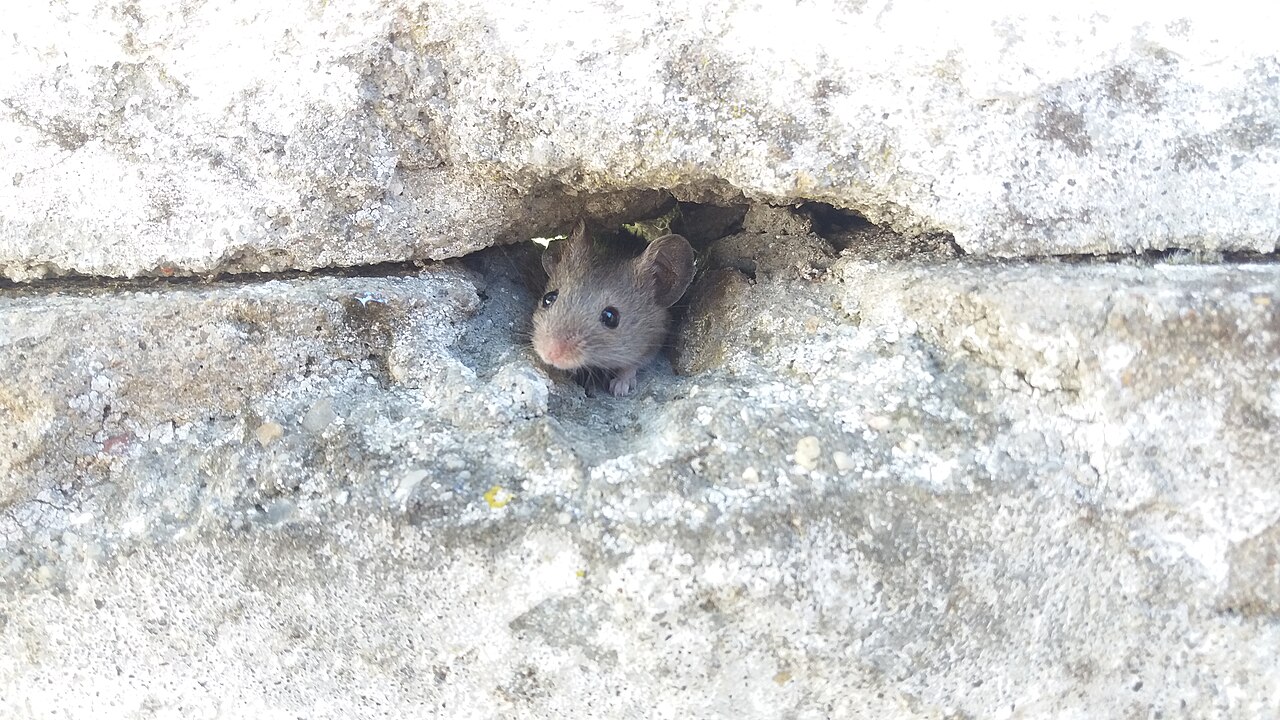
Mice most often enter walls through small gaps around utility lines, foundation cracks, gaps under doors, and openings where pipes or cables pass through exterior walls. A house mouse can squeeze through an opening as small as a quarter inch, roughly the width of a pencil, so even minor construction gaps are a real entry risk.
Older homes with settling foundations or gaps around window frames tend to have more of these entry points than newer construction. Attached garages, crawl spaces, and areas around chimneys are also common weak spots where mice slip into wall cavities unnoticed.
Once inside a wall void, mice often travel between floors using the same gaps that plumbing and electrical lines pass through, which is part of why an infestation on one floor can quickly spread to another if entry points are not sealed.
Setting Traps Inside the Wall Cavity
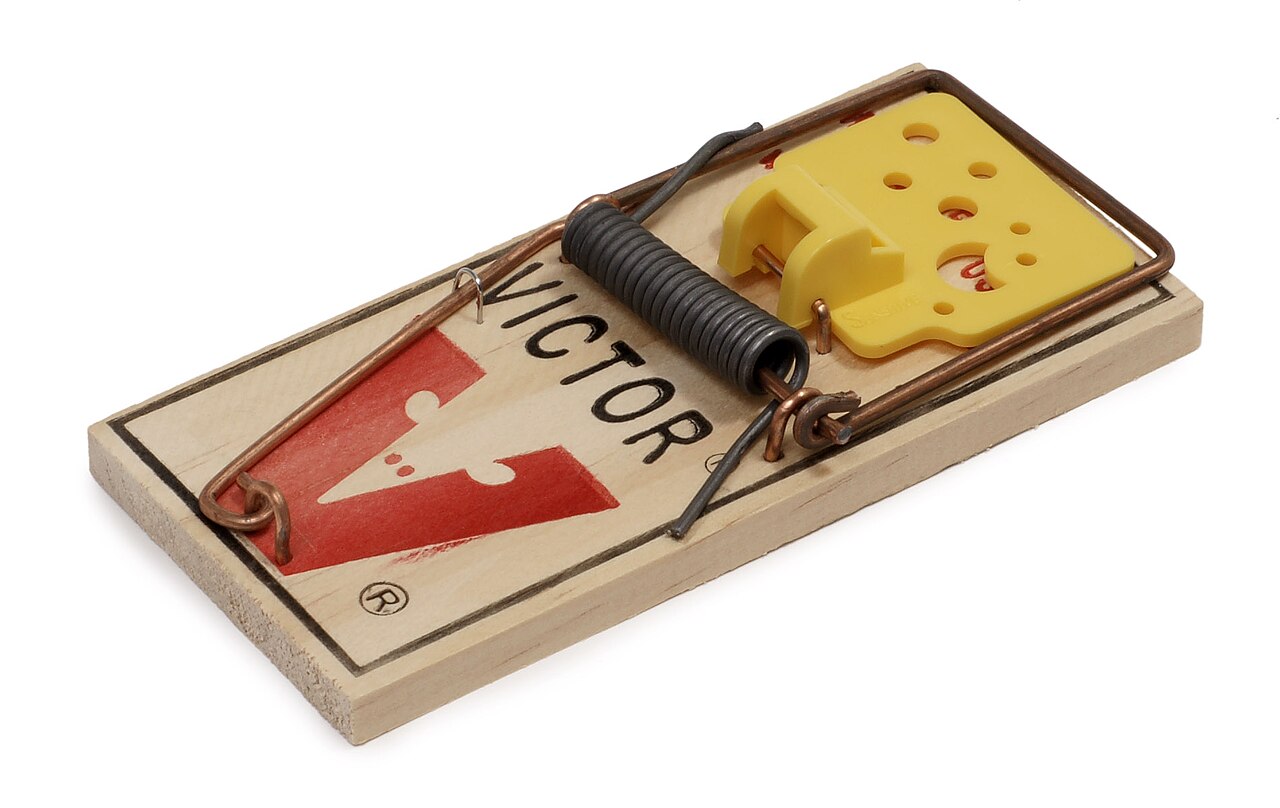
The most effective way to catch mice already living in a wall is to place snap traps or bait stations as close to their travel path as possible, ideally near an access point like an outlet cover, vent, or small cut opening. Traps placed randomly around a room are far less effective than traps set directly along a confirmed mouse route.
Peanut butter, oats, or a small piece of bacon tend to work better as bait than cheese, contrary to popular belief, since what mice actually eat skews toward high-fat, high-protein foods over dairy. Setting several traps in a row along a suspected path increases the odds of a catch within the first few nights.
For mice that seem to stay entirely within the wall and never emerge into living spaces, a pest control professional can sometimes access the cavity directly through a small, carefully placed opening, place traps inside, and patch the hole afterward.
How Long Do Mice Stay in Walls?
Mice can stay in walls indefinitely as long as the space provides food, warmth, and safety from predators, with some infestations persisting for months if left unaddressed. A single mouse that has found a stable nesting spot inside insulation has little reason to leave on its own.
Breeding accelerates how long an infestation lasts, since a female house mouse can produce a new litter roughly every three weeks under favorable conditions. What starts as one or two mice in a wall can become a much larger population within a season if trapping does not begin promptly.
Consistent trapping combined with sealed entry points typically resolves most wall infestations within one to two weeks. Infestations that persist longer usually indicate either an unblocked outdoor entry point or an established nest that traps have not reached.
What Happens If Mice Live in Your Walls?
Mice living in walls commonly chew through electrical wiring, wood framing, and insulation, which creates both structural damage and a genuine fire risk from exposed or damaged wires. Insulation is also frequently shredded and used as nesting material, reducing its effectiveness over time.
Beyond physical damage, mice contaminate wall spaces with urine and droppings, which can produce persistent odors and, in some cases, contribute to indoor air quality problems. Droppings can also carry pathogens including hantavirus and salmonella, making direct contact something to avoid.
An unaddressed wall infestation frequently attracts secondary pests as well, including fleas and mites that live on the mice themselves. This is one reason pest control professionals recommend addressing mouse infestations promptly rather than waiting to see if the mice leave on their own.
Sealing Gaps and Cracks From the Outside
Steel wool packed tightly into small gaps, combined with a layer of caulk or expanding foam over the top, is one of the most effective ways to permanently block mouse entry points. Mice can chew through plastic, rubber, and foam alone, but they generally avoid gnawing through steel wool.
A full exterior walkthrough should focus on gaps around utility penetrations, foundation vents, garage door edges, and areas where siding has pulled away from the frame. A flashlight held at a low angle at dusk can help reveal small gaps that let daylight through, which usually means mice can fit through as well.
Sealing should always happen after trapping has removed mice already inside the wall, not before, since sealing an active mouse inside a wall cavity can trap it there permanently and lead to unpleasant odor problems later.
What Smell Do Mice Hate?
Peppermint oil is the scent most commonly cited as a mouse deterrent, and while it can make an area less appealing to mice short term, it is not a reliable standalone solution for an active infestation. Ammonia-soaked cotton balls are sometimes used the same way, though the smell is unpleasant for people as well.
These scent-based deterrents work best as a supplement to sealing and trapping rather than a replacement for them. Mice that are motivated by an easy food or nesting source will often tolerate an unpleasant smell if the payoff is significant enough.
For longer lasting results, focusing on removing food sources, sealing entry points, and trapping existing mice produces far more reliable outcomes than relying on scent deterrents alone.
What Kills Mice Immediately?
Snap traps are generally the fastest and most humane way to kill mice quickly, when placed correctly along an active travel path. Anticoagulant rodenticide baits also kill mice, though death typically takes several days rather than being immediate, which can lead to mice dying inside the wall and causing odor issues.
Because of the delayed effect and the risk of dead mice decomposing inside inaccessible wall spaces, many pest professionals recommend snap traps or enclosed bait stations placed in accessible areas over loose rodenticide near wall voids. This also reduces risk to pets and children.
Whichever method is used, checking traps daily and disposing of caught mice promptly helps prevent odor and keeps the trapping process moving quickly toward a full resolution.
The Five-Day Mouse Rule Explained
The five-day mouse rule is a rough guideline suggesting that if trapping and sealing efforts have not produced results within about five days, it is time to reassess the approach rather than continuing the same method. This usually means checking for missed entry points or repositioning traps closer to confirmed activity.
In practice, most active infestations show a noticeable drop in activity within the first few days if traps are correctly placed and entry points are sealed. A lack of progress after five days often points to an unsealed opening still allowing new mice inside from outdoors.
This rule is not an official pest control standard, but it serves as a useful checkpoint for homeowners to avoid spending weeks on an approach that is not working before trying additional traps, bait stations, or professional help.
How to Get Rid of a Dead Mouse Smell in the Wall
A dead mouse trapped inside a wall cavity produces a strong odor that typically peaks within three to five days and can linger for one to two weeks as decomposition runs its course. Locating the general area by following the smell to its strongest point is the first step toward removal.
If the mouse cannot be reached through an existing opening, a small access hole cut into the drywall near the strongest odor point is often the only reliable way to remove it. Odor-absorbing products, charcoal, or baking soda placed near the area can help manage the smell while the carcass naturally dries out if removal is not possible right away.
Once removed, the area should be cleaned and, if needed, treated with an enzymatic odor remover to fully eliminate lingering smell, since decomposition byproducts can soak into drywall and insulation.
Preventing Mice From Returning
Long-term prevention depends on keeping food sources inaccessible, maintaining sealed entry points, and periodically inspecting the exterior for new gaps, particularly after seasonal temperature swings that cause materials to shift. Pet food, birdseed, and pantry items should be stored in sealed containers rather than bags mice can chew through.
Trimming vegetation and woodpiles away from the foundation reduces cover that mice use to approach the house undetected, and encouraging natural predators such as birds that eat mice around the property can help keep outdoor populations lower to begin with. Outdoor structures like sheds and garages should be checked as well, since they often serve as a staging area before mice move toward the main structure.
A seasonal check, ideally each fall before mice begin seeking warmer shelter, of all previously sealed gaps helps catch new openings before they become an entry point for a fresh infestation.
When to Call a Professional Exterminator
A professional exterminator is worth calling when trapping and sealing have not resolved the problem after a couple of weeks, when the infestation appears to span multiple rooms or floors, or when entry points cannot be safely located or sealed without specialized tools. Persistent, unexplained odors are also a reasonable trigger to bring in a professional.
Pest control professionals have access to thermal imaging and specialized inspection tools that can locate nests and travel paths inside walls without extensive demolition. They can also identify structural vulnerabilities a homeowner might miss during a standard exterior walkthrough, and distinguish an indoor mouse problem from an outdoor rodent issue like voles that simply needs yard-level treatment instead. According to University of Illinois Extension, sealing entry points and combining traps with cleanup remains the most effective long-term approach.
For recurring infestations, a professional can also help distinguish mice from other wall-dwelling pests, since bats and other animals can produce similar scratching sounds but require entirely different removal approaches.
Frequently Asked Questions
What keeps mice away permanently?
Permanently keeping mice away requires sealing every entry point larger than a quarter inch, removing accessible food sources, and maintaining that seal over time as materials shift. No single repellent or scent provides permanent results without addressing entry points directly.
What food is poisonous to mice?
Chocolate, onions, and certain artificial sweeteners can be harmful to mice in large amounts, though these are not practical deterrents for infestations. Commercial rodenticides are specifically formulated anticoagulants designed to be lethal to mice when consumed.
How do you get rid of mice overnight?
A single night rarely clears a full infestation, but placing multiple baited snap traps along confirmed travel paths gives the best chance of catching mice quickly. Sealing at least the most obvious entry points the same night also helps prevent new mice from arriving.
Can mice chew through interior walls to get into a room?
Yes, mice can gnaw through drywall, particularly around existing gaps or soft, damaged sections, to create new openings into living spaces. This is more common when a wall cavity nest becomes overcrowded and mice search for new territory.
Are mice in the walls dangerous to pets?
Mice themselves rarely attack pets, but they can carry parasites like fleas and mites that transfer to cats and dogs, and their droppings can carry pathogens if pets investigate or ingest them. Keeping pets away from areas with active mouse activity is a reasonable precaution.
What’s the difference between mice in walls and mice in the attic?
Mice in walls travel through narrow vertical cavities and are usually heard as scratching within a specific wall section, while attic mice have more open space to nest and move around, often producing louder, more widespread noise. Both require similar sealing and trapping approaches, just in different locations.