Small Chicken Breeds: 9 Compact Birds for Backyard Flocks
Small chicken breeds are bantams and compact standard birds that weigh roughly 1 to 4 lb (450 to 1,800 g) and need about half the coop space of a full size hen. They eat less, handle small yards better, and still lay usable eggs, which is why they dominate urban and suburban flocks across the United States. The trade off is egg size, not egg count.
You may see these birds advertised as mini chickens or teacup chickens. Neither is a breed name: both are informal labels for bantams, the correct term for any chicken that stays under about 4 lb (1.8 kg). The nine breeds below cover the full range of what a small flock keeper actually chooses between, from true bantams that have no large counterpart to miniaturized versions of familiar farm breeds and ornamental birds kept mostly for looks.
Small chicken breeds weigh 1 to 4 lb (450 to 1,800 g) compared with 6 to 10 lb (2.7 to 4.5 kg) for standard hens. The smallest is the Serama at under 1 lb (450 g). Most bantams lay 100 to 180 small eggs a year and need about 2 sq ft (0.19 sq m) of coop floor each.
| Breed | Hen Weight | Eggs per Year | Egg Color | Temperament |
|---|---|---|---|---|
| Serama | 13 to 19 oz (370 to 540 g) | 100 to 150 | Cream | Confident, tame |
| Sebright | 20 oz (570 g) | 60 to 80 | White | Active, flighty |
| Japanese Bantam | 18 oz (510 g) | 60 to 90 | Cream | Calm, docile |
| Dutch Bantam | 19 oz (540 g) | 140 to 180 | Tinted | Alert, friendly |
| Belgian d’Uccle | 22 oz (620 g) | 100 to 150 | Cream | Gentle, lap tame |
| Silkie Bantam | 32 oz (900 g) | 100 to 120 | Cream | Very docile, broody |
| Bantam Cochin | 30 oz (850 g) | 80 to 120 | Light brown | Placid, slow |
What Counts as a Small Chicken Breed?
A small chicken breed is any breed whose adult hen stays under about 4 lb (1.8 kg), which in practice means the bantam classes plus a handful of light standard breeds. The American Poultry Association recognizes four bantam classes, and most of them run at one quarter to one fifth the weight of the equivalent large fowl.
Poultry keepers split these birds into true bantams and miniaturized bantams. True bantams such as the Serama, Sebright, and Dutch have no large counterpart anywhere in the breed standard, so their size is the breed rather than a scaled down version of one. Miniaturized bantam chickens like the Bantam Cochin or Bantam Brahma exist alongside a full size original, and they usually keep the parent breed’s shape, feathering, and personality.
Size changes almost everything about daily management. A flock of six bantams fits in the coop footprint of three Brahma hens, eats roughly 2 oz (57 g) of feed per bird per day instead of 4 oz (113 g), and produces noticeably less manure. Small birds also carry less body heat into a closed coop, which matters in a tight urban setup with limited ventilation.
Serama: The Smallest Chicken Breed in the World
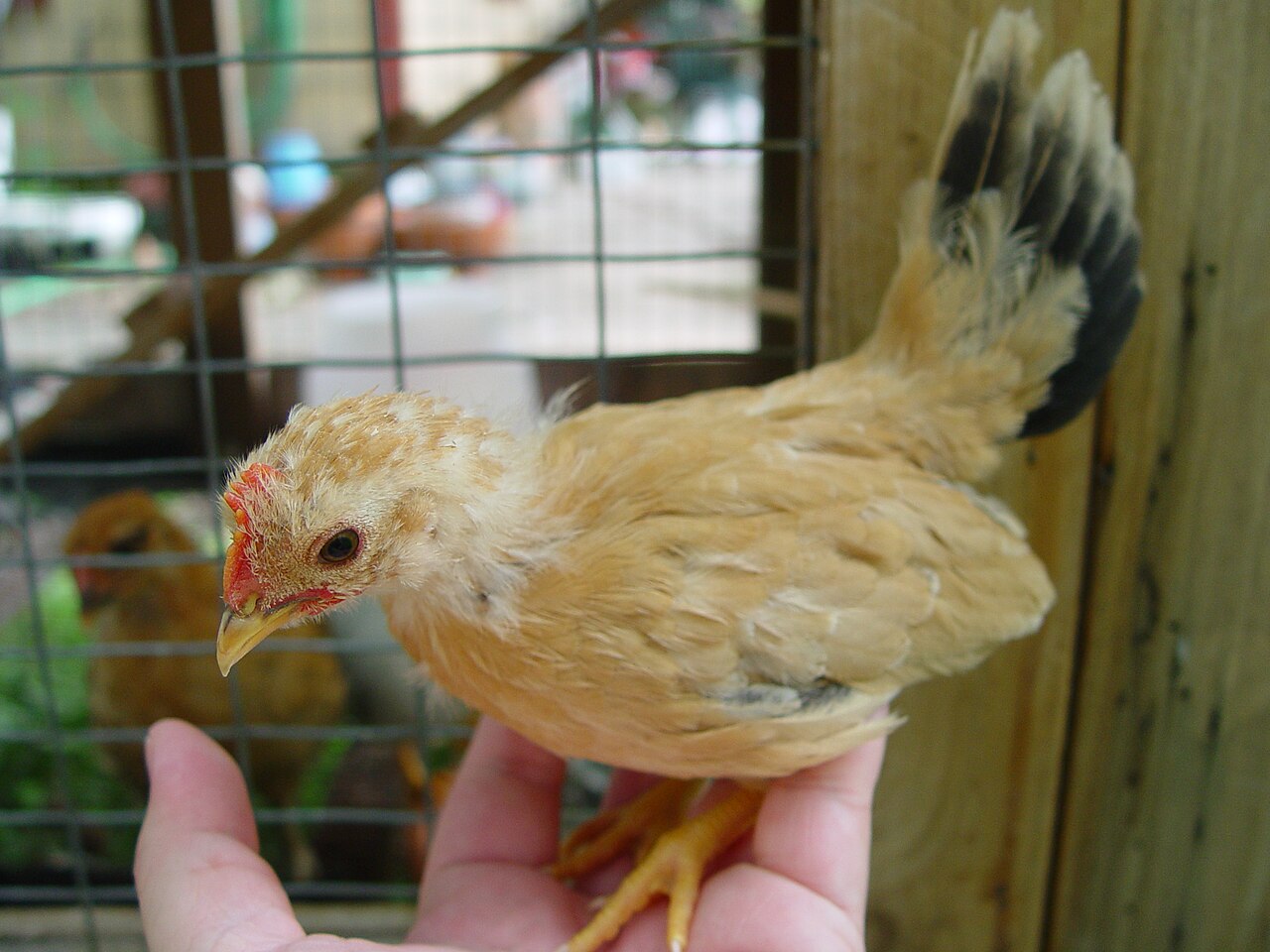
The Serama is the smallest recognized chicken breed on the planet, with show class hens under 13 oz (370 g) and roosters that fit comfortably in one hand. It came out of Malaysia in the late twentieth century and reached the United States around 2000, where it spread fast among keepers who wanted a bird that could live in a garden the size of a parking space.
The breed’s signature is its posture. A good Serama holds its body almost vertical, with the breast pushed forward, wings pointing down at the ground, and the tail carried high and close to the back of the head. Breeders judge that outline more strictly than color, which is why Serama come in almost every plumage pattern without a single dominant standard.
Serama hens lay 100 to 150 small cream eggs a year, each around 0.8 oz (23 g), so roughly three of them equal one standard large egg. They are unusually people oriented for a bantam and will perch on a forearm within a few weeks of regular handling. The main limitation is cold: Serama do poorly below about 40 F (4 C) without a heated shelter.
Sebright: Laced Feathers in a Tiny Frame
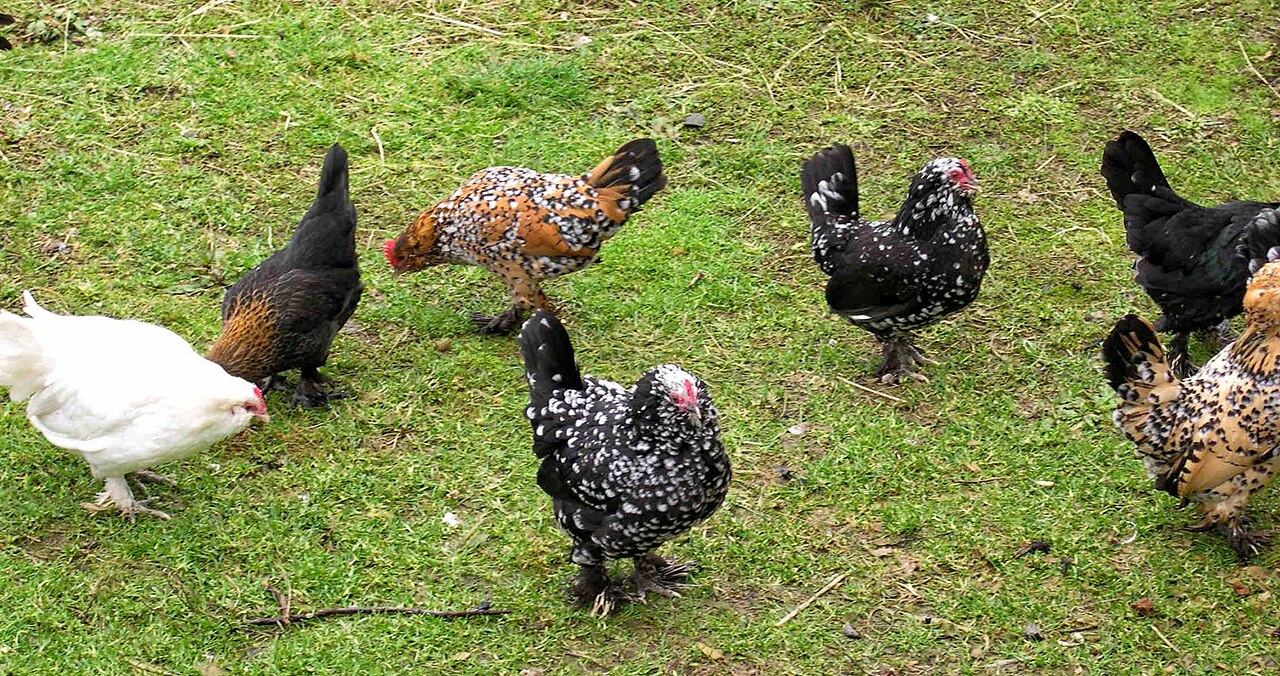
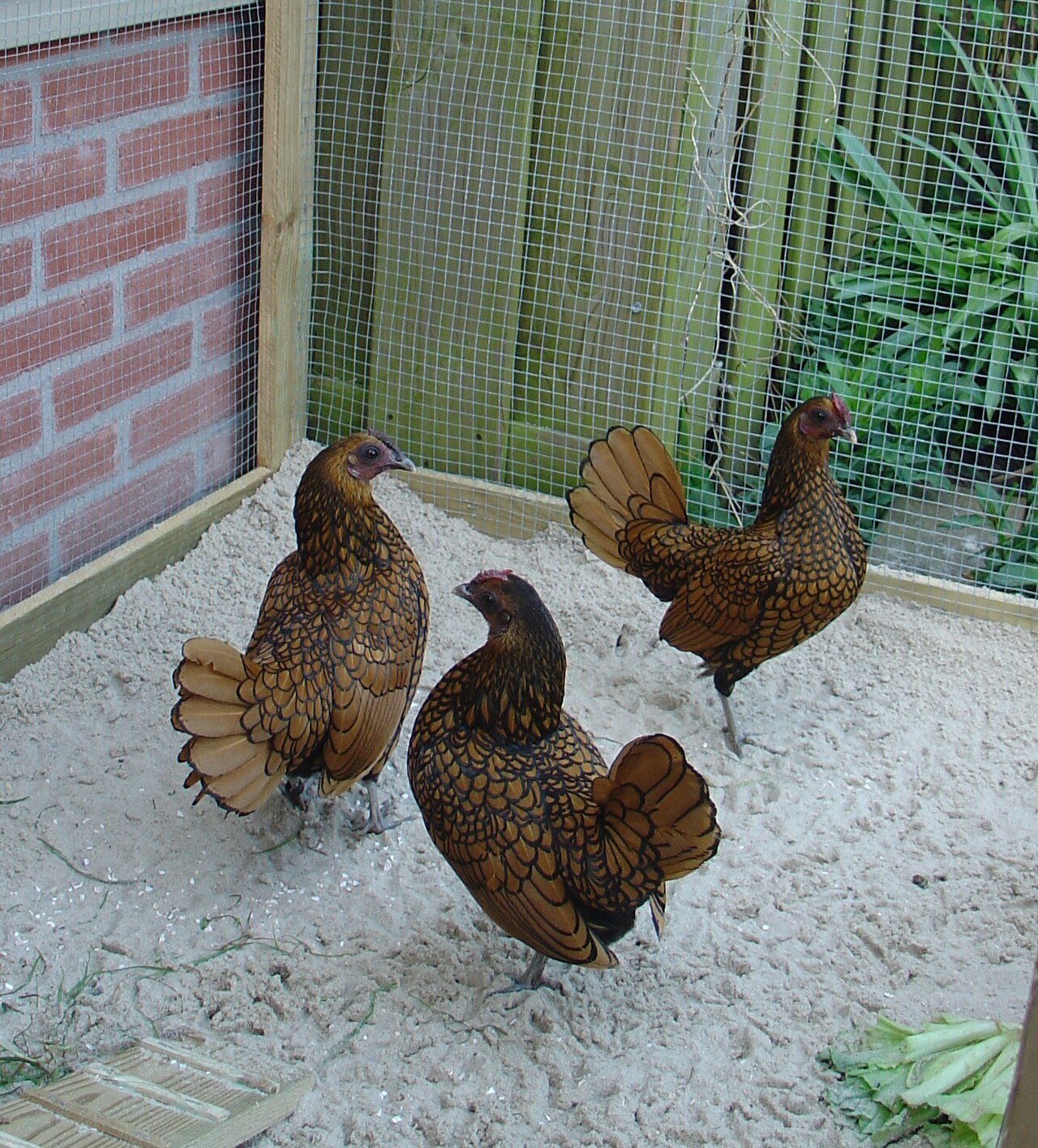
The Sebright is a true bantam developed in England in the early 1800s by Sir John Saunders Sebright, and it remains the classic ornamental small chicken. Hens weigh about 20 oz (570 g). Every feather carries a sharp dark outline against a gold or silver ground, a pattern that took decades of selective breeding to fix and still takes skill to maintain.
Sebright roosters are hen feathered, meaning they lack the long pointed sickle and saddle feathers that most male chickens grow. From a distance a Sebright cockerel looks like a slightly larger hen with a rose comb and a bolder stance. That trait is unique enough among small breeds that it alone identifies the bird in a mixed run.
Laying is the weak point. A Sebright hen manages 60 to 80 tiny white eggs a year and rarely goes broody, so this is a bird kept for its appearance rather than the kitchen. They are also active and light enough to clear a 5 ft (1.5 m) fence from a standing start, which means a covered run is not optional. Keepers who want the same crisp contrast in a larger bird usually look at black and white chicken breeds instead.
Japanese Bantam: Short Legs and Upright Tail
The Japanese Bantam, known as Chabo in its home country, is built around two exaggerated traits: extremely short legs and a huge upright tail that can rise above the head. Hens weigh about 18 oz (510 g), and the body sits so low that the wing tips nearly brush the ground when the bird stands still.
Those short legs come from a gene that is lethal in the homozygous form, so a quarter of the chicks in a Japanese Bantam to Japanese Bantam pairing die before hatching. Established breeders accept the lower hatch rate as part of the breed. Anyone incubating their own replacements should plan for roughly 25 percent fewer live chicks than the fertility numbers suggest.
Temperament is the reason this breed keeps showing up in family flocks. Japanese Bantams are slow moving, quiet, and content in a small run, and they tolerate handling better than most ornamental bantams. They lay only 60 to 90 cream eggs a year and go broody readily, which makes them useful as foster mothers for other small breeds.
Dutch Bantam: A True Bantam That Actually Lays
The Dutch Bantam is the practical choice among true bantams because it lays 140 to 180 eggs a year, far more than any other bird in its weight class. Hens weigh about 19 oz (540 g), and the eggs run 1.1 oz (31 g), small but steady through spring and summer with a short winter pause.
The breed reached the United States in the 1950s and is still described in old Dutch sources as the farmyard bantam that scavenged behind larger flocks. The body is compact and neatly angled, with a single upright comb, white earlobes, and slate blue legs. Partridge is the most common color, though silver and yellow partridge both appear in show lines.
Dutch Bantams are alert and quick without being unfriendly. They forage hard, which suits a yard where the birds have real ground to work, and they use cover intelligently when a hawk passes over. Keepers report that a Dutch hen will often spot aerial predators before the standard fowl in the same run does.
Belgian d’Uccle: Feathered Feet and a Calm Temperament
The Belgian d’Uccle, sometimes listed as Barbu d’Uccle, is a bearded true bantam with heavily feathered legs and feet. Hens weigh about 22 oz (620 g). The beard and muff wrap the face in a rounded cushion of feathers, and mille fleur, the speckled orange and white pattern, is the color most American hatcheries carry.
This is one of the tamest small breeds available. Belgian d’Uccle hens tolerate being picked up, settle quickly on a lap, and rarely panic in a crowded run, which makes them a common first bird for children. They lay 100 to 150 small cream eggs a year and sit reliably when they go broody.
Foot feathering is the maintenance cost. Feathered feet pick up mud, and in a wet run the shafts break, bleed, and invite scaly leg mites. A dry, deeply bedded coop and a run with some drainage keep the problem manageable, but this breed is a poor fit for a permanently soggy corner of the yard.
Silkie Bantam: Fluffy Plumage and Constant Broodiness
Silkie Bantams carry feathers without functional barbs, so the plumage looks and feels like fur rather than a normal feather coat. Hens weigh about 32 oz (900 g), which puts them at the upper end of the small breeds, and they also show black skin, dark bones, five toes on each foot, and a walnut comb.
Because the feathers do not interlock, Silkies cannot fly and cannot shed rain. A soaked Silkie loses body heat fast, so the run needs a roof or at least a large covered section in any climate with regular rainfall. They also cannot be dried by shaking the way a hard feathered bird can.
The breed is famous for broodiness. A Silkie hen will sit on anything egg shaped, including ceramic decoys, and many small flock keepers keep one purely to hatch clutches from breeds that have lost the instinct. Laying stops during each broody cycle, which is why annual production stays around 100 to 120 eggs despite decent shell quality.
Polish Bantam: The Crested Small Breed
The Polish Bantam is the miniature of the crested show breed, with hens at roughly 26 oz (740 g) and the same dramatic ball of head feathers as the standard size Polish. The crest grows from a bony knob on the skull, and in bearded varieties a muff and beard fill in below the eyes as well.
That crest blocks most of the bird’s upward field of vision. Polish Bantams startle easily because they genuinely do not see a hand coming from above, and in mixed flocks they end up near the bottom of the pecking order. Approaching from the side and speaking before you reach in prevents most of the flapping.
Many keepers trim the crest feathers back above the eyes once the bird is out of show condition. It is a five minute job with blunt scissors, it does not hurt the bird, and it measurably reduces both panic and the frostbite risk that comes from a crest that stays damp in winter. Laying is modest at 100 to 140 small white eggs a year.
Rosecomb Bantam: A Show Bird With Attitude
The Rosecomb is one of the oldest English true bantams, documented since at least the fourteenth century, and it is judged primarily on the comb that gives it the name. A show quality rose comb is broad and flat on top, covered in fine points, and ends in a single straight spike that follows the line of the neck.
Hens weigh about 18 oz (510 g) and carry large white earlobes that contrast sharply against black plumage in the most common variety. Those earlobes are fragile: sun, wind, and rough handling all mark them, and show breeders often keep birds in shade for weeks before an exhibition to preserve the surface.
Rosecombs are energetic and vocal. Roosters are assertive for their size and will challenge much larger birds, so a single Rosecomb cockerel in a mixed flock usually needs watching. Hens lay 50 to 80 tiny white eggs a year and seldom go broody, which places this breed firmly in the ornamental column.
Old English Game Bantam: Hardy and Alert
The Old English Game Bantam is the small version of an ancient British fowl, and it is the toughest bird in this list. Hens weigh about 22 oz (620 g) over a dense, muscular frame with a tight feather coat that sheds rain and resists cold better than the fluffier bantams do.
These birds forage constantly and cover ground. In a yard with cover they behave almost like wild birds, roosting in trees if allowed and raising chicks with very little help. That independence is an asset on an acre of land and a liability in a small suburban run, where the same energy turns into escape attempts.
Roosters are genuinely aggressive toward other males, a trait fixed by centuries of selection before the sport that shaped them was banned. Keep one cockerel per flock, and expect hens to be protective rather than hostile. Annual laying sits at 80 to 120 small tinted eggs, with strong broody behavior in spring.
How Many Eggs Do Small Chicken Breeds Lay?
Most small chicken breeds lay 100 to 180 eggs a year, which is not far below the 180 to 250 of a standard dual purpose hen. The gap that matters is weight per egg. A bantam egg runs 0.8 to 1.2 oz (23 to 34 g) against 2 oz (57 g) for a standard large egg, so six bantam hens produce roughly the volume of three standard hens.
Dutch Bantams and Serama sit at the productive end of the range, Sebrights and Rosecombs at the bottom, and Silkies lose weeks each season to broodiness. Small breeds also have a shorter productive peak, with output falling noticeably after the third laying year, though many bantams stay active and healthy well past that point.
Feed quality drives the numbers more than breed selection does. A layer ration at 16 to 18 percent protein with free choice oyster shell keeps shell quality stable, and treats should stay under 10 percent of intake. Scraps such as apples and cabbage are fine in that proportion. Detailed nutrient requirements for small flocks are published by land grant university extension programs such as Penn State Extension.
How Much Space and Feed Do Small Breeds Need?
Plan 2 sq ft (0.19 sq m) of coop floor and 5 sq ft (0.46 sq m) of run per bantam, against 4 and 10 for standard fowl. Roost bars should sit 18 to 24 in (46 to 61 cm) off the floor, lower than a standard coop, because heavy feathered small breeds like Silkies and Cochins injure their feet landing from height.
Daily feed intake is about 2 oz (57 g) per bird, roughly 2.8 lb (1.3 kg) per bantam per month. Nest boxes can drop to 10 by 10 in (25 by 25 cm), and the pop door can be as small as 8 by 10 in (20 by 25 cm), which helps keep raccoons and opossums out of the coop at night.
Security needs more attention than with large fowl, not less. A bantam is within carrying weight for a red tailed hawk, a great horned owl, and most mid sized mammals, so runs need hardware cloth rather than poultry netting and a covered top. Free ranging small breeds without overhead cover loses birds steadily in most parts of the country.
Frequently Asked Questions
What is the smallest chicken breed?
The Serama is the smallest recognized chicken breed. Show class hens weigh under 13 oz (370 g) and stand about 6 in (15 cm) tall, while the largest accepted class reaches 19 oz (540 g). A Serama rooster is roughly the size of a pigeon and fits in one cupped hand.
What are mini chickens called?
Mini chickens are called bantams. That is the correct term for any breed whose adult hen stays under about 4 lb (1.8 kg), and it covers both true bantams such as the Serama and miniaturized versions of standard breeds. Teacup chicken and micro chicken are informal names for the same birds.
What are teacup chickens?
Teacup chickens are not a separate breed. The name is a sales term for the smallest bantams, usually Serama or Dutch Bantams, which weigh 13 to 20 oz (370 to 570 g) as adults. Any seller advertising a distinct teacup breed is describing a small bantam at a higher price.
Do small chicken breeds lay smaller eggs?
Yes. Bantam eggs weigh 0.8 to 1.2 oz (23 to 34 g) against 2 oz (57 g) for a standard large egg, so you need about three bantam eggs to replace two standard ones. Shell strength, flavor, and yolk proportion are comparable, and the yolk to white ratio is often slightly higher.
Are small chicken breeds good for beginners?
Belgian d’Uccle, Silkie, and Japanese Bantam suit beginners well because they are calm, easy to handle, and content in small runs. Sebright, Rosecomb, and Old English Game are poorer first choices: they fly well, resist handling, and need more secure enclosures than a first coop usually provides.
Can small chicken breeds live with standard size chickens?
They can, but bantams end up low in the pecking order and need escape routes. Provide extra feeders, multiple roost heights, and at least one sheltered corner a large hen will not follow into. Avoid mixing bantams with heavy aggressive breeds, and never house a single bantam with a group of standard hens.
How long do small chicken breeds live?
Most bantams live 5 to 8 years, similar to standard hens, and individual birds reach 10 or more with good care. Silkies and Serama tend toward the shorter end because of cold sensitivity and reproductive problems, while hardy breeds like Old English Game Bantams regularly pass 8 years.
Do small chicken breeds need a heated coop in winter?
Most do not. Dutch, Old English Game, and Rosecomb handle freezing temperatures with dry bedding and good ventilation. Serama and wet feathered Silkies are the exceptions and need supplemental heat below roughly 40 F (4 C), along with a fully covered run that keeps their plumage dry.