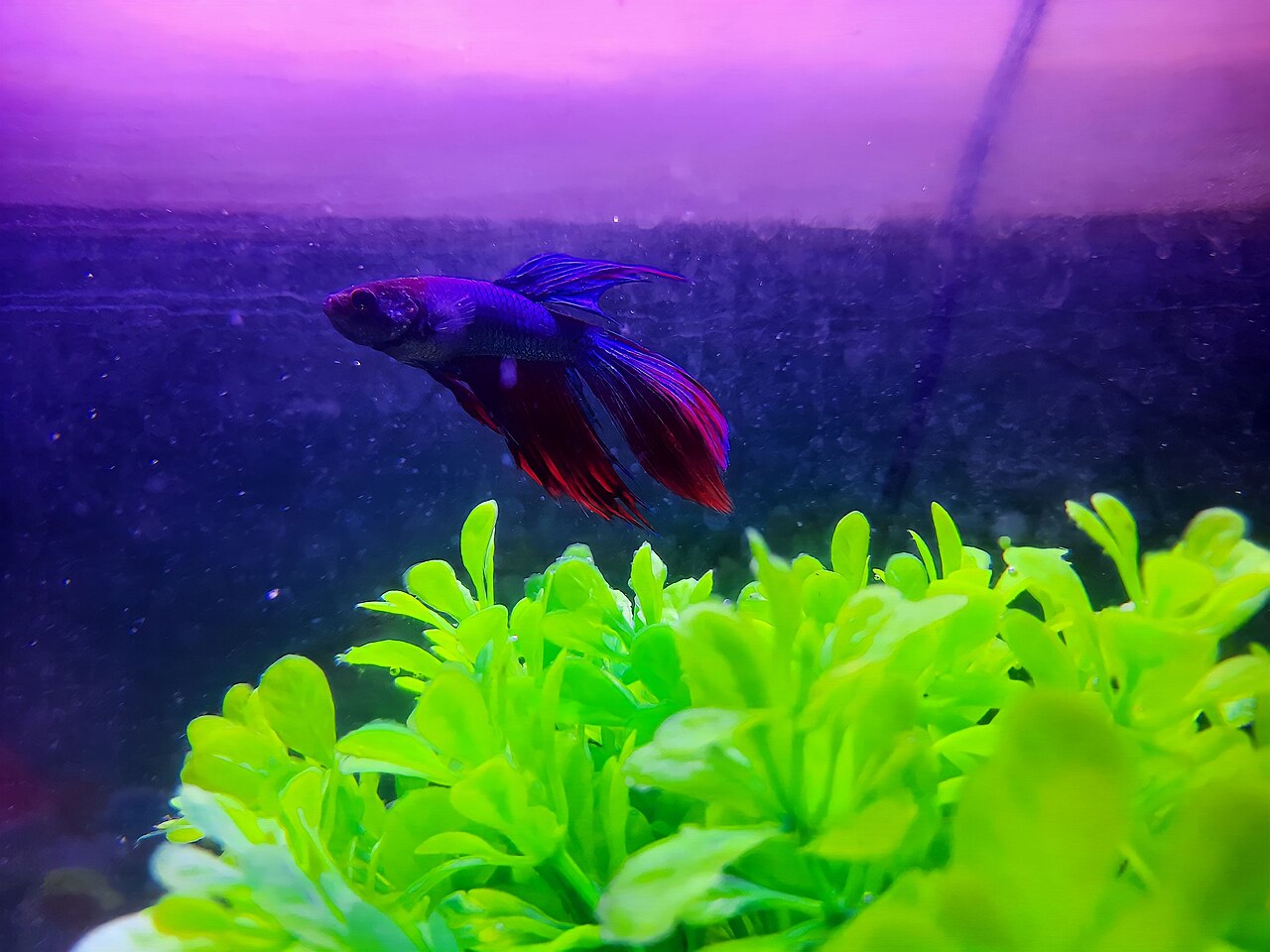
Purple Betta Fish: Why True Purple Is So Rare and What You Actually Get
A purple betta fish is real, but true purple is one of the least common colors in the hobby. Most fish sold as purple are blue or steel bettas with a red or copper layer on top, and that overlay reads as violet only under certain light. Thai breeders have chased a stable purple line for decades without locking it in.
That matters if you are shopping. Knowing which pigment does the work tells you whether the color holds at home or shifts as the fish matures. The basics of betta fish care do not change with color, but your expectations should.
True purple bettas are rare because Betta splendens has no purple pigment. Violet tones come from blue structural iridophores layered over red pigment cells, so the effect depends on light angle and fades as the fish ages. Most purple bettas are lavender, mauve, or copper violet variants.
| Type sold as purple | What you actually see | How rare | US price |
|---|---|---|---|
| Lavender | Pale violet, often pink wash | Uncommon | $25 to $45 |
| Mauve | Dusty purple over steel blue | Uncommon | $25 to $50 |
| Copper violet | Metallic sheen, flips purple in light | Common | $15 to $35 |
| Royal blue sold as purple | Deep blue with red fin wash | Very common | $8 to $20 |
| Purple butterfly | Violet body, pale fin band | Rare | $40 to $90 |
| Solid true purple | Even violet, no blue flash | Extremely rare | $80 and up |
Are Purple Bettas Rare?
Purple bettas are rare in the strict sense and common in the loose sense. A chain store tag reading purple usually sits on a royal blue fish with red fin wash. A genuine violet fish from a Thai breeder is a waiting list item that sells in minutes.
The reason is genetic. Purple has to be built by stacking blue iridophores, which reflect structurally rather than through pigment, over red erythrophores. That stack is unstable, so siblings from one purple spawn often come out blue, red, or muddy.
What Is a Lavender Betta?

A lavender betta is a pale violet fish with a soft pink or gray undertone, and it is the closest thing to purple that breeds with any reliability. Lavender sits between pink bettas and true violet, and many buyers searching for purple end up happiest with one.
It comes from a marble or pastel base with reduced black pigment, letting the blue and red layers show through softly. Marble bettas also carry a jumping gene that switches patches on over a lifetime, so a lavender fish may pick up blue streaks at a year old.
Mauve, Copper Violet, and Purple Butterfly

Mauve is a dusty purple over a steel blue base, darker and more even than lavender. Copper violet is the most common purple looking betta in stores: a metallic fish whose sheen swings violet, bronze, or green with the light.
Purple butterfly describes pattern, not shade: a violet body with fins ending in a clean band of pale tissue. Good banding is hard to breed, which is why those fish outprice a solid of the same hue.
How Much Does a Purple Betta Cost?
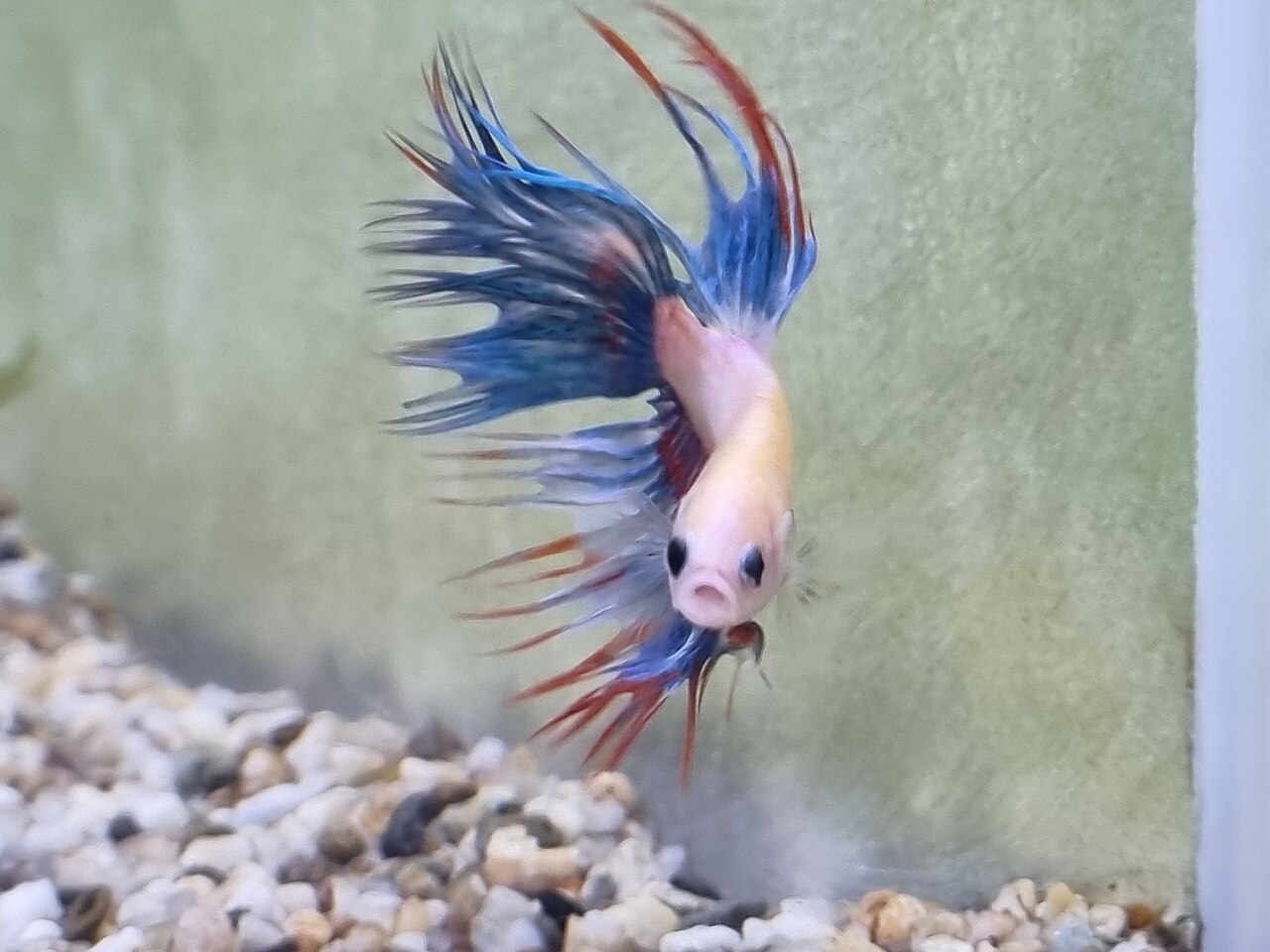
Expect $15 to $35 for a copper violet locally, $25 to $50 for a lavender or mauve, and $80 to $200 for a competition grade purple from a named Thai breeder. Shipping adds $25 to $60 per box, which is why buyers split transshipper orders.
Price tracks evenness and finnage more than hue. Clean violet across the body with no red bleed costs several times what a blotchy fish does. Show quality female bettas in the same run cost less than males because the fins are shorter.
Where to Buy a Purple Betta
Skip the bargain cups. A $6 fish labeled purple is almost always royal blue, and no care turns it violet. Local aquarium clubs, betta groups, and licensed transshippers importing weekly from Bangkok are where real purple appears.
Ask for the parent pair and the spawn date. Reputable sellers know both. The same photo checks apply to any fancy tail type, including a halfmoon betta shown only at full flare.
How to Keep a Purple Betta’s Color Strong
Color holds when water quality holds. Stable water temperature between 78 and 82 F (25 to 28 C), zero ammonia, and nitrate under 20 ppm beat any color enhancing food. Stressed fish go pale within hours.
Feed frozen bloodworms or daphnia twice a week alongside a quality pellet. Age does the rest, and not always in your favor: iridophore layers thicken, so a purple fish often drifts blue in its second year. That is normal and says nothing about how long bettas live. The USGS Nonindigenous Aquatic Species database tracks Betta splendens in US waters.
Frequently Asked Questions
What is the rarest color betta?
Solid true purple and pure black are the hardest colors to produce. Purple has no dedicated pigment cell, and the black melano gene carries a defect that leaves many females infertile. Albino bettas are rarer still but rarely survive long in the hobby.
What is the holy grail of betta fish?
Breeders usually name a stable, solid, non metallic purple as the holy grail. Some point instead to a true black orchid without blue iridescence. Both describe the same problem: a color that shows up in individual fish but has never bred true across generations.
Do bettas like it dark at night?
Yes. Bettas need roughly eight to twelve hours of darkness each night and sleep lying on leaves or the substrate. A tank light left on around the clock stresses them, dulls their color, and feeds algae. An outlet timer solves it for a few dollars.
Why can’t you touch betta fish?
Bettas are covered in a protective slime coat that blocks bacteria and parasites. Handling wipes it away and opens the door to fin rot and fungal infection. Use a net or cup for transfers, and wet your hands first if you must handle one.
How long is a betta’s memory?
Longer than the myth suggests. Bettas learn feeding routines within days and recognize the person who approaches the tank, and aquarists report retained training after weeks of separation. The three second memory claim applied to goldfish originally and was wrong there too.
Do betta fish like to be talked to?
They cannot hear speech the way you do, but they detect vibration through the lateral line and swim bladder. They respond to your presence and routine, not the words. Talking to a betta at feeding time reinforces the association and does no harm.