Barking Tree Frog: Sound, Size, Range and Pet Facts
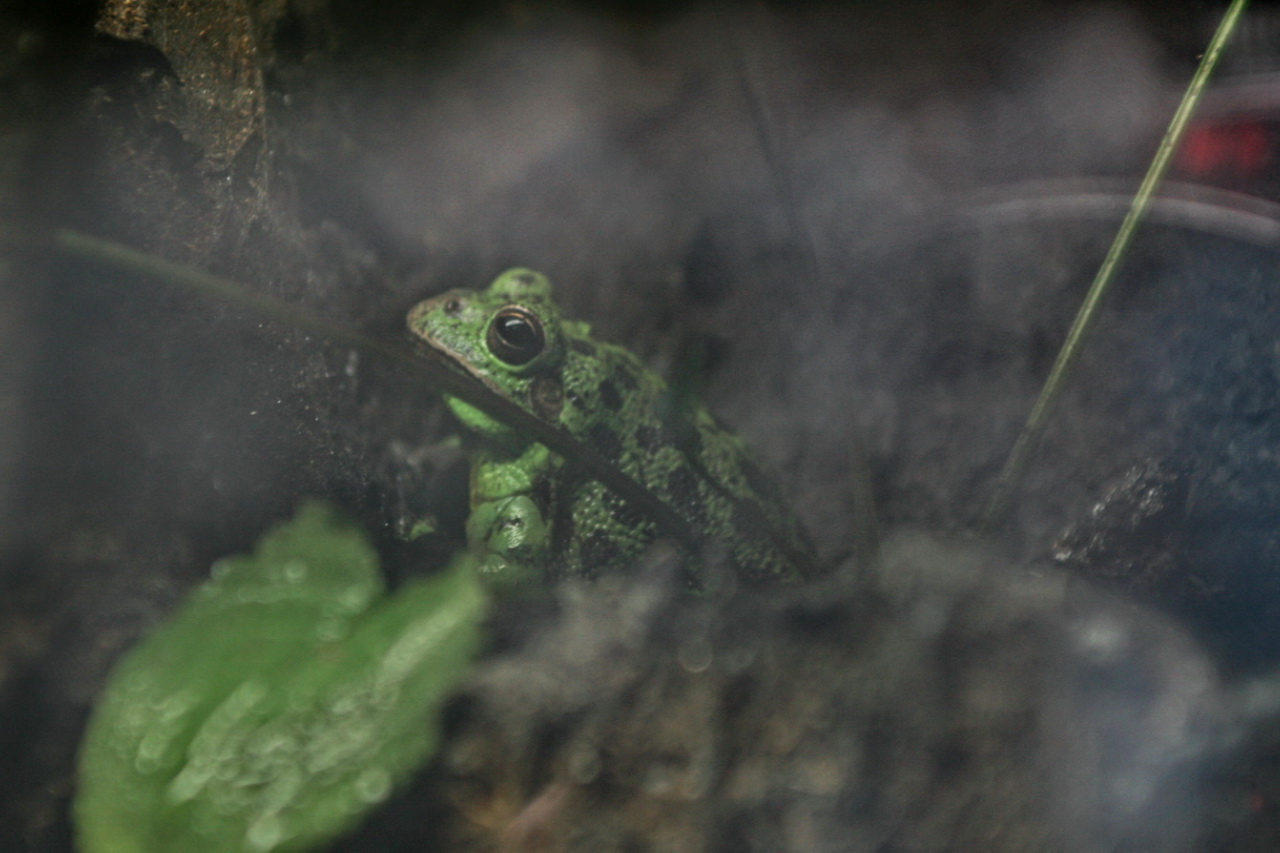
The barking tree frog (Hyla gratiosa) is the largest native treefrog in the southeastern United States, and it earns its name with a hoarse, doglike bark that carries for hundreds of yards on humid summer nights. Adults reach 2 to 2.7 in (5 to 7 cm), far bulkier than the green treefrogs they share a pond with, and their skin carries dark round spots on a base of green, brown or gray that shifts with temperature and mood.
Most people meet this species by ear. A chorus calling from flooded pine flatwoods in Georgia or Florida sounds less like frogs than like a pack of small dogs across the field, yet the frogs spend the day wedged into bark or buried in sand.
The barking tree frog is a large, spotted treefrog native to the southeastern United States, growing to about 2.7 in (7 cm). Males give a single hoarse bark, repeated every few seconds, from ponds and flooded flatwoods between March and August. The species is harmless to people and is not venomous.
| Quick Fact | Detail |
|---|---|
| Scientific name | Hyla gratiosa |
| Adult size | 2 to 2.7 in (5 to 7 cm), the largest native US treefrog |
| Range | Coastal plain from Maryland to Louisiana, core in Florida and Georgia |
| Call | Single hoarse bark, repeated every 1 to 2 seconds |
| Diet | Moths, beetles, crickets, spiders, small roaches |
| Lifespan | About 5 to 7 years in the wild |
What Kind of Frog Makes a Barking Sound?
In the southeastern US, the frog making a barking sound at night is almost always the barking tree frog. The male call is a single, deep, hollow bark, repeated every one to two seconds from a floating position or a shrub at the water’s edge. Heard from a quarter mile away it is genuinely confusing, and wildlife agencies field calls about it every spring.
Up close the call changes character. A frog calling from land gives a shorter, harsher note, and the full barking chorus only develops once dozens of males are floating in a breeding pond.
Green treefrogs (Hyla cinerea) often call from the same ponds, but their note is a nasal honk given in a fast, reedy series. If you want to compare the two by ear before you go out, our guide to tree frog sounds lays out the common calls side by side.
How to Identify a Barking Tree Frog
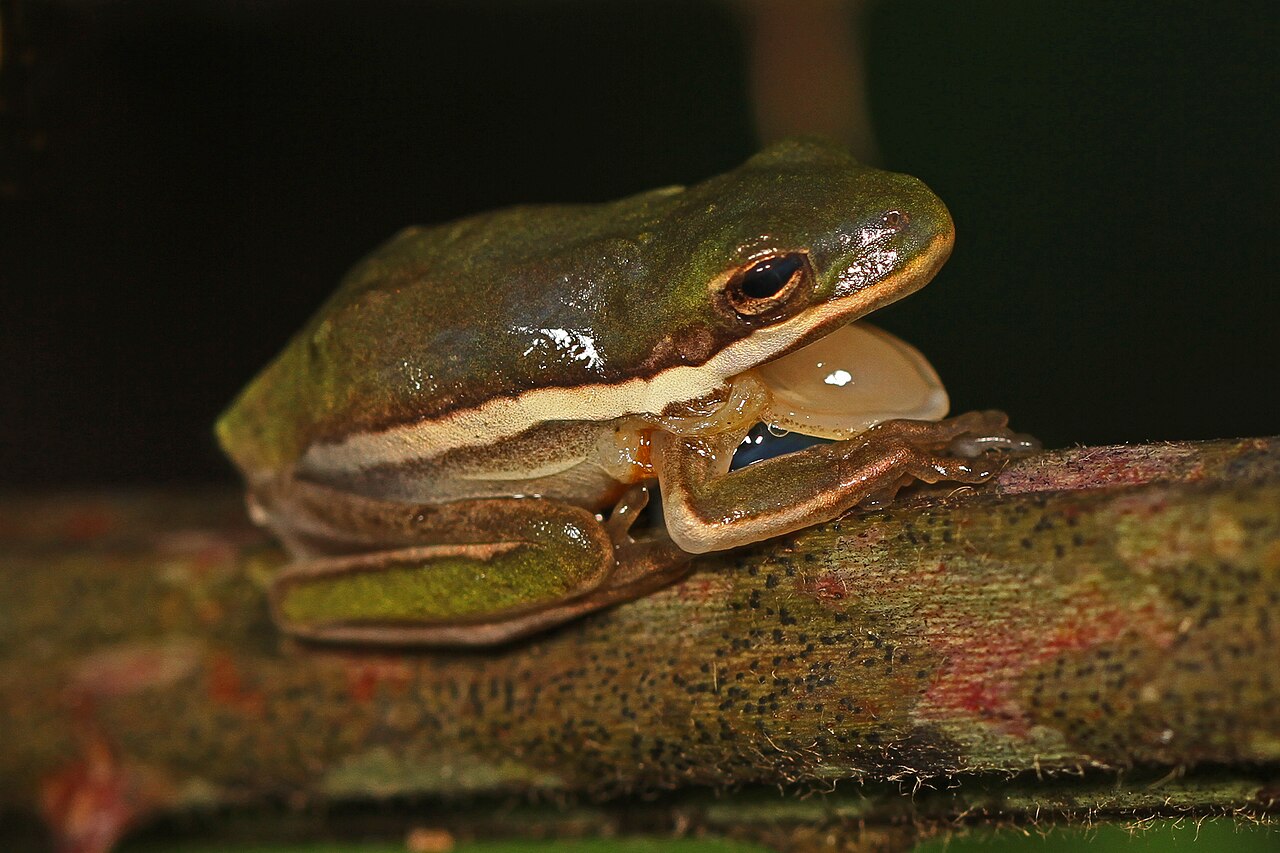
Look for a heavy body, granular skin and dark round spots. No other US treefrog combines that bulk with clear spotting. The base color runs from green through olive to gray, and one frog can shift across that range within an hour, so color identifies nothing.
The reliable marks are the spots, the rough and slightly warty skin, and a pale stripe along the upper lip and flank. The belly is cream or yellow, and males show a darker throat pouch.
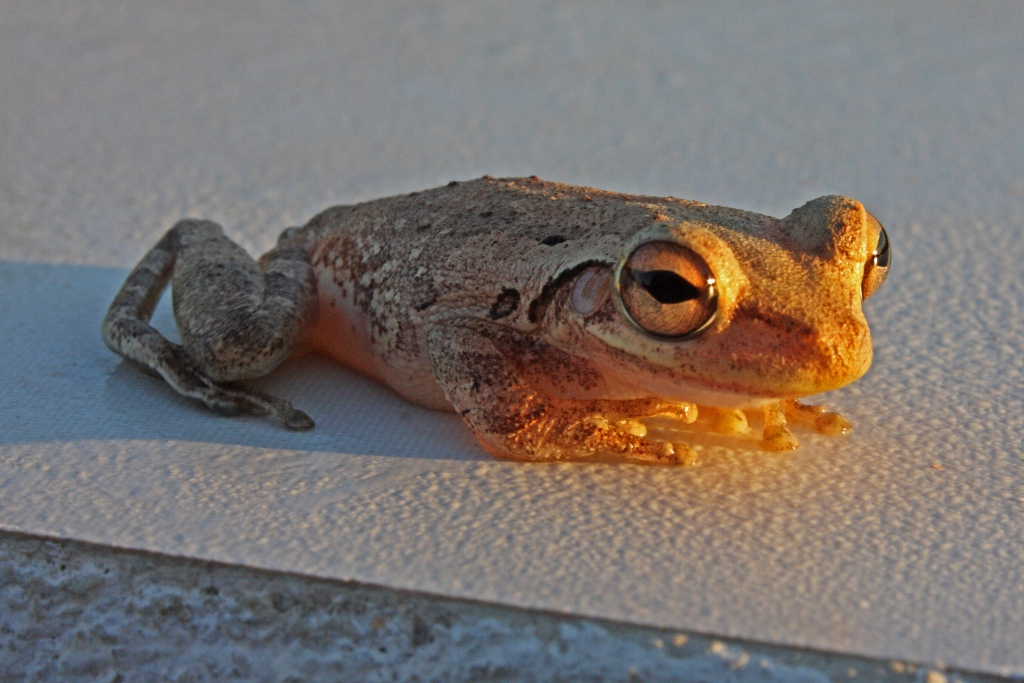
The usual confusions are the green treefrog, smooth skinned and unspotted, and the invasive Cuban tree frog, which is larger and has oversized toe pads. Compare also the red-eyed tree frog and the white’s tree frog.
Where Barking Tree Frogs Live
The species occupies the Atlantic and Gulf coastal plain, from southern Maryland through the Carolinas and Georgia to Florida, Alabama and eastern Louisiana. Its stronghold is Florida and southern Georgia, where longleaf pine flatwoods and cypress depressions give it dry cover and temporary breeding pools.
Outside the breeding season these frogs are hard to find because they are not always in trees. They burrow into loose sand at the base of shrubs, wedge under bark, or shelter in palmetto leaf axils, sometimes several feet underground during dry spells. Northern populations go dormant in cold months, much like the species in our piece on frog hibernation.
The Savannah River Ecology Laboratory at the University of Georgia has tracked the species for decades and publishes field accounts at srelherp.uga.edu.
What Does a Barking Tree Frog Eat?
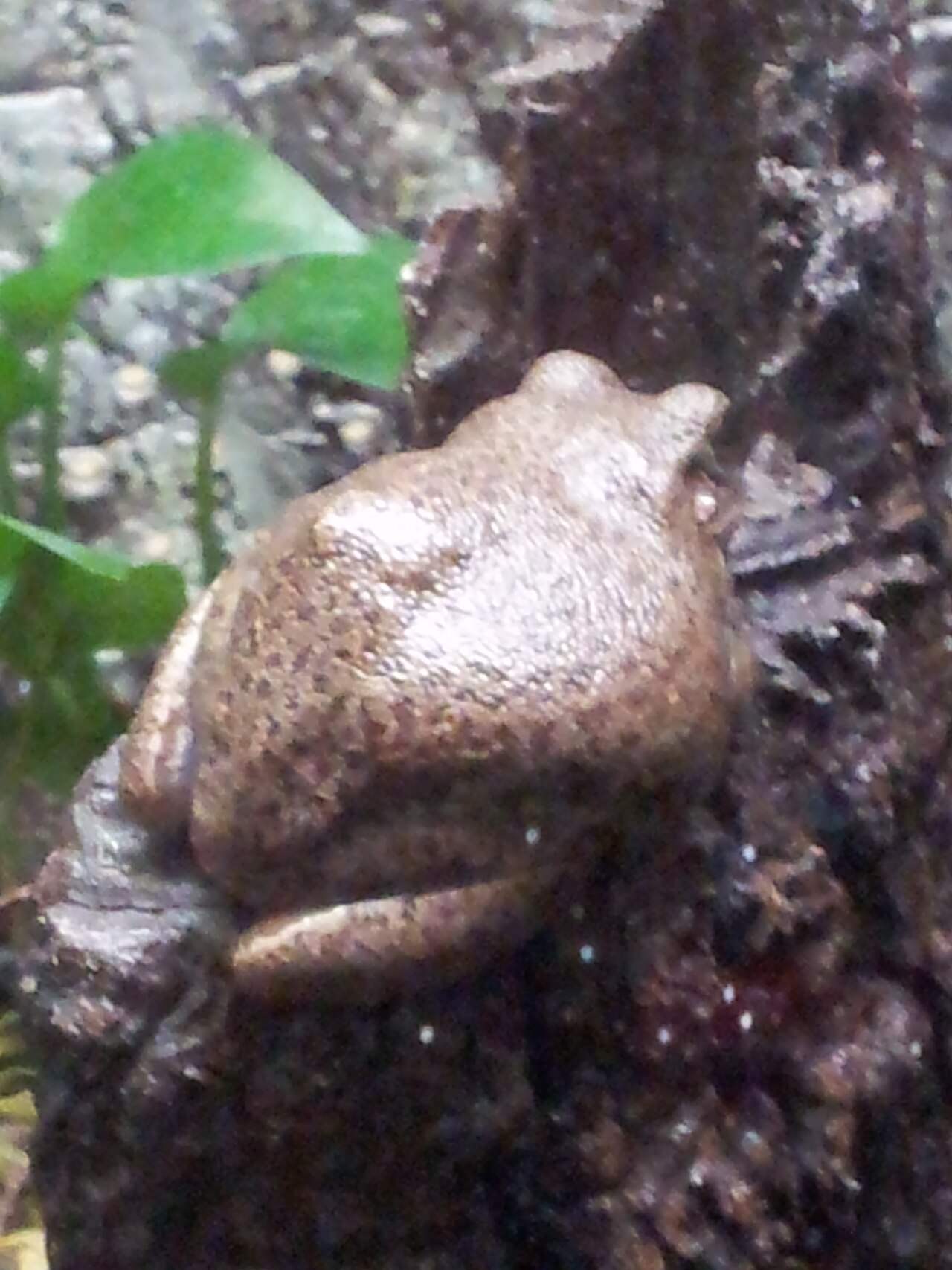
A barking tree frog eats whatever invertebrate fits in its mouth: moths, beetles, crickets, small roaches and spiders. It hunts by ambush, which is why porch lights attract them in summer. The insects come to the light and the frogs come to the insects.
Tadpoles graze algae and detritus for roughly six to ten weeks before transforming. Metamorphs are about half an inch long and head straight for cover, where mortality is heaviest.
Captive adults do well on crickets and dubia roaches dusted with calcium, close to what keepers feed the pacman frog, though this species needs height and climbing branches rather than floor space.
Can I Keep a Barking Tree Frog as a Pet?

You can keep a barking tree frog as a pet in much of its range, but only a captive bred animal and only where state law allows it. Florida and Georgia regulate collection of native amphibians, and some states ban taking them from the wild. Check your state rules first.
Care itself is moderate. A vertical enclosure of at least 18 by 18 by 24 in, temperatures of 72 to 82 F (22 to 28 C), humidity around 60 to 70 percent, cork bark for climbing and a shallow water dish cover the basics. They are loud: a calling male in a bedroom is heard through a closed door. Wild caught animals arrive with parasite loads and adjust poorly, so keepers steer beginners toward captive bred stock.
Frequently Asked Questions
Are Barking Treefrogs rare?
Barking treefrogs are locally common in Florida and southern Georgia but genuinely rare at the edges of the range. Maryland, Tennessee and Kentucky list them as endangered or of conservation concern, largely because the temporary wetlands they breed in have been drained. Seeing one in those states is a notable record worth reporting.
Why do tree frogs scream at night?
Tree frogs scream at night for two different reasons. The loud, repeated calls are males advertising for mates, which peaks after warm rain. A single sharp, high scream is a distress call, given when a snake or bird grabs the frog, and it is startling enough that people often mistake it for a bird or a small mammal.
How to get rid of Barking Treefrogs?
Remove what draws them rather than the frogs themselves. Turn off outdoor lights that concentrate insects, empty standing water in containers and tarps, and trim shrubs away from walls. Most states protect native amphibians, so killing or moving them may be illegal, and the chorus fades once breeding season ends.
Are barking tree frogs poisonous?
Barking tree frogs are not poisonous to people and not venomous at all. Like most frogs they secrete a mild skin irritant that can sting if rubbed into eyes, and their skin carries bacteria such as salmonella, so wash your hands after handling. Nothing about them compares to a true toxic species like the poison dart frog.