Are Owls Nocturnal? Which Species Hunt Day vs Night
Most owls are nocturnal, but not all of them are, and the exceptions are common enough that you can reasonably expect to see an owl in daylight. Of the roughly 19 owl species that breed in North America, about two thirds hunt mainly at night, a handful are active at dawn and dusk, and at least four hunt in broad daylight as a matter of routine. Asking whether owls are nocturnal is really asking which owl.
The split is not random. It tracks prey, habitat and competition. Owls that hunt rodents in closed forest gain everything from darkness, while owls that hunt in open tundra, prairie or desert face a different problem: in the far north the summer sun barely sets, and an owl that waits for night would not eat. Evolution answered by building daylight hunters out of the same body plan.
Most owls are nocturnal, hunting between dusk and dawn, but several North American species are not. Northern hawk owls, snowy owls, burrowing owls and northern pygmy owls hunt in daylight, and short eared owls hunt at dawn and dusk. Seeing an owl during the day is normal and does not mean the bird is sick.
| Species | Activity Pattern | Main Prey |
|---|---|---|
| Barn owl | Strictly nocturnal | Voles, mice, shrews |
| Great horned owl | Nocturnal, some dusk activity | Rabbits, skunks, birds |
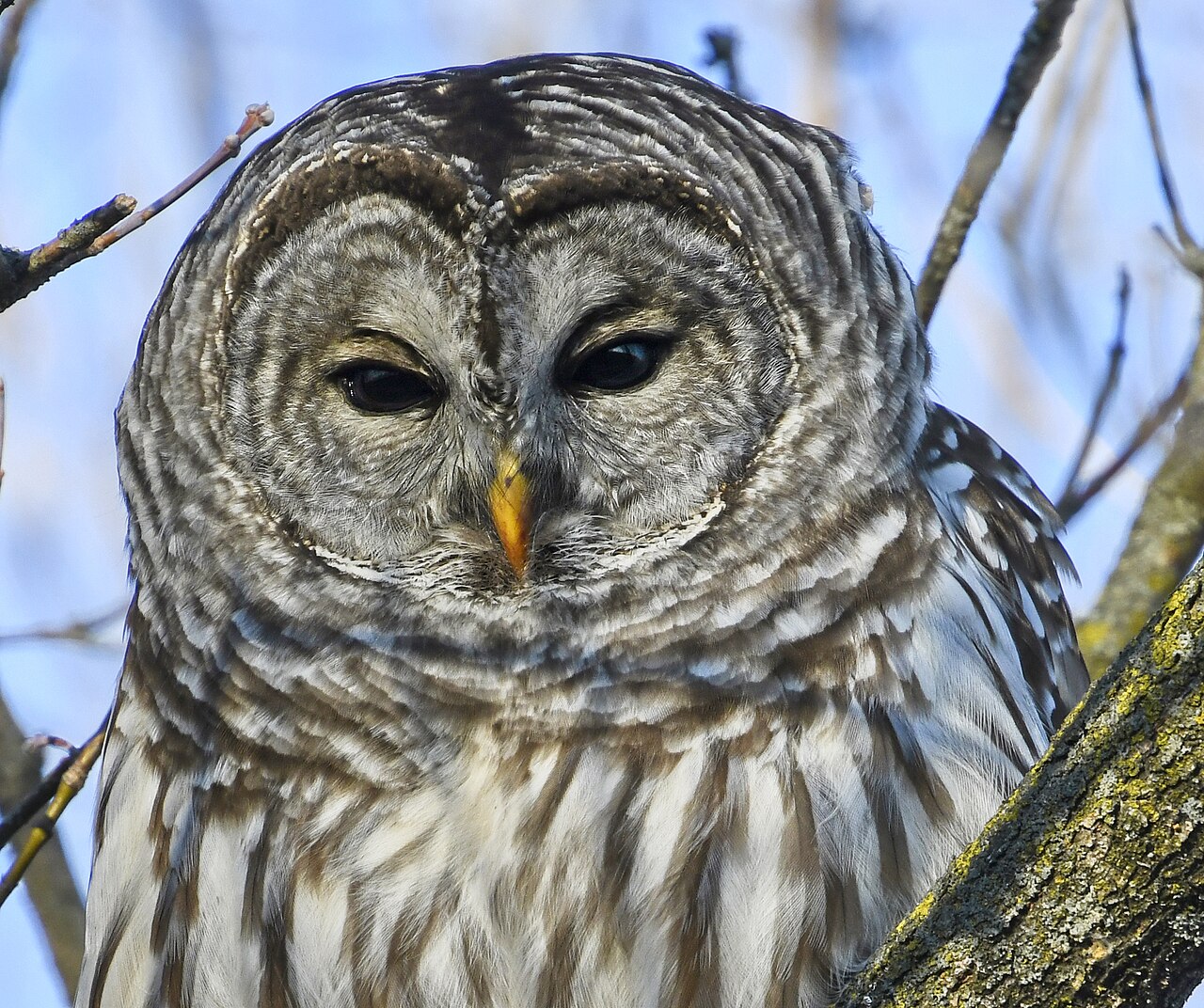
| Barred owl | Nocturnal, often calls by day | Rodents, frogs, crayfish |
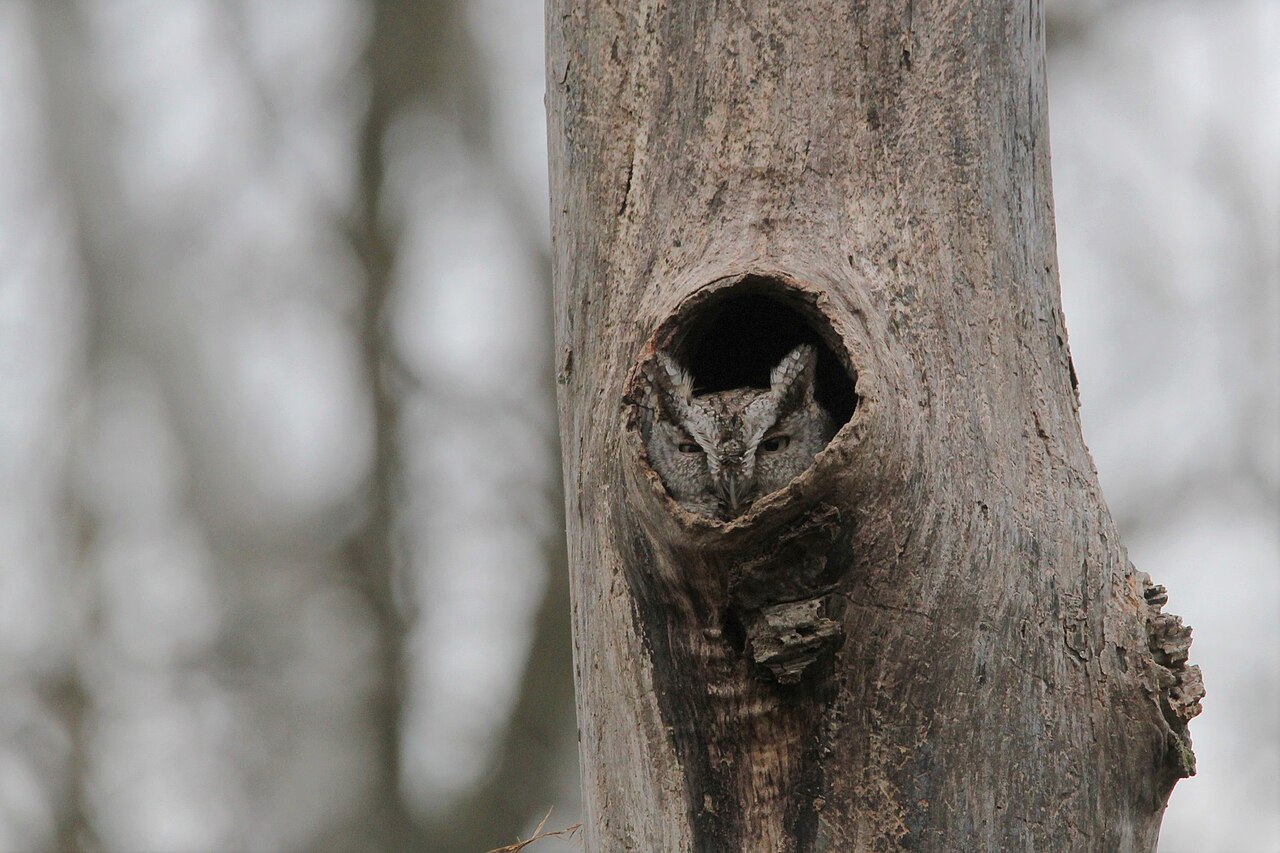
| Eastern screech owl | Nocturnal | Insects, mice, small birds |
| Short eared owl | Crepuscular | Voles |
| Snowy owl | Diurnal in summer | Lemmings, waterfowl |
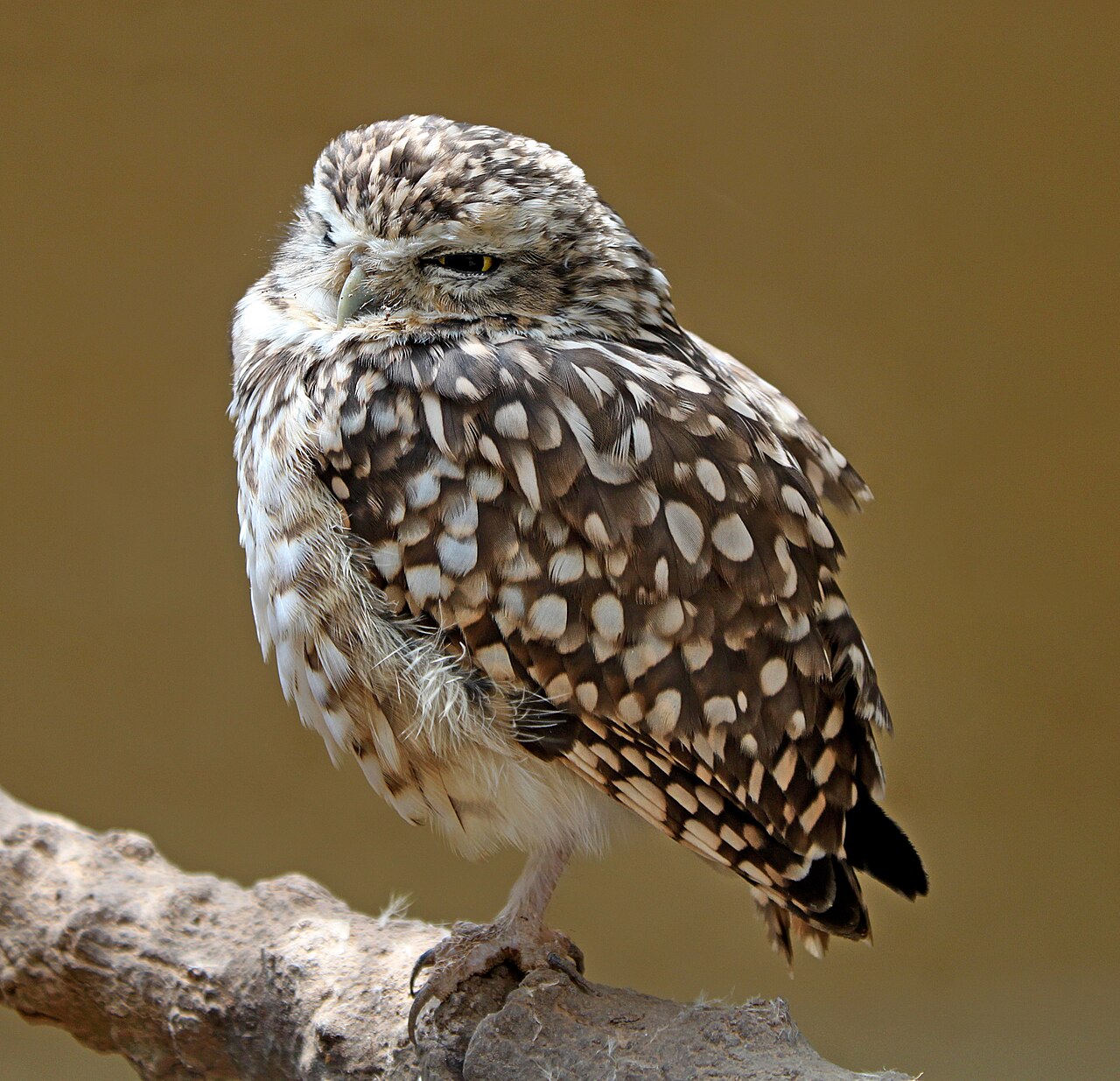
| Burrowing owl | Diurnal and crepuscular | Insects, small rodents |
Which North American Owls Are Truly Nocturnal
The strictly nocturnal owls are the ones people picture: barn owls, great horned owls, barred owls, screech owls, long eared owls and saw whet owls. These species leave the roost near sunset, hunt through the first half of the night, rest, then hunt again before dawn. Daylight activity in these birds is the exception, not the pattern.
The barn owl sits at the extreme end. It has the most sensitive directional hearing measured in any animal tested and can locate a mouse in total darkness by sound alone. That specialization comes with a cost: barn owls hunt poorly in wind or heavy rain, when the sound of prey is masked, and winter storms kill them in numbers.
The great horned owl is the generalist of the group and the one most likely to be heard first. Its low five note hoot carries a mile on a still winter night, and pairs begin calling in December, months before most other birds start their season.
Diurnal Owls: Species That Hunt in Daylight
Four North American owls hunt regularly in daylight. The northern hawk owl (Surnia ulula) perches at the top of a spruce and watches for voles the way a kestrel does. The northern pygmy owl hunts songbirds at midday. The snowy owl hunts through the Arctic summer when there is no darkness to wait for.
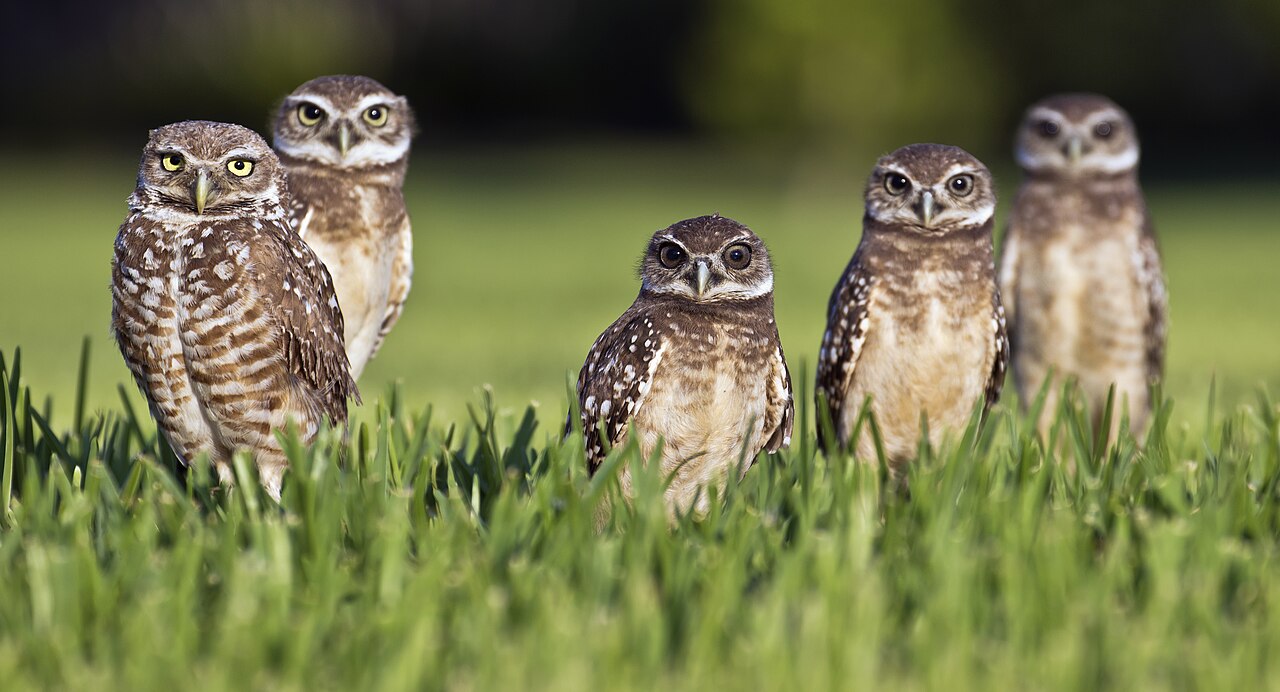
The fourth is the burrowing owl (Athene cunicularia), which lives in prairie dog towns and open desert grassland, stands at its burrow entrance through the day, and takes insects on the ground in full sun. It is the owl most people photograph without realizing it is an owl at all.
These species keep the standard owl equipment, large eyes and asymmetric ear openings, but they rely on it less. Pygmy owls in particular have relatively small eyes for an owl and fairly noisy flight, both signs of a lineage that gave up night hunting long ago.
Crepuscular Owls: Dawn and Dusk Hunters
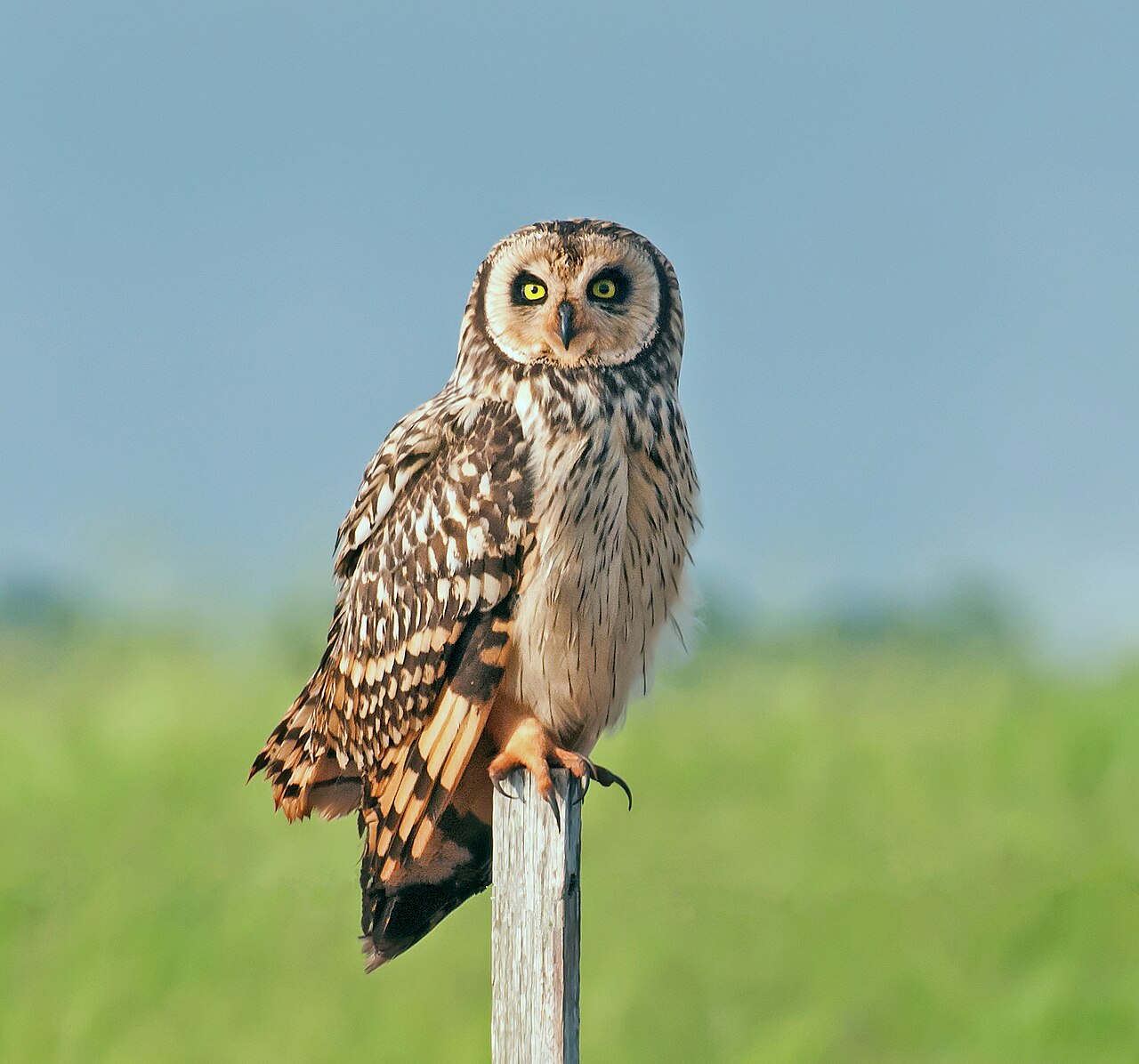
Crepuscular owls work the low light hours at either end of the day, and the short eared owl is the clearest example. It quarters low over marsh and grassland in the last hour of light, flying with a loose, mothlike wingbeat that looks nothing like the direct flight of a hawk. In winter, several birds may hunt the same field.
The advantage of this schedule is prey behavior rather than light. Voles and mice have their own activity peaks near dawn and dusk, and an owl that hunts then meets more animals above ground per hour than one hunting at midnight. Many nominally nocturnal owls shift into this window when food gets scarce.
Long eared owls, which roost communally in dense conifers, often leave the roost well before full dark in winter. If you see a slim, tall eared owl crossing a field in the last of the light, this is the likely candidate.
Why Nocturnal Owls See So Well in the Dark
An owl’s eye is built for photon capture rather than detail. The eyes are tubular instead of spherical, which lengthens the focal distance and produces a large image on the retina, and the retina itself is dominated by rod cells. A great horned owl gathers roughly 2.5 times more light than a human eye of the same aperture.
The tradeoff is that tubular eyes cannot rotate in their sockets. An owl must turn its whole head to look, which is why the neck carries 14 vertebrae against the 7 in a human neck and why owls can rotate 270 degrees. The blood vessels in the neck have adaptations that keep the brain supplied through that rotation.
Owls also have a reflective layer behind the retina, the tapetum lucidum, which sends unabsorbed light back through the photoreceptors for a second chance. That layer is what makes owl eyes glow orange in a flashlight beam, and it is a reliable way to find a roosting bird at night.
Owl Hearing: Finding Prey Without Seeing It
Hearing, not vision, is what makes true nocturnal hunting possible. In barn owls, long eared owls and several others the ear openings sit at different heights on the skull, so a sound arriving from below reaches one ear marginally sooner than the other. The bird reads that delay as a vertical angle and the left to right delay as a horizontal one.
The facial disc works as a parabolic collector. Stiff feathers around the face funnel sound toward the ear openings, and the owl can adjust the shape of the disc with facial muscles to sharpen the focus. Remove the disc feathers experimentally and hunting accuracy in darkness collapses.
The result is precise enough that a barn owl in a lightless room can strike a moving mouse within a few degrees of accuracy. Great gray owls take it further and punch through a foot of snow to reach voles they have only heard, a hunting method covered in our profile of the great gray owl.
Silent Flight and the Night Hunt
Silent flight is the third piece of the nocturnal toolkit, and it serves two purposes at once. The comblike serrations on the leading edge of the outer primary feathers break up the turbulent air that normally generates flight noise, and a soft fringe on the trailing edge dampens what remains.
The obvious benefit is that prey does not hear the owl coming. The less obvious one matters more: a silent owl can hear its own prey during the final approach. A noisy bird would mask the sounds it is navigating by in the last second before the strike, when corrections count most.
Silent flight costs something. The velvety feather surface absorbs water, so owls are poor wet weather hunters, and the structure only works at slow flight speeds. Fish owls and the diurnal hawk owl, which do not need stealth, have largely lost the adaptation.
Is It Normal to See an Owl During the Day?
Seeing an owl during the day is normal and usually means nothing is wrong. Nocturnal owls roost in the open more often than people assume, particularly great horned and barred owls, and a roosting bird that opens its eyes as you pass is simply awake, not distressed. Winter shortens the night and pushes hunting into daylight hours.
Mobbing is the most common reason an owl becomes visible by day. Crows, jays and chickadees that find a roosting owl will harass it loudly for as long as an hour, and the noise is what draws human attention. The owl generally endures it, then moves to a denser roost.
Genuine warning signs are different: a bird on the ground that does not fly, a drooping wing, obvious blood, or an owl that lets you walk within a few feet. Those birds need a licensed rehabilitator, not a photograph.
Do Owls Sleep During the Day?
Nocturnal owls sleep during the day, but in short bouts rather than one long block. A roosting owl dozes repeatedly through the daylight hours, waking at any disturbance, and rarely enters deep sleep for long stretches while exposed. Owlets sleep far more heavily, often face down, because their heads are too heavy to hold upright.
Roost choice matters as much as sleep itself. Screech owls use tree cavities and nest boxes, long eared owls pack into dense conifer stands, and barn owls take barns, silos and church towers. The requirement is concealment from crows and from larger owls, which readily kill smaller ones.
Diurnal owls invert the pattern and sleep at night, and burrowing owls sleep underground in old prairie dog or badger tunnels. Nocturnal mammals in the same habitat follow a similar logic, as in our account of whether foxes are nocturnal.
What Owls Do Through the Night, Hour by Hour
The typical nocturnal owl night has two peaks. Activity rises sharply in the 30 to 60 minutes after sunset, when the bird leaves the roost, calls to establish territory and begins hunting. That first push accounts for a large share of the night’s kills, because prey is also active then.
The middle of the night is quieter. Many owls perch, digest and cast pellets, the compacted fur and bone from earlier meals, which takes roughly 6 to 10 hours per pellet. Finding a pile of pellets under a tree is the surest sign of a long used roost.
A second activity peak comes in the hour before dawn, then the bird returns to a day roost. During breeding season this rhythm changes completely: a male feeding a brood may make 15 or more prey deliveries in a night and will hunt into daylight to keep up.
Do Owls Recognize People?
Owls recognize individual people to a limited degree, and the evidence is mostly behavioral rather than experimental. Nesting owls habituate to a person who walks the same route daily and will flush at a stranger taking the same path, which implies they are discriminating between individuals rather than simply tolerating humans in general.
Corvids are far better documented on this point. Crows demonstrably remember specific human faces for years and teach that recognition to others, and the formal studies behind that finding have never been repeated with owls. Claims that an owl remembers you for years are plausible but not established.
What owls certainly do learn is places and routines. A barred owl learns which porch light attracts moths and therefore mice, and a great horned owl learns which field gets mowed. Those associations are strong enough to look like recognition of a person.
Seasonal Shifts: When Nocturnal Owls Turn Day Active
Activity patterns shift with season, and the driver is usually food demand. In late winter, when a pair is incubating and the nights are cold, the hunting male extends into morning and late afternoon. Northern populations do this more than southern ones, simply because the nights are longer and the prey thinner.
Snow cover forces a similar shift. When voles move under a snow layer, owls that hunt by sight lose their advantage entirely and hearing specialists take over. Irruption years, when snowy owls appear far south of the Arctic, put a daylight hunting owl into habitats where people have never seen one.
The barred owl is the species most likely to break the pattern outright. It calls in daylight throughout the year, hunts at midday in overcast weather, and in suburbs has partially shifted its schedule around human activity rather than around light.
Listening for Nocturnal Owls in Your Yard
Calling is the practical way to find nocturnal owls, because you will hear ten for every one you see. The peak calling season in most of the US runs from December through March, well before dawn chorus season, and the best listening window is the first two hours after full dark on a still, clear night.
Learn three calls and you will cover most of the country: the deep hoot of the great horned owl, the rhythmic phrase of the barred owl, and the descending whinny and trill of the eastern screech owl. The Cornell Lab maintains reference recordings for every North American species at allaboutbirds.org.
Avoid playing recordings repeatedly during breeding season. Playback pulls territorial birds off nests and away from hunting, and in heavily birded areas the cumulative cost is real. One or two listens, then silence, gets you the identification without the damage.
Frequently Asked Questions
Do owls ever come out in the daytime?
Owls do come out in the daytime, regularly. Burrowing owls, snowy owls, northern hawk owls and northern pygmy owls hunt in daylight by default. Nocturnal species also appear by day when they are mobbed by crows, when they are feeding young, or in winter when short nights leave too little hunting time.
Can an owl pick up a 10 lb cat?
No owl in North America can carry off a 10 lb cat. A great horned owl, the largest common species, weighs about 3 lb (1.4 kg) and can lift roughly its own body weight, so a 3 lb prey animal is the practical ceiling. Great horned owls do attack small cats and kittens on the ground, which is a real reason to keep cats indoors at night.
What is an owl’s worst enemy?
The great horned owl is the main natural enemy of other owls, killing barred owls, long eared owls and screech owls whenever ranges overlap. Beyond that, the leading causes of owl death are human: vehicle strikes, rodenticide poisoning passed up the food chain, and collisions with fences and power lines.
What is the lifespan of an owl?
Wild owls typically live 4 to 13 years depending on species, with small owls at the short end and great horned owls at the long end. Barn owls average only about 4 years in the wild. In captivity the same species live far longer, and great horned owls have reached 38 years.
Do owls have a high IQ?
Owls are not especially intelligent by bird standards. Their brains are dominated by the structures that process vision and hearing, and they perform poorly on the problem solving and tool use tests that crows and parrots pass easily. The folk association between owls and wisdom comes from Greek mythology, not from behavior.
What does it mean if an owl visits your yard?
An owl in your yard means your yard has prey, cover and a decent perch, nothing more. Mice around a bird feeder, a brush pile, an old hardwood or a barn all raise the odds. In most folk traditions the visit carries symbolic weight, but the ecological explanation is simply rodents and a place to sit.