Pacman Frog Teeth: 3 Structures in That Mouth and How Hard They Bite
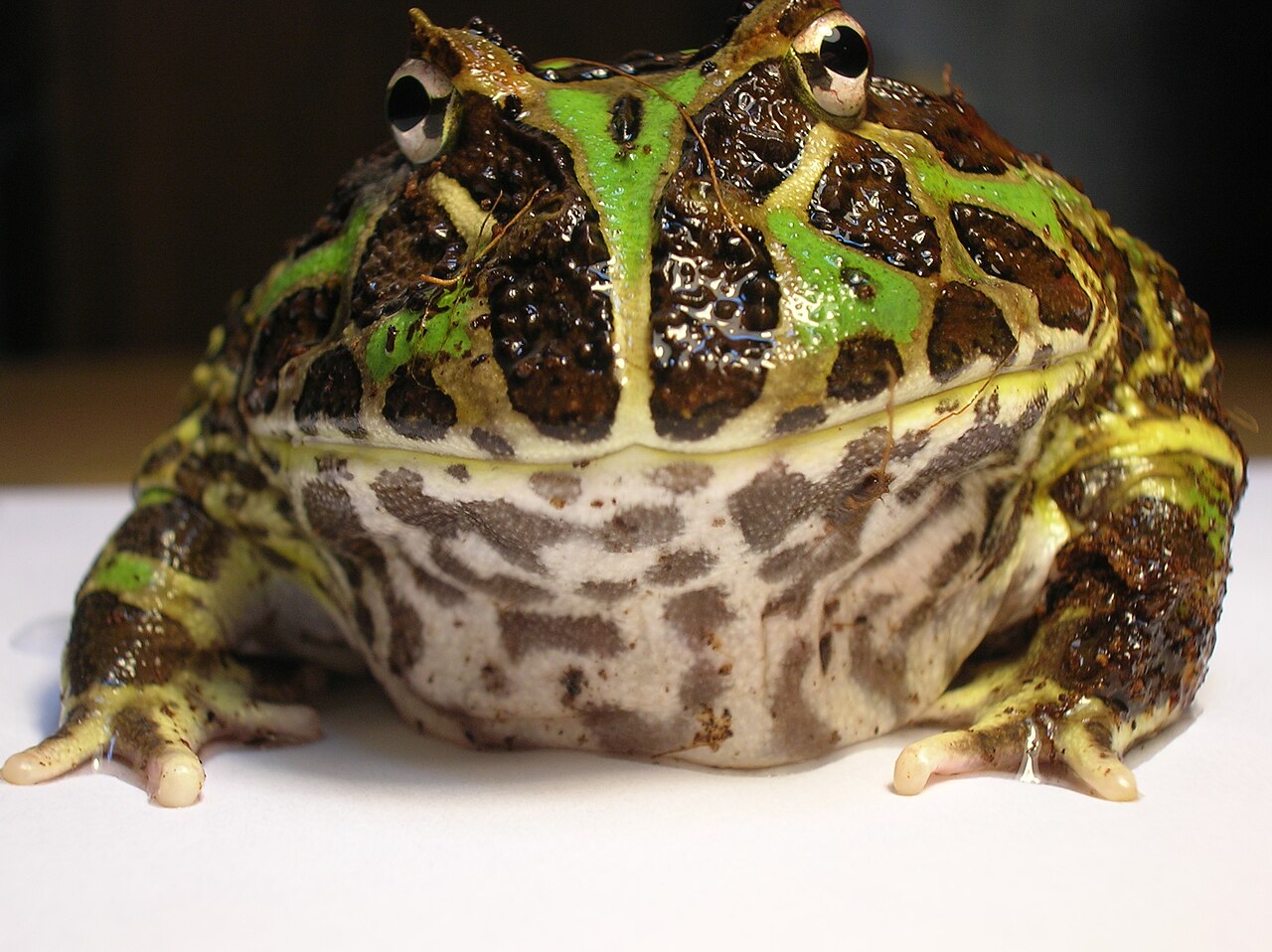
Pacman frogs have real teeth, and they have a second set of structures that are not teeth at all. Small maxillary teeth line the upper jaw, vomerine teeth sit on the roof of the mouth, and two bony spikes called odontoids rise from the lower jaw. Together they turn the mouth of a horned frog (Ceratophrys spp.) into a one way trap.
None of it is built for chewing. Every one of those points curves backward, so prey that enters can only go further in. That design, plus a bite force measured in a laboratory at a surprising level for an animal this size, explains why a hand that gets bitten sometimes bleeds.
Pacman frogs have dozens of small maxillary and vomerine teeth plus two large odontoid projections on the lower jaw. The teeth grip prey rather than chew it, all of them point backward, and a large adult can bite with roughly 30 N of force, enough to break human skin.
| Structure | Location | Function |
|---|---|---|
| Maxillary teeth | Upper jaw rim | Grip and hold struggling prey |
| Vomerine teeth | Roof of the mouth | Stop prey from backing out |
| Odontoid projections | Lower jaw, bony not dental | Pin prey against the upper teeth |
| Measured bite force | Adult Ceratophrys cranwelli | About 30 N at 4 cm head width |
| Risk to keepers | Fingers during feeding | Punctures, bruising, rare stitches |
What Is the Purpose of Pacman Frog Teeth?
The teeth exist to hold, not to cut. A Pacman frog is an ambush predator that swallows prey whole, and its usual targets, including insects, other frogs, and small rodents, fight back hard. The backward angle means every struggle drives the animal deeper toward the throat. Unlike a walleye and its rows of gripping teeth, the frog never tears a piece off.
How Many Teeth Do Pacman Frogs Have?
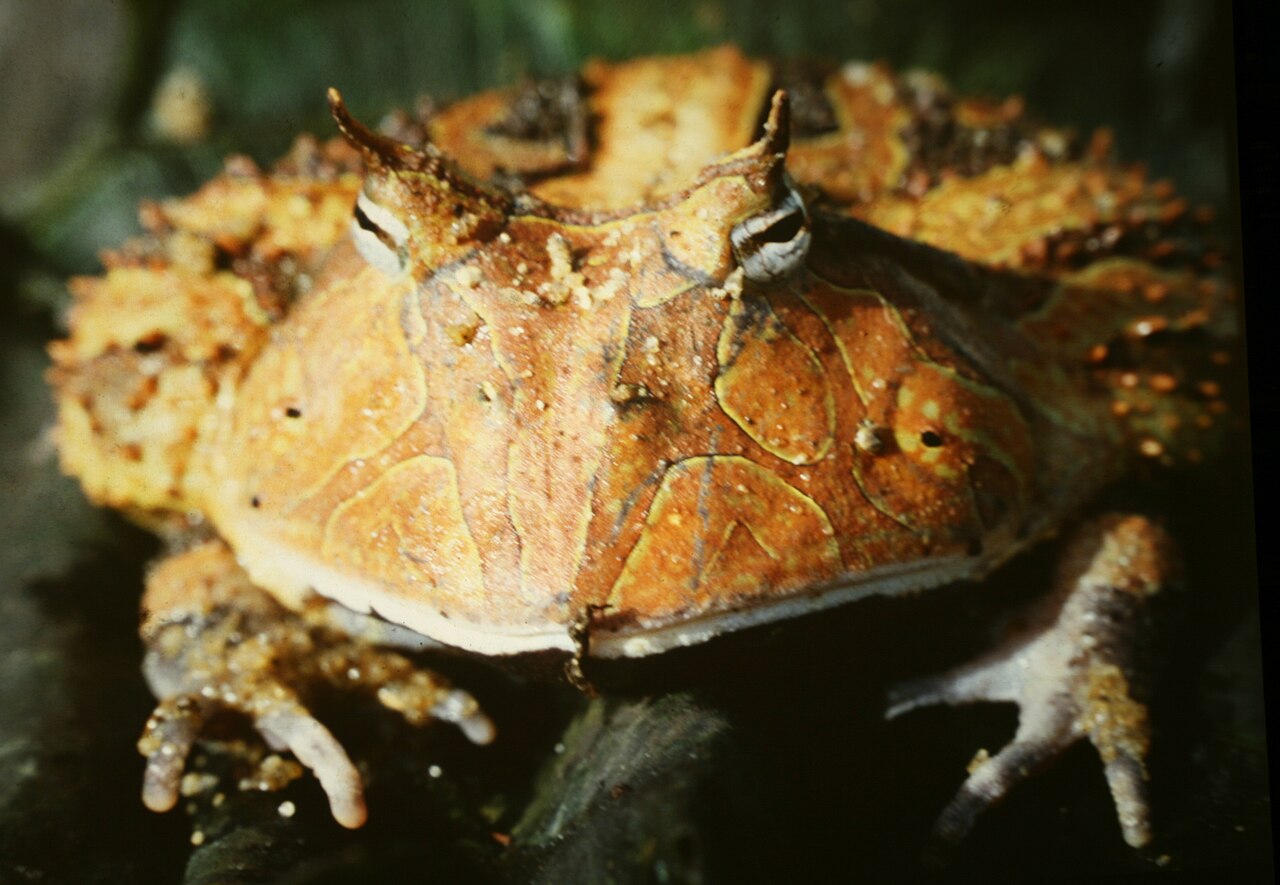
There is no fixed count, because frog teeth are replaced continuously throughout life. A healthy adult carries roughly 40 to 60 tiny conical maxillary teeth along the upper jaw plus a cluster of vomerine teeth. The two odontoids are not counted as teeth at all: they are outgrowths of the jawbone covered in a tooth like layer, which is why birds, having lost teeth entirely, took a different route, as covered in whether birds have teeth.
What Is the Bite Force of a Pacman Frog?
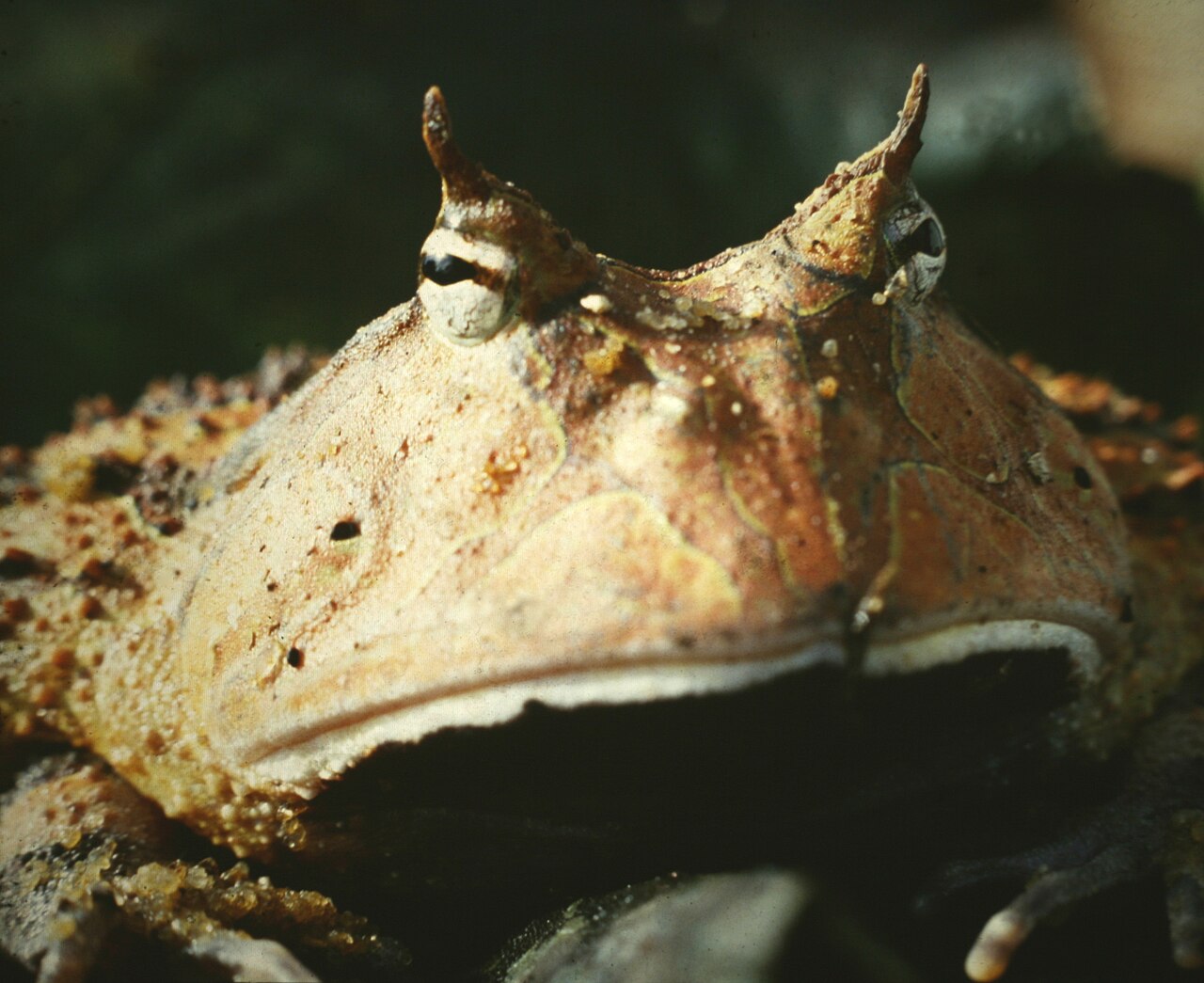
A 2017 study of Cranwell’s horned frog, published in peer reviewed work indexed at the National Library of Medicine, measured about 30 N of bite force in an adult with a head 4.5 cm wide. Scaling to the largest South American horned frogs gives an estimate near 500 N, which is in the range of a medium sized mammalian predator.
Do Pacman Frog Bites Hurt?
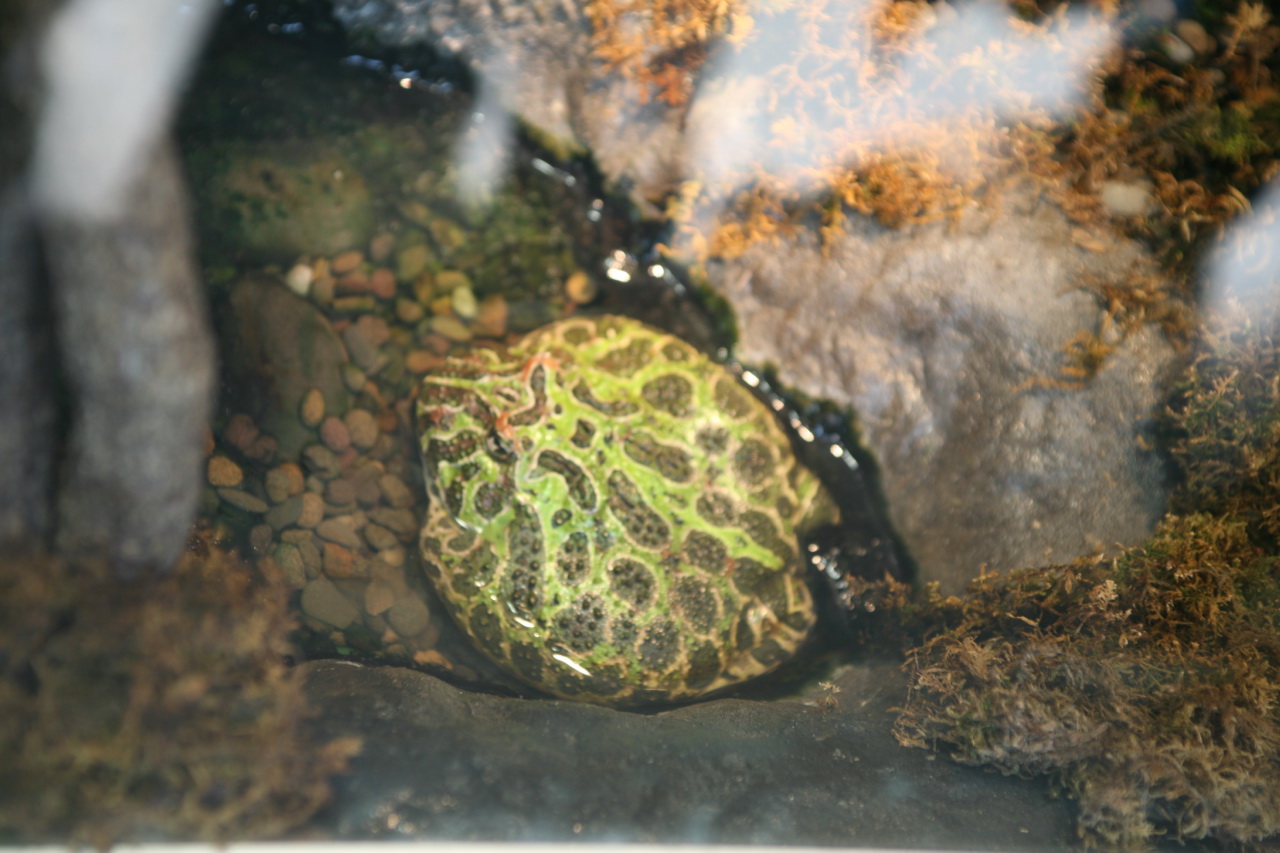
Yes, and adult bites sometimes draw blood. The frog usually latches and holds rather than releasing immediately, and pulling your hand back does the damage, since the teeth angle backward. Let it release on its own, or lower the frog into shallow water. Wash the wound, because amphibians carry Salmonella. Feeding with long tongs prevents nearly every bite, as detailed in the full Pacman frog care guide.
Related reading: Pacman Frog Care.
Frequently Asked Questions
Do all frogs have teeth?
Most frogs have maxillary teeth on the upper jaw only, and almost none have true teeth on the lower jaw. True toads lack teeth entirely. Gastrotheca guentheri, a marsupial frog, is the single known frog with real lower jaw teeth, which it re evolved after roughly 200 million years without them.
What are the signs that a Pacman frog is happy?
A settled frog burrows with only the eyes showing, keeps plump smooth skin, feeds readily, and passes firm waste. Warning signs run the other way: sitting in the water dish constantly, refusing food outside of estivation, cloudy or shed skin left in place, and thin legs against a still bloated body.
Can two Pacman frogs live together?
No. They are cannibals and will attempt to swallow tank mates of similar size, which the teeth make lethal. House each animal alone, including juveniles and including color morphs such as the strawberry Pacman frog. Only pair them briefly under supervision for breeding.
What is the lifespan of a Pacman frog?
Six to ten years is typical in captivity, with well kept animals reaching 12 to 15. Females outlive males and grow larger, up to 7 in (18 cm) across. Impaction from loose substrate and obesity from overfeeding cut that short more often than any disease. Other amphibians, including the blue tree frog, run similar numbers.