Gecko Droppings vs Mouse Droppings: The White Tip Test
Gecko droppings have a chalky white tip and mouse droppings do not, and that single detail settles almost every case of gecko droppings vs mouse droppings in under a second. The white cap is solid urine, which reptiles excrete as a paste rather than as liquid, and nothing a rodent leaves behind looks like it. If every pellet on the floor is a uniform dark brown or black with no pale end, you are looking at a mammal.
The rest of the identification comes from size, from where the droppings sit, and from how many there are. A gecko leaves a few pellets in the same favored place for weeks, while a mouse leaves dozens a day in lines along the wall. Both call for gloves, and one of the two carries the greater health risk by a wide margin.
Gecko droppings are 0.2 to 0.5 in (5 to 13 mm) long, dark and cylindrical with a distinct white or cream tip at one end, and they appear in small repeat piles. Mouse droppings are smaller at 0.125 to 0.25 in (3 to 6 mm), uniformly dark, pointed at both ends, and scattered in trails.
| Feature | Gecko droppings | Mouse droppings |
|---|---|---|
| Length | 0.2 to 0.5 in (5 to 13 mm) | 0.125 to 0.25 in (3 to 6 mm) |
| White tip | Yes, chalky cap on one end | No, color is uniform |
| Shape | Cylinder, blunt or rounded ends | Rice grain, tapered at both ends |
| Contents when crushed | Insect wings, legs, shiny fragments | Fine fibrous meal, seed and grain bits |
| Typical count | A few in one spot, added to slowly | 50 to 75 per mouse per day |
| Where found | Walls, sills, under lights, high surfaces | Along baseboards, in drawers, under sinks |
| Main health concern | Salmonella | Hantavirus, Salmonella, LCMV |
The One Detail That Settles It
Look for the white tip and stop there if you find it. Reptiles and birds route their nitrogen waste into uric acid, which dries as a white paste and leaves the kidneys attached to the solid waste in one package, so a gecko dropping is effectively two-toned. Mammals dissolve the same waste in water and pass it as urine, which means a mouse pellet is one color all the way through. The tip can break off or wear away on an old dropping, so check several pellets rather than one, and check the freshest you can find. A fuller walk through the reptile side is in our guide to gecko droppings.
What Gecko Poop Looks Like
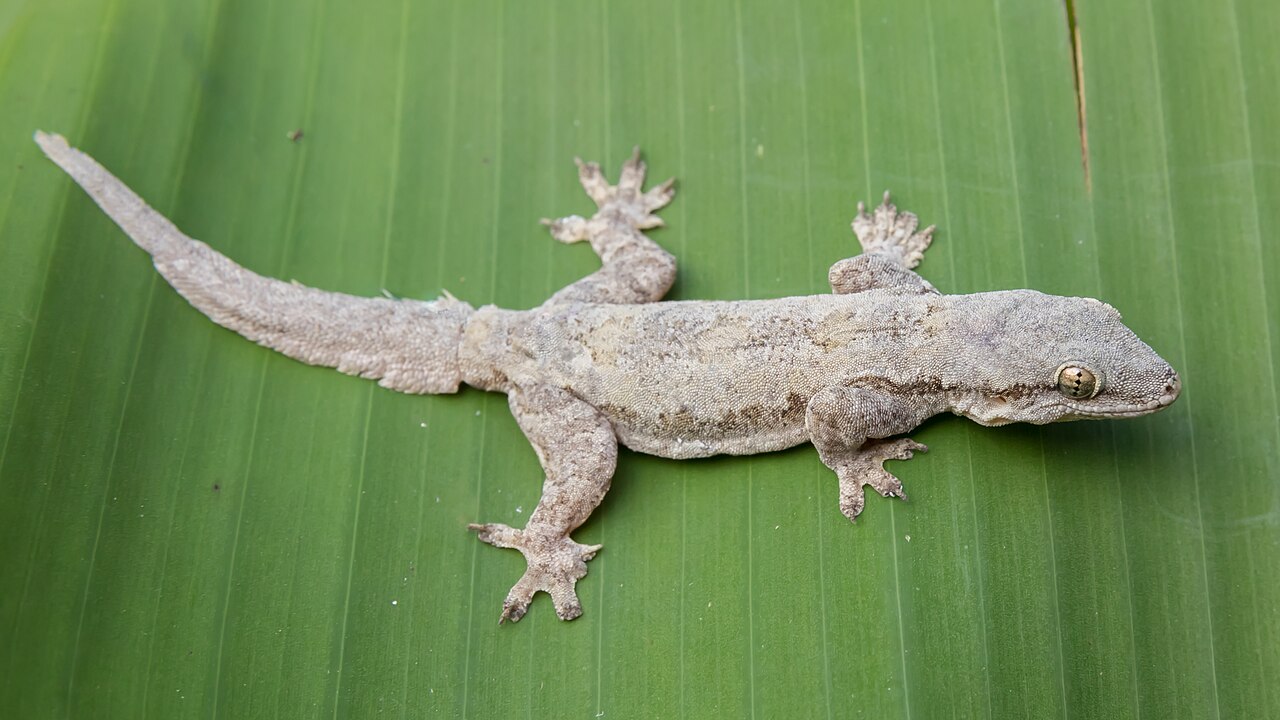
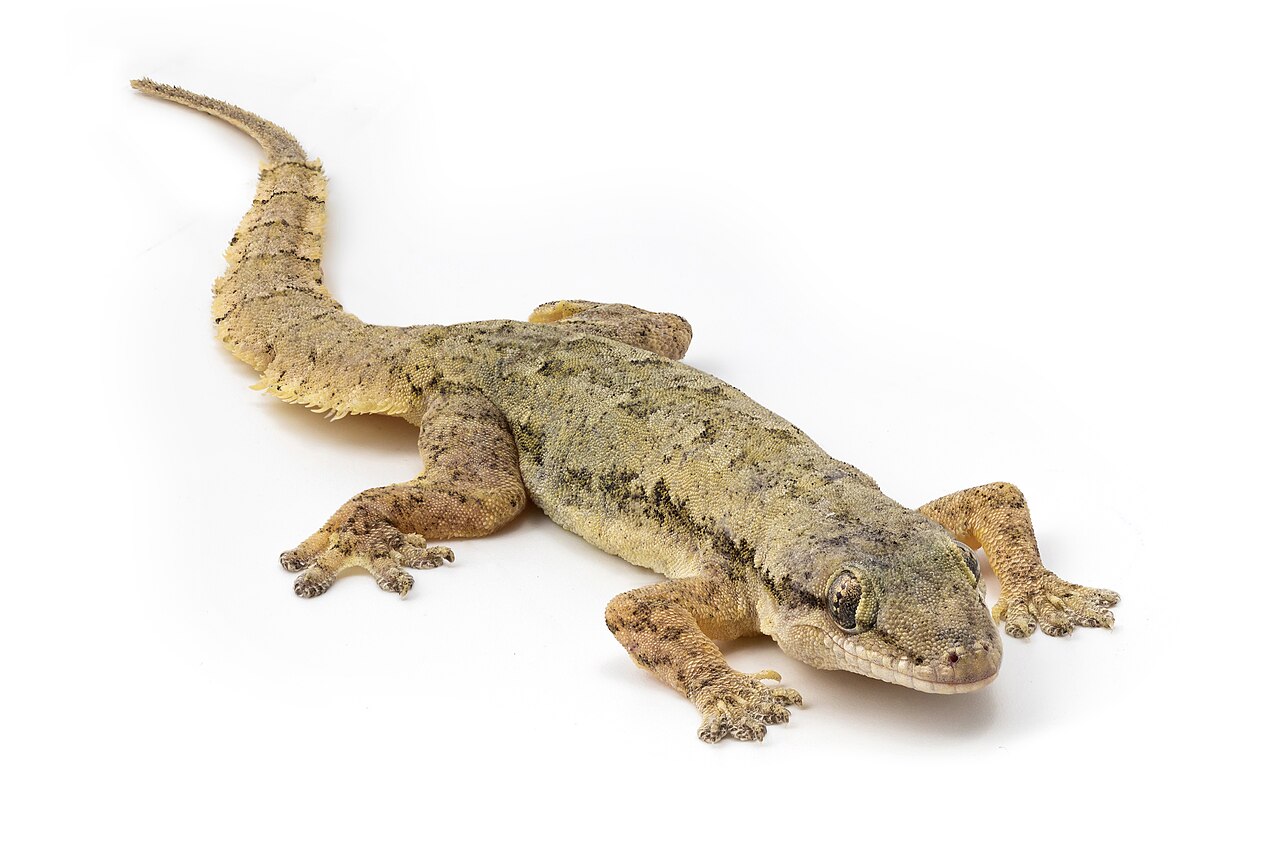
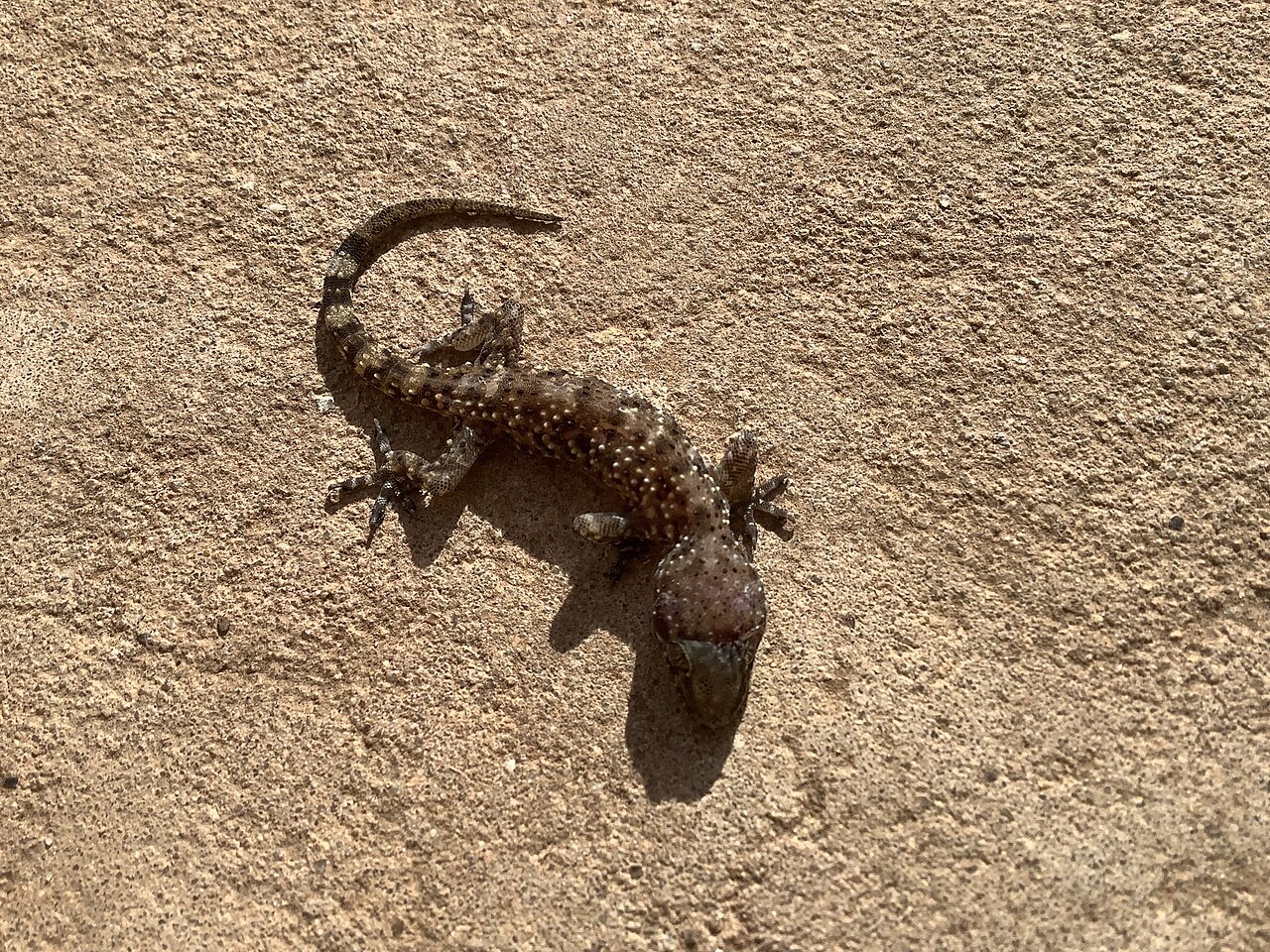
A house gecko pellet is a short dark cylinder, 0.2 to 0.5 in (5 to 13 mm) long and 0.08 to 0.12 in (2 to 3 mm) thick, with blunt rather than tapered ends and a white or cream cap on one end. The dark portion is almost black when fresh and fades to a dull brown as it dries. Crushed with a tool, it breaks into recognizable insect parts: beetle wing cases, moth scales, ant heads and legs, all of it with a faint sheen. In the United States the usual producers are the Mediterranean house gecko (Hemidactylus turcicus) across the Gulf states and the common house gecko (Hemidactylus frenatus) in Florida, Hawaii and southern Texas. Both hunt at lights after dark, which is exactly where the droppings accumulate.
What Mouse Poop Looks Like
House mouse droppings are small dark grains, 0.125 to 0.25 in (3 to 6 mm) long, shaped like a grain of rice with a point at each end, and uniform in color from end to end. Fresh ones are soft, nearly black and slightly glossy. They come in quantity, because a single mouse produces 50 to 75 droppings in a day, and they follow the animal’s routes rather than piling in one place. Crushed, they break into a fine gray-brown meal with no shine and sometimes with visible grain or seed husks. A strong ammonia smell in a cupboard usually means urine as well as droppings, which is a sign of a population rather than one visitor. See the full mouse dropping profile for the staining and gnaw marks that go with them.
Size and Shape Compared
Gecko droppings are usually the larger of the two, which surprises people who expect a lizard to leave less than a mouse. A big adult house gecko can produce a pellet twice the length of a mouse dropping. The shape difference is just as reliable as the size: a mouse pellet tapers to a point at both ends because of how it is extruded, while a gecko pellet keeps an even thickness and ends bluntly. Juvenile gecko droppings do fall into the mouse size range, so for small pellets go back to the white tip and to the count. One or two pellets in a spot favors a gecko; twenty favors a mouse.
What Is the White Tip of Lizard Poop?
The white tip is a urate, a concentrated paste of uric acid that serves as the lizard’s urine. Geckos, like other reptiles and like birds, have no bladder for liquid urine and instead save water by excreting nitrogen waste in near-solid form, which is a major advantage for an animal that lives in dry walls and attics. The urate is chalky, slightly waxy, and sticks to surfaces more stubbornly than the dark portion does. If the white tip is yellow or orange rather than white, the animal is dehydrated, which is worth knowing if the gecko is a pet rather than a wall resident.
Where You Find Them
Location is nearly as diagnostic as the droppings themselves. Geckos climb, so their droppings turn up on vertical and elevated surfaces: window sills, the tops of door frames, the wall beneath an exterior porch light, behind wall-mounted pictures, and on curtains. They fall in small clusters below a favored hunting perch and the same spot refills week after week. Mouse droppings stay low and follow runways, which means baseboards, the backs of drawers, under the kitchen sink, inside pantry boxes, and in insulation. Mice also leave droppings while traveling, so you get a scattered line rather than a pile. A dropping found 6 ft (1.8 m) up a wall is not from a mouse.
Fresh or Old? How to Date the Droppings
A fresh mouse dropping is dark, soft enough to deform under light pressure, and slightly shiny. After two or three days it turns dull gray-brown, hardens, and crumbles to dust when pressed. Fresh gecko droppings are moist at the base with a bright, soft white tip; old ones are brittle, the dark part turns ashy, and the urate chalks up and flakes. Dating matters more than identifying, because it tells you whether you have an active problem or a record of an old one. Clear the area completely, then check it again in three days: anything new means the animal is still present.
Gecko Poop vs Rat Poop
Rat droppings are much larger than either, running 0.5 to 0.75 in (12 to 19 mm) long and as thick as a pencil lead, with Norway rat pellets blunt at both ends and roof rat pellets more tapered and curved. They have no white tip and they come in fewer, bigger deposits than mouse droppings do. Nobody confuses a rat pellet with a gecko pellet once both are side by side, but a single large gecko dropping in poor light can read as a small rat dropping until the white end gives it away. The rat and mouse comparison covers the size thresholds in detail.
Gecko Poop vs Roach Poop
Cockroach droppings are the most common false alarm in kitchens. German cockroach frass is tiny, under 0.04 in (1 mm), and looks like scattered black pepper or like dark smears and streaks on vertical surfaces. American cockroach droppings are bigger, around 0.08 in (2 mm), cylindrical with blunt ends and with fine ridges running along the length, which is a feature no vertebrate dropping has. Roach frass clusters in tight corners, inside cabinet hinges and behind appliances. If pellets are ridged, uniformly dark and smaller than a sesame seed, work from the roach side of the comparison instead.
Gecko Poop vs Bat Poop
Bat guano overlaps closely with mouse droppings in size, and that is the pair most often mixed up in attics. Guano has no white tip, and the giveaway is what happens under pressure: it crumbles into glittering insect fragments, because bats eat almost nothing else, while a mouse dropping crumbles into a dull fibrous powder. Guano also collects in distinct mounds directly beneath a roost, which mouse droppings never do. The chief reason to tell them apart is the cleanup, since guano in quantity raises the question of histoplasmosis; our bat and mouse guide sets out when that matters. Other lizards leave droppings closely resembling gecko pellets, and the broader lizard and mouse comparison covers skinks and anoles.
Health Risks and Safe Cleanup
Mouse droppings are the greater risk of the two. In North America the serious concern is hantavirus, carried mainly by the deer mouse (Peromyscus maniculatus) and transmitted when dried droppings and urine are stirred into the air, along with Salmonella and lymphocytic choriomeningitis virus. The Centers for Disease Control and Prevention is explicit that you should never sweep or vacuum dry rodent droppings, because both aerosolize the particles that carry infection. Wet the droppings with a disinfectant or with a bleach solution of 1 part bleach to 10 parts water, let it soak for 5 minutes, then wipe up with paper towels, double-bag the waste, and wash your hands. Gecko droppings carry a real but narrower risk, essentially Salmonella from reptile skin and waste, so the same gloves and the same hand washing apply. Ventilate the room while you work and keep children and pets out until surfaces are dry.
Frequently Asked Questions
What attracts mice to your house?
Food, warmth and an opening the width of a pencil. Crumbs, pet food left in bowls, open grain packaging and bird seed in a garage draw mice in, and clutter gives them nesting material. A mouse needs a gap of only 0.25 in (6 mm), so sealing utility penetrations and door sweeps does more than trapping alone.
Is it safe to touch mouse poop with bare hands?
No. Rodent droppings and urine can carry hantavirus, Salmonella and other pathogens, and skin contact followed by hand to mouth transfer is a real route of infection. Wear rubber or disposable gloves, wet the droppings before removing them, and wash your hands with soap afterward. If you have already touched them, wash thoroughly and do not panic.
What disinfectant kills mouse droppings? Does Lysol or hydrogen peroxide work?
A bleach solution of 1 part bleach to 10 parts water, or any EPA-registered disinfectant including Lysol products labeled for hard surfaces, works when the droppings are soaked and left wet for 5 minutes. Hydrogen peroxide is effective on surfaces but weaker on soiled material. Vinegar is not a disinfectant and will not do the job.
How long do mouse droppings stay toxic?
Hantavirus in droppings loses viability within two to three days at room temperature and faster in direct sunlight, but dried droppings weeks old still carry Salmonella and still release particles when disturbed. Treat any droppings as infectious regardless of age. Age changes the odds, not the procedure.
What looks like mouse poop but isn’t?
Cockroach droppings, bat guano, gecko droppings without a visible tip, dried potting soil tracked from houseplants, poppy and chia seeds, coffee grounds, and crumbs of rodent bait all get mistaken for it. Check for the white tip, for lengthwise ridges, and for whether the pellet crumbles shiny or dull.
Is house lizard poop dangerous?
It carries some risk, mainly Salmonella, which reptiles shed in their waste without appearing sick. The practical danger is low if you use gloves, avoid dry sweeping, and wash your hands, and it is lower than the risk from rodent droppings. Clean kitchen counters and food surfaces with disinfectant if droppings have landed there.