Alligator Symbolism and Spiritual Meaning: 7 Signs Explained
Seeing an alligator is traditionally read as a call to hold your ground: across the cultures that actually live with the animal, alligator symbolism centers on ancient patience, hidden strength and the instinct to wait rather than chase. The alligator sits still for hours, then moves once, decisively, and that single image carries most of the meanings people attach to it, from Seminole clan identity to the Nile crocodile gods of Egypt.
Alligators belong to the American Southeast, so the traditions with real alligator lore are southeastern, Caribbean and African, not Celtic or Plains. Where a tradition had no alligator, it used a water serpent or a dragon instead, and modern spiritual writing has often blurred the two. Beliefs below are given as beliefs, named to the tradition that holds them.
Seeing an alligator is widely interpreted as a sign to stay still, guard your boundaries and trust instinct over argument. It carries meanings of primal strength, survival, patience and hidden danger. In Seminole and Choctaw tradition the alligator is a powerful clan and story animal, while Christian readings link the crocodile to Leviathan.
What Does the Gator Represent?
What does the gator represent most consistently across traditions is survival through stillness. The American alligator (Alligator mississippiensis) has changed little in millions of years, can go months without eating, and takes prey by waiting at the waterline rather than running it down. Symbol readers borrow all three traits directly.
From that core come four recurring meanings: ancient knowledge, because the animal is read as a survivor of an older world; boundary defense, because an alligator tolerates company until something enters its water; raw instinct, because it acts without deliberation; and hidden depth, because most of the animal is underwater when you see it. A sighting is usually read as a prompt about one of those four, not as a prediction of events.
Alligator Symbolism in Native American Traditions of the Southeast
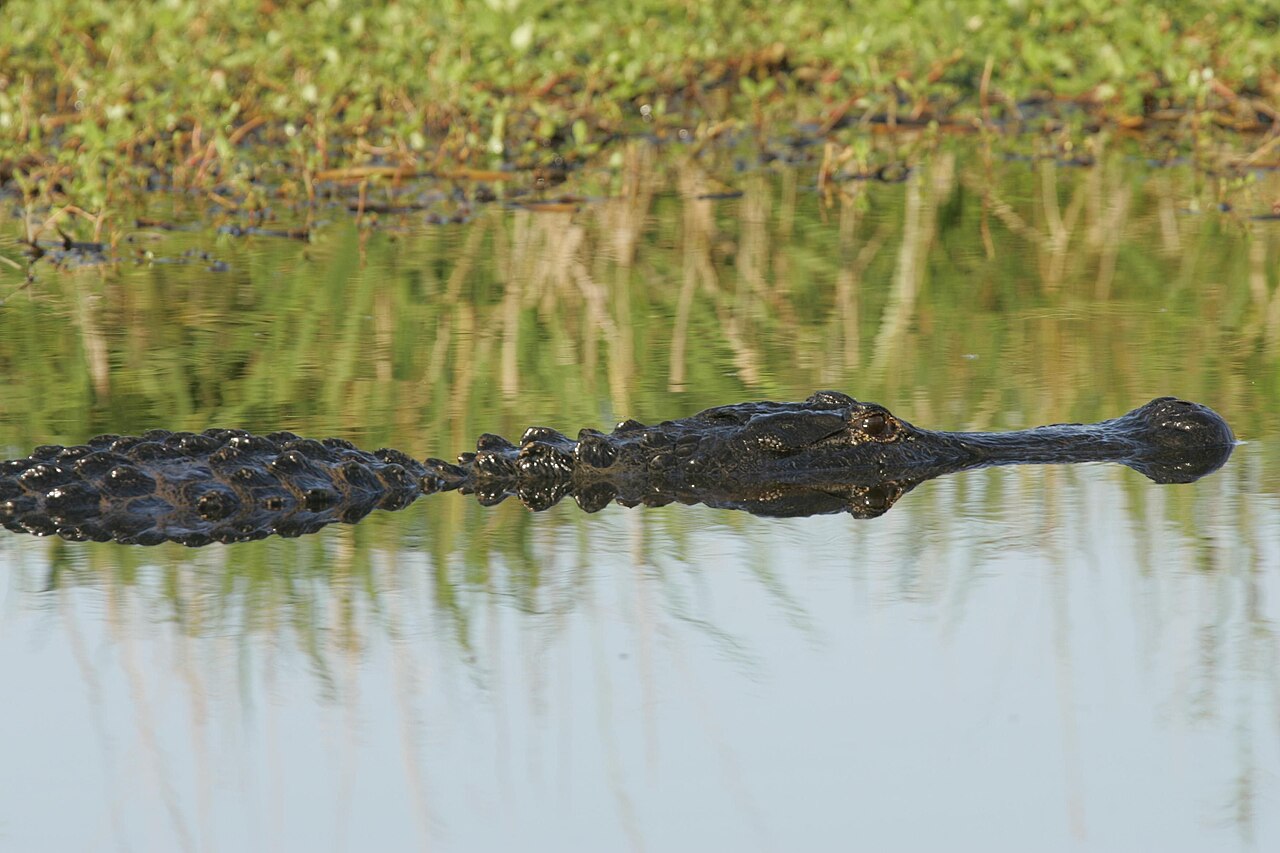
Among southeastern peoples the alligator is a named, specific presence rather than a vague totem. The Seminole and Miccosukee of Florida have an Alligator clan, Halpata, one of the traditional matrilineal clans, and clan identity carries obligations and kinship rather than a mood or a message. Clan names are social structure first and symbolism second, a distinction most spiritual writing skips.
In Choctaw oral tradition the alligator appears as a figure who grants hunting success to a man who treats him respectfully, which frames the animal as a provider that rewards restraint. Alligator teeth were carried as protective items in parts of the Southeast. Nothing comparable exists in Plains or Northeastern traditions, so an alligator meaning attributed to Lakota or Ojibwe sources is almost always a modern invention, in the same way that coyote stories belong to the regions where coyotes actually range.
The Alligator and Crocodile in the Bible
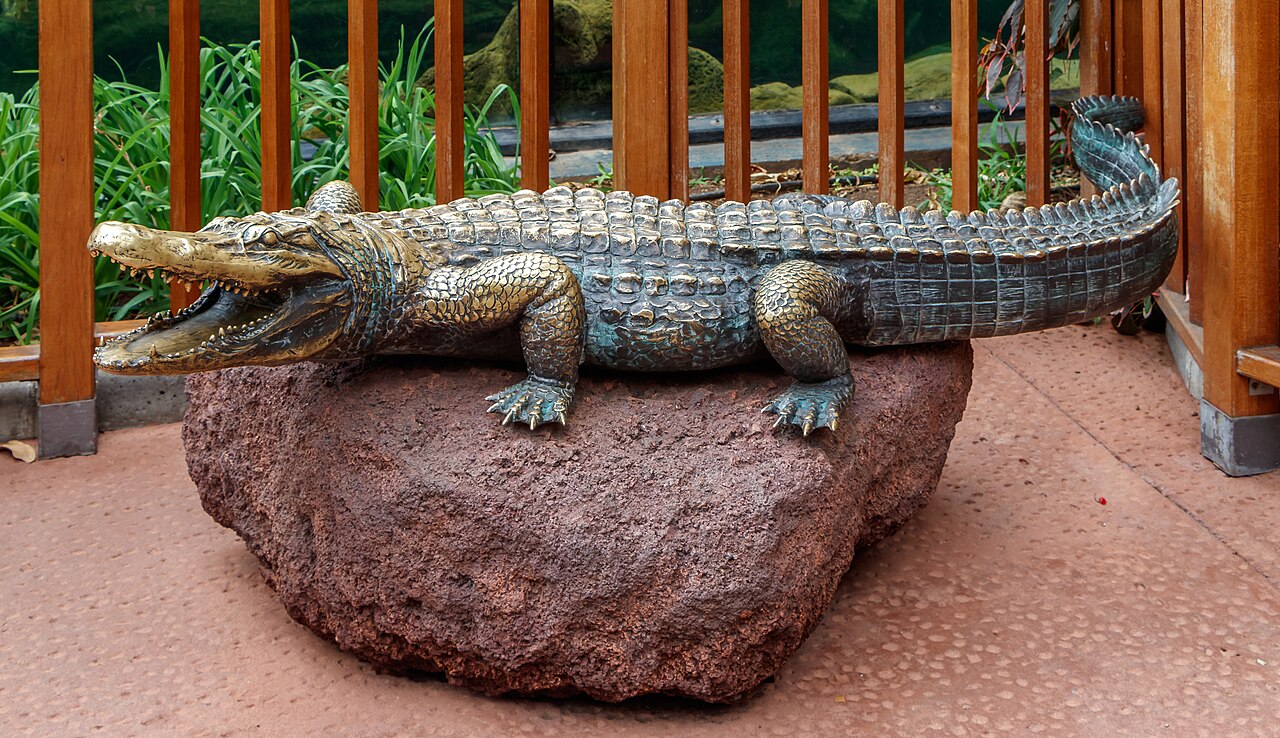
The Bible never mentions alligators, since the animal is American and the text is Near Eastern. What it does describe, many commentators identify as the Nile crocodile. Job 41 portrays Leviathan as a scaled creature of the water that no hook can hold, with teeth that terrify and a hide like overlapping shields, and a long tradition of biblical scholarship reads that passage as a crocodile rather than a whale or a myth.
Ezekiel 29:3 calls the pharaoh of Egypt the great monster lying among his rivers, an image usually understood as the crocodile that symbolized Egyptian power. In Christian readings that follow this line, the crocodile stands for pride that rules the water it lies in, and the lesson is that nothing in the river is beyond God’s reach. Those who read the animal as an omen of pride tend to pair it with warning birds such as the crow in biblical imagery.
Sobek and the Crocodile Gods of Ancient Egypt

Ancient Egypt gave the crocodile the fullest positive treatment of any culture. Sobek, depicted as a crocodile or a crocodile headed man, was associated with the Nile flood, fertility, military power and pharaonic protection, and had cult centers at Kom Ombo and in the Faiyum, where crocodiles were kept, fed and mummified by the thousand.
Egyptian symbolism was explicitly double edged. The same animal that protected the king in one text devoured the unworthy in another, and Sobek could be both a guardian who restored and a threat who waited. That ambivalence is the oldest documented version of the modern reading that the alligator means power you do not provoke, and it is far better attested than any single modern spirit animal description.
Celtic Tradition Has No Alligator: What Took Its Place
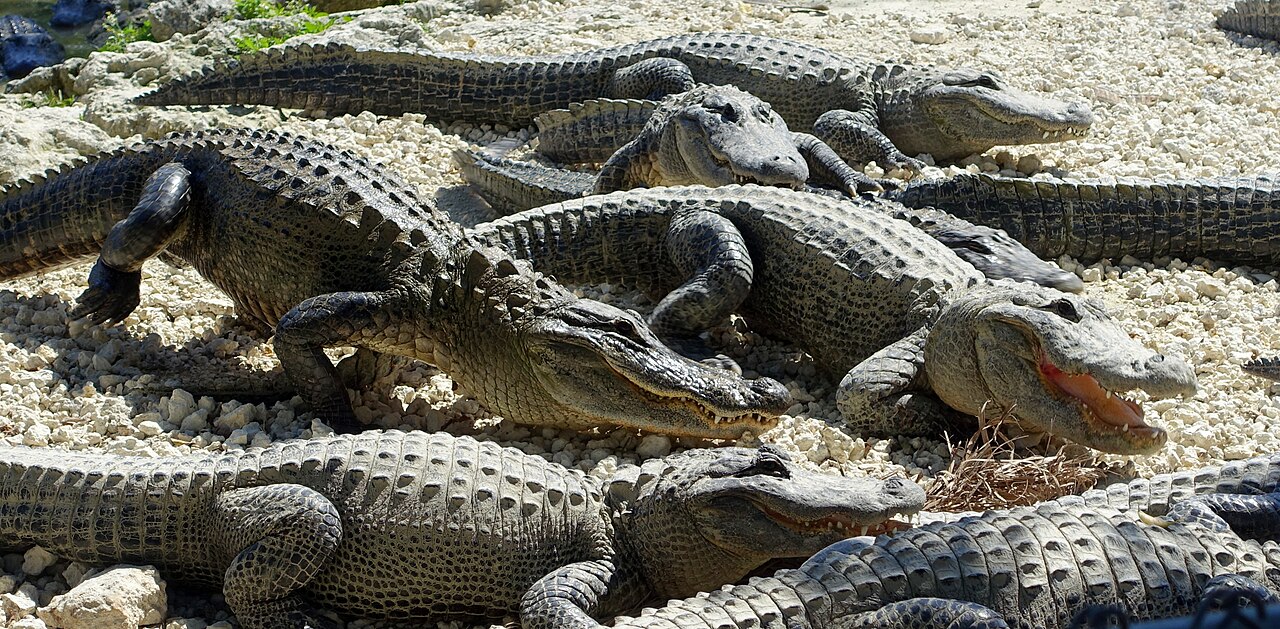
There is no Celtic alligator symbolism, because no crocodilian has lived in Ireland, Britain or Gaul in human history. Websites that list a Celtic alligator meaning are filling a gap in a template. What Celtic and wider Old European tradition does hold is a cluster of water beasts that occupy the same imaginative position: the Dobhar-chu, the water hound of Irish lore said to attack from lakes, along with lake serpents and the Each-uisce.
These figures carry the themes that alligator symbolism now carries in American spiritual writing: a predator submerged in familiar water, a boundary between the safe shore and the unsafe deep, and a creature that punishes carelessness near water. Reading an alligator sighting through Celtic lore means reading it through those water beasts honestly, not inventing an Irish name for a Florida reptile.
East Asian Symbolism: Crocodile, Dragon and Water
China does have a native crocodilian, the critically endangered Chinese alligator (Alligator sinensis) of the Yangtze basin, and it is one of the animals scholars have proposed as a partial inspiration for the Chinese dragon, the long. The connection is debated rather than settled, but the dragon’s associations are clear: water, rain, rivers, imperial authority and good fortune.
That inheritance matters for interpretation. In Chinese and Japanese symbolism, water reptiles belong to the auspicious side of the ledger, as bringers of rain and guardians of rivers, rather than to the predatory side. Someone reading an alligator through East Asian tradition would read patience, flow and the authority of deep water, closer to the dignity attached to the crane in East Asian art than to menace.
Alligator in Louisiana Voodoo and Hoodoo
In Louisiana Voodoo and in Hoodoo practice, alligator parts appear as protective and strength giving curios. Dried alligator feet and teeth have been sold in New Orleans spiritual shops for well over a century, carried as charms for protection, courage, gambling luck and keeping enemies at a distance, and the alligator’s reputation for guarding its own territory is the logic behind that use.
Practitioners describe these as working items within a specific system, with their own instructions and context, not as general purpose good luck symbols. The honest summary for anyone outside the tradition is that the alligator is respected there as a defender and a deterrent. That framing, an animal that marks territory and is not challenged, is close to how bats are read in folk belief around thresholds and doorways.
Alligator as Spirit Animal, Totem and Omen
Modern spirit animal writing, which draws on New Age sources rather than on any single Indigenous tradition, treats the alligator as a teacher of timing. As a spirit animal it is described as arriving when someone is forcing an outcome and needs to wait. As a totem it is described as a lifelong temperament marker for people who are slow to act and formidable once committed.
As an omen, the alligator is read by situation rather than by species, which is why the same animal can mean caution in one account and opportunity in another. The three terms are not interchangeable: spirit animal is a visitor, totem is an identity, omen is a message tied to circumstance. Keeping them separate prevents the muddle that turns every sighting into a vague warning, the same confusion that surrounds the bald eagle as a national and spiritual symbol.
Seeing an Alligator in Your Yard, Pond or Driveway
A gator out of water is the sighting people ask about most, and it is also the one with the most ordinary explanation. Alligators travel overland between water bodies during spring breeding season and after heavy rain, and a 6 ft (1.8 m) animal can cross a subdivision in a night. Within the symbolic frame, an alligator arriving at the house is read as a boundary question: something has entered your territory, or you have wandered into someone else’s.
Readings differ by placement. At the pond edge, it is interpreted as a reminder that your own depths hold something you have not acknowledged. On the driveway or at the door, it is taken as a prompt to defend a limit you have been letting slide. Either way the practical response comes first: keep 30 ft (9 m) away, keep pets indoors, and call your state wildlife agency.
| Situation | Common interpretation |
|---|---|
| Alligator in the yard or driveway | A boundary has been crossed; defend a limit you have let slide |
| At the pond or canal edge, watching | Something unacknowledged in your own depths is surfacing |
| Crossing your path on a road or trail | Wait before acting; the timing is not yours yet |
| Seen at night or in headlights | Instinct over analysis; pay attention to what you sense but cannot prove |
| Seen repeatedly over days or weeks | A pattern being insisted on, usually about patience or protection |
| Found dead | An old defense is finished; the armor is no longer needed |
| Appearing in a dream | A submerged fear or an unexpressed anger, read by the water’s clarity |
At Night, Crossing Your Path, or Seeing One Repeatedly
Night sightings carry the strongest instinct reading, partly because of the eyeshine: an alligator’s eyes return a red orange glow in a flashlight beam, visible across 100 yards (90 m) of dark water. Traditions that treat night animals as messengers of the unseen read that glow as a prompt to trust perception over proof, and alligators are genuinely more active at night, so the sighting is also simply likely.
An alligator crossing your path is read as a timing message, hold position, while repeated sightings are read as insistence rather than novelty. In practical terms, repeat sightings mean one resident animal with a territory and probably a food source, and a gator that has been fed by people loses its avoidance of humans entirely. Both the symbolic and the practical reading end in the same instruction: do not approach, and do not feed.
Finding a Dead Alligator and Other Hard Signs
A dead alligator is read in most modern interpretations as the end of a defense rather than as a death omen: armor that is no longer needed, a fight that has been settled, or a fear that has lost its grip. Traditions that hold the animal as powerful tend to treat the carcass with respect rather than as a trophy, and in the United States handling one is also a legal matter, since alligators are protected under state management programs.
Other hard signs have their own readings. A shed scute or a tooth found at the waterline is widely kept as a protective token, which continues the southeastern practice of carrying alligator teeth. A bellowing alligator in spring, a sound that vibrates the water surface into a visible dance, is interpreted as a call to be heard rather than to hide, and it carries the same symbolic weight as a visitor animal like the cardinal as a seasonal visitor does elsewhere.
What Does It Mean to Have Alligators in Your Dreams?
What does it mean to have alligators in your dreams is the single most searched part of this subject, and dream interpreters read it by the water rather than by the animal. Murky water with an alligator in it is read as a fear you cannot see clearly; clear water with a visible alligator is read as a danger you have already identified and are choosing to live beside.
Being chased is usually read as avoidance of a confrontation, being bitten as a consequence already arriving, and watching an alligator calmly from shore as recovered composure. Jungian readings treat the animal as the oldest layer of the psyche, instinct that predates reason. For the full set of dream scenarios, including the alligator in the house and the alligator in the pool, the alligator dream meaning guide goes scene by scene. Species facts behind the symbolism come from the U.S. Fish and Wildlife Service.
Frequently Asked Questions
What is the crocodile spirit?
In modern spirit animal writing, the crocodile spirit is described much like the alligator: primal instinct, patience and territorial power. In Egyptian religion the crocodile was Sobek, a protective and fertile deity of the Nile. Egyptian sources and modern spirit animal literature are separate traditions and should not be quoted as one.
Is seeing an alligator a bad omen?
Not in most traditions. It is generally read as a warning about timing or boundaries rather than a prediction of misfortune. Egyptian and southeastern Indigenous traditions treat the animal as powerful and protective. Where the sighting is unwelcome, the message is usually read as caution, not doom.
What does a red alligator mean spiritually?
Red alligators do not occur in nature, so the symbolism is read as a color message layered on the animal: red for anger, blood, urgency or passion combined with the alligator’s patience and defense. People who report red alligator dreams are usually working on anger they are holding still rather than expressing.
What does a white alligator mean?
White alligators are real and extremely rare, either leucistic or albino, and a handful live in Louisiana collections. Chitimacha tradition associates them with good fortune. Modern interpretations read rarity itself as the meaning: a familiar power showing an unfamiliar face, usually tied to purity or revelation.
How intelligent are alligators?
More than their reputation suggests. Alligators learn feeding patterns, use tools in the form of stick lures near wading bird rookeries, show coordinated hunting, and remember locations across seasons. That documented patience and learning is exactly the behavior the symbolism describes, which is unusual among animal meanings.
What does the alligator mean in love?
Readings apply the same core traits to relationships: protect what is yours, wait for the right moment, and stop pursuing what is not coming. An alligator appearing in a relationship context is commonly read as a prompt about a boundary, or about anger held below the surface rather than spoken.