Deer Poop vs Bear Poop: 6 Differences You Can See in the Field
Deer poop and bear poop look nothing alike once you know what to measure. Deer leave 20 to 30 separate pellets about the size of a jelly bean, each one oval with a dimple on one end. Bears leave a single large tubular pile or loose mass, often 1.5 to 2.5 in (4 to 6.4 cm) across, packed with berry seeds, grass, and insect shells.
Size and count settle almost every case in the field. The exceptions are late summer bears gorging on berries, which drop a loose puddle with no shape at all, and deer on lush green forage, which clump their pellets into a soft mass that reads bigger than it is. Both exceptions have tells, and both come up below.
Deer scat is a pile of 20 to 30 pellets, each about 0.5 to 0.75 in (1.3 to 1.9 cm) long. Bear scat is one tubular or loose mass, 1.5 to 2.5 in (4 to 6.4 cm) in diameter, full of seeds, berry skins, grass, and insect parts.
Deer Poop vs Bear Poop at a Glance
Run through four things in order: how many pieces, how wide each piece is, what you can see inside, and where it sits. Deer fail the width test immediately, since no deer pellet approaches an inch across. Bears fail the count test, since a bear rarely leaves tidy separate pellets.
| Feature | Deer | Black bear |
|---|---|---|
| Pieces per pile | 20 to 30 pellets | 1 mass, sometimes 2 to 3 segments |
| Size | 0.5 to 0.75 in (1.3 to 1.9 cm) long | 1.5 to 2.5 in (4 to 6.4 cm) wide |
| Shape | Oval, dimpled one end, pointed the other | Tube, cow pie, or shapeless puddle |
| Color | Dark brown to black, dull | Black, purple, or brown, often shiny |
| Contents | Fine, even plant fiber | Berry seeds, acorn shells, grass, insect parts, fur |
| Where | Trails, bedding areas, field edges | Berry patches, logging roads, oak flats |
What Does Deer Scat Look Like in a Picture?
In a photo, deer scat reads as a scatter of small dark beads on leaf litter or snow, loosely grouped in an area the size of a dinner plate. Each pellet is smooth, matte, and slightly pointed at one end with a shallow dent at the other. Fresh pellets shine for a few hours, then dull.
Summer scat often looks wrong to people who only know winter pellets. Green forage produces clumps that fuse into a lumpy mass resembling a small cow pie. Look at the edges: individual pellet outlines are still visible in the clump, which is something bear scat never shows. Our guide to deer poop covers the seasonal range in detail.
How Do You Identify Bear Poop?
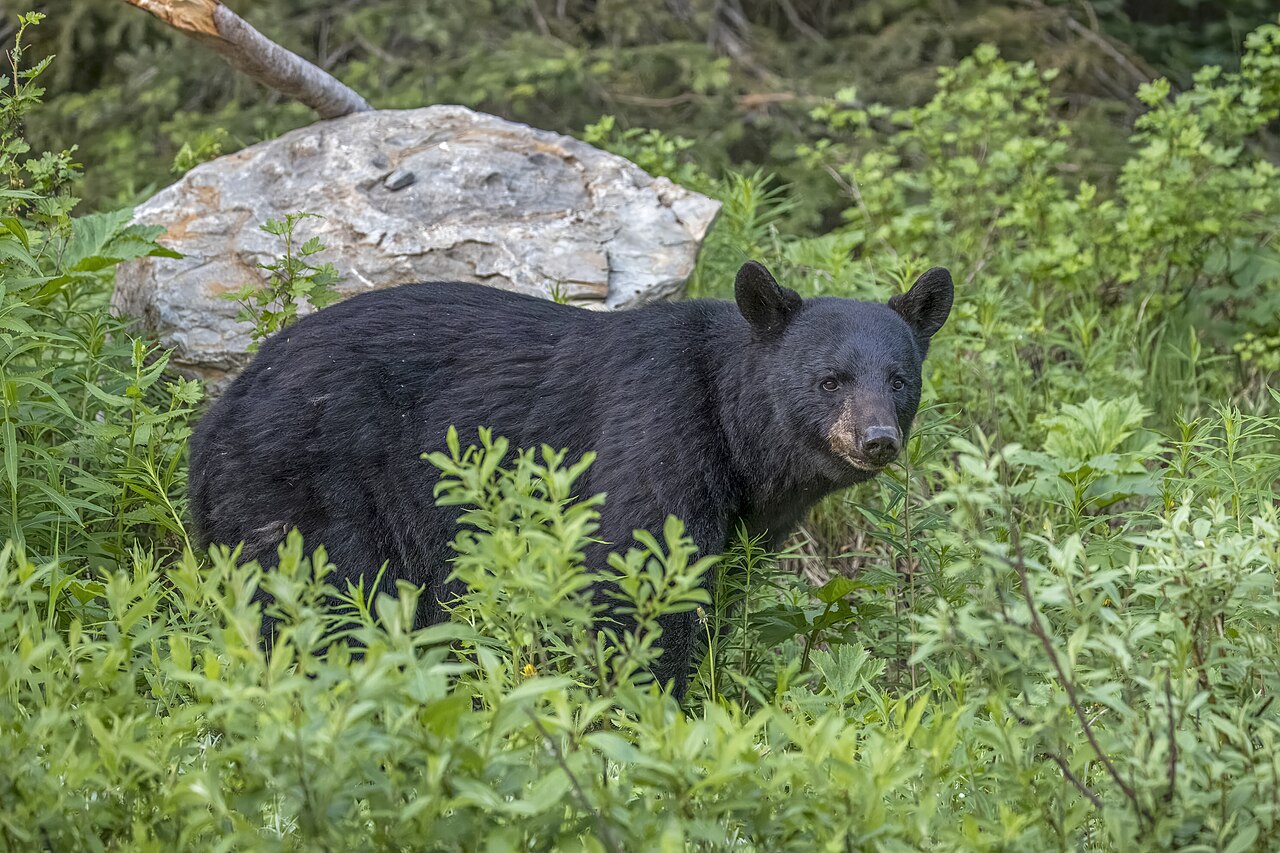
Bear scat is defined by diameter and by what has survived digestion. A black bear dropping is usually at least 1.5 in (4 cm) wide, and a large boar can exceed 2.5 in (6.4 cm). The mass holds together loosely, breaks apart when disturbed, and smells more like fermented fruit than like carnivore waste.
Contents give it away even faster. Bears digest poorly, so you see whole blueberries and raspberry seeds, apple skins, acorn fragments, cornstalk fiber, bee and ant parts, and sometimes deer hair from scavenging. A wide pile that is nothing but packed seeds is bear in almost every setting. See bear poop for the full seasonal breakdown.
Size Is the Fastest Tell
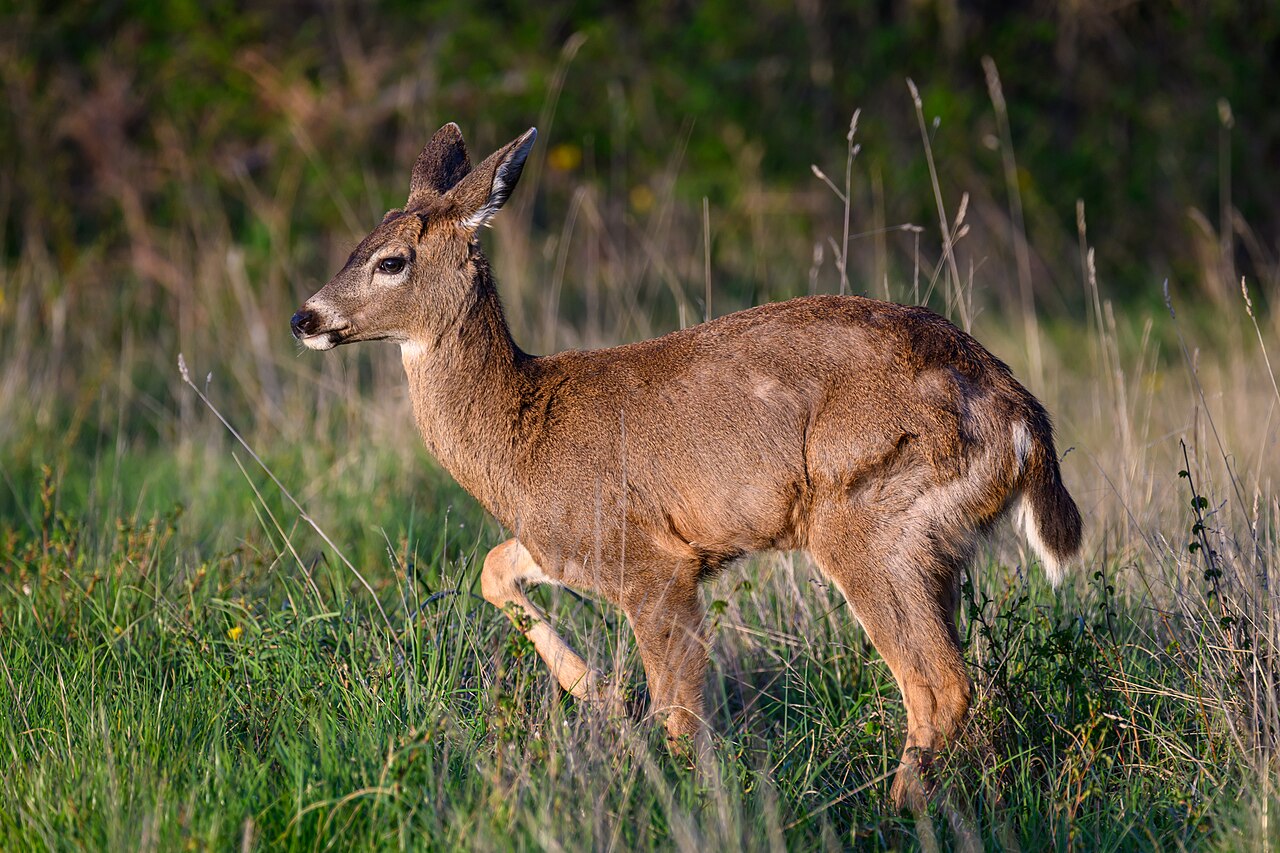
Diameter separates these two species better than any other single feature. Carry a reference: the width of your index finger is roughly 0.75 in (1.9 cm), and a soda can is 2.6 in (6.6 cm). A pellet narrower than your finger is a deer or a smaller herbivore. A mass as wide as a soda can is a bear.
Volume helps too. A full deer pile holds about as much material as a golf ball. A mature bear drops the volume of a grapefruit or more in one sitting, sometimes several times along the same stretch of trail. Elk pellets fall between the two but keep the deer shape at a larger scale.
Shape and Surface
Deer pellets are formed by the same segmented gut process that shapes rabbit and goat droppings, so they come out as discrete, firm, repeating units. The surface is smooth, and in dry country pellets harden into gray pebbles that hold shape for a year or more.
Bear scat has no repeating unit. Depending on diet, it appears as a coiled tube with blunt ends, a flattened pat, or a shapeless splash. Soft, slumped piles usually mean a berry or green grass diet; firm, tapered tubes mean a meat or nut heavy meal. Neither ever shows pellet outlines.
What Is Inside: Fur, Seeds and Berry Skins
Break a dry sample apart with a stick, never your hand. Deer scat is uniform, finely ground plant fiber all the way through, because ruminants chew cud and ferment forage thoroughly. Nothing identifiable survives except the occasional needle fragment.
Bear scat is a catalog of what the bear ate in the last day. Seeds stay whole and viable, which makes bears major seed dispersers in berry country. Grass comes through in long green strands in spring. Fur, bone chips, and insect exoskeletons show up in smaller amounts, and that mixed content is what tells you the animal was an omnivore.
Where You Find It and How It Is Piled
Deer pellets concentrate where deer stand still: bedding ovals in tall grass, browse lines along field edges, and the downwind side of thickets. On a well used trail you may find a pile every 50 ft (15 m). Winter yarding areas can be carpeted with thousands of pellets.
Bear scat lands where bears feed and travel: blueberry and blackberry patches, oak and beech flats in autumn, old logging roads, culverts, and the base of marked trees. Bears often leave several piles within a short distance of a food source, and in late summer the same patch may hold a dozen.
Can Deer Scat Look Like Bear Scat?
Yes, in one situation. Deer feeding on spring green up or on a food plot produce loose clumped scat that merges into a soft pat. At a glance on a trail camera photo, that pat resembles a small bear dropping. Size resolves it: the clump stays under 1.5 in (4 cm) wide and still shows pellet shapes on its surface.
The reverse confusion is rarer. A bear on a dry nut diet can drop firm segments, but each segment still exceeds any deer pellet by a wide margin. If you are weighing pellet size against clumping, trust width over texture. Our comparison of deer poop vs rabbit poop uses the same method at the small end of the scale.
Bear Scat vs Coyote Scat
Coyote scat is a rope about 0.75 to 1 in (1.9 to 2.5 cm) in diameter, tapered to a twisted point at one end, and tightly bound with fur and bone fragments. It usually sits in the middle of a trail or at a junction, deposited deliberately as a scent marker.
Bear scat is wider, blunter, and never twisted, and it rarely sits centered on a trail as a statement. The fur test helps: coyote scat is often held together almost entirely by hair, while bear scat holds together with plant matter. Bears also do not scratch the ground beside the pile as canids often do.
Bear Poop vs Raccoon Poop
Raccoon droppings are tubular, 2 to 3 in (5 to 7.6 cm) long but only about 0.5 in (1.3 cm) wide, with blunt ends and a granular, berry filled texture. Content overlaps heavily with bear scat in late summer, which is why people confuse the two around fruit trees.
Diameter again does the work: raccoon scat is about a third the width of bear scat. Location helps as well, since raccoons use repeat latrines on logs, decks, roof edges, and attic beams, while bears defecate wherever they happen to be. Our guides to squirrel and mouse droppings and bat and mouse droppings cover the smaller attic cases.
Is It Safe to Touch? Disease and Cleanup
Treat all wild scat as infectious and leave it alone where it lies outdoors. Bear and deer droppings can carry Giardia, Cryptosporidium, E. coli, and Salmonella, and raccoon latrines near a yard pose a far more serious risk from Baylisascaris procyonis, a roundworm that infects people through swallowed eggs. The Centers for Disease Control and Prevention publishes current guidance on animal borne illness, and state wildlife agencies such as the Alaska Department of Fish and Game maintain regional sign identification pages.
If scat has to be removed from a deck, walkway, or kennel, wear disposable gloves and an N95 mask, wet the material first so nothing becomes airborne, double bag it in the trash, and wash hands and tools with soap afterward. Do not pressure wash it, do not compost it, and keep dogs away from fresh piles, since dogs both roll in scat and eat it.
Frequently Asked Questions
How to tell the difference between deer poop and rabbit poop?
Rabbit pellets are round spheres about 0.4 in (1 cm) across, light brown, and look like compressed sawdust. Deer pellets are larger, oval rather than round, darker, and dimpled at one end. Rabbit piles also sit in tighter groups, often right where the animal was feeding.
What can be mistaken for bear scat?
Large dog droppings, horse manure that has broken apart, moose scat on a green diet, and human waste at dispersed campsites all get reported as bear. Check for seeds and berry skins, check the diameter, and check whether the pile holds plant fiber rather than fur or processed food.
What does coyote poop look like?
A gray or brown rope about 0.75 to 1 in (1.9 to 2.5 cm) thick, tapered and twisted at one end, visibly full of hair and small bone fragments. Fresh scat smells strongly of carnivore. Coyotes place it on trails, road edges, and junctions as territorial marking.
Is deer poop dangerous to dogs?
Eating deer pellets occasionally rarely harms a healthy dog, but it does transmit Giardia and Cryptosporidium, and both cause diarrhea. In tick heavy areas the greater risk is the deer itself bringing ticks into the yard. Discourage the habit and mention it to your veterinarian if symptoms appear.
Does bear scat smell?
Less than most people expect. Fresh bear scat on a berry or grass diet smells fermented and sweet, closer to a compost heap than to dog waste. Scat from a bear eating meat, fish, or garbage smells sharply foul. Strong carnivore odor in bear country usually means a food conditioned animal.
How can I identify what animal poop this is?
Measure the widest piece, count the pieces, note the shape, look for fur or seeds, and record exactly where it sat. Those five data points narrow nearly any North American sample to one or two species. Photograph it with a coin for scale before anything gets disturbed or rained on.