Hedgehog Poop: Size, Shape and the 3 Droppings It Gets Confused With
Hedgehog poop is a dark brown to black cylinder about 1 to 2 in long (2.5 to 5 cm) and roughly pencil thick, usually tapered or slightly twisted at one end, and almost always flecked with shiny beetle shell fragments. That glitter is the best field mark, because no other garden animal of that size eats enough hard bodied insects to leave it.
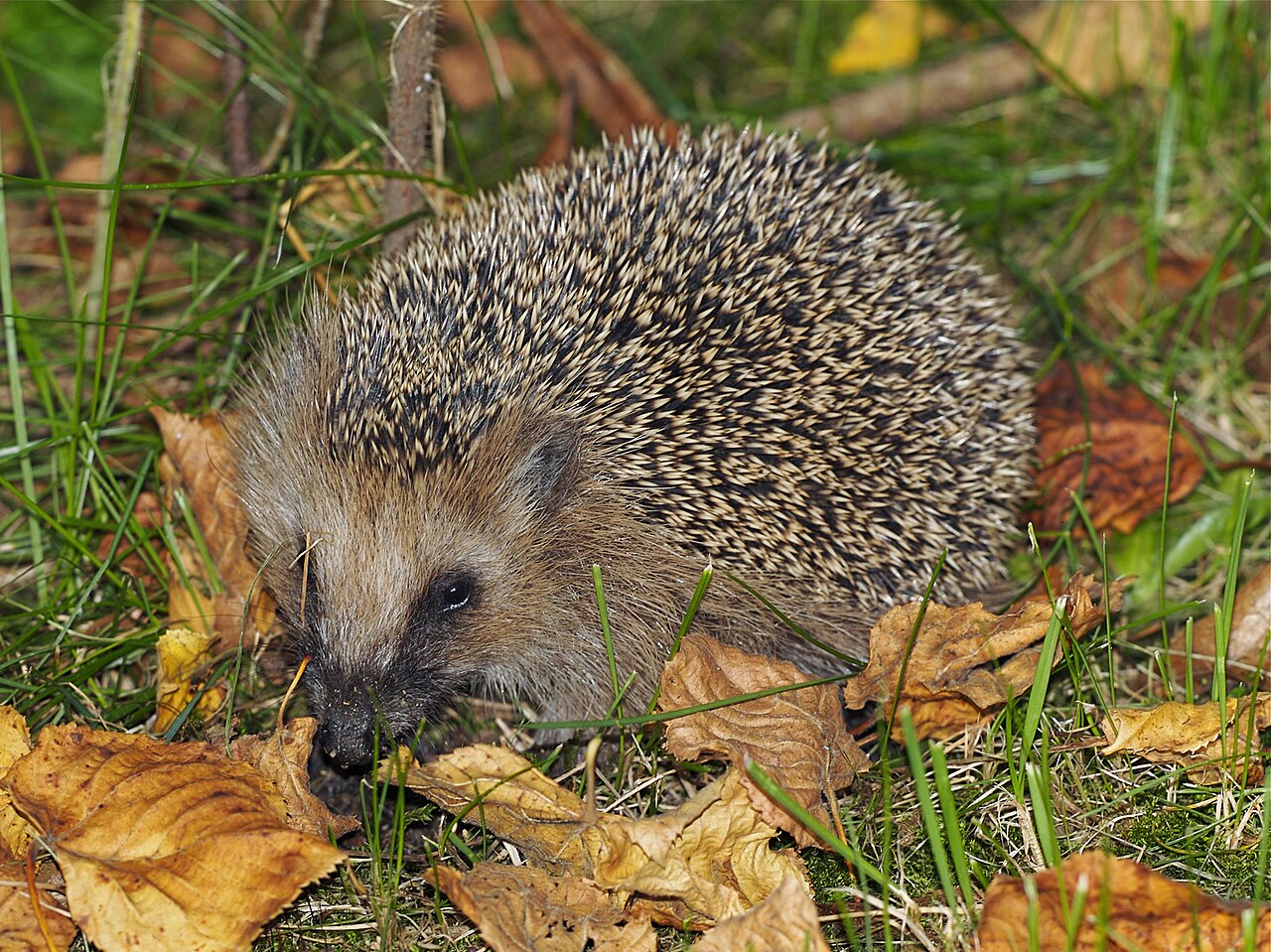
Two different readers land on this question. In the UK and Europe the droppings come from wild European hedgehogs (Erinaceus europaeus) on lawns and paths. In the US there are no wild hedgehogs at all, so hedgehog poop means pet African pygmy hedgehog (Atelerix albiventris) droppings in a cage, where the question is health rather than which animal left it.
Hedgehog droppings are 1 to 2 in long (2.5 to 5 cm), cylindrical, dark brown to black, firm, and studded with glossy insect fragments. They taper at one end and are left singly on open ground, never in piles. Pale, green or slimy droppings from a pet hedgehog signal illness and need a vet.
| Feature | Hedgehog droppings |
|---|---|
| Length | 1 to 2 in (2.5 to 5 cm) |
| Width | 0.3 to 0.4 in (8 to 10 mm), pencil thick |
| Shape | Sausage shaped, one end tapered |
| Color | Dark brown to black, glossy when fresh |
| Contents | Beetle wing cases, insect legs, slug remains |
| Where found | Lawns, patios and paths, out in the open |
| Grouping | Single droppings scattered, no latrine pile |
How Do You Identify Hedgehog Poo?
Start with the glitter. Break a dried dropping apart with a stick and you will see iridescent green or bronze flakes, the wing cases of ground beetles and chafers. Hedgehogs are insectivores, their gut cannot digest chitin, and those fragments pass through intact, so a dropping that sparkles in sunlight is a near certain hedgehog.
Then check placement and size. Hedgehogs defecate while walking and never bury or pile droppings, so you find single deposits scattered across open lawn or decking, often tracing the animal’s route. Anything under 0.75 in (2 cm) is too small and anything thicker than a pencil is too large. The same width first, contents second method runs through rat poop versus mouse poop.
Hedgehog Poop vs Rat Poop

Rat droppings are smaller and arrive in quantity: pellets 0.5 to 0.75 in long (13 to 19 mm), narrow, pointed at one or both ends, and 30 to 50 per rat per day, so they accumulate in corners and inside sheds. They are matte and uniform, because rats eat grain and pet food rather than beetles, and they stay close to cover. Smaller dark pellets along a wall are more often reptile or rodent, as in lizard poop versus rat poop and squirrel poop versus rat poop.
Hedgehog Poop vs Cat Poop
Cat feces are the most common garden misidentification. They are thicker, 0.5 to 0.75 in (13 to 19 mm) across, tapered at both ends, far smellier from a meat heavy diet, and contain hair rather than insect armor. Cats also scratch soil over their deposits, which hedgehogs never do, so anything buried or in a loose scrape is cat.
Hedgehog Poop vs Fox Poo
Fox scat is longer at 2 to 4 in (5 to 10 cm), twisted with a thin tapered tail at one end, and strongly musky. Foxes deposit deliberately on prominent spots such as molehills, rocks and path junctions, and often leave fur, bone chips, feathers or fruit seeds behind. Hedgehog droppings have no tail and only a mild earthy odor, and berry pips in late summer point to fox, as the same tail test does in deer poop versus rabbit poop.
Is Hedgehog Poop Dangerous, and How Do You Clean It Up?
Treat it as a mild but real hazard. Hedgehogs can carry Salmonella, which the Centers for Disease Control and Prevention has linked to multistate outbreaks traced to pet hedgehogs, along with the ringworm fungus Trichophyton erinacei and Cryptosporidium. Children under five, older adults and anyone immunocompromised face the highest risk.
Wear disposable gloves, lift droppings with a bag or trowel rather than a brush, and put them in household waste, not compost. Rinse hard surfaces with dilute disinfectant, and wash your hands with soap afterward even if you wore gloves. Never clean a hedgehog cage in a kitchen sink. Green, pale or mucus coated droppings are a medical question, and they are an early warning sign in young hedgehogs that are not thriving.
Frequently Asked Questions
How often do hedgehogs poo?
Several times a night, and more when feeding heavily. A pet hedgehog leaves six to ten droppings in an active night, often while running on its wheel, which is why wheels need daily cleaning. Wild hedgehogs defecate while foraging across a range of up to a mile, so droppings end up scattered.
Do hedgehog droppings smell?
Only mildly. Fresh droppings have a faint earthy odor that fades within a day outdoors, far weaker than cat or fox deposits. In a cage the smell builds fast because droppings get trodden into the wheel, so daily spot cleaning keeps a pet setup close to odor free.
Do hedgehogs carry diseases harmful to humans?
Yes, a few. Salmonella is the main one and has caused documented US outbreaks from pet hedgehogs, with ringworm and Cryptosporidium also recorded. Transmission comes from handling the animal, its bedding or its droppings and then touching your face. Gloves, handwashing and keeping hedgehogs out of kitchens remove nearly all of the risk.
What time of night do hedgehogs come out to feed?
Most activity starts shortly after full dark and peaks in the first two to three hours, with a second burst before dawn. In summer that means roughly 9 pm to midnight and again around 4 am. Pet hedgehogs follow the same pattern indoors, which is why droppings appear overnight and the wheel is busiest late.