Goose Sounds: 7 Calls Decoded, From Honk to Hiss
Goose sounds come down to one unmistakable call, the two-syllable ah-HONK of a Canada goose, plus about seven quieter ones that most people never consciously separate. Geese are among the most vocal birds in North America, and they use their voices for traffic control: honking holds a migrating flock together, warns of danger, announces a landing and settles arguments on the lawn.
The honk you hear overhead in October is a contact call, not a celebration. The hiss you get at 10 ft (3 m) from a nest is the last warning before a bird comes at you. Each call below is listed with the season and time of day it belongs to, what it means, and which species of goose is most likely producing it where you live.
Geese honk, hiss, cackle, grunt and murmur. The classic flight call is a loud two-note ah-HONK, with males lower and females higher. A hiss delivered with the neck out and tongue showing is a close-range threat. Goslings peep and whistle. Most honking carries about 1 mile (1.6 km).
| Sound | What it sounds like | What it means | When you hear it |
|---|---|---|---|
| Flight honk | Loud ah-HONK, two syllables | Keep the flock together | Migration, day and night |
| Greeting call | Rapid honking with head pumping | Pair or family reuniting | Year round, after a separation |
| Pre-flight call | Low rhythmic honk honk plus head bobs | Flock is about to take off | Dawn and dusk on feeding grounds |
| Hiss | Long snake-like exhale | Back off now | Nesting season, within 30 ft (9 m) |
| Alarm honk | Short sharp barks, repeated | Predator or dog spotted | Any time, any season |
| Gosling peep | Thin rising whistle or peep | I am here, I am cold, feed me | May through July |
| Grazing murmur | Soft low grunts and clucks | All clear, contact within feet | While a flock feeds |
What Noise Does a Geese Make?
A goose honks, and in the United States that honk almost always belongs to a Canada goose (Branta canadensis), the species on golf courses, retention ponds and soccer fields in all 48 contiguous states. The call is two notes, a short rising ah followed by a stressed HONK, loud enough to carry about a mile across open ground.
Honking is only the headline. The same bird hisses, grunts, barks, cackles and murmurs, and its goslings whistle. Researchers studying Canada geese have separated more than a dozen distinct adult calls, which puts geese among the most talkative waterfowl in North America and well ahead of ducks in vocabulary.
The Flight Honk You Hear Overhead

The flight call is the contact signal that keeps a V-formation from falling apart. Birds at the back call forward, birds at the front answer, and the honking rises when the flock changes direction or altitude. In a large skein the calls overlap into a continuous rolling sound rather than clean individual honks.
You hear it most from late September through November and again from February into April, and often at night, because geese migrate after dark when air is calmer. A flock passing at 2,000 ft (600 m) can be clearly audible while staying nearly invisible, which is why the sound seems to come from nowhere.
Male and Female Goose Sounds Are Different
In Canada geese the sexes sound distinct enough that experienced observers sex birds by ear. The gander gives a lower, longer, two-syllable ah-honk. The female answers with a higher, shorter, one-syllable hink or hrink, and in a calling pair the two notes alternate quickly enough to sound like a single stuttering call.
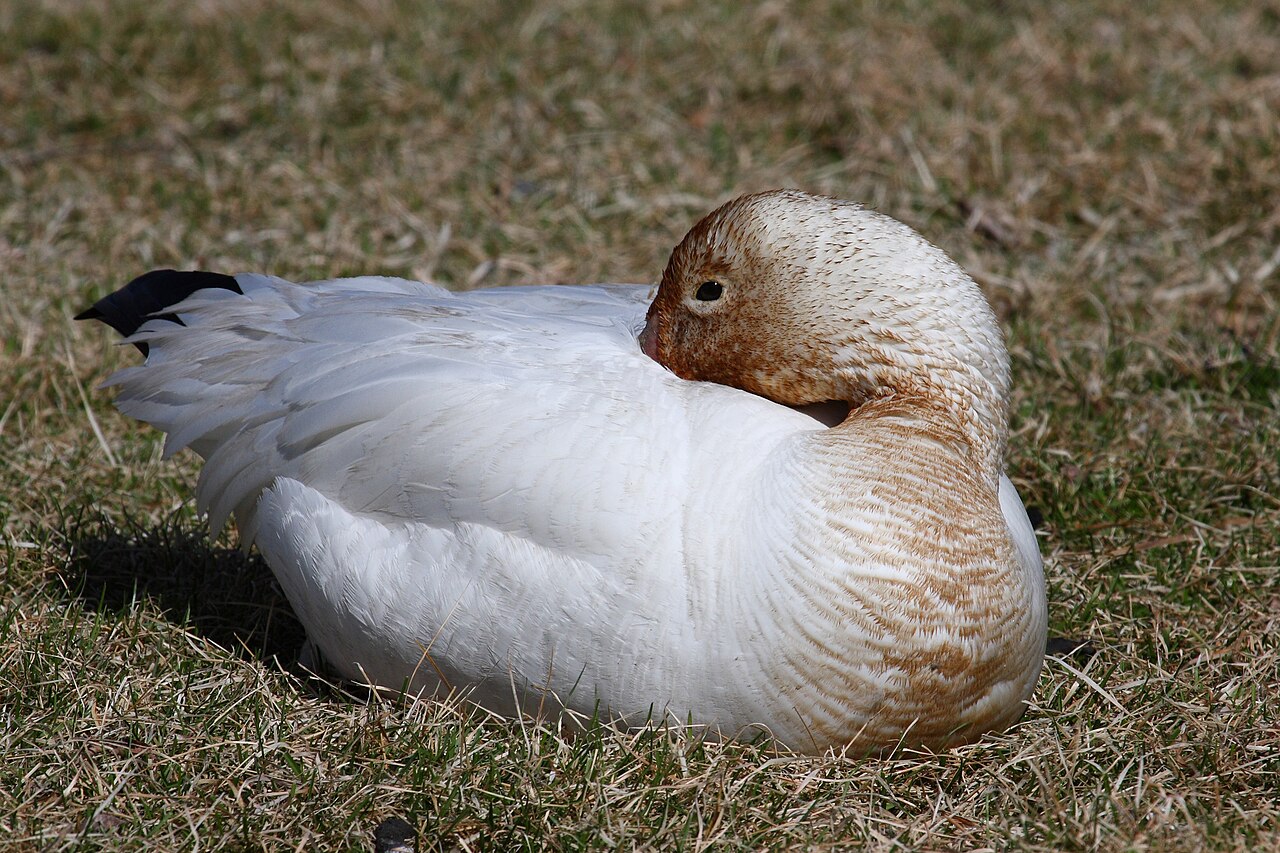
Snow geese and white-fronted geese show much less difference between the sexes, so the trick does not transfer. Pitch also shifts with body size and age, which means a big first-year male can sound like a small adult. Treat the two-note versus one-note pattern as the reliable cue, not the pitch itself.
The Greeting Call When Geese Reunite
Canada geese pair for years, and a reunion after even a brief separation triggers a loud display. Both birds stretch their necks forward, pump their heads up and down and honk rapidly at each other for several seconds. The same display runs when a family regroups after a disturbance or when a gander returns to his mate on the nest.
Waterfowl biologists call this the triumph ceremony, and it reinforces the pair bond rather than communicating anything about the surroundings. If you hear a sudden burst of two-bird honking from a pond at close range with no predator in sight, this is usually what happened. It carries no threat to people watching from a distance.
Pre-Flight Honking and Head Bobbing
A flock does not take off at random. Minutes before departure, individual birds start a low, rhythmic honking paired with a deliberate up-and-down head bob, and the behavior spreads through the group bird by bird. When enough geese are bobbing and calling in sync, the flock lifts off together.
This is the most useful call for a photographer or a hunter to recognize, because it predicts an event a minute or two ahead. It also explains the sudden coordinated departure that looks telepathic from a distance. Each bird effectively casts a vote, and the honking is the tally.
The Hiss and the Threat Display
The hiss is the warning that matters. A goose defending a nest or goslings lowers its head, points its bill at you, opens its mouth, shows its tongue and exhales in a long snake-like hiss. The neck may pump, the wings may lift, and the bird holds its ground instead of moving away.
If the hiss does not work, the goose charges, and an adult gander weighing 12 lb (5.5 kg) with a 5 ft (1.5 m) wingspan can knock a child down and bruise an adult with its wings. The hiss is therefore a courtesy. Nesting season runs March through June, and the aggressive radius around a nest is roughly 30 to 150 ft (9 to 45 m).
Alarm Calls and What Sets Them Off
The alarm call is a short, sharp, barking honk given in fast repetition, flatter and more clipped than the flight honk. A loafing flock with its heads down will go from silence to every bird upright and barking within a second of a dog cresting a bank. It is the same reflex that makes geese useful sentinels.
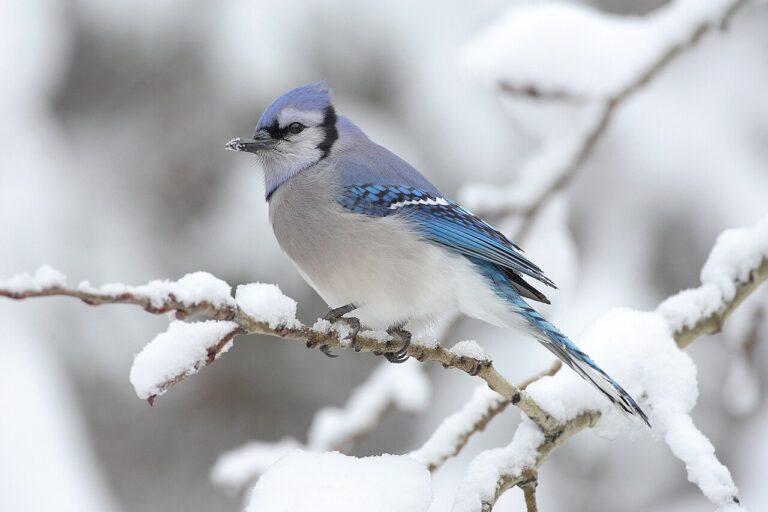
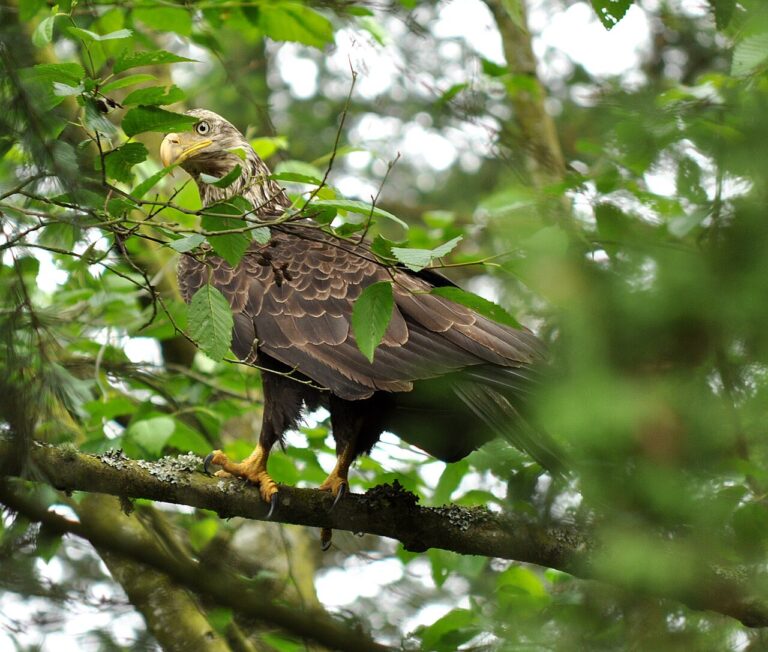
Dogs, coyotes, foxes, eagles and off-leash joggers all trigger it. A hunting bald eagle clears a pond faster than anything else, and the eagle’s own thin chatter, covered in the guide to bald eagle sounds, is nothing like the scream used in films. Geese habituated to parks raise the threshold considerably and may only bark when something comes within 20 ft (6 m). The alarm is also contagious across species, so the scolding calls of blue jays and goose barks often go off together.
How Do You Call a Baby Goose?
A baby goose is a gosling, and the word covers the bird from hatching until it grows adult feathers at about nine weeks. Goslings hatch covered in yellow-grey down, can walk and swim within a day, and stay with both parents for close to a year, far longer than most waterfowl young.
Their voices are thin, high whistles and peeps given almost constantly while they feed, and the rate rises when a chick gets separated, cold or hungry. Parents answer with a low murmur. Goslings also hiss when cornered, a startling miniature version of the adult threat that fools no predator but shows the behavior is innate.
How to Write a Goose Sound
Standard English spellings are honk for the call itself, ah-honk or a-honk for the two-syllable Canada goose version, and hink for the female’s shorter answer. Field guides use HONK-a-lonk for a flock in flight and ka-ronk for the brant’s lower, rolling croak.
For the threat, hssssss with the letter s extended is conventional, and comic writers favor HONK HONK in capitals for volume. Ornithologists avoid these transcriptions in technical work and use spectrograms instead, because the same call can be rendered half a dozen different ways depending on the listener’s native language.
Goose Sounds by Species
Canada goose: the deep two-note ah-honk, the default sound across the country. Snow goose (Anser caerulescens): a higher, nasal, yelping bark, and a flock of 10,000 on a Midwest refuge sounds like a pack of hounds heard through a wall. Greater white-fronted goose: a high, musical, three-note kah-lah-aluck that earned it the old name laughing goose.
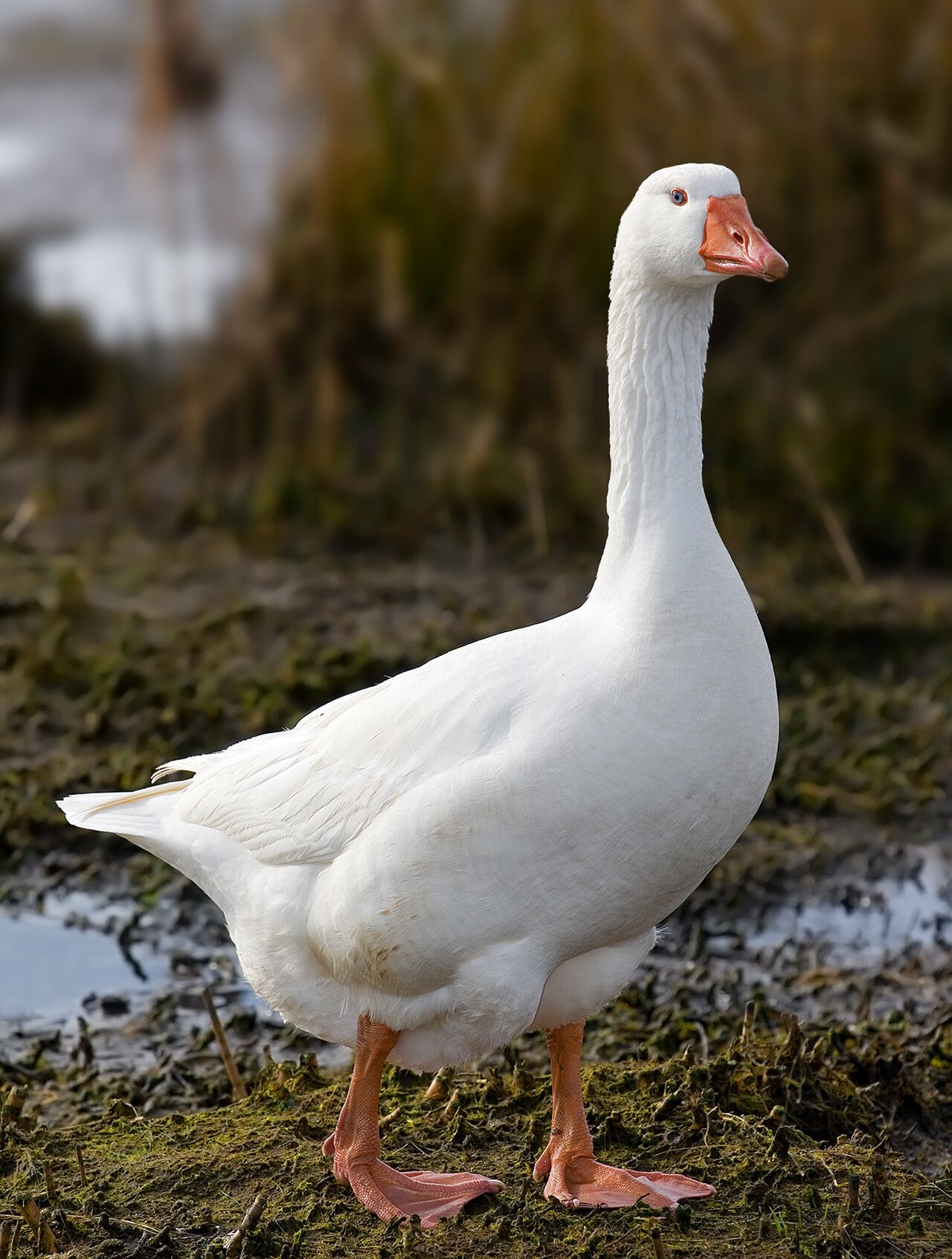
Brant: a low, guttural, rolling cr-r-ronk heard on both coasts in winter. Cackling goose, a small Canada goose lookalike, calls at a noticeably higher pitch. Domestic farm geese descend from the greylag (Anser anser) and give loud, repeated honks plus heavy hissing, which is why they work as yard guards.
Goose Sounds at Night and in the Yard
Honking at 2 a.m. in autumn is a migrating flock passing overhead, not birds on your property. Geese roosting on a pond also call through the night in short bursts when something moves nearby, and a flock loafing on a flat commercial roof will stomp and honk directly above a ceiling, which is the one case where geese create a genuine household noise problem.
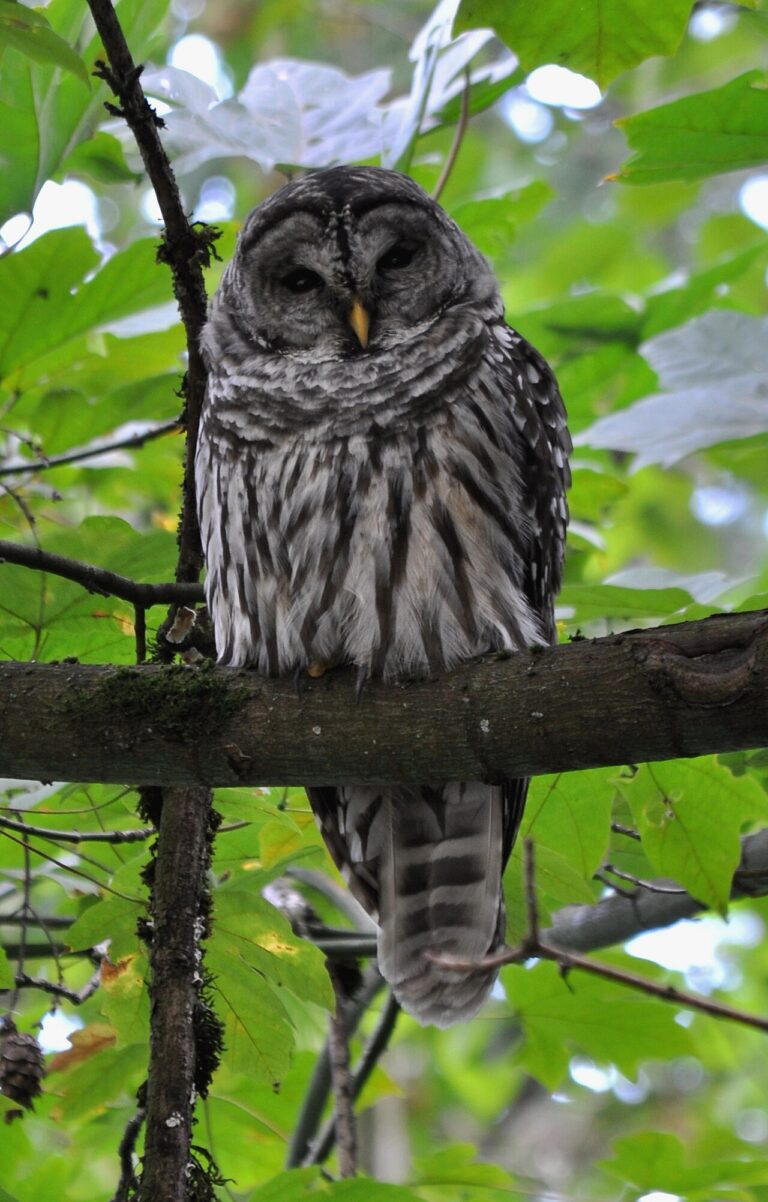
Scratching, squeaking or scrabbling inside a wall or attic is never a goose; that sound is covered in the guide to bat sounds in buildings. On a summer pond the honking mixes with the deep bass described in the bullfrog sound guide, and in winter the same marsh may hold the almost silent hunter from the snowy owl sound guide.
Noise devices are a weak answer because geese habituate to them within days. The guide to bird deterrent sounds covers what actually works and what does not. Geese are federally protected in the United States, so disturbing a nest, eggs or birds requires authorization, and the current rules are published by the US Fish and Wildlife Service.
Frequently Asked Questions
What noise scares a goose?
Sudden, irregular, loud noises work briefly: propane cannons, air horns, pyrotechnics and recorded distress calls. Geese habituate to all of them within a few days to two weeks once no real threat follows. Sound alone almost never clears a site permanently, and it works best paired with a dog or a barrier.
What are geese most afraid of?
Dogs, specifically a dog moving toward them with intent. Trained border collies are the standard professional tool for clearing parks and golf courses because geese read them as coyotes. Coyotes, foxes and eagles also trigger genuine flight, while silhouettes, decoy owls and reflective tape are ignored after about a week.
How to get a goose to leave?
Remove what holds it there. Stop all feeding, let turf grow to 10 to 14 in (25 to 36 cm) tall, plant a dense shrub buffer between the water and the lawn, and add a 30 in (76 cm) fence along the shoreline. Geese need a clear walking path from water to grass, and breaking that line is more effective than any scare device.
What can I put in my yard to scare geese away?
The measures with real evidence behind them are a shoreline barrier, tall unmowed vegetation, a grid of wires over a small pond and repeated harassment by a trained dog. Plastic swans, fake coyotes, scarecrows and most ultrasonic units fail. Expect to combine two or three methods and maintain them for several weeks.
What is a goose’s natural enemy?
Coyotes and foxes are the main predators of adults and goslings, and raccoons, skunks, crows and gulls take eggs. Bald eagles and great horned owls take goslings and occasional adults, and snapping turtles and large fish pull down young from below. Most goslings that die are lost in the first three weeks.
What to do if a goose runs at you?
Face the bird, spread your arms or raise a bag or jacket to look larger, and back away steadily without turning around or running. Do not kick or swing at it. If it reaches you, keep your face and eyes protected with a forearm and keep retreating until you are outside the nesting radius.