Orange Snake Identification: 5 Common US Species and 1 to Avoid
An orange snake in the United States is almost always harmless. Of the species that read as orange to the eye, only the copperhead (Agkistrodon contortrix) is venomous, and its color is a dull coppery tan with dark hourglass bands rather than true orange.
Orange shows up three ways in snakes: as the whole body, as a stripe down the back, or as a belly color that flashes when the animal moves. Which of the three you saw, plus your state, narrows the list to one or two species.
Orange snakes in the US are harmless in nearly every case. The common orange species are the corn snake, groundsnake, orange-striped ribbonsnake, scarlet snake and red-bellied snake. The only venomous snake that can look orange is the copperhead, which is coppery tan with dark hourglass crossbands and a thick body.
Are orange snakes poisonous?
No orange snake in the US is poisonous, and almost none are venomous. Poisonous means harmful to eat or touch, venomous means injected through a bite, and snakes belong in the second group. A corn snake can bite if grabbed, but no venom follows.
The species to rule out is the copperhead: heavy body, wide triangular head, vertical pupils, dark hourglass crossbands on pinkish tan. A slender, fast, evenly orange snake is not a copperhead. Treat any snake you cannot name as venomous and keep 6 ft (1.8 m) back.
The orange snakes you are most likely to find
| Species | Markings | Length | Range |
|---|---|---|---|
| Corn snake (Pantherophis guttatus) | Orange with red blotches, checkerboard belly | 3 to 5 ft (90 to 150 cm) | New Jersey to Florida, west to Louisiana |
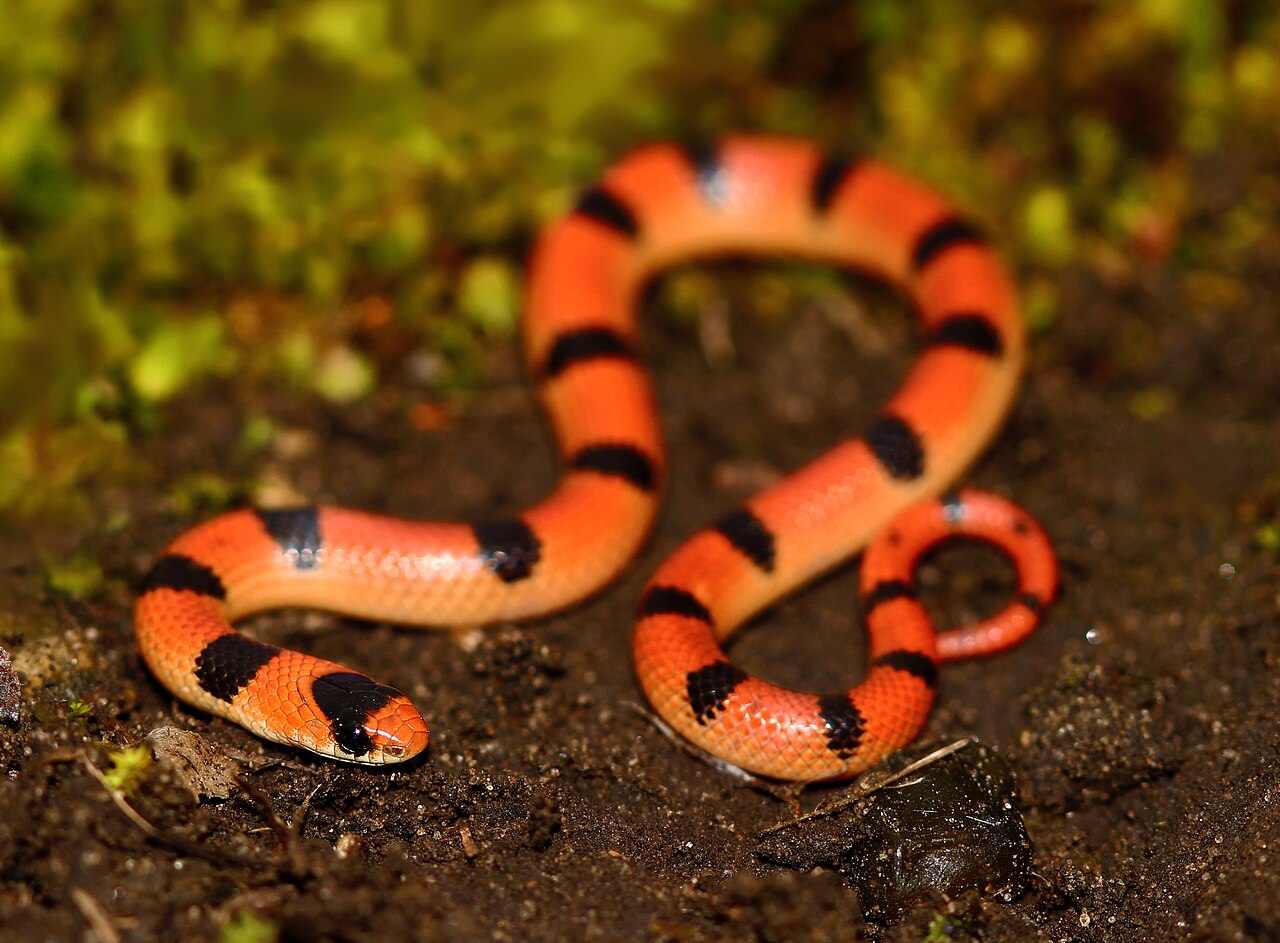
| Groundsnake (Sonora semiannulata) | Plain orange or orange with black bands | 8 to 19 in (20 to 48 cm) | Texas, Oklahoma, Southwest |
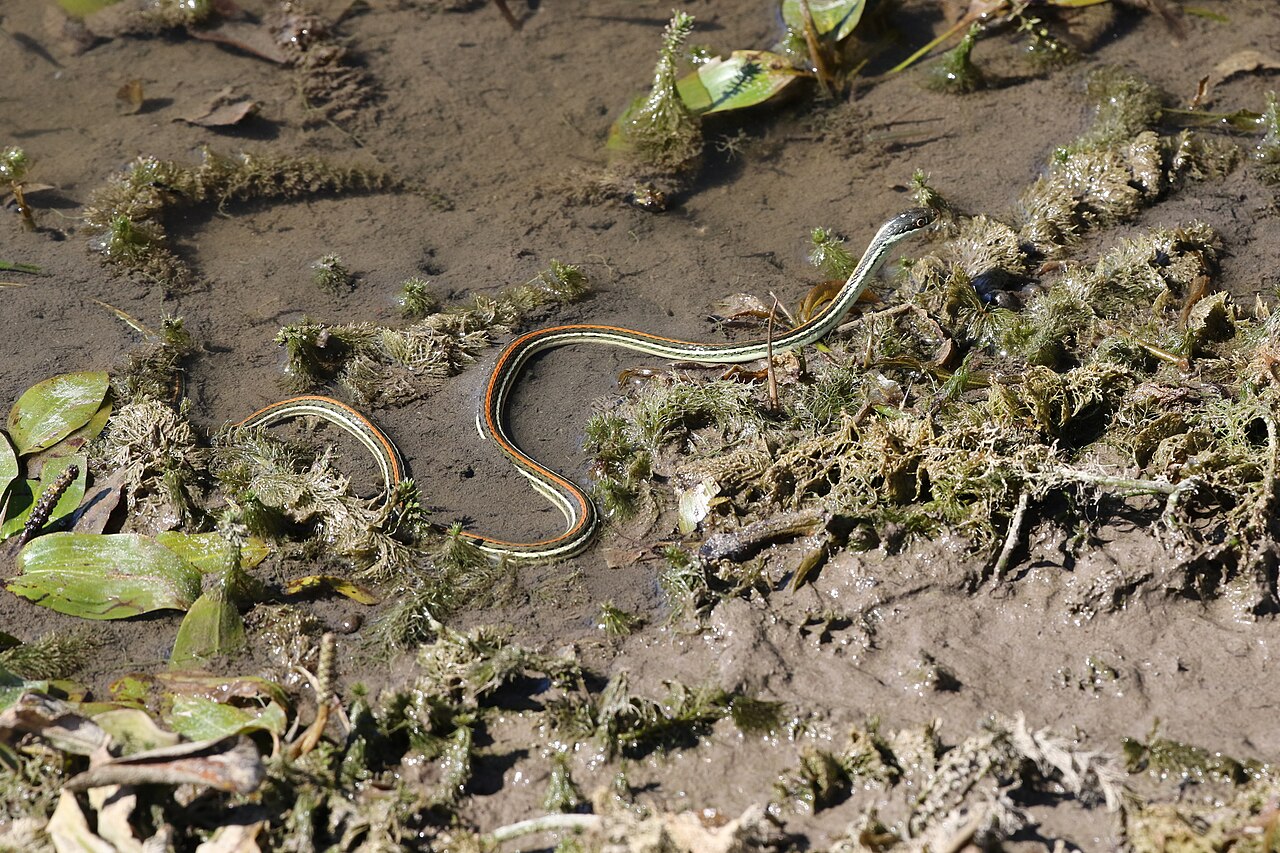
| Orange-striped ribbonsnake (Thamnophis proximus) | Dark body, bright orange spine stripe | 20 to 42 in (50 to 107 cm) | Texas and the Great Plains |
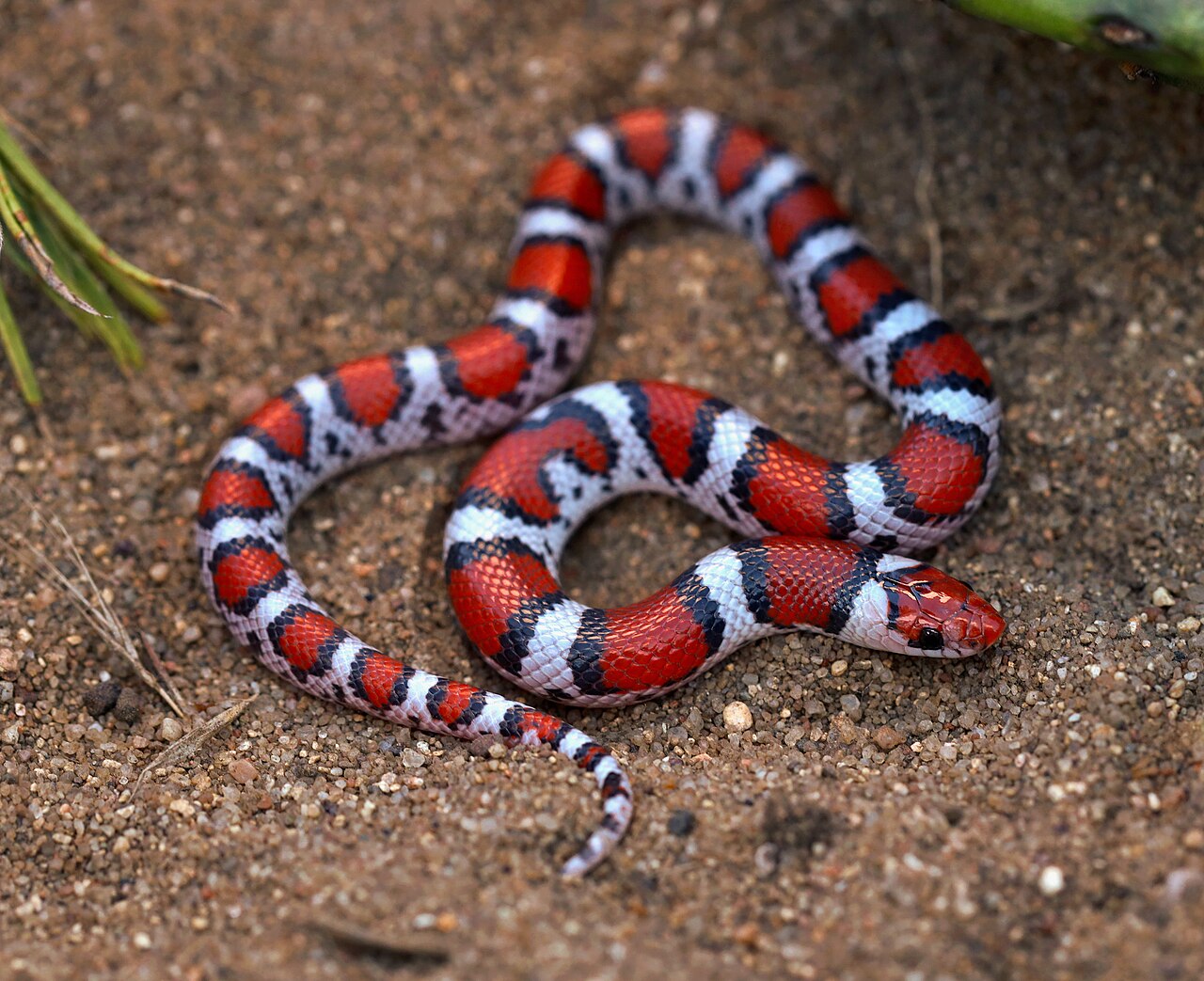
| Scarlet snake (Cemophora coccinea) | Red-orange saddles edged in black, red snout | 14 to 20 in (36 to 51 cm) | Southeast including Florida |
| Red-bellied snake (Storeria occipitomaculata) | Brown above, vivid orange belly | 4 to 10 in (10 to 25 cm) | Eastern half of the country |
All five are harmless. The corn snake accounts for most sightings around barns and suburbs, the groundsnake turns up under boards, the ribbonsnake stays near water. Color is weak evidence in snakes, which is why black and yellow snakes and brown snakes each cover a dozen unrelated species.
Are orange belly snakes poisonous?
An orange belly is one of the safest marks in US snake identification. It belongs to the red-bellied snake, the ring-necked snake (Diadophis punctatus) and the plain-bellied water snake (Nerodia erythrogaster), none of them venomous. No pit viper here has a bright orange underside.
Lookalikes: scarlet kingsnake and coral snake
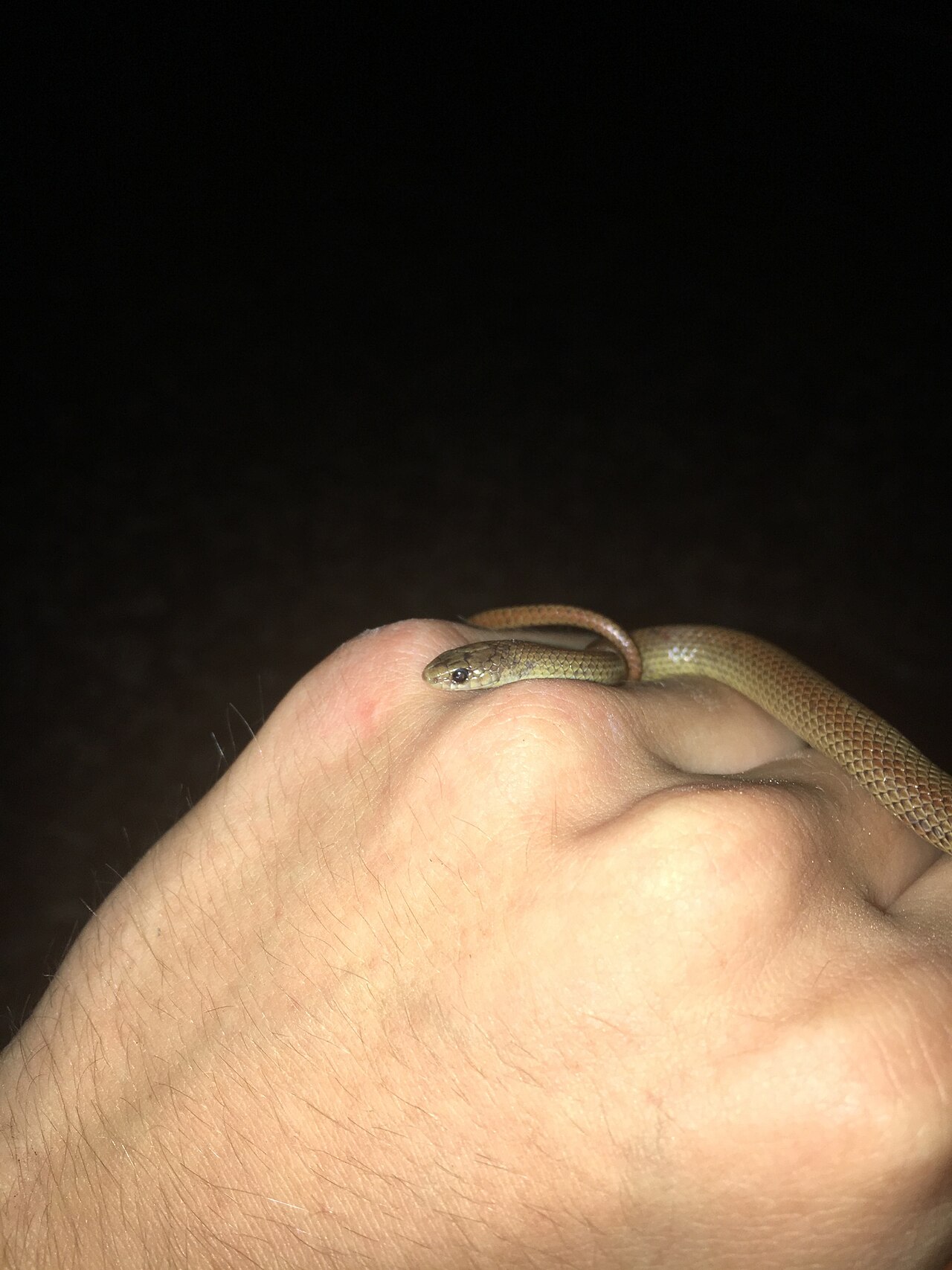
| Feature | Scarlet kingsnake (harmless) | Coral snake (venomous) |
|---|---|---|
| Band order | Red or orange touches black | Red or orange touches yellow |
| Snout | Red and pointed | Black and blunt |
| Bands | Often broken on the belly | Continue around the belly |
| Length | 14 to 20 in (36 to 51 cm) | 20 to 30 in (51 to 76 cm) |
| Range | Southeast and Gulf states | Coastal Southeast, Florida, south Texas |
The old rhyme about red touching yellow works in the US and nowhere else. For the side by side, see our breakdown of coral snake versus king snake markings.
What kind of snake is orange in Florida?
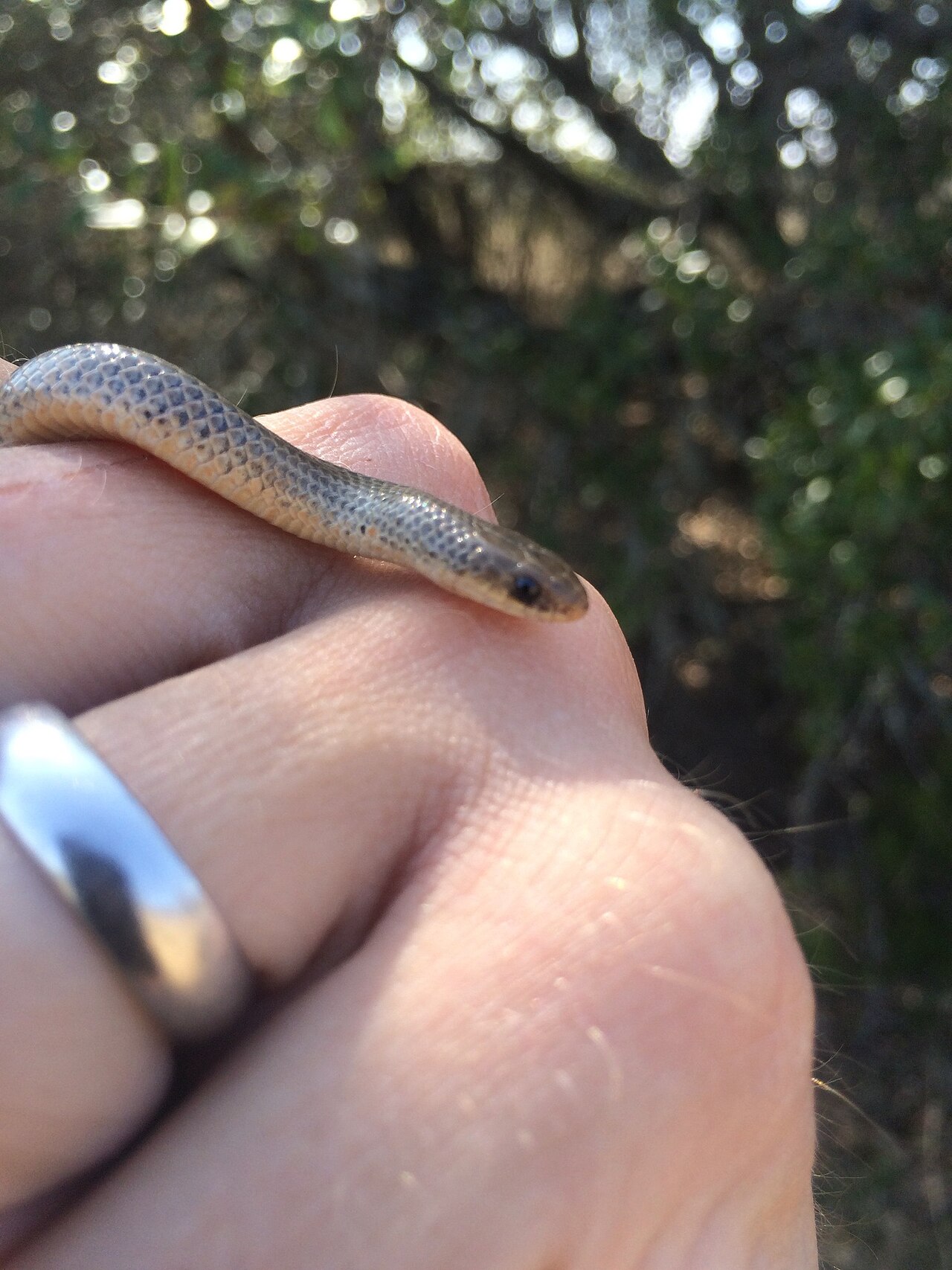
In Florida the answer is usually the corn snake, called the red rat snake there. Scarlet snakes and scarlet kingsnakes make up the rest, and juvenile yellow rat snakes look orange before their stripes come in. Many black snakes in the Southeast also hatch patterned and darken with age. Check the species accounts from the U.S. Fish and Wildlife Service.
What snakes are orange in Texas?
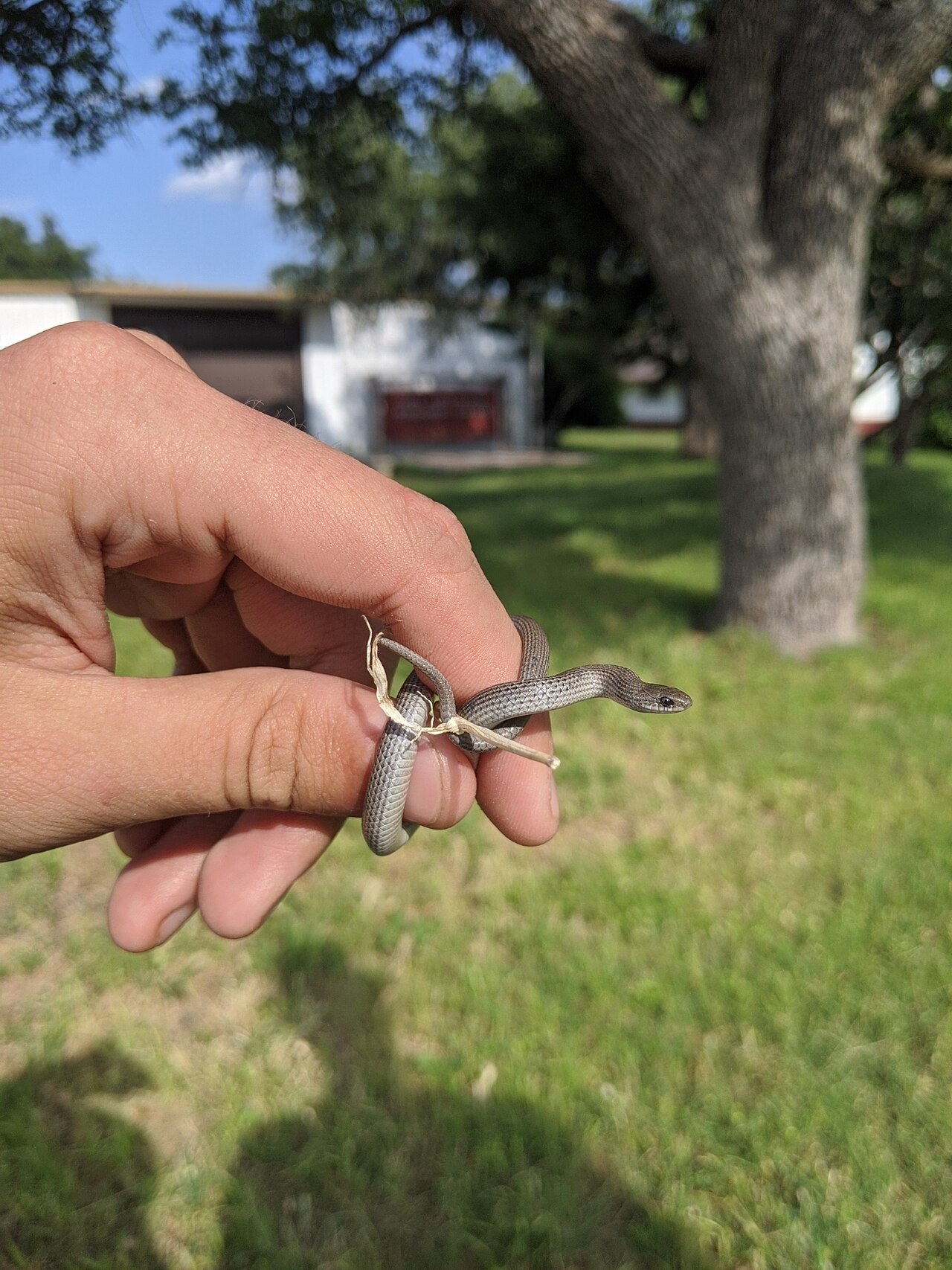
Texas has three regulars: the groundsnake across the dry west, the orange-striped ribbonsnake near ponds, and the Texas ratsnake with its rusty wash. The Texas coral snake lives in the eastern and southern counties, so the band rule matters there. A shedding snake of any species, even the state’s blue tinted ones, can throw an orange cast.
Frequently Asked Questions
What does it mean when you see an orange snake?
Biologically it means you found a species with orange pigment, nothing more. Orange helps these snakes disappear in pine needles and clay soil. In folklore orange and red snakes are read as warnings or signs of change, but the color carries no message about danger in North America.
Are orange snakes poisonous?
No. Orange snakes in the US are non venomous, and no snake is poisonous to touch. The copperhead is the only venomous species that gets called orange, and its coppery tan body with dark hourglass bands looks nothing like a true orange snake up close.
Which snake has a 100% fatality rate?
None. No snake kills every person it bites, and the claim circulates without support. Untreated black mamba bites are often fatal, but antivenom changes that. In the US, treated venomous bites are survived in well over 99 percent of cases.
How do I identify a snake I found?
Note length, body thickness, head shape, pupil shape if visible, pattern direction and the state you are in, then photograph it from 6 ft (1.8 m) away. Those six details narrow almost any US snake to a species. Never handle an unknown snake for a better picture.