Cooper’s Hawk Sounds: 6 Calls and What Each One Means
Cooper’s hawk sounds center on one unmistakable call: a harsh, hollow cak-cak-cak fired off in rapid bursts near the nest. Add a single barking kik, a long nasal whaaa from the female, and the thin whistled begging of fledglings in midsummer, and you have nearly the whole vocabulary of this bird.
The Cooper’s hawk (Accipiter cooperii) is also silent for most of the year, which trips people up. Outside the breeding season it hunts bird feeders without making a sound, so a loud raptor screaming over the neighborhood in January is almost certainly something else. Knowing which call belongs to which month, and which bird is faking it, is most of the work in identifying this species by ear.
The main Cooper’s hawk sound is a fast, harsh cak-cak-cak alarm call, usually from a male defending the nest. Females give a long nasal whaaa when begging for food, both sexes give single kik notes, and fledglings whistle insistently in July and August. Cooper’s hawks are mostly silent outside the breeding season.
| Call | Sounds like | Who gives it | Season and time |
|---|---|---|---|
| Cak-cak-cak | Hollow, harsh barking, 3 per second | Mostly males | March to July, early morning |
| Kik | Single sharp note, repeated slowly | Both sexes | Breeding season, near nest |
| Whaaa | Long, nasal, rising whine | Females | Courtship and incubation |
| Begging whistle | Thin, insistent wheee, repeated for minutes | Fledglings | July and August, all day |
| Nestling peep | Soft, high, muffled | Chicks in the nest | May and June |
| Silence | No call while hunting | All birds | September to February |
What Does a Cooper’s Hawk Sound Like?
A Cooper’s hawk sounds hollow and wooden rather than piercing. The signature call is a series of 10 to 20 harsh notes delivered at about three per second, written as cak-cak-cak or kek-kek-kek, with a dry quality closer to a woodpecker’s rattle than to the drawn-out scream most people picture when they imagine a hawk.
Volume is moderate. You will hear a calling male across a city block, not across a valley. The call carries a nervous, stuttering urgency that is easy to recognize once heard, and it is the sound that gives away an active nest in a neighborhood conifer long before anyone spots the bird.
The Cak-Cak-Cak Alarm Call
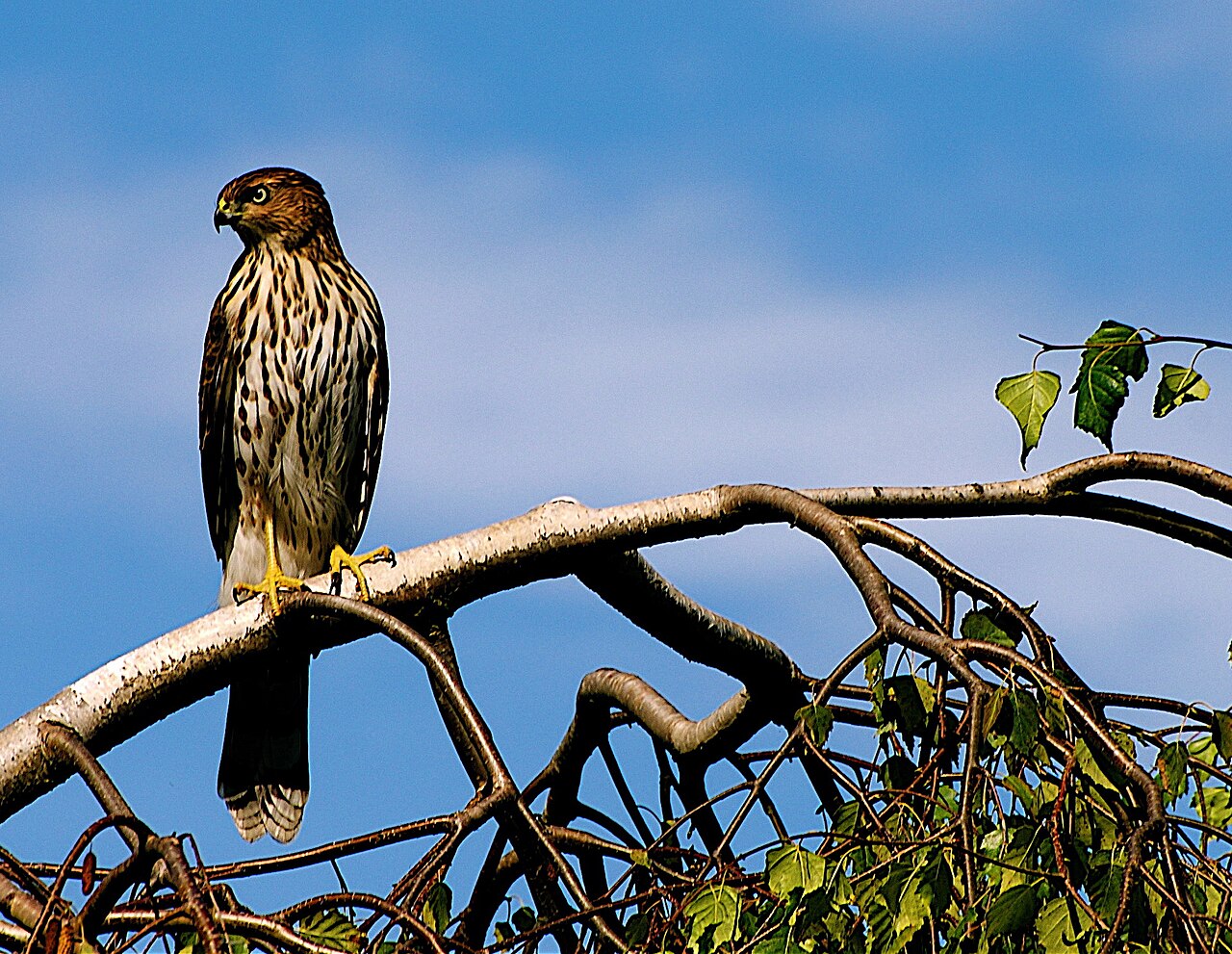
This is the call behind most Cooper’s hawk recordings. It is an alarm and territorial announcement, given when a person, dog, crow or rival raptor approaches the nest tree. The male gives it far more than the female, and intensity rises with proximity: slow and spaced at 100 ft, dense and frantic directly below the nest.
It peaks from late March through early July. If you hear this call repeatedly from the same block over several mornings, there is a nest within about 200 ft, and the bird is telling you so. Back away rather than searching for it, since repeated disturbance is a common reason accipiter nests fail.
The Kik Call: Single Contact Notes

Separated from the rapid series, a Cooper’s hawk also gives single kik notes at intervals of a second or more. This is a lower-pressure contact call used between mates during nest building, during prey handoffs, and as a mild warning when something unfamiliar enters the territory but has not come close.
The spacing is the identification key. A rapid machine-gun burst is alarm; a slow, deliberate kik every second or two is conversation. Birders often hear the slow version first and only get the burst if they keep walking toward the tree.
The Whaaa Call: The Female’s Food Whine
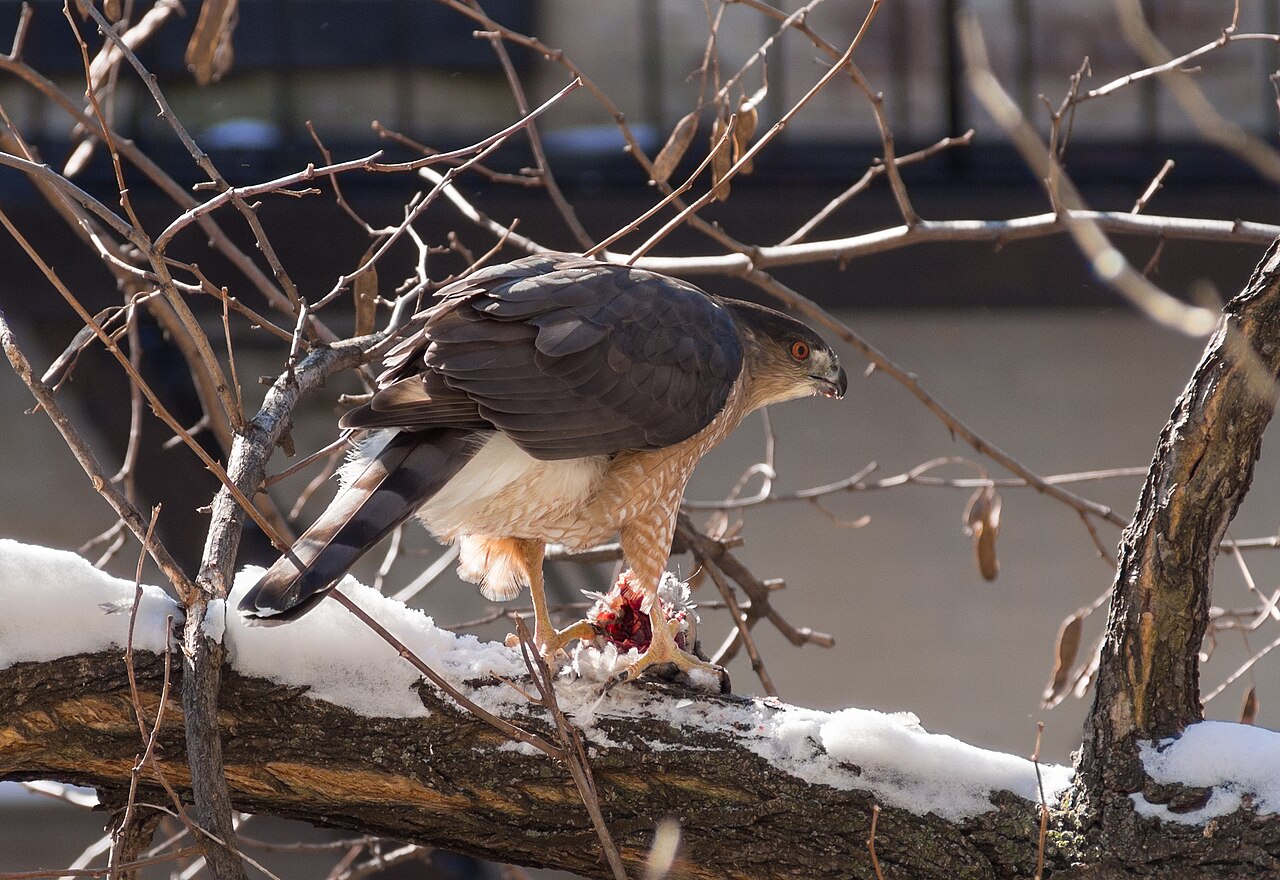
Female Cooper’s hawks produce a long, nasal, slightly rising whine described in the literature as the whaaa call. It lasts roughly a second, sounds almost plaintive, and is most often given when the female wants food from the male or is signaling from the nest during incubation.
Because it is nasal and drawn out, people mistake it for a jay, a young crow, or even a cat. It travels less far than the cak series, so hearing it reliably means you are close to an active nest, usually within 150 ft and often directly underneath.
Courtship Sounds in Late Winter and Early Spring
Vocal activity starts before the leaves do. From mid-February into March, pairs display over the nest woods with slow wingbeats and exaggerated flight, and the male calls during and after these flights. Mutual calling at dawn, with the male’s cak series answered by the female’s whaaa, marks a pair that has settled on a site.
This is the easiest window to locate a territory. The canopy is still open, the birds are loud, and the activity concentrates in the hour after sunrise. By late April the pair goes much quieter again until the chicks hatch.
Nestling and Fledgling Begging Calls
Chicks in the nest give soft, high peeps that are barely audible from the ground. The volume changes completely once they fledge. From early July into late August, newly independent Cooper’s hawks sit in the open and whistle for food in a thin, insistent, repeated note that can run for 20 minutes without a pause.
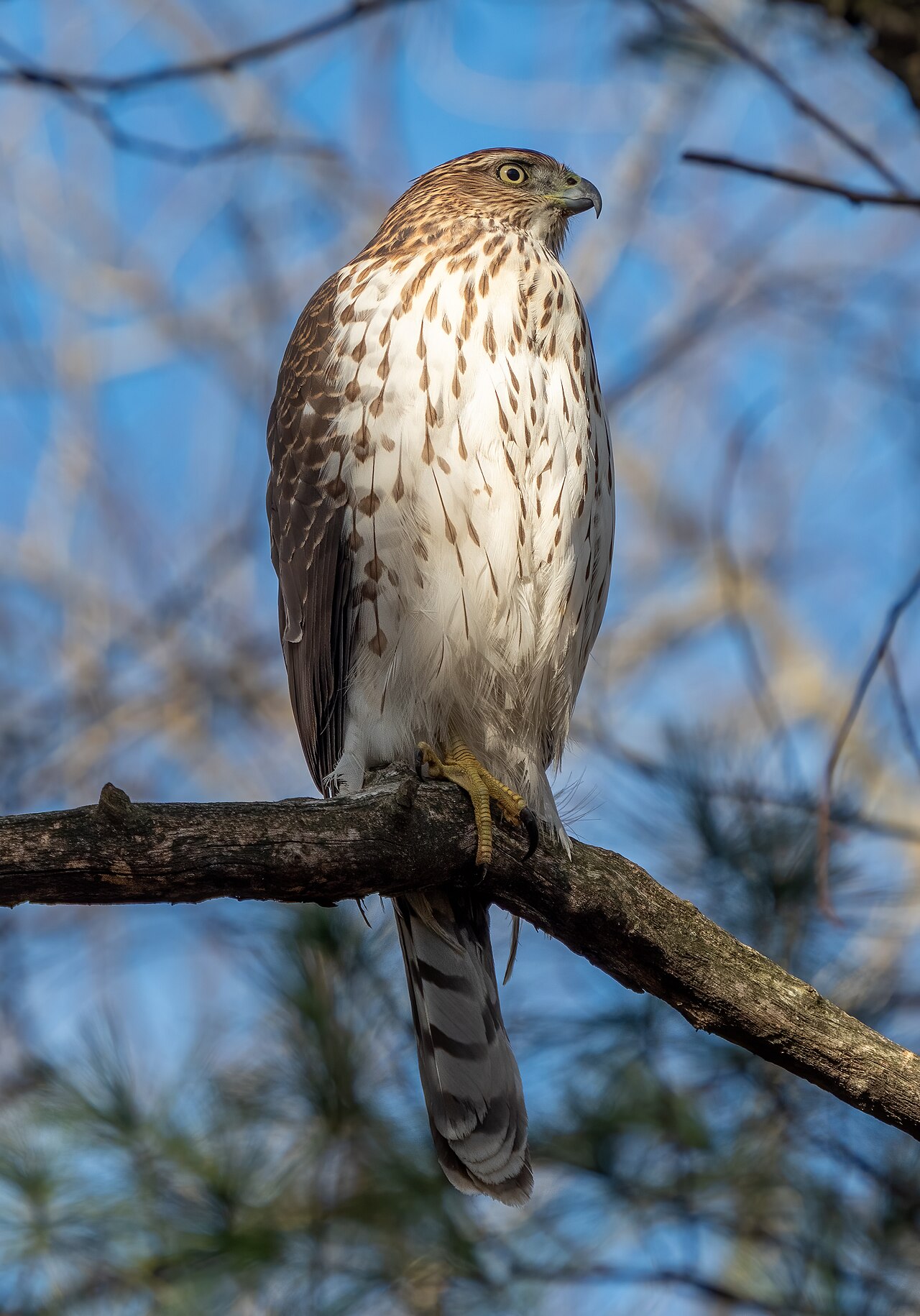
Begging juveniles are the single most common source of mystery hawk noise in suburbs. The sound is higher and more whistled than the adult cak call, and the bird making it is usually visible, perched low with a streaked brown breast and a long banded tail.
When Cooper’s Hawks Are Loudest
Peak calling runs from March to August, with the sharpest spike from April to June while the pair has eggs or small chicks. Dawn through midmorning is by far the noisiest stretch; afternoon calling is sporadic and tied to prey deliveries at the nest.
From September through February, assume silence. Winter Cooper’s hawks hunt feeders using ambush and surprise, and calling would ruin that. Wintering birds that do call are almost always reacting to a great horned owl or another hawk inside their space. Which raptors actually threaten them is covered in what eats hawks.
Cooper’s Hawk vs Red-Shouldered Hawk Calls
This is the mix-up that accounts for most misidentifications. The red-shouldered hawk gives a loud, clear, ringing kee-ah repeated 5 to 12 times, with each note drawn out and musical. The Cooper’s hawk’s call is shorter, drier, faster and harsher, with no tonal quality at all.
Red-shouldered hawks also call year round and in flight, while Cooper’s hawks call mostly near the nest and mostly in spring. A loud hawk screaming over an open neighborhood in November is almost never an accipiter. The two species also differ sharply in build, as shown in red-tailed vs red-shouldered hawk.
Cooper’s Hawk vs Sharp-Shinned Hawk Calls
Sharp-shinned hawks (Accipiter striatus) give a very similar rapid series, which makes this the hardest honest comparison in the group. The sharp-shinned version is higher pitched, thinner and faster, often written kik-kik-kik, and tends to come in shorter bursts.
In most of the country, the odds favor Cooper’s hawk near houses and sharp-shinned in deeper woods, but neither call is diagnostic on its own. Size, tail shape and head projection settle it where voice cannot. Compare the broader set of raptor voices in hawk sounds.
Flickers and Blue Jays: Two Common Mix-Ups
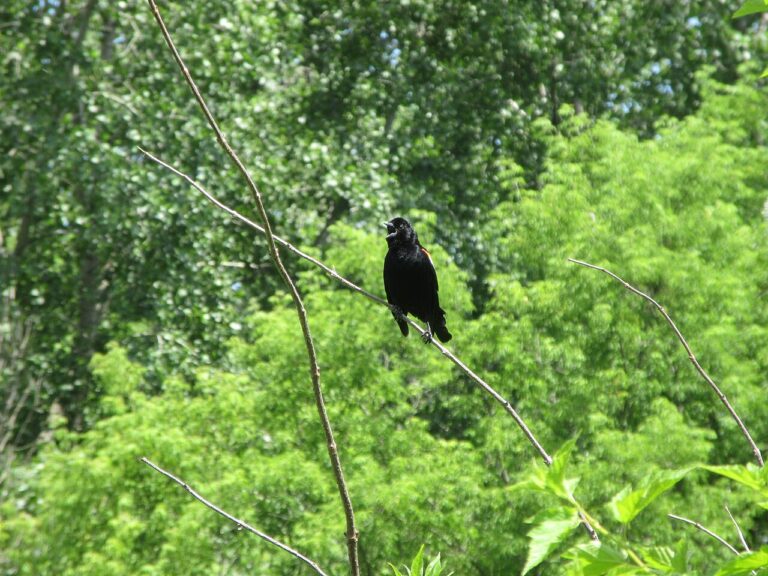
The northern flicker gives a long, even series of loud wik-wik-wik notes in spring that fools experienced birders every year. The difference is rhythm: the flicker’s series is machine-steady and can run 15 seconds or more, while the hawk’s is shorter, uneven and sounds pressured.
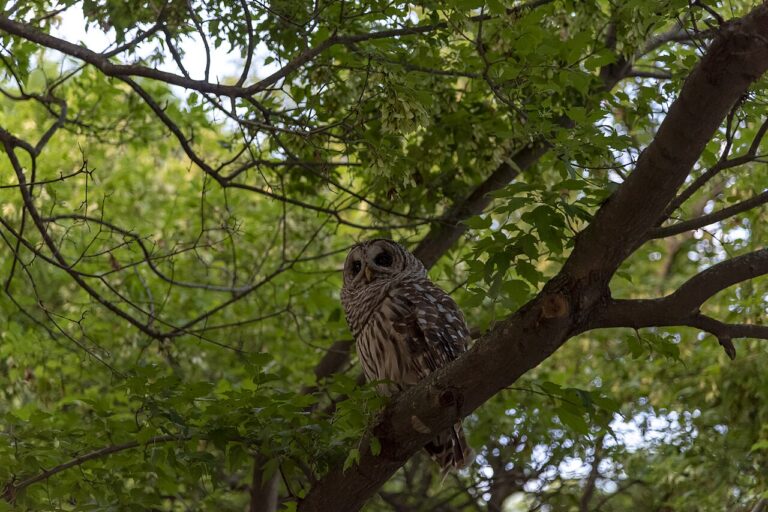
Blue jays imitate raptors outright, usually red-shouldered hawks but sometimes a passable accipiter bark. A jay mimicking a hawk gives one or two phrases and then reverts to jay noise, which no real hawk does. Deeper, hooting confusion in the same woods usually belongs to the barred owl instead.
Hearing a Cooper’s Hawk Around the Yard
Cooper’s hawks have become true suburban birds, and bird feeders are the reason. A hawk that sits silently in a yard for 20 minutes, then explodes through a shrub at a crowd of house sparrows, is behaving exactly as expected. Silence on arrival, followed by distant calling later from a nest tree, is the normal pattern.
If calling is constant and close through May and June, a nest is in your trees or your neighbor’s. There is nothing to fix and nothing to fear; the birds leave on their own by September. More detail on the species sits in the Cooper’s hawk profile, and full reference recordings are published by All About Birds.
Frequently Asked Questions
What does a Cooper’s hawk sound like?
It sounds like a fast, harsh, hollow cak-cak-cak, roughly three notes per second in bursts of 10 to 20. The tone is dry and wooden rather than musical or screaming. Females add a long nasal whaaa, and fledglings whistle a thin repeated begging note through midsummer.
Why is a hawk screaming near my house in spring?
Repeated harsh calling from the same trees in April through June means an active nest within roughly 200 ft, and the bird is reacting to you, a dog or a crow. The calling stops when the perceived intruder moves away. Keep your distance from the tree and the noise settles within minutes.
Do Cooper’s hawks call at night?
Rarely. Cooper’s hawks are daytime hunters and go quiet at dusk. Loud calling after dark almost always comes from owls, especially barred and great horned owls, or from a mockingbird running through its repertoire under a streetlight during the breeding season.
What bird sounds like a Cooper’s hawk?
Northern flickers give a steadier, longer wik-wik-wik series that fools many listeners, and sharp-shinned hawks give a thinner, higher version of the same bark. Blue jays imitate hawk calls convincingly for a phrase or two. Red-shouldered hawks are louder and clearly musical by comparison.
Do male and female Cooper’s hawks sound different?
Yes. Males give the rapid cak series far more often and at a slightly higher pitch, since they are the smaller sex and handle nest defense. Females are the main source of the drawn-out nasal whaaa call, used largely around food exchange and incubation.
How does a Cooper’s hawk compare with a red-tailed hawk by ear?
They are easy to separate. Red-tailed hawks give the long, raspy descending scream used in films for almost every bird of prey, while Cooper’s hawks bark in short dry bursts. The difference is detailed in red-tailed hawk sounds.