Mink Poop: Size, Shape, and 3 Droppings It Gets Confused With
Mink poop is a thin, dark, rope like dropping 2 to 3 in (5 to 8 cm) long, tapered to a point at both ends and packed with fish scales, crayfish shell, and fur. You find it on rocks, logs, and bank ledges within a few feet of water, usually in small repeat piles, and it carries a sharp musky smell that lingers after the scat dries.
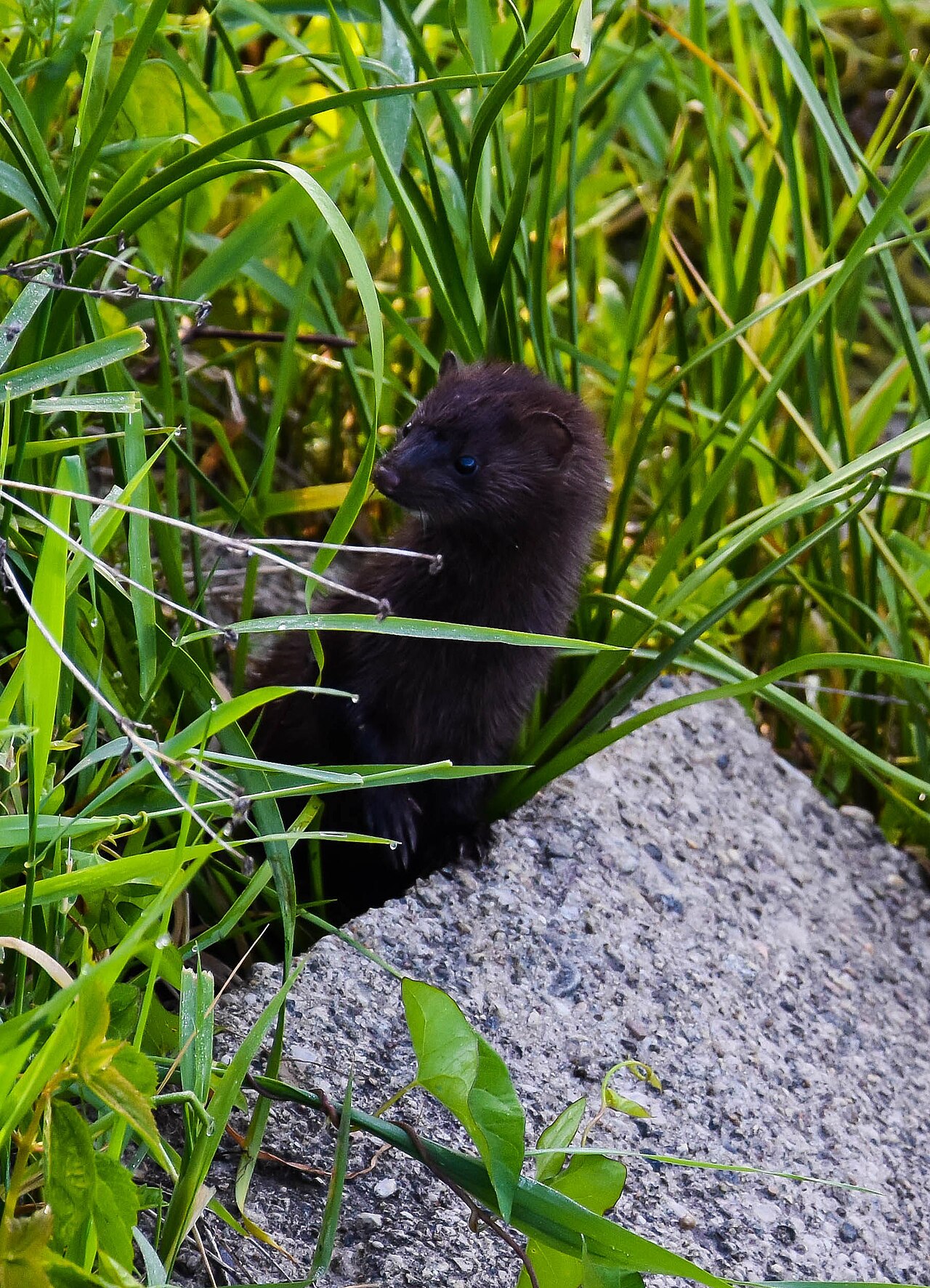
American mink (Neovison vison) live along almost every stream, lake, and marsh edge in the United States, so their scat turns up far more often than the animal does. The work is separating it from otter, weasel, and rat droppings, which share the same waterside ground.
Mink droppings are 2 to 3 in (5 to 8 cm) long and about 0.25 to 0.5 in (6 to 13 mm) thick, black or dark brown, tapered at both ends, and often twisted or curled. Fish scales, crayfish fragments, bone, feathers, and fur stay visible in the dried scat, and the odor is strongly musky.
| Feature | Mink scat |
|---|---|
| Length | 2 to 3 in (5 to 8 cm) |
| Diameter | 0.25 to 0.5 in (6 to 13 mm) |
| Shape | Slender rope, twisted, pointed at both ends |
| Color | Black to dark brown, graying with age |
| Contents | Fish scales, crayfish shell, bone chips, fur, feathers |
| Odor | Strong musk, persists for weeks |
| Where it sits | Rocks, logs, dock beams, culvert mouths within 10 ft (3 m) of water |
| Grouping | Two to six pieces at a reused marking spot |
What do mink droppings look like?
The outline is the first clue. Mink scat is far longer than it is thick, giving it a cord or shoelace profile instead of the pellets or stubby logs left by most mammals that size. Both ends narrow to a point, and the piece usually lies in a loose curl or a single twist.
Color runs from glossy black when fresh to a chalky gray brown after a week of weather, and older pieces crumble to reveal their contents. A hand lens shows fish scales as flat, translucent discs and crayfish shell as curved rust colored plates. Diet drives all of it, since mink eat fish, crayfish, frogs, muskrats, voles, and nesting birds: scat full of fur and small bones came from a mink hunting rodents away from the bank, scat that is mostly scales came from a fishing animal.
Where you find mink scat
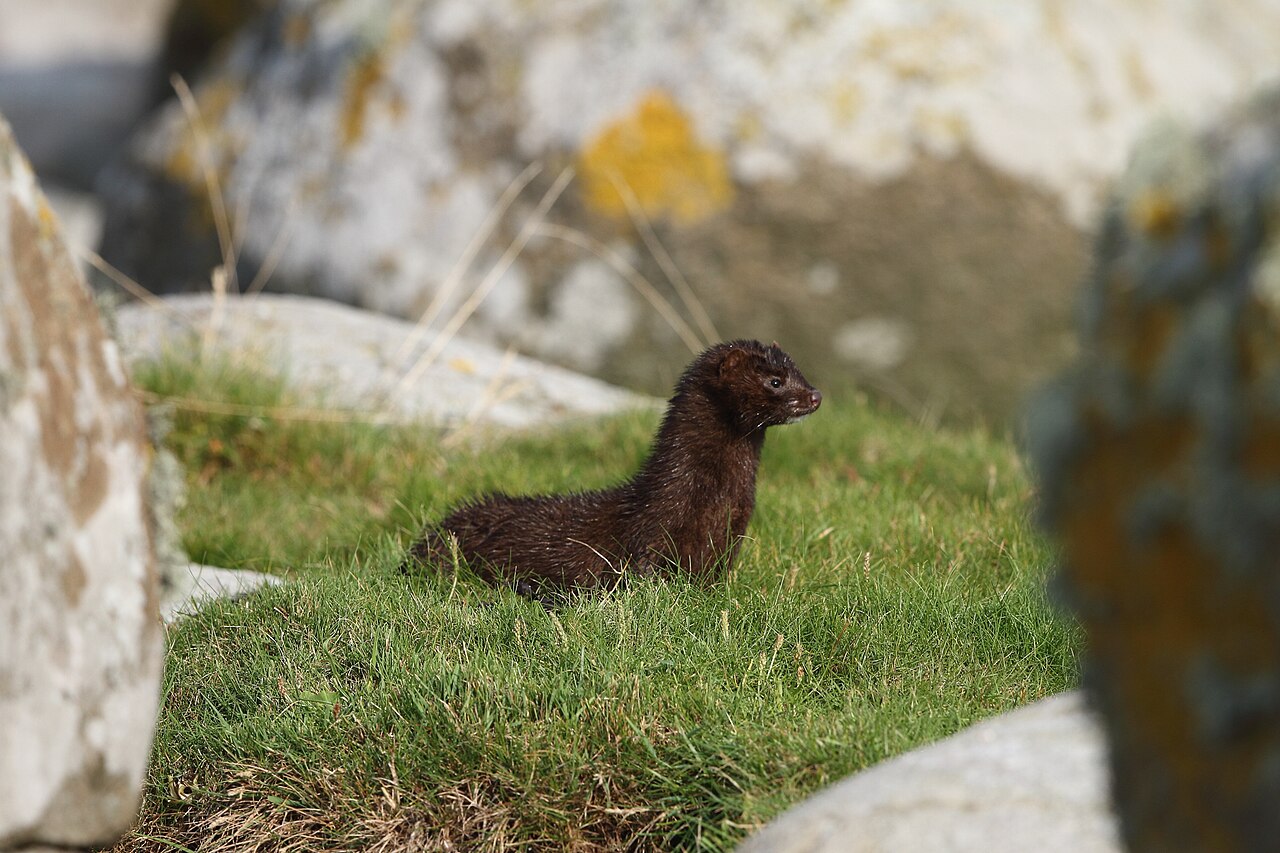
Mink mark along a route rather than at random. Check flat rocks at the water line, exposed logs, beaver lodges, dock crossbeams, culvert mouths, and the lips of bank dens. The animal returns to the same perches, so a productive spot holds several droppings of different ages.
Almost all mink scat sits within 10 ft (3 m) of open water, strung out along a territory that follows 1 to 3 mi (1.6 to 5 km) of shoreline. Snow reads clearest: paired tracks bounding in a 1 to 2 ft (30 to 60 cm) gait, then a dark dropping on a rock beside them. Repeated marking at one rock over weeks means a resident male rather than an animal passing through. For how placement separates other species, see bear poop vs deer poop.
Mink poop vs otter poop
River otters are the most common mix up, since both animals leave fish scat at the water line. Otter droppings, called spraint, are bigger and sloppier: 3 to 5 in (8 to 13 cm) of loose material that often collapses into a shapeless pile of scales and shell with no defined ends.
Otters also build latrines, scraping mounds of grass and mud on bank tops and using them communally, so you find several droppings plus flattened vegetation across a few feet. Mink mark on hard, raised surfaces and never build a mound. Diameter settles the rest: otter scat runs 0.75 to 1 in (19 to 25 mm) thick, roughly double a mink dropping, so a rope under half an inch across sitting alone on a rock is mink.
Next question: Mink Tracks: Size, Gait and 5 Lookalikes Ruled Out
Mink poop vs rat poop
Rat droppings cause the confusion indoors, in boathouses, sheds, and crawl spaces near water. Norway rat pellets are 0.5 to 0.75 in (13 to 19 mm) long with blunt, rounded ends, and they appear in scattered groups of dozens, because rats defecate as they travel.
Contents separate them instantly. Rat scat is uniform dark brown paste with no scales, no bone, and no visible fur, since rats eat grain and refuse, while mink scat is coarse and obviously full of prey remains and never appears in the dozens. Smell is the third test: rat droppings smell faintly of ammonia, mink scat of musk strong enough to notice from several feet. The same length and content logic runs through rat poop vs mouse poop and opossum poop vs rat poop.
Mink poop vs weasel and fisher scat
Weasels leave the same shape in miniature. Long-tailed weasel and ermine (Mustela erminea) scat measures 1 to 2 in (2.5 to 5 cm) long and under 0.25 in (6 mm) thick, a thread rather than a cord, holding rodent fur and tiny bones instead of fish scales. Weasels also hunt well away from water.
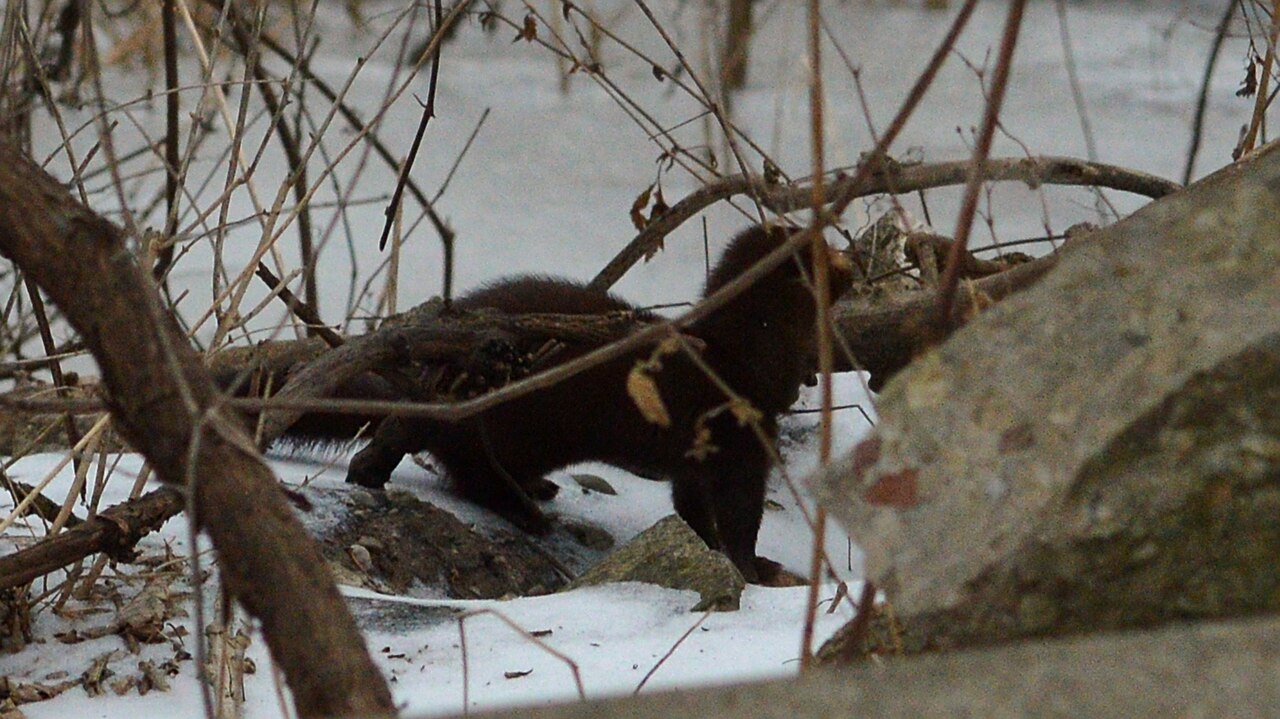
Fishers run the other way: 4 to 7 in (10 to 18 cm) long, thicker, and usually left on stumps or trail junctions in mature forest, often with porcupine quills or deer hair in them. Habitat does most of the work here. A tapered, musky, scale filled rope on a rock at the water line is mink; the same shape in dry upland woods is a weasel if small and a fisher if large, the same way contents beat size in squirrel poop vs mouse poop.
Is mink poop dangerous? Health and cleanup
Mink scat can carry parasites and bacteria that infect people and pets, including Giardia, Cryptosporidium, Salmonella, Leptospira, and the roundworm Baylisascaris. Mink are also a host of canine distemper. Risk from one dropping outdoors is low, but it is not zero.
Handle it the way the CDC advises for any wildlife waste: disposable gloves, no dry sweeping that lifts dust, dampen the material first, bag it, then wash hands with soap. Hose hard surfaces and disinfect with roughly 1 part bleach to 10 parts water. Dogs eating scat at the shoreline are the real exposure route, and a leptospirosis vaccine is available in endemic regions. For indoor cleanup rules, see bat poop vs mouse poop.
Frequently Asked Questions
How rare is it to see a mink?
Mink are widespread but seldom seen. They are active mostly at dawn, dusk, and night, move fast under cover, and hold territories that barely overlap, so people living beside good mink habitat often never spot one. Scat and tracks in mud or snow are far more reliable signs than sightings.
Will a mink go after a dog?
A mink will not attack a dog but defends itself fiercely when cornered, and a bite from a 2 lb (0.9 kg) animal with sharp carnassial teeth needs veterinary attention. Mink are far more likely to kill chickens, ducks, and pond fish. Keep dogs leashed near dens and secure poultry with hardware cloth.
Should I report seeing a mink?
There is no need to report a routine sighting, since American mink are native and common across most of the country. Report them to your state wildlife agency if one is killing livestock or poultry, if the animal looks sick or unafraid of people, or if your state runs a furbearer survey collecting observations.
How do you identify animals by their droppings?
Work through four things in order: length and diameter, end shape, visible contents, and placement. Measure before guessing, because size overlaps less than appearance does. Then ask what the animal ate and where the dropping sits, as in deer poop vs rabbit poop, where diet and habitat finish the call.
Explore more: Animal Poop Identification: A Field Guide by Species