Types of Geese: A Complete Guide
North America is home to several types of geese, most familiarly the Canada goose, along with the snow goose, cackling goose, Ross’s goose, greater white-fronted goose, and brant. These large waterfowl are known for their honking calls, strong family bonds, and impressive migrations. This guide covers how many types of geese there are, common species you can see, how to tell them apart, where they live, and how geese differ from ducks and swans.
| Goose | Key Features |
|---|---|
| Canada Goose | Black head, white chinstrap |
| Cackling Goose | Like Canada but much smaller |
| Snow Goose | White with black wingtips |
| Ross’s Goose | Small white goose, stubby bill |
| Greater White-fronted Goose | Brown, white face, orange legs |
| Brant | Small, dark, coastal |
| Emperor Goose | Gray, scaly, Alaska |
| Barnacle Goose | Black and white, rare visitor |
How Many Types of Geese Are There?
There are several species of geese in North America, part of the waterfowl family that also includes ducks and swans. The most familiar is the Canada goose, but the group also includes the snow goose, the diminutive cackling goose, Ross’s goose, the greater white-fronted goose, and the small, dark brant, along with a few less common species like the emperor goose of Alaska. Geese are generally large, heavy-bodied birds with long necks, though shorter than swans, and they are strong fliers that often migrate in noisy V-shaped formations. They are more terrestrial than most ducks, frequently grazing on land, and they are known for strong pair bonds and family groups that stay together through migration. Many geese are highly social, gathering in large flocks, especially outside the breeding season. This variety of geese, from the abundant Canada goose to rarer species, makes them a familiar and impressive group of waterfowl, related to the ducks in our guide to types of ducks.
Common Types of Geese
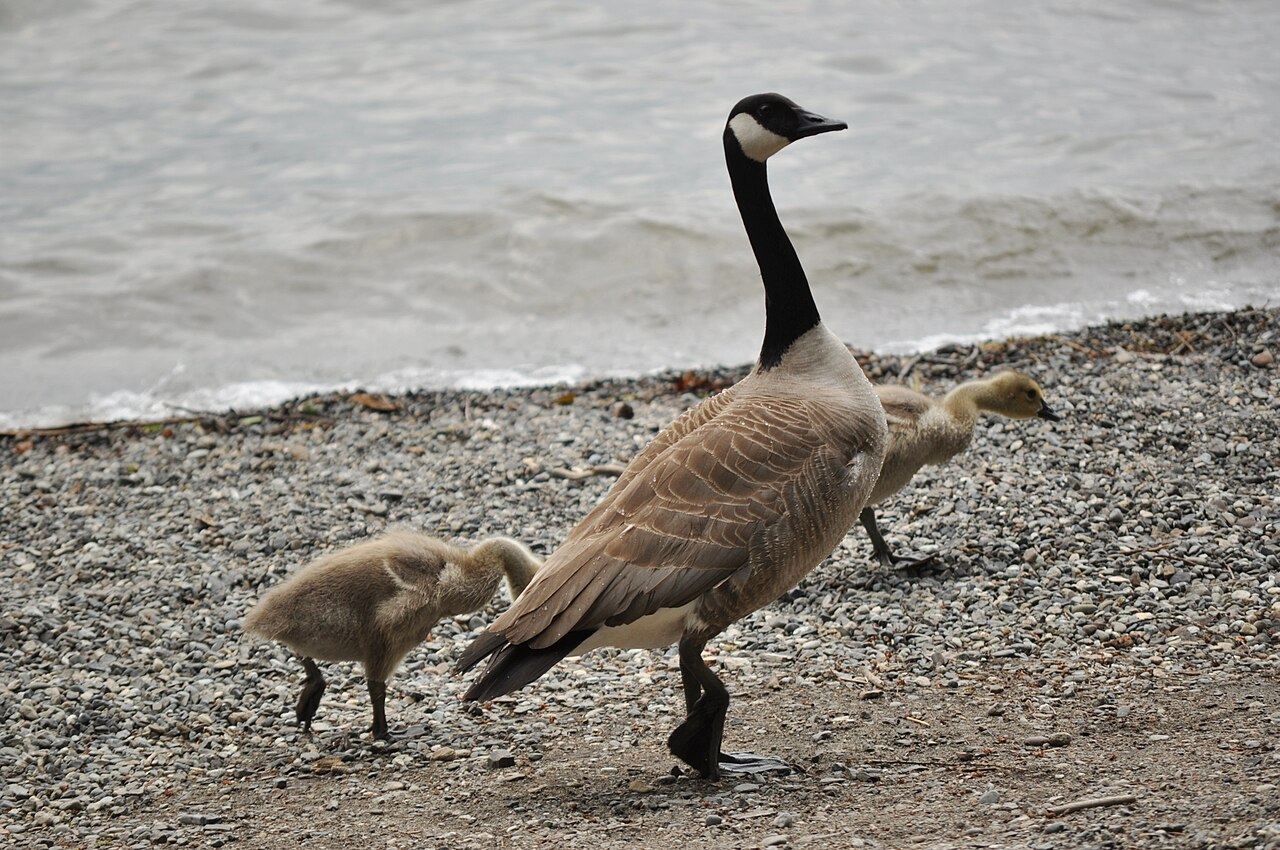
Several types of geese are especially common and worth knowing. The Canada goose is by far the most familiar, a large brown goose with a black head and neck and a distinctive white chinstrap, found across much of the continent, sometimes year round. The cackling goose looks almost identical to the Canada goose but is much smaller, with a stubbier bill, and was only relatively recently recognized as a separate species. The snow goose is a white goose with black wingtips that gathers in enormous flocks during migration, and it also has a dark form known as the blue goose. Ross’s goose is a smaller, daintier white goose with a stubby bill. The greater white-fronted goose is a brownish goose with a white face patch and orange legs, and the brant is a small, dark goose of coastal waters. These species range from the ubiquitous Canada goose to more localized birds, each with its own look and habits, and they often feed alongside the birds in our guide to what geese eat.
How to Tell Geese Apart
Telling geese apart is manageable when you focus on color, size, and key markings. First, separate the white geese from the dark or brown geese. Among the white geese, the snow goose and Ross’s goose both appear white with black wingtips, but Ross’s is smaller with a stubbier bill and a rounder head. Among the darker geese, the Canada goose and cackling goose share the black head and white chinstrap, so size is the main clue, with the cackling goose being much smaller. The greater white-fronted goose is browner with a white face and orange legs, while the brant is small and dark with a coastal lifestyle. Note the overall size, the head and neck pattern, leg and bill color, and the habitat and range. Because some geese travel in mixed flocks, comparing birds side by side helps. Combining color, size, and markings lets you identify most geese, a rewarding skill for waterfowl watchers, much like the birds in our guide to what ducks eat.
Where Geese Live
Geese live in a range of habitats across North America, generally tied to water and open feeding areas. Many geese breed in the far north, including the Arctic tundra, where species like the snow goose, Ross’s goose, and greater white-fronted goose nest in large numbers during the brief northern summer. They then migrate south for winter, sometimes in enormous flocks, to spend the colder months in marshes, lakes, farmland, and coastal areas across the United States and beyond. The Canada goose is more flexible, breeding across a huge range and, in many areas, living year round, often in parks, golf courses, and suburban ponds where it has become very common. Geese frequently graze in fields and lawns, feeding on grasses and grains, and gather on open water to rest and roost. This combination of northern breeding grounds and southern wintering areas, along with the adaptable Canada goose, makes geese a familiar sight across much of the continent, as reflected in our guide to attracting birds.
Geese vs Ducks and Swans
Geese belong to the same waterfowl family as ducks and swans, but they differ in several ways. Geese are generally larger than ducks and have longer necks, though their necks are shorter than the very long necks of swans, placing them in between in size and proportion. Unlike most ducks, geese spend a great deal of time grazing on land, feeding on grasses and grains, and they are more terrestrial in habit. Geese also tend to have stronger, longer-lasting pair bonds than many ducks, often mating for life and keeping their family groups together through migration. Compared to swans, geese are smaller and usually darker or more patterned, whereas swans are typically all white and much larger. In terms of sex, male and female geese look alike, unlike the often colorful male ducks. Understanding these differences helps place geese within the broader waterfowl family and distinguishes them from their relatives, as explored in our guide to birds that mate for life.
The Canada Goose’s Success
The Canada goose’s abundance is a notable wildlife story worth understanding. According to the Cornell Lab of Ornithology, the Canada goose is one of the most familiar waterfowl in North America, and while many populations migrate, others have become year-round residents in parks, suburbs, and other developed areas. This adaptability has allowed Canada geese to thrive alongside people, taking advantage of lawns, golf courses, and ponds for grazing and safety, to the point that they are sometimes considered a nuisance in urban settings. Their success reflects both their flexibility and the abundance of suitable habitat that human landscapes provide. Canada geese also form strong pair bonds and keep tight-knit family groups, with parents fiercely defending their goslings. Understanding how adaptable the Canada goose is helps explain why it is by far the most commonly encountered goose, and why it is such a familiar presence, as reflected in our guide to birds that mate for life.
Geese in Flight and Migration
Few natural sights are as iconic as a flock of geese flying overhead in a V-shaped formation. Many geese are strong, long-distance migrants, breeding in the far north and traveling south for winter, often in large, noisy flocks that honk as they go. The classic V formation is thought to help the birds save energy, as each goose benefits from the airflow created by the one ahead, and the lead position is often rotated. These migrations can cover impressive distances, and the sight and sound of migrating geese are a well-loved marker of the changing seasons, with skeins of geese moving south in fall and returning north in spring. Their strong flight, endurance, and coordinated formations make geese among the most impressive of migratory birds, and watching a flock pass overhead is a memorable experience that connects observers to the rhythms of the natural year.
Related reading: types of herons.
Related reading: types of swans.
Frequently Asked Questions
How many types of geese are there?
North America has several goose species, including the Canada goose, cackling goose, snow goose, Ross’s goose, greater white-fronted goose, brant, and emperor goose.
What is the most common goose?
The Canada goose is by far the most common and familiar goose in North America, recognized by its black head and neck with a white chinstrap.
What is the difference between a Canada goose and a cackling goose?
They look nearly identical, but the cackling goose is much smaller, roughly mallard-sized, with a stubbier bill and rounder head, while the Canada goose is much larger.
What is a white goose called?
The main white geese are the snow goose and the smaller Ross’s goose, both white with black wingtips. The snow goose also has a dark form called the blue goose.
How are geese different from ducks?
Geese are larger with longer necks, graze more on land, and often mate for life. Male and female geese look alike, unlike the often colorful male ducks.
Do geese mate for life?
Yes, many geese form strong, long-lasting pair bonds and often mate for life, keeping their family groups together through migration and raising young together.
Where do geese live?
Many geese breed in the Arctic and migrate south to marshes, lakes, farmland, and coasts for winter, while the Canada goose lives year round across much of the continent.