Types of Wrens: A Complete Guide
North America is home to several types of wrens, most commonly the house wren and Carolina wren, along with Bewick’s wren, the winter wren, marsh wren, and the large cactus wren. These small, energetic brown birds are known for cocking their tails upward and for songs that are remarkably loud for their size. This guide covers how many types of wrens there are, common species you can see, how to tell them apart, where they live, and how to attract wrens to your yard.
| Wren | Key Features |
|---|---|
| House Wren | Plain brown, loud bubbly song |
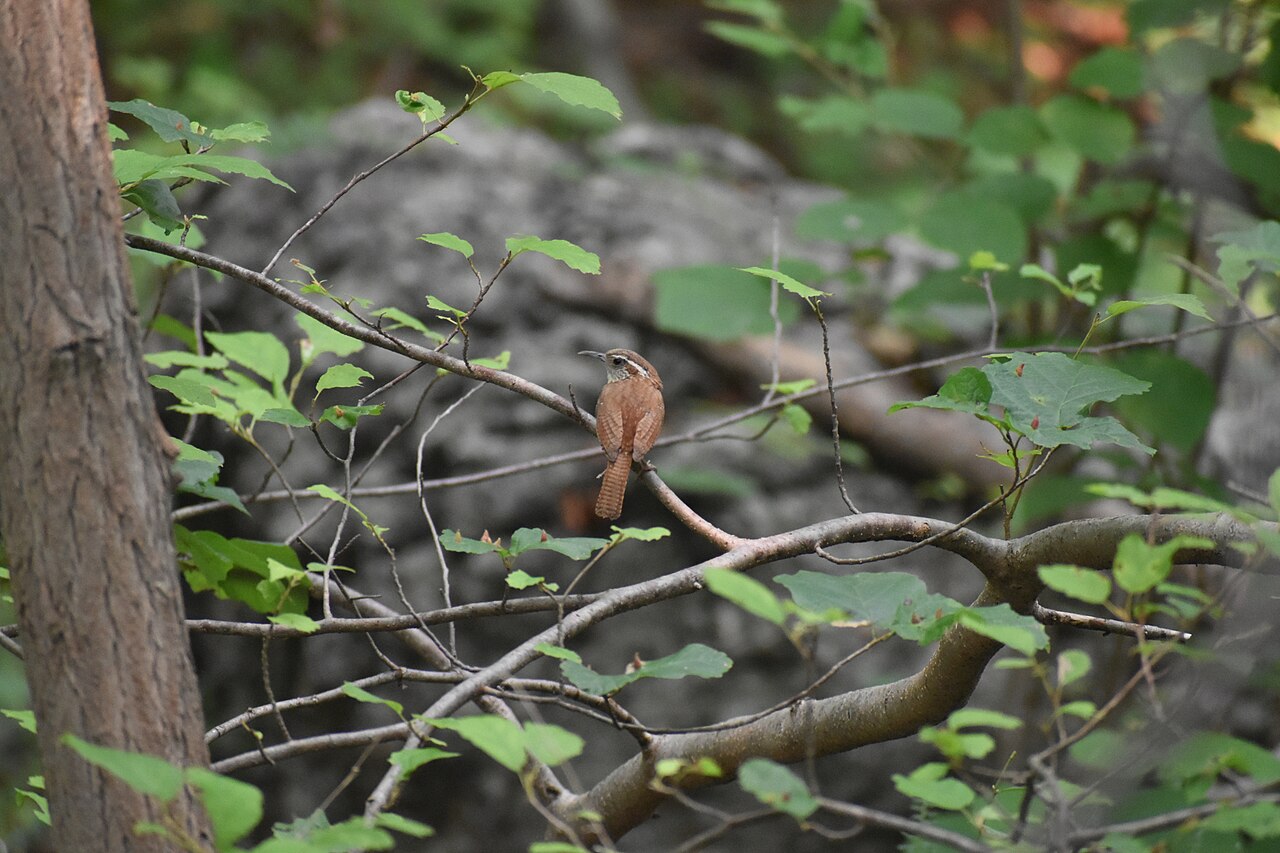
| Carolina Wren | Rusty, bold white eyebrow |
| Bewick’s Wren | Gray-brown, long tail, eyebrow |
| Winter Wren | Tiny, dark, stubby tail |
| Marsh Wren | Streaked back, marshes |
| Cactus Wren | Large, spotted, deserts |
| Rock Wren | Pale gray, rocky areas |
| Canyon Wren | Rusty, white throat, canyons |
How Many Types of Wrens Are There?
There are several species of wrens in North America, part of a family of small, active songbirds. The most familiar are the house wren and the Carolina wren, but the group also includes Bewick’s wren, the tiny winter wren, the marsh and sedge wrens of wetlands, and several western species such as the large cactus wren, the rock wren, and the canyon wren. Wrens are generally small, plump, brown birds with fine barring or streaking, slender curved bills, and a characteristic habit of holding their tails cocked upward. Despite their small size, wrens are famous for their loud, energetic, and often beautiful songs, which can seem surprisingly powerful coming from such tiny birds. They are also lively and inquisitive, constantly moving as they search for insects in vegetation, brush, and crevices. This combination of small size, brown plumage, cocked tails, and big voices makes wrens a distinctive and much-loved group, as covered in our guide to attracting birds.
Common Types of Wrens
Several types of wrens are especially common and worth knowing. The house wren is a widespread, plain brown wren known for its bubbly, energetic song and its readiness to nest in birdhouses and cavities around yards. The Carolina wren is a warm rusty-brown wren of the East with a bold white eyebrow stripe and a loud, ringing song often described as teakettle-teakettle. Bewick’s wren is a gray-brown western wren with a long tail that it flicks about and a white eyebrow. The winter wren and the closely related Pacific wren are tiny, dark, round wrens with very short tails and astonishingly long, complex songs. The marsh wren lives in cattail marshes and has a streaked back. In the West and Southwest, the large cactus wren lives among desert cacti, while the rock wren and canyon wren inhabit rocky places. Each has its own habitat and song, but all share the wrens’ lively character.
How to Tell Wrens Apart
Telling wrens apart is easier when you use color, markings, tail length, habitat, and song. Start with the overall color and any face pattern, since the Carolina wren is rusty with a bold white eyebrow, the house wren is plainer brown with only a faint eyebrow, and Bewick’s wren is grayer with a long tail and white eyebrow. Note the tail, as the winter and Pacific wrens have very short, stubby tails, while Bewick’s wren has a notably long one. Habitat is very helpful, since marsh wrens live in wetlands, cactus wrens in deserts, and rock and canyon wrens in rocky areas, while house and Carolina wrens favor yards and woodland edges. Song is one of the best clues, because each wren has a distinctive voice, from the Carolina wren’s ringing teakettle to the winter wren’s long, tinkling performance. By combining appearance, tail length, habitat, and song, you can identify most wrens, a rewarding challenge for a lively group, much like the birds in our guide to types of sparrows.
Where Wrens Live
Wrens live in a wide variety of habitats across North America, with different species favoring different settings. The house wren is common in backyards, gardens, parks, and woodland edges, wherever there are shrubs and nooks for nesting, and it readily uses birdhouses. The Carolina wren favors wooded and brushy areas, thickets, and suburban yards in the East, often staying year round. Bewick’s wren occupies brushy and open woodland habitats in the West. The winter and Pacific wrens prefer moist, shady forests with plenty of fallen logs and undergrowth, while the marsh and sedge wrens are tied to wetlands with dense marsh vegetation. In the arid West and Southwest, the cactus wren lives among desert scrub and cacti, and the rock and canyon wrens inhabit rocky slopes, cliffs, and canyons. This range of habitats means that somewhere across the continent, there is usually a wren well suited to the local environment, from backyards to deserts, as detailed in our guide to plants that attract birds.
How to Attract Wrens
Attracting wrens to your yard is very achievable, especially the house wren and Carolina wren, with the right features. Since several wrens are cavity nesters, putting up nest boxes or birdhouses with suitably sized entrance holes is one of the most effective ways to attract them, and house wrens in particular readily accept them. Providing brushy cover, shrubs, native plantings, and brush piles gives wrens the dense vegetation and insect-rich foraging areas they favor, since wrens are primarily insect eaters that hunt in tangles and crevices. While wrens do not typically eat much seed, Carolina wrens may visit feeders for suet, mealworms, or peanut pieces, so offering these can help draw them in. A source of water for drinking and bathing is welcome too. By combining nest boxes, brushy cover, native plants, and perhaps some suet or mealworms, you can make your yard attractive to these energetic, big-voiced little birds and enjoy their lively presence and song.
What Makes a Wren a Wren
Wrens share a set of features that define them as a group and make them a delight to know. According to the Cornell Lab of Ornithology, wrens are small, energetic birds known for holding their tails cocked upward and for songs that are remarkably loud and complex for their size. This means that despite being tiny and mostly brown, wrens have big personalities and even bigger voices, filling their habitats with bubbling, ringing, or tinkling songs. Their habit of cocking the tail is a helpful clue, as is their restless, inquisitive behavior as they hunt insects in tangles, brush, and crevices with their slender, slightly curved bills. Many wrens are also cavity nesters, using holes, nooks, and nest boxes. This combination of small size, brown plumage, cocked tails, insect diet, and powerful song is what makes a wren a wren, and it helps distinguish them from other small brown birds, such as the sparrows in our guide to feeding backyard birds.
The Wren’s Remarkable Song
One of the most impressive things about wrens is their singing, which is out of all proportion to their tiny size. Wrens are among the most vocal of birds, and species like the winter wren and Pacific wren deliver astonishingly long, rapid, and intricate songs, cascading through many notes in a single performance. The Carolina wren sings a loud, ringing, repeated phrase often written as teakettle-teakettle-teakettle, so powerful it is hard to believe it comes from such a small bird, and the house wren pours out a bubbly, exuberant warble. These songs serve to defend territories and attract mates, and they make wrens easy to detect by ear even when the birds stay hidden in dense cover. Learning wren songs is one of the best ways to find and identify them, adding a rich dimension to enjoying these lively birds, much like recognizing the voices of the birds in our guide to bird symbolism.
Frequently Asked Questions
How many types of wrens are there?
North America has several wren species, including the house wren, Carolina wren, Bewick’s wren, winter wren, marsh wren, cactus wren, rock wren, and canyon wren.
What is the most common wren?
The house wren is one of the most common and widespread wrens, a plain brown bird with a bubbly song, while the Carolina wren is very familiar in the East.
What does a Carolina wren look like?
A Carolina wren is a warm rusty-brown wren with a bold white eyebrow stripe and a loud, ringing song often described as teakettle-teakettle. It is common in the East.
Do wrens use birdhouses?
Yes, several wrens are cavity nesters, and house wrens in particular readily use birdhouses and nest boxes, making them easy to attract to a yard with a suitable box.
How do you tell wrens apart?
Use color and face pattern, tail length, habitat, and song. The Carolina wren is rusty with a bold eyebrow, while the winter wren is tiny and dark with a stubby tail.
How do you attract wrens?
Put up nest boxes, provide brushy cover and native plants for insects, and offer suet or mealworms. Wrens are insect eaters, so dense vegetation is especially helpful.
Where do wrens live?
Wrens live in backyards, woodlands, marshes, deserts, and rocky areas across North America, with different species favoring different habitats from gardens to canyons.