Red Robin Spiritual Meaning: Signs, Folklore and Facts
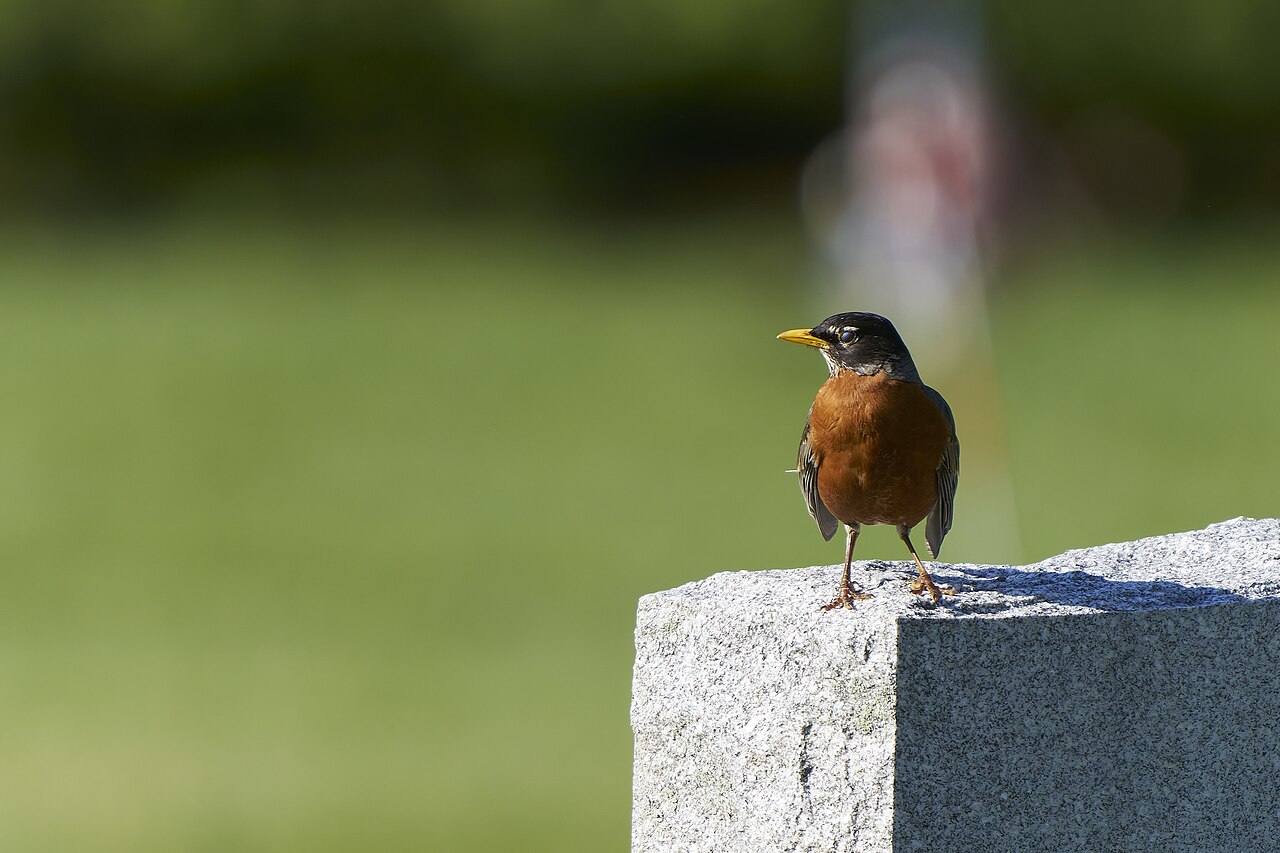
Symbolically, a red robin stands for renewal, return and a fresh start, and that is the core of the red robin spiritual meaning. The bird most Americans call a red robin is the American Robin (Turdus migratorius), a thrush with a brick orange breast that feeds on lawns and can remain through winter where food is available.
The meaning sharpens once you know what the bird is doing. A robin that sings, guards a yard or pulls worms after rain is living its ordinary season, and that ordinary rhythm is exactly what gives it weight as a sign. A robin that appears at a turning point in your life simply mirrors what the season is already doing.
As a sign, a red robin points to renewal, a new season and steady hope after a hard stretch. The American Robin is one of the most common birds in North America, so a sighting is not rare. Its meaning comes from timing and behavior, not scarcity, and one bird is a prompt, not a verdict.
What Does Seeing a Red Robin Mean Spiritually?
Seeing a red robin means a new season is starting in your life, a turn from waiting to growing. In North America, the bird is usually an American Robin, whose orange red breast supplies the “red” in the name. Its return to feeding on thawing lawns makes it an image of things beginning to move again, even where the bird has stayed all winter.
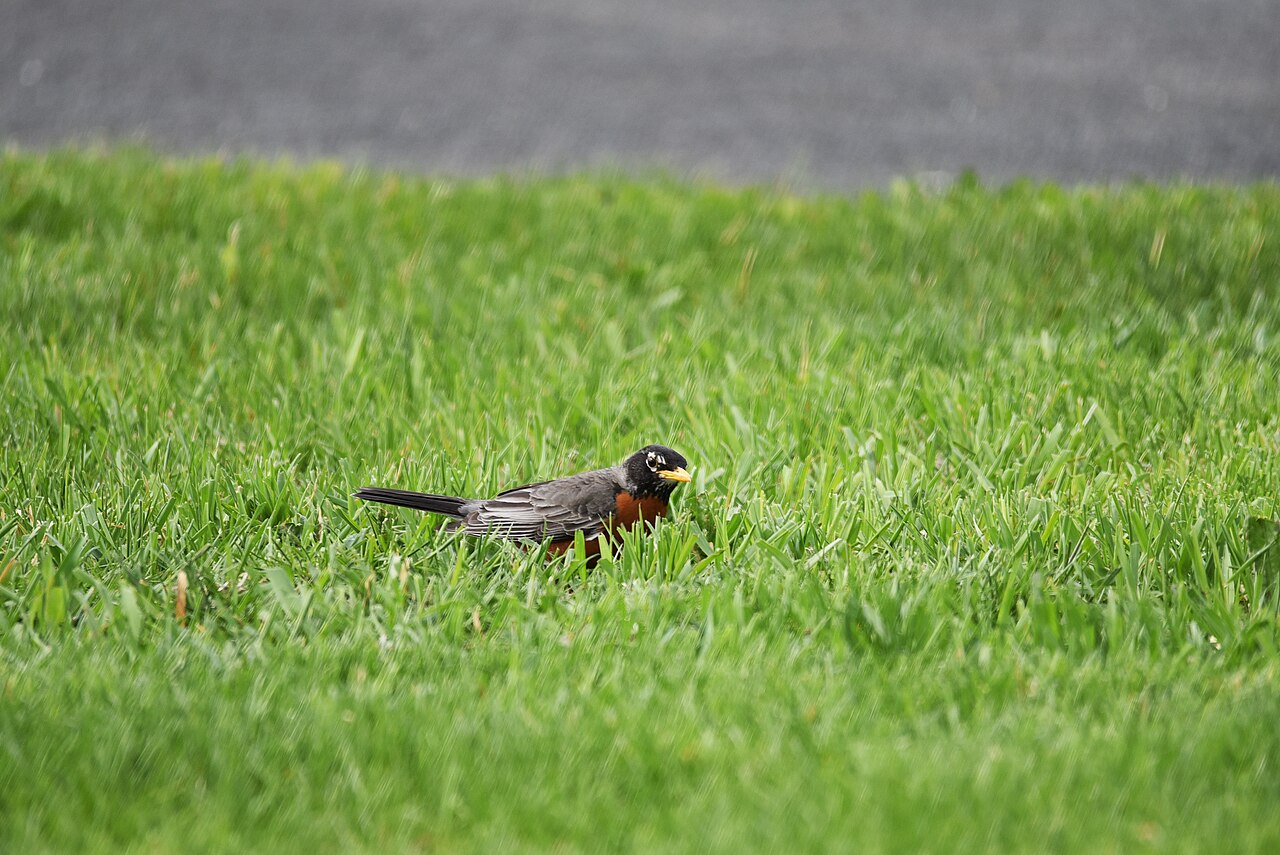
The reading follows the bird. A robin forages in the open and stays close to people, so its message is close too. It speaks to home, daily work and the small progress you make each day. A robin that holds your eye for a while points to patience. It finds food by watching and waiting, then moving at the right second.
One sighting is not a judgment about your week. What it means when you see a red robin depends on place and repetition more than on the single moment. A robin seen once on a gray morning is a nudge. A robin that returns to the same branch every day points to a lesson that keeps asking for your attention.
What Is a Robin Trying to Tell Me?
A robin tells you to start again and trust the season you are in. Its message is spring itself. Its renewed activity on lawns as the ground thaws carries the idea that the hardest part is behind you and growth is next.
Its behavior adds detail to the message. A singing robin announces its territory, and that points to speaking up for what is yours. A robin running and pausing on a lawn listens and looks for worms, which turns it into an image of focused effort. A robin carrying grass or mud is building a nest, a picture of preparing a home before the work pays off.
The robin’s message takes shape through its behavior and the moment of the encounter. Singing points to finding your voice, while nest building points to preparing a home. Red birds carry different meanings by species, and the robin’s message centers on renewal.
Is Seeing a Red Robin Rare?
No, seeing a red robin is not rare. The American Robin is abundant and widespread in North America, and Audubon lists its estimated population at about 370 million. It thrives in lawns, parks and suburbs.
Two robins together are just as ordinary. In spring and summer you are often watching a mated pair working the same territory. In fall and winter robins gather in loose flocks, sometimes dozens strong, to feed on berries in woods and hedges. A pair points to partnership, and a winter flock points to community, but neither is a rare omen.
American Robin vs European Robin
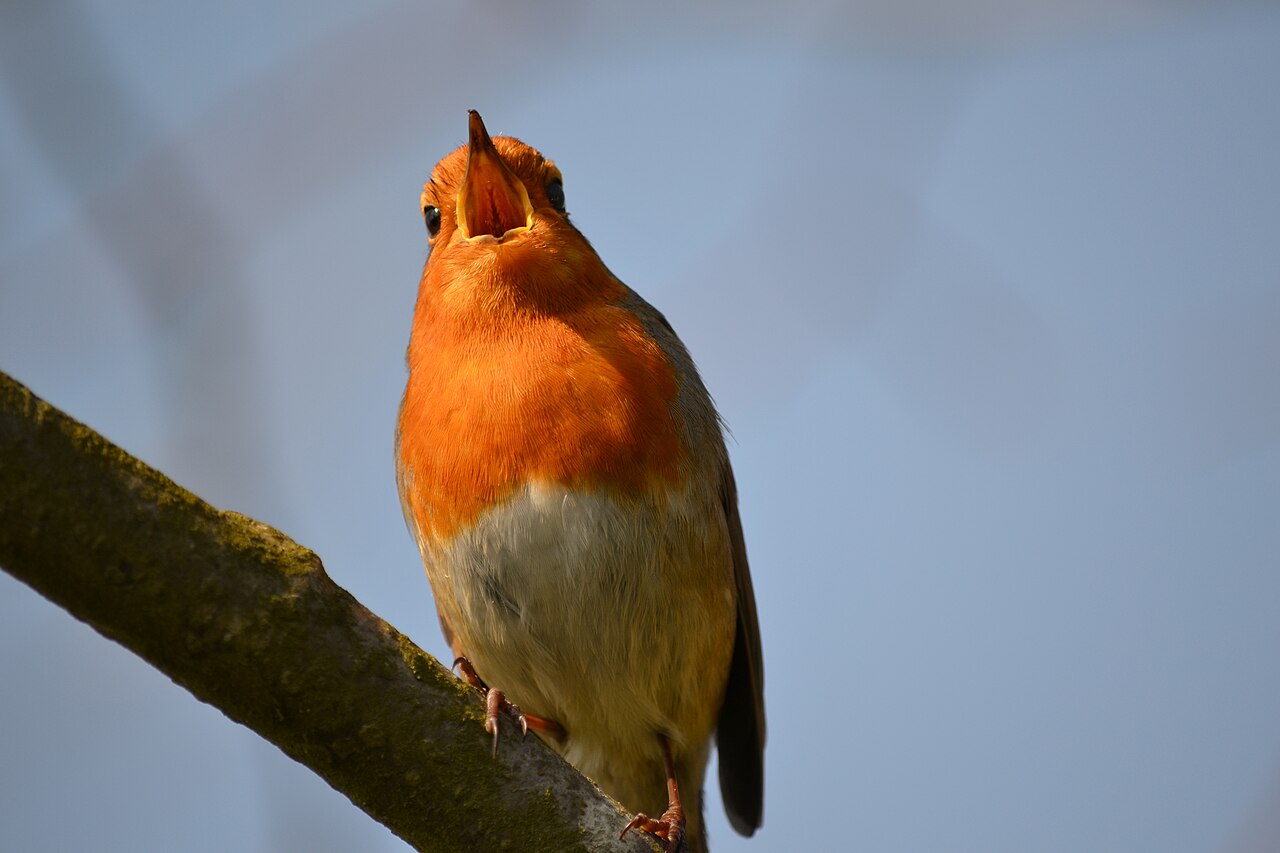
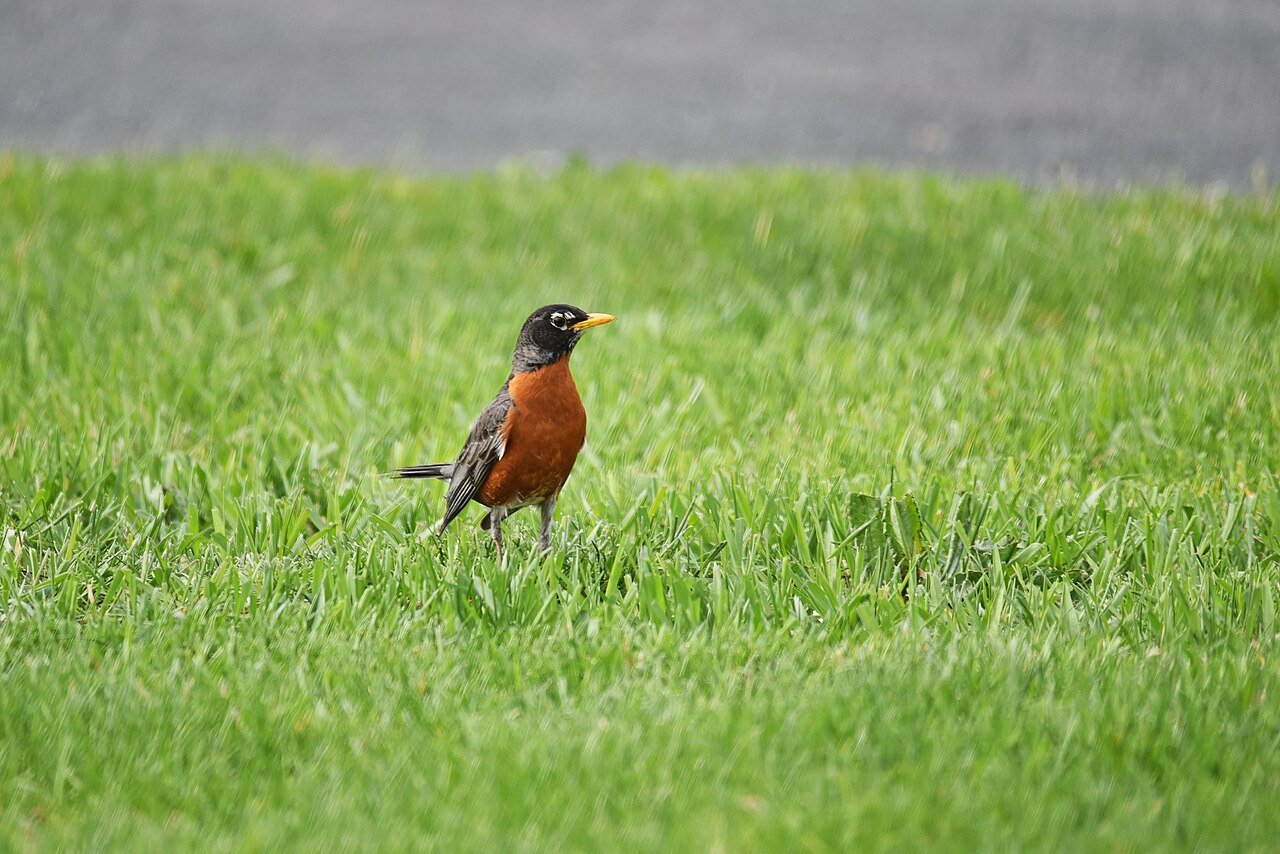
The American Robin and the European Robin are two different birds, and most robin legends belong to the European one. English settlers named the American thrush after the small robin of home because both have a reddish breast. The two are not closely related.
| Trait | American Robin | European Robin |
|---|---|---|
| Scientific name | Turdus migratorius | Erithacus rubecula |
| Family | Thrush | Old World flycatcher |
| Size | About 10 in (25 cm) | About 5.5 in (14 cm) |
| Breast color | Brick orange | Orange red face and breast |
| Range | North America | Europe, western Asia, North Africa |
| Main symbol | Spring, renewal | Christmas, the Passion legend |
This matters for meaning. When an American reads that a robin brings a message at Christmas, the source story is British and describes a different bird. The American Robin carries the spring reading, and it borrows the legends by name.
Robin Folklore: Legends of the Red Breast
A Breton Christian legend explains the robin’s red breast through an act of compassion. In the version recorded by William Henderson, the robin removes a thorn from Christ’s crown, and Christ’s blood stains its breast red. The bird becomes an image of devotion expressed through a small, practical kindness.
English robin beliefs include warnings about death and harm to the bird. A bird in the house signifies a death in the household in a robin belief recorded at Bath, which Charles Swainson includes in his dictionary of British bird names and folklore. Henderson also records a Cornish rhyme warning that anyone who harms a robin or wren will fail to prosper, alongside an English rhyme threatening unrest to anyone who disturbs their nests.
The Victorians tied the robin to Christmas. British postmen wore red coats and earned the nickname “robins,” and early Christmas cards showed robins carrying letters in their beaks. That is why the European Robin still sits on holiday cards today. These stories belong to the European Robin and travelled to America with the name.
When God Sends You a Robin: Christian Readings
Scripture says God feeds the birds, and that is the ground for reading a robin as a sign of care. In Matthew 6:26 Jesus says, “Behold the fowls of the air,” and points out that the heavenly Father feeds them. A robin pulling a worm from wet grass fits that picture closely.
A Christian reading of Matthew 6:26 makes a robin at a hard moment an image of provision. It points to Jesus’ reminder that people matter more than the birds the Father feeds. The Breton thorn legend adds devotion and compassionate action to this reading.
The phrase “robins appear when loved ones are near” is a modern memorial saying. It gives a robin visit the meaning of continuing love and remembrance of someone who has died. Here the message is comfort during grief.
Why Do Robins Sing at 3am?
Robins can sing around 3am when artificial light advances their dawn song, while daytime noise can also favor singing at quieter nighttime hours. Research on American Robins links artificial light to an earlier morning chorus. A separate study of European Robins found nocturnal singing more strongly associated with daytime noise than with nighttime light. Their song serves territorial communication, rather than following a fixed 3am schedule.
Robins are early singers by nature. They are among the first voices in the spring dawn chorus, starting well before sunrise to claim territory and attract a mate. Under a bright streetlight that start moves earlier still. A robin singing in the dark is a bird defending its yard on a shifted clock.
Not every night singer is a robin. The Northern Mockingbird (Mimus polyglottos) can sing for hours at night in spring and summer, mixing imitations with repeated phrases. The American Robin’s song is a steady, rising and falling caroling, so a long medley of varied calls in the dark may be a mockingbird. A song in the dark carries the message of hope that holds before the light arrives.
Red Robin Symbolism by Sighting: Window, Yard, Dream
Where you see a robin shapes its message. A robin at the window points to news or a change arriving at home. A robin tapping at glass is fighting its own reflection, so it stands for a struggle with yourself that needs a pause.
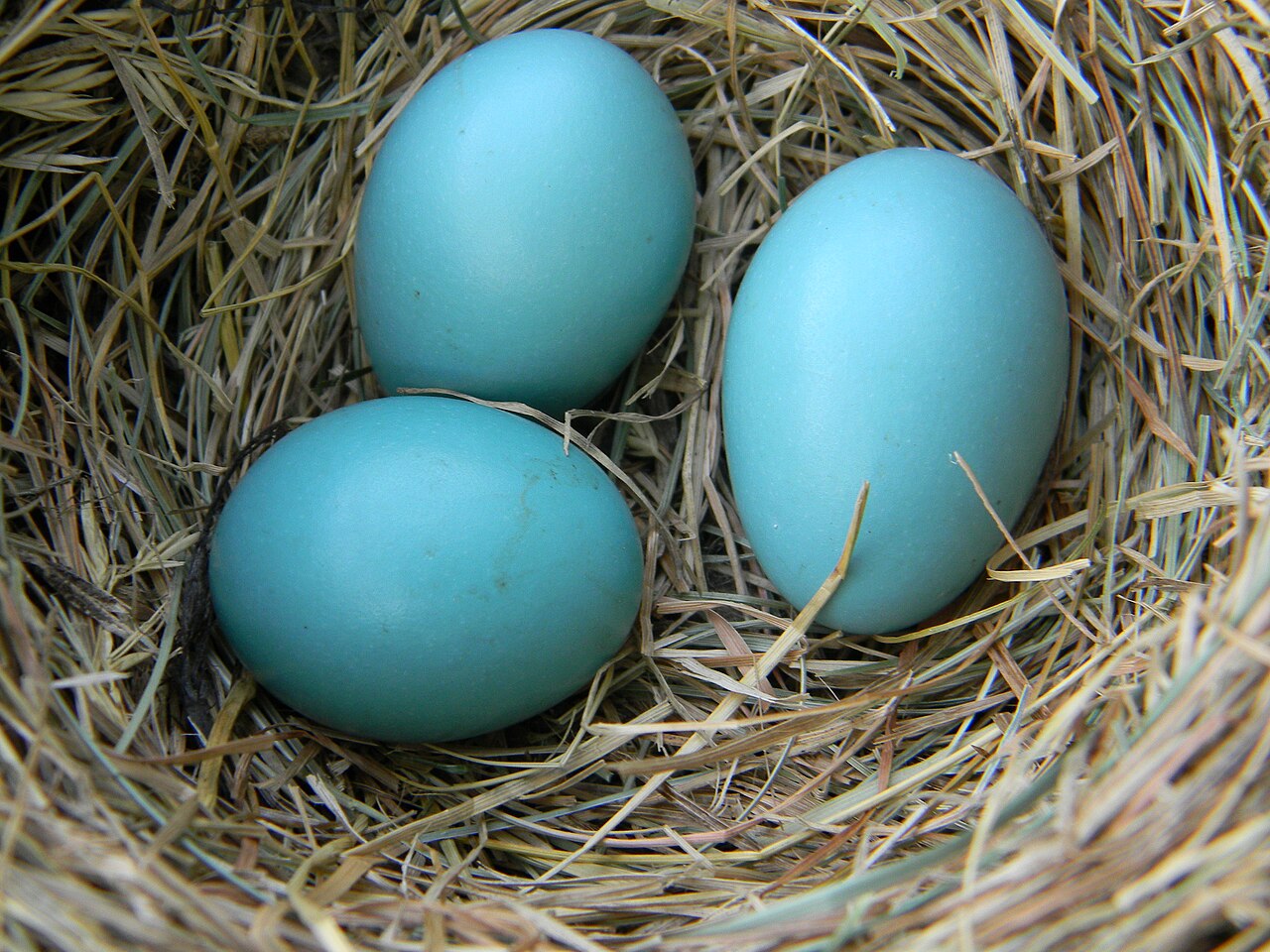
A robin in the yard points to steady progress and a season of growth close to home. A nest in your yard points to new beginnings in your family. Robin eggs get their blue from a pigment called biliverdin, and the color adds a note of calm to that reading. A robin in a dream points to hope returning after a dark period.
A red bird crossing your path is a broader sign than a robin alone. Seeing a red bird on your path includes cardinals and tanagers as well. For the robin, the thread stays the same in every setting. It marks a fresh start, patient effort and a home worth building.
Frequently Asked Questions
Is the first robin a sign of spring?
No, not reliably. Many American Robins spend the winter in the United States and switch from worms to berries, roaming in flocks through woods. The first robin you notice on a lawn may be a bird that stayed nearby all winter and returned to open ground once it thawed.
Why is the American robin called a robin?
English settlers named it after the European Robin of home because both birds have a reddish breast. The American bird is a thrush, Turdus migratorius, related to bluebirds and the Wood Thrush. The European Robin, Erithacus rubecula, belongs to a different family entirely.
How long does a robin live?
Most wild American Robins live only a few years, because many die in their first year from predators, weather and collisions. The oldest banded American Robin on record reached nearly 14 years. A robin that returns to your yard several springs in a row is a lucky survivor.
Are robin eggs really blue?
Yes, robin eggs are truly blue. The color comes from biliverdin, a pigment the female deposits on the shell as the egg forms. A clutch holds about 3 to 5 eggs, and the shade can vary from pale sky blue to a deeper blue green.
Does seeing a robin signify anything?
Yes, as a symbol a robin signifies renewal and a new season. The bird itself is common and does not carry a fixed message. Its meaning comes from timing and behavior, such as singing, nest building or visiting the same spot, and from what you were thinking at that moment.
Sources
- Cornell Lab of Ornithology, American Robin Overview
- National Audubon Society, American Robin Field Guide
- CDC, Healthy Pets: Birds
- Bible Gateway, Matthew 6:26 (KJV)