Bird Baths: The Complete Guide to Attracting Birds with Water
A bird bath is the most overlooked attractant in backyard birding. Most beginners put up a feeder, wait for results, and never realize that adding water typically doubles the variety of birds they’ll see within weeks. Robins, thrushes, warblers, orioles, and dozens of other species visit water but ignore seed entirely, so a yard without a water source is invisible to half the birds in the neighborhood. This guide covers every kind of bird bath, where to place them, how deep the water should be, what to do in winter, the trick that actually multiplies your traffic (it’s not the bath itself), and how a $15 ceramic saucer often beats a $200 decorative fountain.
What a Bird Bath Actually Does
A bird bath is a shallow water source designed for wild birds to drink from and bathe in. The design varies, from a flat saucer on the ground to a multi-tiered concrete pedestal with a fountain pump, but the function is consistent: provide birds with reliable, clean, accessible water at a depth they can safely use.
Birds need water year-round for two reasons that aren’t immediately obvious to beginners. First, drinking water is critical, especially for seed-eating species that don’t get moisture from their food the way insect-eaters do. Cardinals, finches, and sparrows all need to drink daily. Second, bathing is essential for feather maintenance. Birds bathe to clean parasites and dirt from feathers, then preen with oil from the uropygial gland near the tail to restore waterproofing. Damaged or dirty feathers reduce insulation and flight efficiency, life-or-death matters in cold weather.
This is why a water source attracts species that ignore feeders entirely. Many migratory and insectivorous birds, orioles, warblers, vireos, tanagers, robins, bluebirds, thrushes, get most of their food from insects and fruit. They have no reason to visit a sunflower feeder. But every one of them needs water, and a well-placed bath puts them in your yard at eye level.
If you haven’t set up your yard’s broader bird habitat yet, the complete guide to attracting birds to your yard covers the four habitat fundamentals. This guide focuses specifically on the water side.
Why Water Beats Almost Everything for Variety
Among the four habitat levers (food, water, shelter, safety), water typically produces the biggest single-step increase in species diversity for an established backyard. A yard with one feeder and no water might host 5 to 8 species regularly. The same yard with a feeder plus one bird bath often jumps to 12 to 20 species within a few weeks.
The reason is selection: feeders attract a specific subset of birds (mostly seed-eaters that fit the feeder design). Water attracts essentially every bird in your local ecosystem because every bird needs to drink. There’s no species that “doesn’t use” water the way many species don’t use seed.
The implication for yard planning: if you only have budget or space for one attractant, a water source brings more bird variety than a feeder. Most people start with feeders because they’re more dramatic and visually obvious. The math is wrong. Water is the higher-yield first investment, especially if you already have any insect-producing vegetation in your yard.
The Six Bird Bath Types (And Which Works for What)
Bird baths fall into six functional categories. The choice between them depends on which birds you want to attract, how much maintenance you’ll tolerate, and where you can place them. A combination of two types in the same yard outperforms a single bath of any kind.
1. Pedestal Bird Baths
A pedestal bird bath is the classic image: a wide shallow bowl on a stone, concrete, or metal column, typically 24 to 36 inches tall. This is the most common design sold, and it works well as a starter setup, especially in open suburban lawns.
Best for: visible suburban placement, mid-sized songbirds (robins, jays, cardinals, mourning doves).
Pros: stable, easy to clean, hard for ground predators to reach, classic look.
Cons: too elevated for some ground-feeding birds, can topple in high wind, concrete versions crack in freezing climates.
Cost: $40 to 150 typical, premium versions $200+.
The mistake most beginners make with pedestal baths is the bowl design: deep concave bowls hold too much water for small songbirds to safely use. Smaller birds need water 1 to 2 inches deep maximum. Many decorative pedestal baths have 4 to 6 inch deep bowls that the smallest species avoid.
The fix is simple: place a flat stone or two in the bowl to create shallow areas. Birds gather at the stones; the deeper center stays as a reservoir.
2. Ground-Level Bird Baths
A ground-level bath is any shallow water source placed on or near the ground, a saucer set directly on the lawn, a flat dish on a tree stump, a shallow ceramic plant pot saucer. Ground-level baths attract a different species mix than pedestal baths, including thrushes, juncos, sparrows, and many warbler species that prefer to descend to water rather than fly up to it.
Best for: ground-feeding species, naturalistic yards, low-maintenance setups.
Pros: dirt cheap (a thrift-store saucer for $5 works), attracts species pedestal baths miss, looks natural in plant beds.
Cons: vulnerable to cats and ground predators, gets dirty faster (debris, leaves, mud splashes).
Cost: $5 to 30 typical.
The cheapest effective bird bath in any yard is a $5 ceramic plant saucer with a few stones in it, refilled every 1 to 2 days. It out-performs most $80 decorative baths because birds use it.
3. Hanging Bird Baths
A hanging bird bath suspends from a tree branch, shepherd’s hook, or hanging-basket bracket. They occupy the niche between pedestal and ground baths, working well in yards without space for either.
Best for: small yards, balconies, urban setups, integrating with hanging-basket gardens.
Pros: easy to install where pedestal baths won’t fit, harder for cats to ambush, often combined with planter setups.
Cons: smaller water capacity (refill more often), sway in wind, attract fewer ground-feeders.
Cost: $20 to 50 typical.
Most hanging baths are small and shallow by design, which is actually a feature for small songbirds. Chickadees, titmice, nuthatches, and finches use them readily.
4. Heated Bird Baths (Winter)
A heated bird bath has a built-in low-wattage heating element that prevents freezing. In cold-climate yards, a heated bath is the single biggest upgrade you can make to your winter bird population. When open water becomes scarce in sub-freezing weather, a heated bath becomes a regional resource, birds may travel from neighborhoods around to reach it.
Best for: any region with winter temperatures consistently below freezing.
Pros: dramatically increases winter species variety, supports overwintering birds, attracts species you might not otherwise see in winter.
Cons: requires electrical outlet outdoors, draws 50 to 150 watts (modest but ongoing), more expensive than non-heated.
Cost: $80 to 200 for plug-in models, $150 to 300 for solar-with-battery options.
The two heated options are integrated heated baths (a single unit with a heating element built into the bowl) and deicer inserts (a separate heating element you drop into a regular bird bath). Both work; deicer inserts let you upgrade an existing bath without buying a new one.
If you live in a region where winter regularly hits below 25°F, a heated bath is worth its cost in a single season for the species diversity it enables. We compare specific models in the best bird baths comparison.
5. Solar Fountain Bird Baths
A solar fountain bird bath has a small pump powered by a solar panel that circulates water through a fountain, creating splash, sound, and movement. The combination of running water plus visible movement is the single highest-attracting setup for a backyard bird bath.
Best for: yards with at least 4 hours of direct sun daily, maximizing variety and attraction.
Pros: dramatically more attractive than still water, no electrical wiring needed, runs on free solar.
Cons: only operates when sun hits the panel (cloud cover stops the fountain), pumps are typically low-quality and fail within 1 to 3 years, needs sun exposure.
Cost: $25 to 60 for floating standalone units, $80 to 200 for integrated bowl-and-fountain designs.
The reason movement matters so much: birds find water visually from above, and a glint of moving water is visible from 100+ yards in good light. A still pedestal bath is invisible past 10 to 20 feet. Adding any movement (drip, fountain, mister) typically increases bath traffic 2 to 5x.
The cheap, effective shortcut: buy a $20 solar fountain pump (a small floating disk with a solar panel built in) and drop it into any existing bird bath. It transforms a still bath into a movement-bath instantly.
6. Dripper and Mister Setups
A dripper is a slow leak, typically a hose with a drip-emitter, that drops water into a shallow basin at regular intervals. A mister produces a fine spray that drifts down through foliage. Both create the sound and motion that hummingbirds, warblers, and other small birds find especially attractive.
Best for: serious birders, hummingbird-specific setups, naturalistic shade-garden installations.
Pros: very high attraction power, especially for migratory species; misters specifically attract hummingbirds.
Cons: requires hose connection or refillable reservoir, more setup complexity, water usage is ongoing.
Cost: $15 to 40 for dripper hose kits, $20 to 60 for mister attachments.
A dripper hung over a regular bath, set to drip 2 to 3 drops per second, transforms a basic setup into a high-attraction one. It’s a roughly 30-second installation and one of the highest-ROI birding upgrades available.
The Rules of Bird Bath Design (What Actually Matters)
Bird bath effectiveness comes down to a handful of design principles, and most decorative baths fail one or more. The four rules that matter:
Rule 1: Depth (The Single Most Important Rule)
The water in a bird bath should be no more than 2 inches deep at any point. Smaller songbirds (chickadees, warblers, sparrows) will not enter water deeper than 1 to 1.5 inches. Even larger birds prefer 1 to 2 inches for safe bathing.
Many decorative pedestal baths have bowls 4 to 6 inches deep at the center. The solution is to place flat stones in the deep area to create shallow zones birds can use. A small pile of pebbles in the center of a too-deep bath instantly fixes its biggest flaw.
Rule 2: Surface Texture (Birds Need Grip)
Wet bird feet need grip. Glazed ceramic, polished stone, smooth plastic, and bright metal are all too slippery for birds to perch on confidently. The most effective bath surfaces are rough natural stone, concrete with surface texture, or specifically-designed bath inserts with non-slip surfaces.
If you have a slippery bath, place flat pebbles or small stones around the rim and in shallow areas. The birds use them as perches and walking surfaces.
Rule 3: Material (Pick for Climate)
- Concrete or cast stone. Most durable, naturally textured, best for permanent placement. Crack in hard freezes; not for cold climates unless brought inside in winter.
- Glazed ceramic. Beautiful but slippery and breakable. Best for shorter-term decorative use.
- Plastic or resin. Lightweight, freeze-resistant, often UV-degradable over years. Good budget pick.
- Metal (copper, steel). Conducts heat and cold extremely well, too hot in summer sun, too cold in winter shade. Mostly aesthetic.
- Natural stone. Beautiful and durable but expensive and heavy.
For year-round use in freezing climates, resin baths are the most practical. They don’t crack, they’re lightweight enough to move, and they perform similarly to more expensive materials from the birds’ perspective.
Rule 4: Stability (Don’t Wobble)
Birds avoid baths that move or wobble when they land. A pedestal bath that rocks even slightly in the wind, a hanging bath that swings dramatically, or a ground bath that shifts when a robin lands all reduce traffic. Stability is invisible to humans but critical to birds.
For pedestal baths, plant the base 4 to 6 inches into the ground or secure it on a stone slab. For hanging baths, use heavy-duty hooks rated above the bath’s weight when full. For ground baths, level the surface beneath them so they don’t rock.
Where to Place a Bird Bath
Placement matters as much as the bath itself. A perfectly-designed bath in a bad location underperforms a basic bath in a good location. The three placement principles, in priority order:
Distance from Cover
Birds bathing are vulnerable, soaked feathers reduce flight performance, and they often pause to preen with their attention away from threats. They want quick access to dense cover within 8 to 15 feet of the bath so they can dart to safety if a hawk appears.
Closer than 6 feet, cats can ambush from cover. Further than 15 feet, smaller birds avoid bathing because the escape route is too long. The sweet spot for cover proximity is 8 to 15 feet, close enough for safety, far enough that predators can’t strike from concealment.
This is the same range we discuss for feeder placement in the bird feeders guide, and the same range that applies to most yard bird infrastructure.
Sun and Shade Balance
- Morning sun is good. Warms birds after bathing, helps water stay clean (UV inhibits some algae growth).
- Afternoon shade is good in summer. Reduces algae bloom, keeps water cooler, reduces evaporation.
- All-day sun in hot climates is bad. Water gets warm to hot, evaporates fast, develops algae rapidly.
- All-day deep shade is okay but slows daytime use. Birds prefer some warmth on the bath area.
The ideal is partial shade with morning sun, which most yards can find under the eastern edge of a tree canopy or against the east wall of a structure.
Visibility (For You and For Birds)
Birds need to see the bath from flight to find it. Open placement with a clear flight approach is essential, a bath tucked under dense overhead foliage may be missed entirely by passing birds. Open flight approach plus nearby (not overhead) cover is the magic combination.
For your own enjoyment, place baths where you actually look. A bath you can’t see from inside your house won’t reward you with the daily observation that motivates maintaining it. Kitchen window, dining area, home office, deck, wherever you spend time.
Water Maintenance: The Schedule That Matters
A neglected bird bath is worse than no bird bath. Dirty, stagnant water can transmit avian diseases, breed mosquitoes, and become a vector for bird mortality rather than support. Proper maintenance isn’t optional, it’s part of the responsibility of providing water.
Refresh Frequency
- Hot weather (above 80°F): Daily refresh
- Mild weather (60 to 80°F): Every 1 to 2 days
- Cool weather (40 to 60°F): Every 2 to 3 days
- Cold weather (below 40°F): Every 3 to 5 days, or as ice melts
Water gets dirty from bird droppings (always), debris, dust, and pollen. By the second day at warm temperatures, you’ll typically see visible cloudiness or surface film. That’s the trigger to refresh.
Cleaning Schedule
Beyond daily/biweekly refreshing, deeper cleaning matters too:
- Weekly: Light scrub. Drain the bath, scrub the bowl with a stiff brush, rinse, refill. Removes algae starts and bird droppings.
- Monthly: Disinfecting clean. Scrub with a 1:9 bleach-to-water solution, let sit 10 minutes, scrub again, rinse thoroughly with at least three rinses of fresh water (chlorine residue is harmful to birds), refill.
- Seasonally: Full strip. In spring and fall, fully drain, scrub with bleach, allow to dry completely in sun for a day, then return to service. This breaks algae cycles and resets any pathogen buildup.
Algae Management
Green algae is the most common bird bath complaint. Algae loves direct sun, warm water, and stagnant conditions. The interventions:
- Move to partial shade (eliminates one driver).
- Add movement (drip, fountain, mister, algae forms slower in moving water).
- Refresh more frequently (algae establishes from spores; daily refresh resets the cycle).
- Use a copper or copper-treated insert (copper ions naturally inhibit algae). Available as small copper sheets or coins to drop in.
Never use chemical algaecides or copper sulfate in a bird bath, both are harmful or toxic to birds.
Mosquito Prevention
Bird baths can breed mosquitoes if water sits stagnant for 4+ days. Refreshing every 1 to 3 days breaks the mosquito breeding cycle, since larvae need 7 to 10 days to mature.
For setups where daily refresh isn’t practical, two safe options:
- Mosquito Dunks (Bti). Bacillus thuringiensis israelensis is a bacterium that kills mosquito larvae but is harmless to birds, pets, and beneficial insects. Drop a small piece in the bath, refresh as normal.
- Add movement. Moving water doesn’t support mosquito breeding because larvae can’t surface to breathe.
Winter Bird Baths
Winter water is the highest-impact setup change you can make. In cold climates, a heated bath transforms your yard from a passive feeder station to a regional bird resource. Open water in winter is rare; birds will travel measurably to reach reliable sources.
The two practical options:
Heated Bath (Integrated)
A self-contained heated bath has a heating element built into the bowl, typically thermostatically controlled to keep water just above freezing (about 35 to 40°F). Most plug into a standard 110V outlet, drawing 50 to 150 watts during operation (less when temperatures are above freezing).
Operating costs are modest, typically $5 to 15/month in electricity during cold months. For the species lift, the ROI is substantial. Many winter bird baths attract waxwings, robins, bluebirds, and species you wouldn’t normally see in winter because they’re coming for water specifically.
Concrete heated baths are most durable; plastic heated baths are lighter and freeze-resistant but UV-degrade over years.
Deicer Insert
A deicer insert is a separate heating element you drop into an existing bird bath. It plugs into a standard outlet and prevents water from freezing in the bowl around it. This is the cheapest path to a winter water source, typically $30 to 60 versus $80 to 200 for a complete heated bath.
Use deicers in baths rated for it (most ceramic and plastic baths accept them; check the deicer’s instructions). Avoid in painted or thin-walled baths that could be damaged.
Manual Refresh (Budget Option)
If electricity isn’t an option, you can manually break ice and refresh water 2 to 3 times daily during the coldest weather. This works but requires consistent commitment, a bath that freezes solid for 3 days becomes a non-resource and birds will stop visiting.
A common compromise: a heated bath as the primary winter water source, with a secondary unheated ground bath that you refresh manually when temperatures allow.
Solving Common Bird Bath Problems
Several issues come up at bird baths. All have practical solutions.
Algae Buildup
Covered above. Combination of shade, movement, and refresh frequency solves it. Copper insert as backup.
Birds Won’t Use the Bath
Most common causes:
- Water too deep. Add stones to shallow areas.
- Surface too slippery. Add pebbles for grip.
- Too exposed. Move closer to (but not under) cover within 8 to 15 feet.
- Too hidden. Birds need to find it from flight. Move to a more visible location.
- First-time setup. New baths take 1 to 4 weeks for birds to find and trust. Patience.
Mosquito Breeding
Refresh every 2 to 3 days, or add movement, or use mosquito dunks (Bti).
Bath Always Dirty
Likely a placement issue, direct sun (algae), heavy bird traffic (droppings), or proximity to debris-shedding plants. Move to a less debris-prone location, or clean more frequently. Some birders accept that high-traffic baths just need daily cleaning.
Concrete Bath Cracked
Freeze-thaw cycles destroy concrete. Either bring it inside before winter, drain it for winter, or switch to resin or freeze-resistant material.
Bath Tips Over
Pedestal not seated firmly. Plant the base into soil, secure on a stone slab, or replace with a heavier model.
Which Birds Will Visit Your Bath
A well-placed bath attracts a remarkably diverse set of species. Some species visit baths almost exclusively (essentially never eat from feeders), others visit both, and a few visit baths only seasonally.
Common bath visitors that mostly ignore feeders:
- American Robins. Drink and bathe heavily, especially in summer.
- Cedar Waxwings. Berry-eaters that visit water in groups.
- Orioles. Visit baths during migration and breeding.
- Warblers (multiple species). Insect-eaters that visit baths during migration.
- Eastern Bluebirds. Visit baths near nesting areas.
- Hermit Thrush and Wood Thrush. Quiet forest-edge species often missed without water.
Species that visit both:
- Chickadees and titmice. Use baths regularly.
- Cardinals. Drink frequently, bathe occasionally.
- Goldfinches and other finches. Use baths year-round.
- Mourning Doves. Drink heavily from baths.
- Various sparrows. Use baths for both drinking and dust bathing in adjacent dry areas.
Species with their own water systems:
- Hummingbirds. Rarely use traditional baths; prefer fine misters or shallow moving water specifically. See the complete hummingbird guide for the mister setups that attract them.
DIY Bird Bath Options
You don’t need to buy a commercial bath. Several DIY options work as well or better.
$5 ceramic plant saucer. A shallow saucer from any garden center or thrift store, placed on the ground or on a flat stone. Add a few pebbles in the center. Done. This is the cheapest effective bath in this guide.
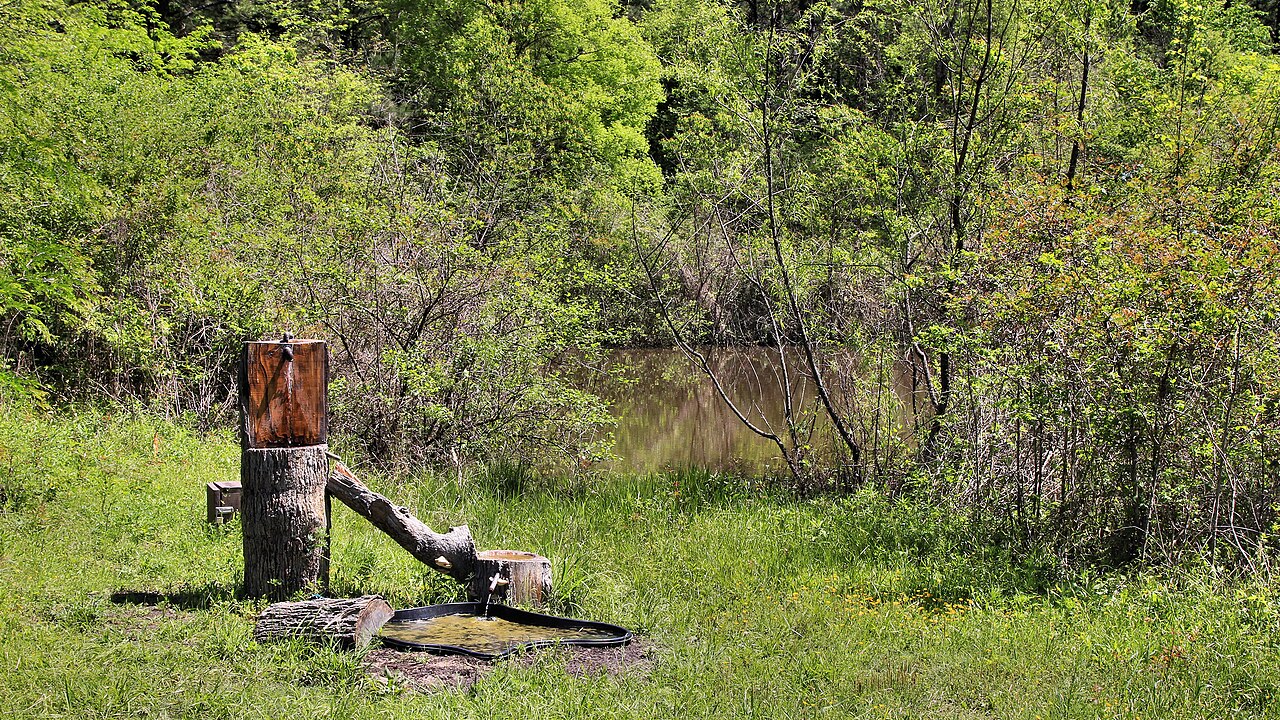
Tree stump basin. Hollow a slight depression into a flat tree stump (an inch is enough), seal with food-safe outdoor sealer. Refill with water. Looks natural, attracts ground-feeding species especially well.
Hubcap bath. An upside-down hubcap on a stable surface holds water perfectly. Free if you can find one; aesthetically rustic.
Trash-can-lid bath. A clean metal trash can lid (the old-fashioned kind), placed on a flat surface or hung on a chain. Surprisingly effective and free.
DIY pedestal. A shallow bowl glued or screwed to a thick wooden post planted in the ground. Total cost under $20 with materials from a hardware store.
For DIY-style projects with kids, the saucer-and-pebbles option is the easiest entry, five minutes to set up, immediate function.
Building a Multi-Bath Setup
Yards with multiple water sources outperform single-bath yards by significant margins. The optimal setup for most suburban yards is two water sources at different heights and locations.
A common high-performance configuration:
- One pedestal bath in an open area for mid-sized songbirds and visibility from inside the house.
- One ground-level bath in or near a planted bed for thrushes, sparrows, and ground-feeders.
- Optional: a dripper or solar fountain at one of them for the movement-attraction boost.
This setup typically attracts 50 to 100% more bird species than a single bath of equivalent quality. The cost difference is modest ($30 to 80 for a basic two-bath setup) and the maintenance is similar (you’re refreshing two small things instead of one larger thing).
If you want to maximize attraction further, the dedicated guide to attracting birds to your yard covers how water integrates with feeders, plants, and shelter into a complete habitat.
Frequently Asked Questions
How deep should bird bath water be?
Two inches maximum at the deepest point, with shallow zones of 1 inch or less around the edges. Smaller songbirds (chickadees, warblers, sparrows) won’t enter water deeper than about 1.5 inches. For deeper decorative baths, place stones in the center to create shallow areas.
How often should I change bird bath water?
Daily in hot weather (above 80°F), every 1 to 2 days in mild weather, every 2 to 3 days in cool weather. Cloudy or filmy water means change immediately. Refreshing every 2 to 3 days also prevents mosquito breeding (larvae need 7+ days to mature).
Why aren’t birds using my bird bath?
Most common causes: water is too deep, surface is too slippery (add pebbles for grip), location is too exposed or too hidden, or the bath is new and birds haven’t found it yet. New baths typically take 1 to 4 weeks for birds to discover and trust.
Should I add anything to bird bath water?
No. Plain fresh water is what birds need. Never add chemicals, soap, algaecides, or “water cleaners” marketed for bird baths, many contain copper sulfate or other compounds harmful to birds. The only safe additive is Mosquito Dunks (Bti) for mosquito control, which is harmless to birds.
Do I need a heated bird bath in winter?
In any region with extended freezing weather, yes, a heated bath is the single biggest winter upgrade. Open water becomes scarce when ponds and streams freeze, and birds will travel notable distances to reach a reliable water source. Heated baths attract species you wouldn’t otherwise see in winter.
Can I use a fountain pump in any bird bath?
Most small solar fountain pumps ($20 to 40) work in any bath, just drop them in. Wired fountain pumps require an outdoor outlet and electrical safety considerations. Moving water dramatically increases bath attraction (typically 2 to 5x).
How do I keep algae out of my bird bath?
Three interventions: partial shade (especially afternoon shade), movement via dripper or fountain, and frequent refresh. For persistent algae, drop in a small copper insert (copper coins, copper sheet), copper ions inhibit algae growth naturally. Never use chemical algaecides.
Will mosquitoes breed in my bird bath?
Yes, if water sits stagnant for 7+ days. Refreshing every 2 to 3 days breaks the breeding cycle. For low-maintenance setups, Mosquito Dunks (Bti bacteria) are bird-safe and prevent larvae development. Moving water doesn’t support mosquito breeding.
What’s the best bird bath material?
For year-round use in freezing climates, resin is most practical (lightweight, freeze-resistant, durable). For warmer climates, concrete or cast stone is most durable. Glazed ceramic is beautiful but slippery and breakable. Avoid metal, conducts temperature extremes.
Can I use a kiddie pool or larger water feature?
Yes, but with adjustments. Larger water features need shallow edges (place stones or a ramp to create 1 to 2 inch wading zones), regular refresh or filtration, and protection from becoming mosquito breeding sites. Garden ponds with proper biological filtration also attract birds well.
Do bird baths attract too many of the wrong birds?
Unlike feeders, water doesn’t strongly favor any specific species, it’s used by everyone. Some non-native species (House Sparrows, European Starlings) will visit baths, but they don’t dominate the way they can dominate seed feeders.
Should I take my bird bath inside in winter?
In freezing climates, either bring it inside (concrete baths must come inside to prevent cracking) or use a heated bath/deicer. Drained-and-stored baths are fine. Frozen baths that crack are a one-season loss.