Red-Winged Blackbird: Identification and Behavior Guide
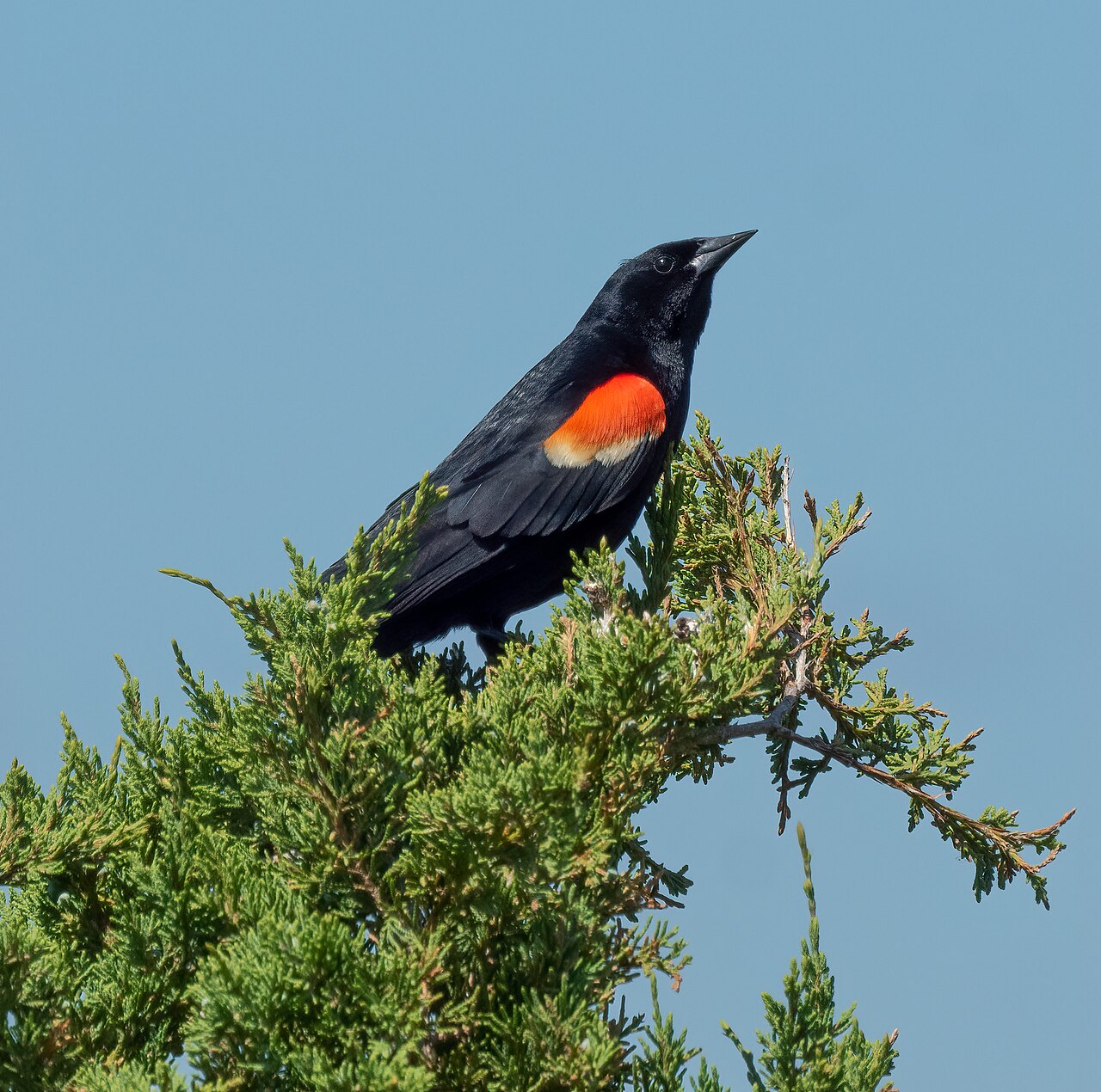
The red-winged blackbird (Agelaius phoeniceus) is one of the most abundant birds in North America, instantly recognized by the male’s glossy black body and bold red-and-yellow shoulder patches, called epaulets, displayed prominently while perched on cattails and marsh vegetation. Females look so different from males, streaky brown all over like a large sparrow, that many people don’t realize the two are the same species at all. Found in wetlands, roadside ditches, and agricultural fields across the entire United States, red-winged blackbirds are also known for aggressively dive-bombing anyone who ventures too close to a nest, a behavior that catches many unsuspecting walkers and joggers off guard each spring.
| Quick Reference | Detail |
|---|---|
| Length | 6.7 to 9.1 inches |
| Wingspan | 12.2 to 15.8 inches |
| Male color | Glossy black with red and yellow shoulder patches |
| Female color | Streaky brown, sparrow-like |
| Habitat | Marshes, wetlands, roadside ditches, farm fields |
| Diet | Insects in summer, seeds and grain in winter |
| Mating system | Polygynous; one male can have several mates |
Male Red-Winged Blackbird Identification
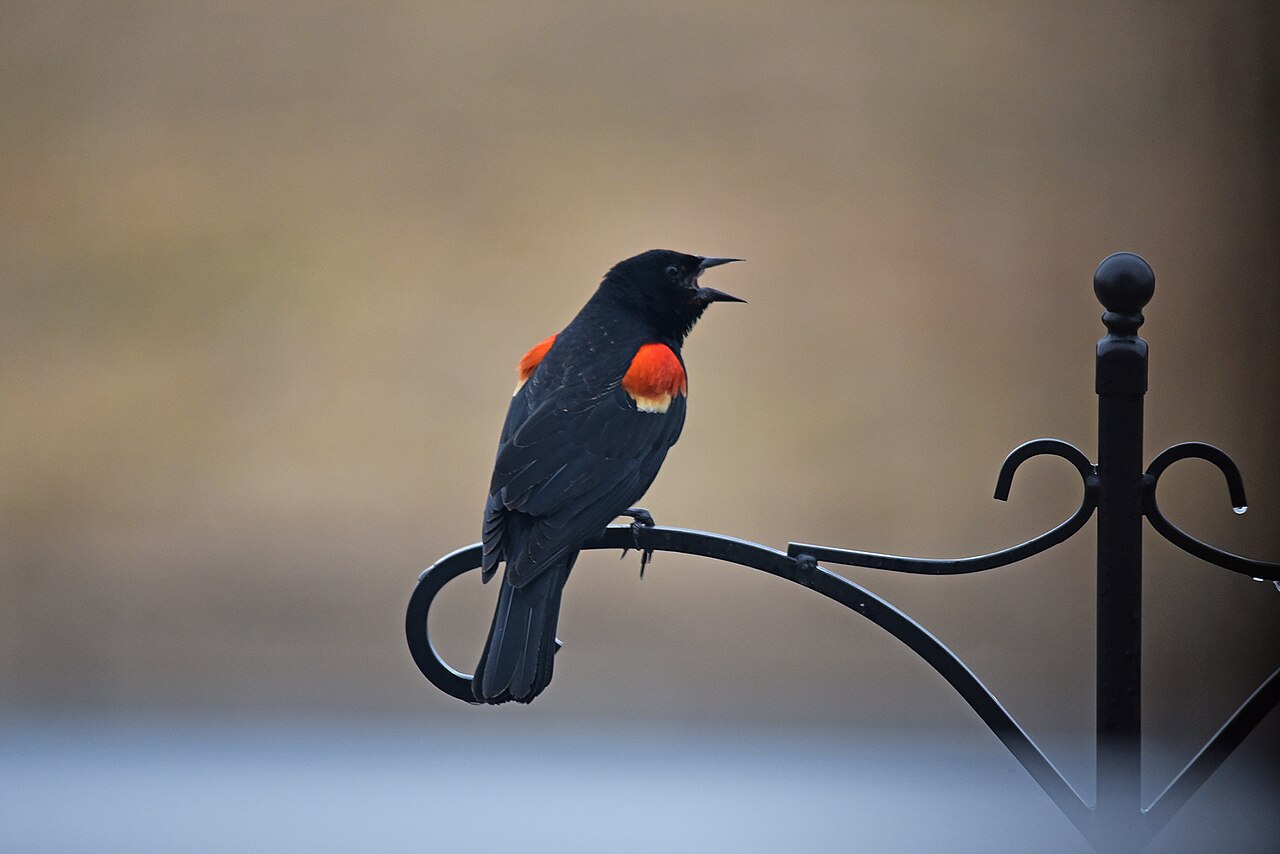
Male red-winged blackbirds are unmistakable: solid glossy black overall, with a bright red patch bordered by yellow on the shoulder, called the epaulet, which the male can flare open dramatically during territorial displays or keep mostly hidden when at rest. This visual display is a key part of male-to-male competition and mate attraction, with males often perching conspicuously atop cattails or shrubs, spreading their tail, and flashing the red epaulets while singing to advertise territory ownership over a marsh or field.
Female Red-Winged Blackbird: The Sparrow Look-Alike
Female red-winged blackbirds look so different from males that they are frequently misidentified as a large, heavily streaked sparrow rather than recognized as the same species. Females are mottled brown and buff overall with dark streaking throughout, a pale eyebrow stripe, and no red or yellow coloring at all. This dramatic difference between sexes, called sexual dimorphism, is thought to benefit females by keeping them camouflaged while incubating eggs in low marsh vegetation, where a bright red-and-black male would be an easy target for predators. This kind of extreme plumage difference between males and females is relatively uncommon among North American blackbirds and more pronounced in red-winged blackbirds than in most other species that share their marsh habitat, making correct identification of females a genuine challenge even for people who can instantly recognize a male on sight.
Diet and Feeding Habits
Red-winged blackbirds shift their diet seasonally, feeding primarily on insects, spiders, and other invertebrates during the spring and summer breeding season, then switching to seeds, grain, and waste corn in fall and winter when insect availability drops. This dietary flexibility allows them to occupy an enormous range of habitats and is part of why they remain one of the most numerous native bird species in North America despite significant wetland habitat loss over the past century, a seasonal diet shift also seen in the Eastern phoebe, which similarly moves from insects to fruit as the seasons change.
Why Male Red-Winged Blackbirds Attack People
During breeding season, male red-winged blackbirds aggressively defend their nesting territory against any perceived threat, including much larger birds, dogs, and humans who walk too close to a nest hidden in marsh vegetation. This defensive behavior, sometimes resulting in a male swooping down and briefly striking a person’s head, is almost always limited to a small radius around an active nest and stops once the breeding season ends and young have fledged. The behavior is a normal, protective instinct rather than random aggression, and simply avoiding dense marsh edges during nesting season (roughly April through July) prevents most encounters, a similar territorial pattern to the aggressive nest defense seen in breeding Canada geese during the same general time of year.
The Polygynous Mating System
Unlike many songbirds that form monogamous pairs, red-winged blackbirds are polygynous, meaning a single successful male can mate with and defend the nests of several females within his territory simultaneously, sometimes five or more in prime marsh habitat. Males establish and defend territory first, then females select a territory (and its resident male) based largely on habitat quality rather than the male’s individual traits, a mating strategy well documented in decades of research on this species. This system means territory quality, dense vegetation, abundant insect prey, and protection from predators, matters more to female mate choice than any visual display the male can offer, making red-winged blackbirds one of the most thoroughly studied examples of resource-based mate selection in ornithology.
Vocalizations
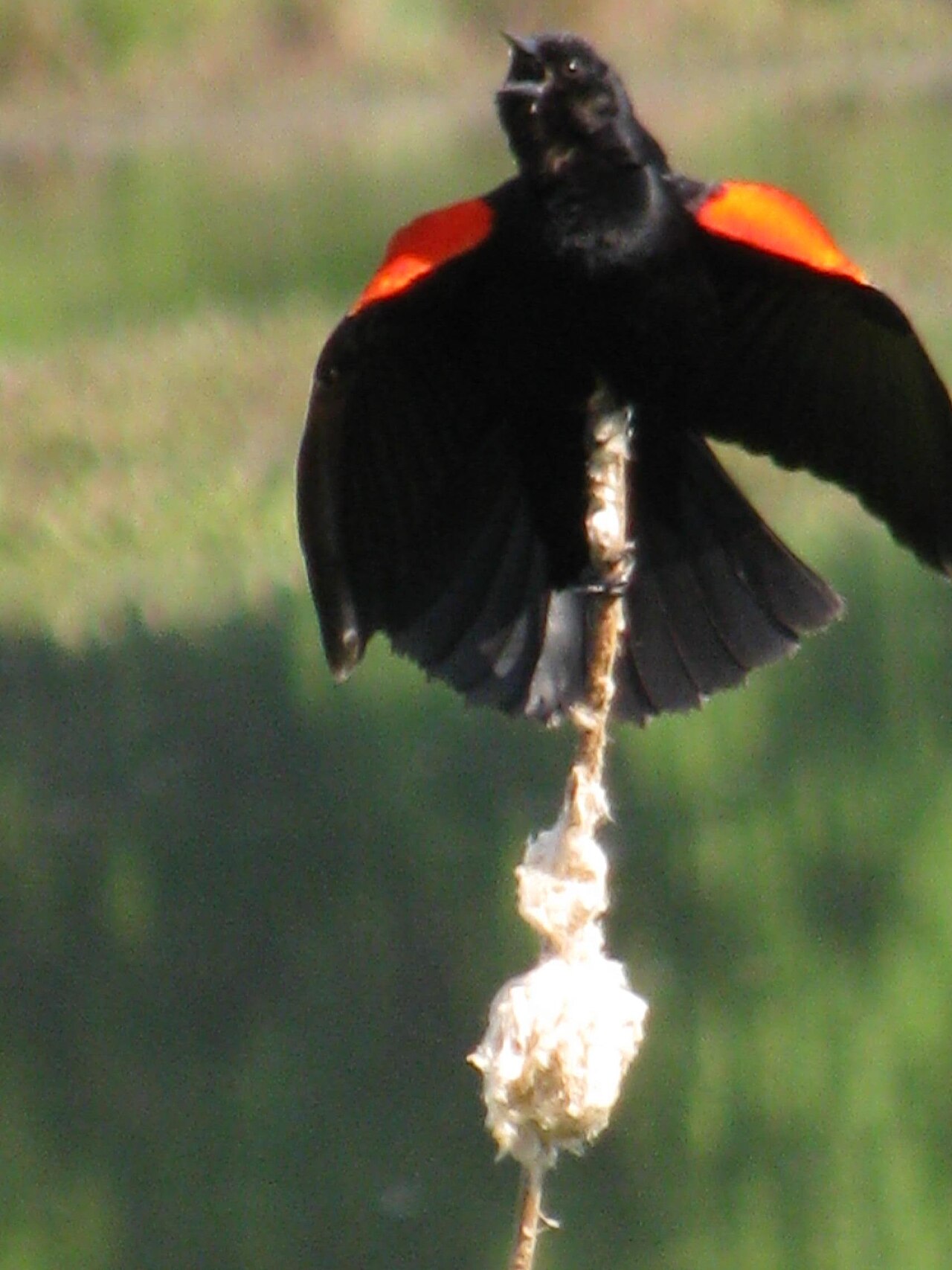
The male red-winged blackbird’s song is a distinctive, gurgling “conk-la-ree” often delivered from an exposed perch while displaying the red epaulets, one of the most recognizable sounds of North American wetlands in spring. Females produce a different, sharper chattering call, and both sexes give a variety of alarm and contact calls used to coordinate within the flock or warn of approaching predators. This song is so closely tied to wetland habitats across the continent that many birders consider it one of the first true signs of spring in marsh country, often heard well before the ice has fully cleared from the shallowest ponds and ditches each year.
Habitat and Range
Red-winged blackbirds breed across virtually the entire United States and Canada, favoring freshwater and brackish marshes, wet meadows, and roadside ditches with cattails or dense reeds for nesting cover. Outside the breeding season, they readily move into agricultural fields and open grassland, often joining the massive mixed-species blackbird flocks that also include common grackles and starlings. For a related species you may see in the same habitats, see our guide to other common North American blackbird species.
Conservation Status and Population Trends
Red-winged blackbirds remain one of the most abundant and widely studied songbirds in North America, though the Cornell Lab of Ornithology notes that overall populations have declined significantly since the 1960s due to wetland habitat loss and agricultural intensification, even as the species remains common and easy to find across most of its range. This pattern, a species still numerous in absolute terms but declining steadily from a much larger historical baseline, is shared by several other wetland and grassland-dependent birds, and researchers use exactly this kind of long-term trend data to flag population issues well before a species becomes rare enough to draw broader public attention.
Red-Winged Blackbirds Compared to Other Blackbirds
Red-winged blackbirds are frequently seen mixed into massive winter flocks alongside common grackles, European starlings, and brown-headed cowbirds, and separating the species takes practice, especially since female red-winged blackbirds look so different from the males. Compared to the larger, longer-tailed grackle, male red-winged blackbirds are smaller-bodied with a shorter, less wedge-shaped tail, and of course carry the unmistakable red-and-yellow shoulder patches no grackle shares, a visual signal not unlike the bold facial mask used by the gray catbird to stand out despite its otherwise plain gray plumage. For a broader look at how to sort out mixed blackbird flocks in the field, see our guide to identifying common blackbird species.
Frequently Asked Questions
How do you identify a male red-winged blackbird?
Male red-winged blackbirds are glossy black overall with a bright red patch bordered by yellow on each shoulder, called an epaulet, which they display prominently during territorial displays.
Why do male and female red-winged blackbirds look so different?
Females are streaky brown for camouflage while incubating eggs in low marsh vegetation, while males display bright red and yellow shoulder patches to attract mates and defend territory, a pattern called sexual dimorphism that is more extreme in this species than in most other North American blackbirds.
Why do red-winged blackbirds attack people?
Male red-winged blackbirds aggressively defend their nesting territory against anyone who approaches too closely during breeding season, a defensive behavior that stops once the young have fledged.
What do red-winged blackbirds eat?
Red-winged blackbirds eat mostly insects and invertebrates during breeding season, then switch to seeds and grain in fall and winter, a seasonal dietary shift shared by several other North American songbirds adapted to changing food availability.
Do red-winged blackbirds mate for life?
No, red-winged blackbirds are polygynous, meaning a single male can mate with and defend the nests of several females within his territory during one breeding season, a system driven by territory quality rather than pair bonding.
What does a red-winged blackbird sound like?
Males produce a distinctive gurgling “conk-la-ree” song, often delivered while displaying their red shoulder patches from an exposed perch, a sound widely considered one of the earliest audible signs of spring returning to wetland habitats across the continent.
Where do red-winged blackbirds live?
Red-winged blackbirds breed across nearly all of the United States and Canada, favoring freshwater marshes, wet meadows, and roadside ditches with dense reed cover, and remain one of the continent’s most numerous and widely distributed native songbirds.