Types of Birds of Prey in North America
The main types of birds of prey are hawks, eagles, owls, falcons, vultures, and kites or harriers, six groups of raptors united by sharp talons, hooked bills, and exceptional eyesight built for hunting. Some, like owls, hunt mainly at night, while others, like falcons, are built purely for speed. This guide walks through each major group of birds of prey found in North America, what sets it apart, how it hunts, and how to start telling the different groups apart in the field.
| Group | Example | Key Trait |
|---|---|---|
| Hawks | Red-tailed Hawk | Broad wings, soars in circles |
| Eagles | Bald Eagle | Largest raptors, powerful grip |
| Owls | Great Horned Owl | Mostly nocturnal, silent flight |
| Falcons | Peregrine Falcon | Pointed wings, fastest fliers |
| Vultures | Turkey Vulture | Scavengers, bald head |
| Kites and Harriers | Mississippi Kite | Slender, buoyant flight |
What Makes a Bird a Bird of Prey?
A bird of prey, also called a raptor, is defined by three physical traits built for hunting: sharp, curved talons for grabbing and killing prey, a hooked bill for tearing flesh, and unusually sharp eyesight for spotting prey from a distance or in low light. According to the Cornell Lab of Ornithology, raptors also share a generally similar body plan across groups, a compact, muscular frame paired with wings suited to their particular hunting style, whether that means sustained soaring, explosive short bursts of speed, or near-silent nocturnal flight. Most birds of prey are also carnivorous hunters rather than scavengers, though vultures are a notable exception, feeding almost entirely on carrion instead of live prey. Raptors occupy nearly every habitat in North America, from open farmland to deep forest to city skylines, and range enormously in size, from a kestrel small enough to fit in one hand to an eagle with a seven-foot wingspan.
Hawks
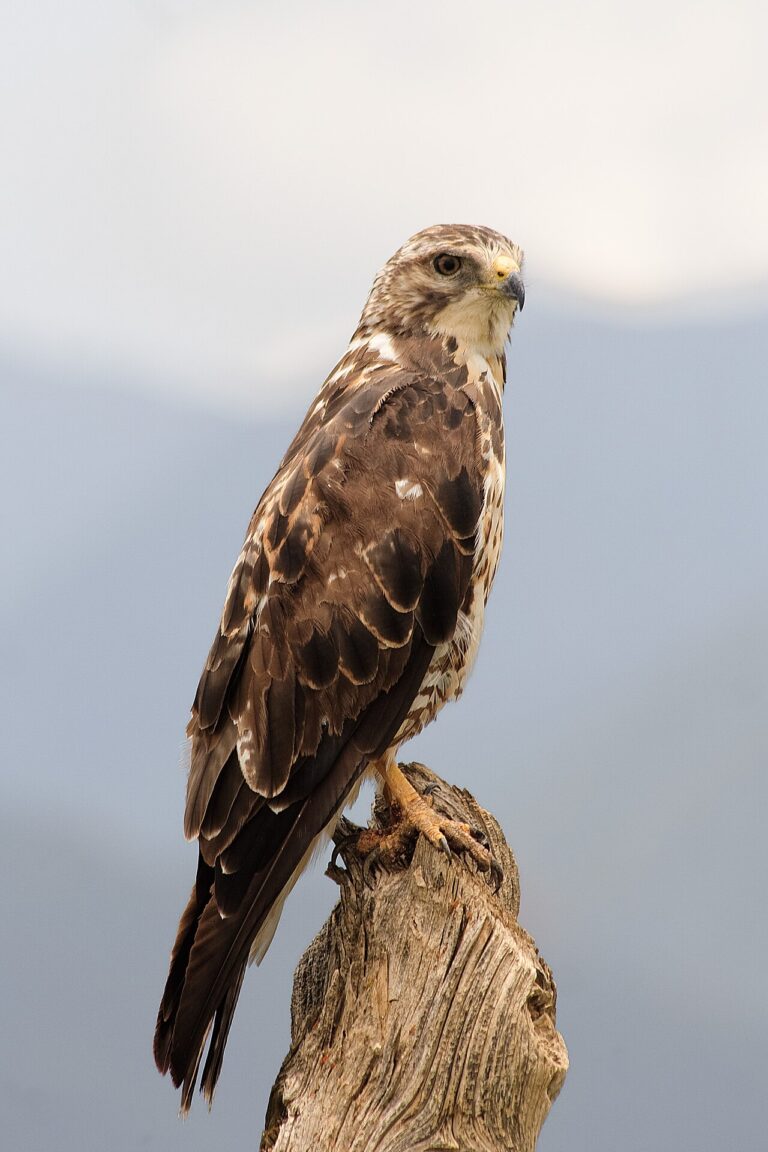
Hawks are the most frequently seen birds of prey in North America, commonly divided into broad-winged, soaring buteos like the red-tailed hawk and smaller, forest-hunting accipiters like Cooper’s hawk. Buteos are built for soaring on flat, broad wings while scanning open ground below, often for many minutes at a time without a single flap, while accipiters have short, rounded wings and long tails built for short bursts of speed chasing songbirds through trees and backyard cover. Hawks are also the raptor group most likely to be spotted at a bird feeder, since accipiters in particular treat a busy feeding station as a reliable hunting ground. For the full lineup of North American hawk species and how to identify each one, see our complete guide to types of hawks.
Eagles
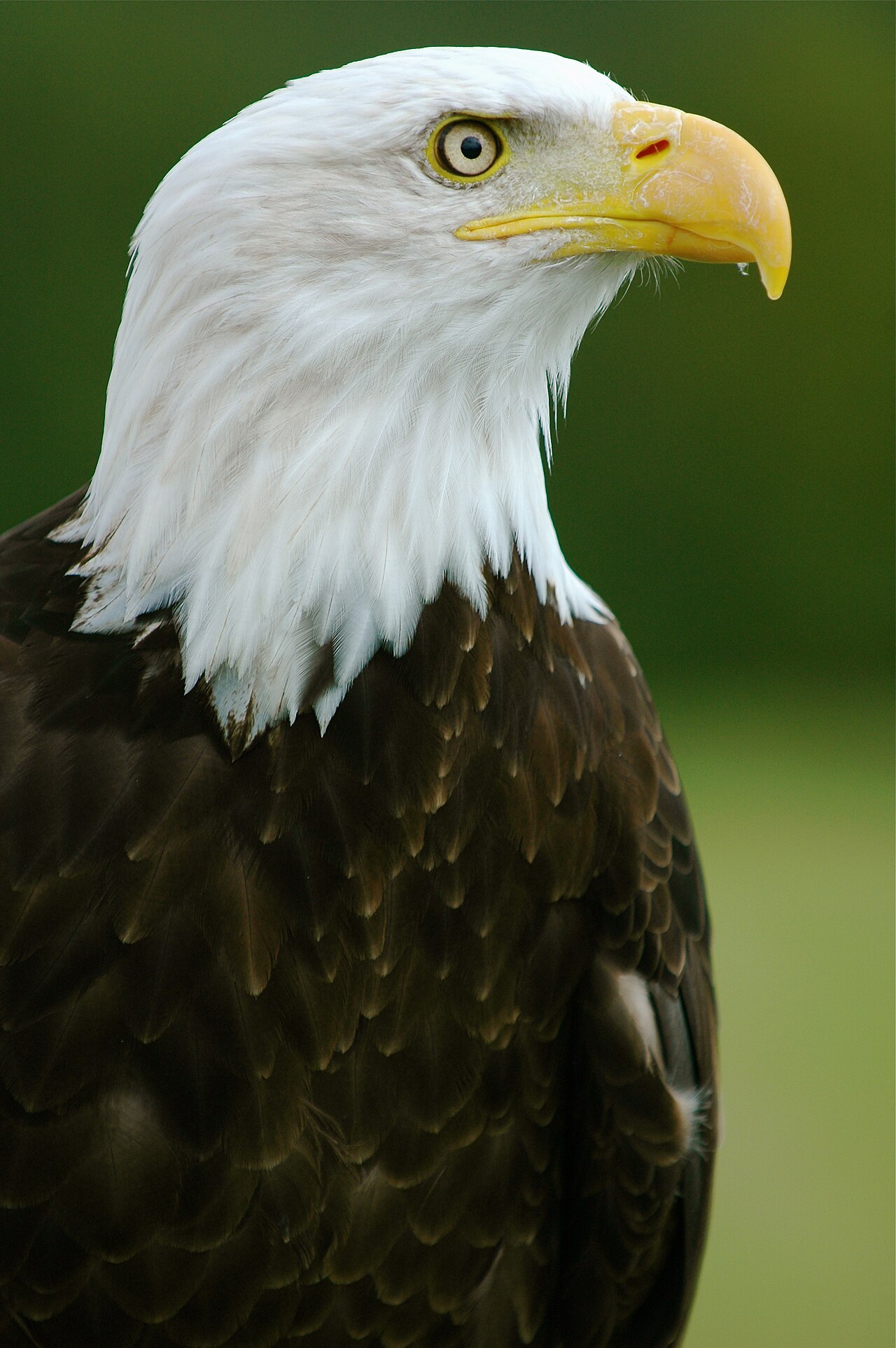
Eagles are the largest and most powerful birds of prey in North America, built with heavy bodies, long broad wings, and an exceptionally strong grip capable of carrying prey many times their own body weight. The bald eagle, instantly recognizable by its white head and tail against a dark brown body, is the most familiar species and a strong flier over lakes, rivers, and coastlines where fish make up the bulk of its diet. The golden eagle is the other widespread North American species, favoring open mountainous and desert terrain in the western half of the continent and hunting mammals like rabbits and ground squirrels rather than fish. Both species can live for decades in the wild and mate for life, returning to the same nest site, called an eyrie, year after year. Our guide to types of eagles covers both species in full detail.
Owls
Owls are the primary nocturnal branch of the birds of prey family, equipped with forward-facing eyes for depth perception, asymmetrical ears for pinpointing sound in total darkness, and specialized soft-edged feathers that allow near-silent flight so prey never hears them coming. Species range from the tiny elf owl to the powerful great horned owl, and while most owls hunt small mammals under cover of darkness, a few, including the burrowing owl and short-eared owl, are regularly active during daylight as well, particularly around dawn and dusk. Owls also differ from other raptors in swallowing many prey items whole and later coughing up compact pellets of indigestible fur and bone, a trait that makes them unusually easy to study after the fact. Our complete guide to types of owls breaks down every North American species.
Falcons
Falcons are built differently from hawks, with long, pointed wings and a distinctive notched bill rather than the broader wings of a buteo, and they rely on speed rather than soaring to catch prey. The peregrine falcon is the fastest animal on Earth, reaching speeds over 200 miles per hour in a hunting dive called a stoop, striking prey in midair with a closed fist rather than grabbing with talons outstretched. The smaller American kestrel is North America’s most common falcon, often seen hovering over roadside fields on rapidly beating wings while scanning the grass below for insects and small rodents. For the full range of North American falcon species, see our guide to types of falcons.
Vultures
Vultures are the scavengers of the raptor world, feeding almost entirely on carrion rather than hunting live prey, and their featherless heads are a specialized adaptation that keeps their skin clean while feeding inside carcasses. The turkey vulture, recognized by its bald red head and the shallow V-shaped wobble of its flight, is the most widespread North American species and one of the few birds with a strong sense of smell, which it uses to locate carrion from high in the air even under a forest canopy. Vultures also play an important ecological role by rapidly clearing carcasses that might otherwise spread disease, a service that has led some conservationists to call them nature’s cleanup crew. Our guide to types of vultures covers the full lineup, including the black vulture and endangered California condor.
Kites and Harriers
Kites and harriers round out the raptor lineup with slimmer, more buoyant flight styles than typical hawks. Kites, including the graceful Mississippi kite and swallow-tailed kite, are agile fliers that often catch insects on the wing in addition to small vertebrates, sometimes eating their catch in midair without ever landing. Harriers, represented in North America mainly by the northern harrier, hunt low over open marshes and fields with a distinctive owl-like facial disk that helps them locate prey by sound as much as sight, a rare trait among daytime raptors that mirrors the hunting strategy of true owls.
How to Tell the Different Types of Birds of Prey Apart
The fastest way to sort a raptor into its family is wing shape and flight style. A bird soaring on broad, flat wings in wide circles is almost certainly a hawk, eagle, or vulture, while long, pointed wings and fast wingbeats point to a falcon. Nighttime activity and a large rounded head without a visible neck point to an owl, while a small body wobbling low over a field with wings held in a shallow V belongs to a turkey vulture or harrier. Size then narrows things further, since eagles dwarf every other North American raptor except for the largest owls, and habitat can help too, since vultures and harriers favor open country while many owls and forest hawks prefer wooded cover.
Frequently Asked Questions
What are the main types of birds of prey?
The main types of birds of prey are hawks, eagles, owls, falcons, vultures, and kites or harriers, each a distinct group built for a different hunting style.
What is the difference between a hawk and an eagle?
Eagles are significantly larger and more powerful than hawks, with a stronger grip and broader wings, though both are diurnal hunters that soar on flat wings.
Are owls considered birds of prey?
Yes, owls are birds of prey. They share the sharp talons, hooked bill, and hunting lifestyle of other raptors but are adapted for hunting at night instead of during the day.
What is the largest bird of prey in North America?
The bald eagle and golden eagle are the largest North American birds of prey by wingspan, with some individuals reaching a wingspan of over 7 feet.
Do all birds of prey hunt live prey?
No, vultures are the main exception. They feed almost entirely on carrion rather than hunting live animals, relying on keen eyesight and, in some species, smell to find carcasses.
What is the fastest bird of prey?
The peregrine falcon is the fastest bird of prey and the fastest animal on Earth, exceeding 200 miles per hour during its hunting dive known as a stoop.
How many types of birds of prey are there in North America?
North America is home to roughly 34 native species across the hawk, eagle, falcon, and kite and harrier groups, plus around 19 owl species and several vultures.