Albino Peacock
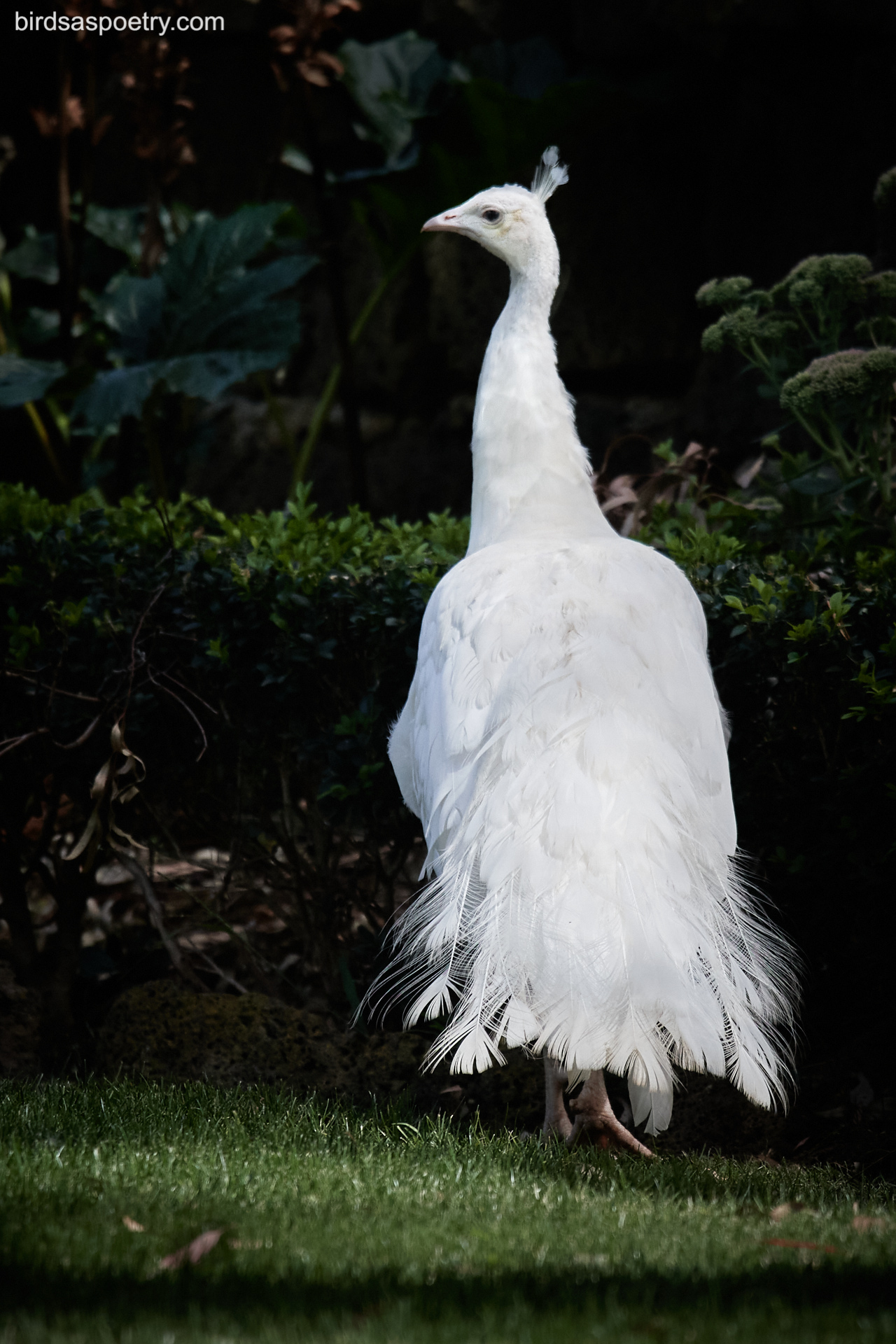
An albino peacock is the name most people use for a pure white peafowl, though true albinism is actually quite rare in this species. The vast majority of white peacocks are leucistic rather than albino, meaning a recessive gene blocks pigment from reaching their feathers while leaving their eyes, skin, and overall health completely normal.
A genuine albino peacock would show pink or red eyes, because it produces no melanin anywhere in its body, including its retina, while a leucistic bird keeps its natural blue-gray eye color despite its all-white plumage. Both conditions are strikingly beautiful and increasingly popular in captive breeding, but only one of them is technically albinism.
| Quick Reference | Detail |
|---|---|
| Species | Pavo cristatus, Indian peafowl, white color variety |
| Underlying Condition | Usually leucism; true albinism is much rarer |
| Eye Color | Normal blue-gray (leucistic) vs. pink or red (true albino) |
| Chick Color | Yellowish at hatching, whitens over 1 to 3 years |
| Typical Price | Roughly $300 to $2,500 depending on age and breeder |
| Wild Survival | Very poor due to loss of natural camouflage |
| Lifespan | 15 to 20 years in captivity |
Most white peacocks are leucistic, not albino. Leucism blocks pigment from reaching the feathers but leaves the eyes dark blue or brown. A true albino produces no melanin anywhere and has pink or red eyes, which is genuinely rare in peafowl and almost never what people photograph.
Is an Albino Peacock Real? Leucism vs. True Albinism
Genuine albino peacocks do exist, but the term gets applied far more often than the condition actually occurs, since most all-white peafowl are leucistic instead. Leucism is a genetic condition that causes a partial or complete loss of pigment in feathers and skin while leaving the eyes fully pigmented and functioning normally.
Albinism is a distinct condition caused by a mutation affecting melanin production throughout the entire body, including the eyes, which is why true albino animals almost always show telltale pink or red eyes rather than a normal eye color. Because both conditions can produce a similarly all-white bird from a distance, the two get confused constantly in casual conversation, even though the underlying biology and appearance up close are quite different.
Given how visually similar the two conditions look at a glance, the most reliable way to know which one you are actually looking at comes down to a single detail: the color of the bird’s eyes.
How to Tell a Leucistic Peacock From a True Albino
The clearest, most dependable test is eye color. The Cornell Lab of Ornithology notes that leucism affects only the cells that produce feather pigment, leaving eye color completely unaffected, which is why a leucistic peacock retains its species’ normal blue-gray eyes while a true albino peacock has pink or red eyes caused by the complete absence of melanin, allowing the blood vessels inside the eye to show through.
Skin and leg color offer a secondary clue, since leucistic birds usually keep a normal or only slightly paler leg and beak tone, while true albinos tend toward a much paler, sometimes pinkish cast across all exposed skin. Behavior and general health are typically indistinguishable between the two, and neither condition is considered inherently unhealthy on its own, though leucistic feathers can occasionally be somewhat more brittle than normally pigmented plumage.
In practice, the overwhelming majority of birds sold or displayed as “albino peacocks” turn out to be leucistic once someone actually checks eye color, which is why serious breeders and zoos increasingly use the more accurate term “white peacock” instead.
The Genetics Behind White Peacocks
Leucism in peafowl is inherited as a recessive trait, which means a chick only displays the white coloring if it inherits one copy of the leucistic gene from each parent. A peacock carrying just a single copy of the gene looks completely normal in color but can still pass the trait on to its offspring, making it what breeders call a “carrier.”
When two carrier peafowl are paired, roughly 25 percent of their offspring can be expected to hatch leucistic, since each chick needs to inherit the recessive gene from both parents to display the white plumage. Breeders aiming to produce reliably white offspring often pair two leucistic birds directly, since two white parents will consistently produce white chicks.
True albinism follows a similarly recessive inheritance pattern but is considerably rarer in the overall peafowl population, which is one of the reasons genuinely albino birds, with their distinctive pink or red eyes, command such attention whenever one is confirmed.
From Yellow Peachick to White Adult
White and leucistic peachicks are not born looking obviously white. Hatchlings typically emerge with a yellowish or light tan, game-bird-like down similar to many other young pheasant species, including golden pheasant chicks, which can make very young leucistic peafowl surprisingly easy to mistake for an ordinary juvenile bird at first glance.
Clutches usually contain three to six eggs, and as chicks mature over roughly one to three years, the leucistic ones gradually lose their juvenile coloring and grow in the pure white adult plumage that makes them so distinctive. Both male and female leucistic peafowl can display this white coloring, and white males still grow and fan a full, dramatic train, just entirely white rather than the iridescent blue and green of a typical male.
Because the whitening process happens gradually rather than all at once, owners and breeders often cannot confirm with full certainty which chicks in a mixed clutch will end up leucistic until they are already well into their first year or two of growth.
Can White Peacocks Survive in the Wild?
Survival prospects for a white peafowl in a truly wild setting are poor, largely because the entire point of a typical peacock’s iridescent blue and green plumage is camouflage within dense jungle vegetation, a job an all-white bird simply cannot do. A white peacock standing in dappled forest light is far easier for a predator to spot than its normally colored relatives.
Some sources also suggest that leucistic feathers can be somewhat more brittle than normal plumage, which may make sustained flight marginally more difficult, compounding the disadvantage of losing natural camouflage in the first place. Between the visibility problem and any feather quality issues, white peafowl are essentially never found thriving as a self-sustaining population outside of protected or captive settings.
As a result, virtually every white peacock alive today exists because of deliberate captive breeding programs at parks, zoos, and private aviaries rather than as the product of a wild population reproducing on its own.
White Peacock Symbolism and Spiritual Meaning
Where a normally colored peacock’s tail already carries rich symbolism, with its eye-like feather patterns long associated with watchfulness, protection, and immortality across many cultures, a white peacock tends to intensify that meaning into something closer to purity and spiritual transcendence. In Hindu tradition, peacocks are linked to deities including Saraswati and Kartikeya, and a white bird’s rarity has made it an especially potent symbol of spiritual clarity and self-realization.
Buddhist symbolism frames the peacock, and the white peacock in particular, as representing an enlightened mind that has moved past ordinary perception into a state of pure awareness. Christian iconography has historically used the peacock as a symbol of resurrection and eternal life, and a white peacock elevates that association further, often standing in for a purified, transcendent soul in religious artwork.
Beyond specific religious traditions, many people simply encounter the symbolism of the peacock more broadly as a spirit animal associated with confidence and authentic self-expression, and a white variant of that same bird is widely read as an invitation toward clarity, renewal, and letting go of old patterns.
Keeping a White Peacock: Habitat, Care, and Cost
Because exotic pet ownership rules around peafowl have relaxed in many areas, white peacocks have become increasingly available through specialty breeders and aviaries, with prices commonly ranging from a few hundred dollars for a young bird up to two thousand dollars or more for a mature, well-documented specimen. Rarity, age, and the breeder’s reputation all factor heavily into that price range.
Day-to-day care for a white peacock is essentially identical to caring for any Indian peafowl: they need generous outdoor space, secure predator-proof housing at night, a balanced diet of grain, greens, and protein, and patient handling given their size and long, dramatic tail feathers. With attentive care, a white peacock typically lives 15 to 20 years, matching the lifespan of normally colored birds.
For anyone drawn to exotic poultry but not ready for a bird as large or space-hungry as a peafowl, smaller alternatives such as ornamental quail breeds offer a similar sense of novelty on a much smaller property.
Albino Peacock vs. Other White or Pale Birds
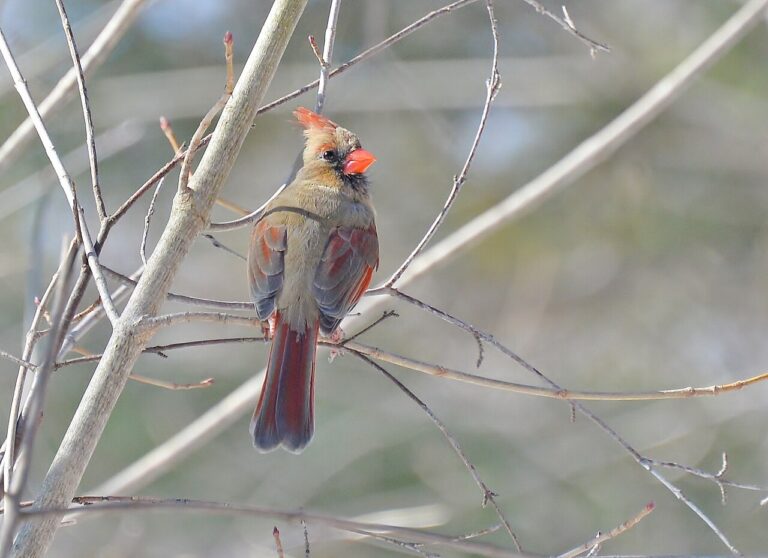
Leucism and albinism are not unique to peafowl; both conditions show up across the bird world, from songbirds to game birds. A pale or all-white cardinal, sometimes discussed alongside questions about what it means to see a red cardinal, is one of the more famous backyard examples of the exact same leucism at work in a much smaller, more familiar species.
The visual effect also differs depending on how a species normally produces its color. A peacock’s ordinary blue and green sheen comes largely from microscopic feather structures that bend light rather than from pigment alone, a phenomenon closely tied to the same peacock feather structure that gives the standard bird its shimmer, which is part of why a leucistic bird loses that iridescent color entirely rather than simply fading to a paler version of it.
Other ornamental birds bred in captivity, including several pheasant species, show their own white or pied color morphs for similar genetic reasons, making the white peacock part of a much broader pattern of pigment-related mutations that breeders have selected for across many kinds of backyard and aviary birds.
Related reading: Female Peacock.
Related reading: Baby Peacock.
How Rare Is a True Albino Peacock?
True albino peafowl are rare enough that most breeders will never produce one, while white leucistic peafowl are common and widely available. The difference is not a matter of degree but of two separate genetic mechanisms, and they are easy to tell apart once you know to look at the eye rather than the feathers.
Albinism is a failure to produce melanin at all, which leaves the eyes unpigmented so the blood vessels behind them show through as pink or red. Leucism leaves melanin production intact but prevents pigment cells from reaching the feathers, so a leucistic peacock is pure white with normal dark eyes. The white peafowl kept on estates, in parks and at zoos are almost universally the leucistic form, maintained as an established colour variety of Indian peafowl rather than as a rarity.
A leucistic male still grows the full train with its eyespot structure, visible as texture and shape rather than colour, which is why the display remains striking in white. The Smithsonian’s National Zoo profile of common peafowl describes the train and eyespot anatomy that the white birds retain.
Frequently Asked Questions
Are albino peacocks rare?
True albino peacocks, identifiable by pink or red eyes, are genuinely rare. Most birds people call “albino peacocks” are actually leucistic, a more common condition that produces white feathers while leaving eye color normal.
Is a white peacock actually albino?
Usually not. The overwhelming majority of white peacocks are leucistic rather than truly albino, and checking eye color is the most reliable way to tell the two conditions apart.
Can two white peacocks always produce white babies?
Yes, in most cases. Since leucism is a recessive trait, pairing two leucistic peafowl together will reliably produce leucistic, white-feathered offspring.
How much does a white or albino peacock cost?
Prices typically range from a few hundred dollars for a young bird to two thousand dollars or more for a mature, well-documented specimen, depending on age, rarity, and the breeder.
Do white peacocks have different colored eyes than blue peacocks?
Leucistic white peacocks keep the same normal blue-gray eye color as standard blue and green peafowl. Only a true albino peacock shows pink or red eyes.
Can white peacocks survive in the wild?
Survival odds are poor, since their white plumage removes the natural camouflage that colored peafowl rely on in dense jungle habitat, making them far easier targets for predators.
What does seeing a white peacock symbolize spiritually?
Across Hindu, Buddhist, and Christian traditions, a white peacock is widely associated with purity, spiritual enlightenment, and transcendence, often seen as an intensified version of the watchfulness and renewal already linked to ordinary peacocks.