Emu Egg: Size, Color, Incubation, and Facts
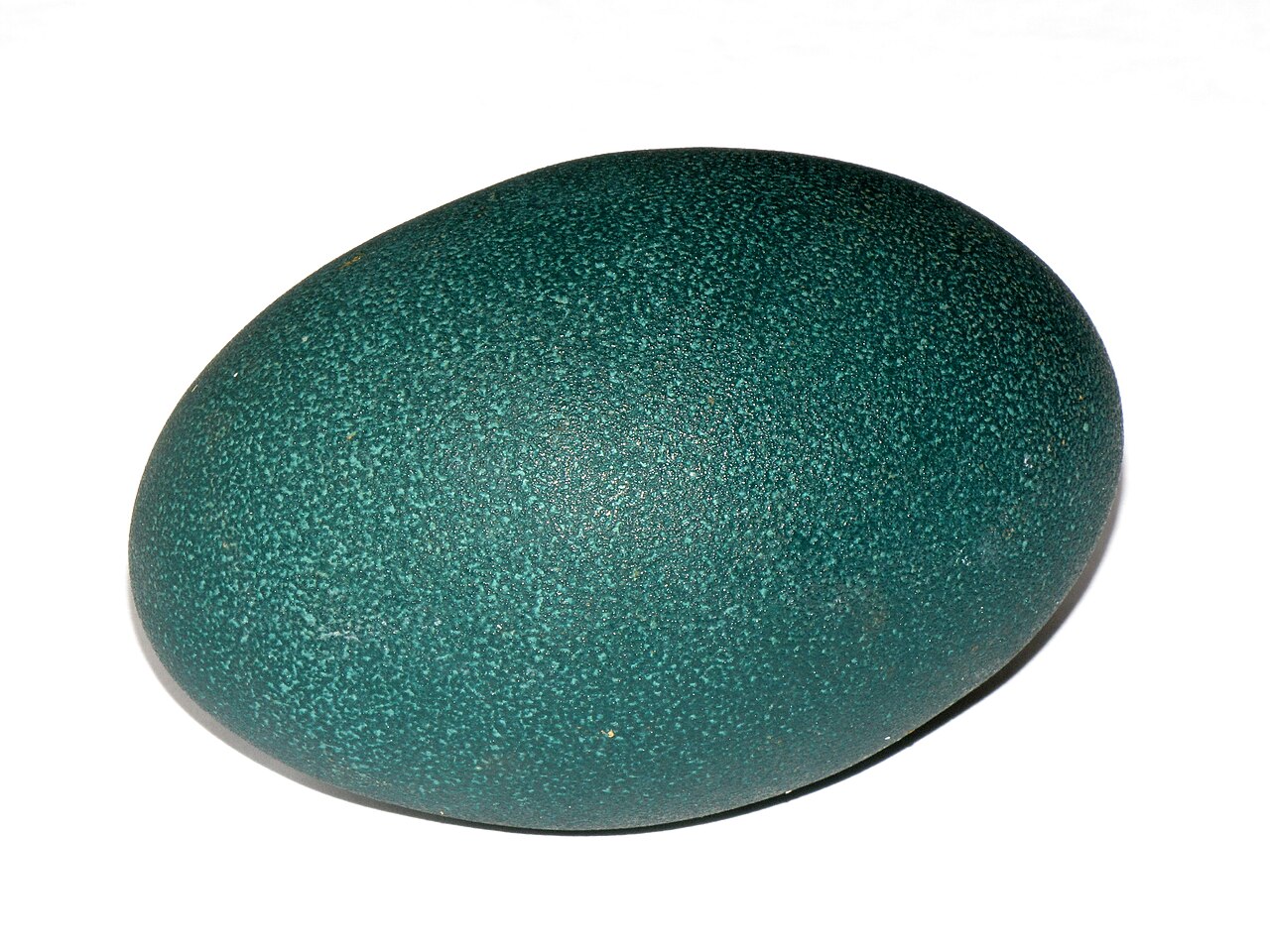
An emu egg is a deep, dark emerald green, almost black in places, and measures roughly 5 inches long while weighing between 1.2 and 1.5 pounds, about the same volume as 10 to 12 large chicken eggs. It takes 50 to 56 days to hatch, and unusually for birds, the male emu incubates the egg entirely alone, barely eating or drinking the entire time. The dark shell color comes from a pigment called biliverdin, and beneath that outer layer sits a striking blue green inner shell that artists prize for carving.
| Trait | Typical Range |
| Weight | 500 to 700 grams (1.2 to 1.5 lbs) |
| Length | About 5 inches (12 to 14 cm) |
| Color | Dark emerald green to near black |
| Incubation Period | 50 to 56 days |
| Who Incubates | Male only |
| Volume Equivalent | 10 to 12 chicken eggs |
What Does an Emu Egg Look Like?
The most striking feature of an emu egg is its color: a deep, saturated emerald green that can look almost black under low light. This coloring comes from biliverdin, a bile pigment deposited in the outer layer of the shell as the egg forms inside the hen. Over time, especially once an egg is removed from the nest and exposed to sunlight, that dark green gradually fades to a paler, more olive tone.
The shell surface itself is not perfectly smooth. It carries a fine texture of small pits and dimples across its surface, giving it a slightly matte, almost leathery look up close despite still having a glossy sheen overall. This textured surface is functional as much as decorative, since it helps the thick shell stay porous enough for oxygen and moisture exchange during the long incubation period.
Beneath that dark green exterior lies a second layer with a completely different look: a vivid turquoise or blue green tone. This hidden inner layer is invisible until the outer green is carefully carved or ground away, which is exactly why emu eggs have become a favorite medium for decorative carving artists working in relief designs.
How Big Is an Emu Egg?
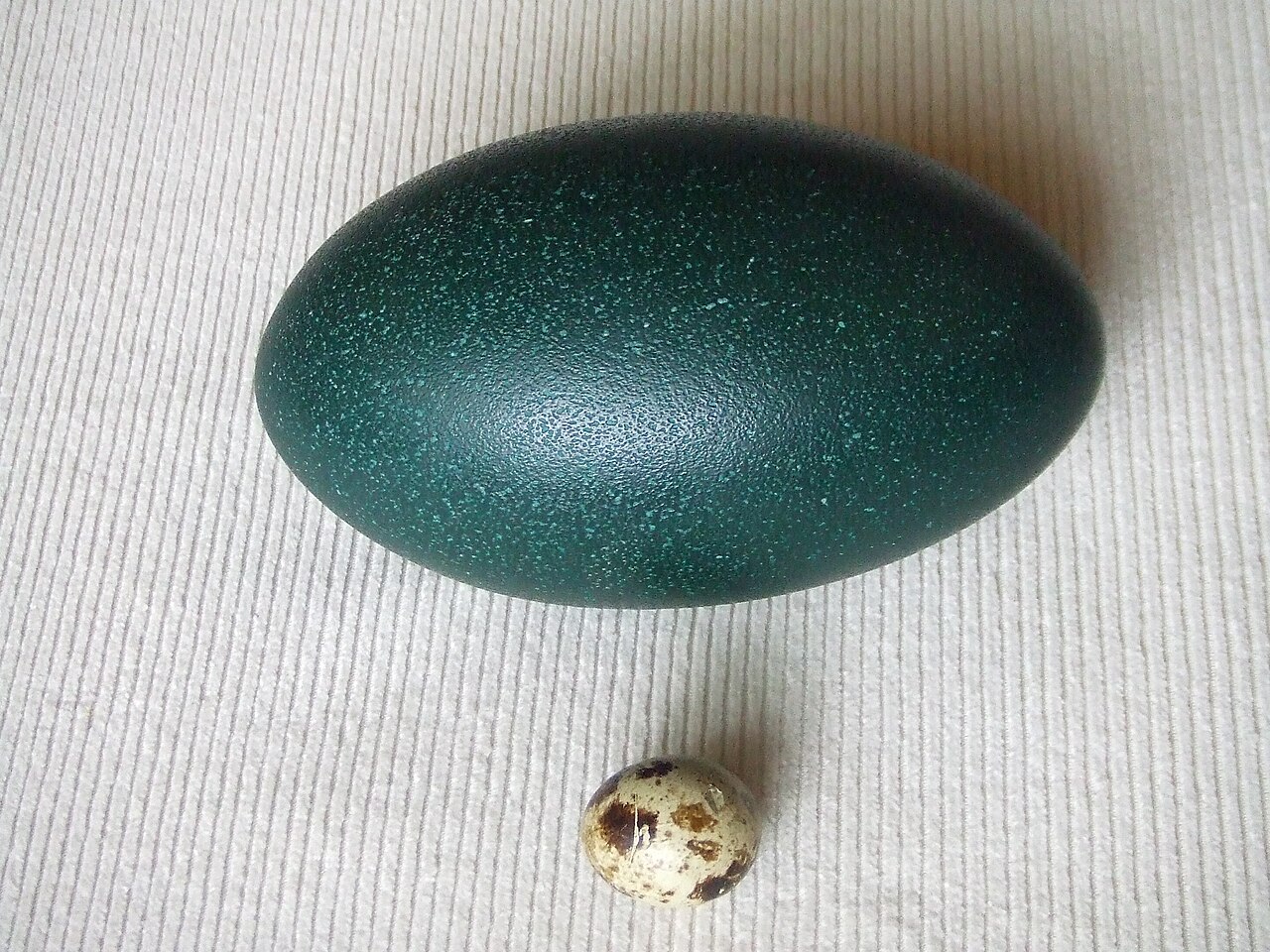
An emu egg typically measures around 5 inches long and 3.5 inches wide, roughly the size of a small softball, and weighs between 500 and 700 grams on average, or about 1.2 to 1.5 pounds. That makes it one of the largest eggs laid by any living bird, trailing only the ostrich and coming in ahead of nearly every other species on the planet.
In terms of volume, a single emu egg is equivalent to roughly 10 to 12 large chicken eggs, which is why one egg alone can feed an entire family when scrambled or baked into a large dish. Despite its size, individual eggs vary somewhat depending on the hen’s age and her point in the breeding season, with younger or first time layers often producing noticeably smaller eggs.
For comparison, an ostrich egg is larger still, though ostrich eggs have a thicker, harder shell and a lighter cream or white color rather than the emu’s dramatic green. Both belong to the ratite group of large, flightless birds, which as a family produces the biggest eggs in the bird world.
How Many Eggs Does a Female Emu Lay?
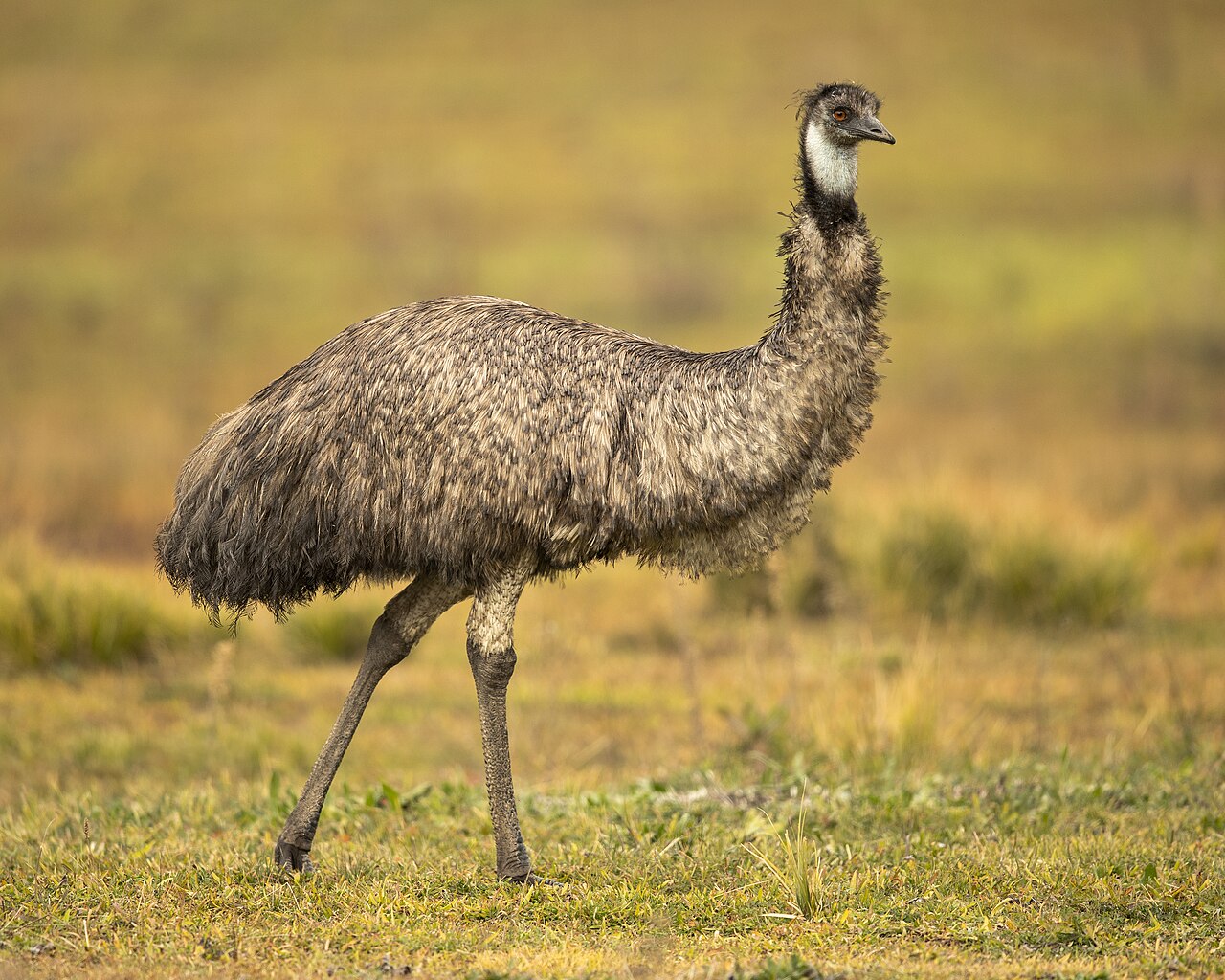
A female emu typically lays a clutch of 5 to 15 eggs during a single breeding season, usually between roughly April and June depending on region and climate, a season that overlaps closely with breeding activity in other exotic backyard species like the golden pheasant. She often returns to a similar nesting spot for each egg, though it is not unusual to find a stray egg simply left in an open area of the enclosure or range rather than gathered neatly in one nest.
Breeding season timing is closely tied to temperature and daylight changes, with cooler months triggering the onset of laying in most farmed and wild populations. Once laying begins, a healthy female can produce an egg every two to three days across the season, though this pace slows as the season progresses. This clutch size sits at the opposite end of the spectrum from smaller farmed birds like the button quail, which lays far more eggs per season but at a tiny fraction of the size and weight.
After laying is complete, the female’s role in reproduction is essentially finished. She typically leaves the nesting area to the male, who takes over sole responsibility for incubation, one of the more unusual divisions of parental labor found among birds. It is a strikingly different arrangement from ground nesting species like the wild turkey, where the female alone handles incubation from start to finish.
Emu Egg Incubation: The Male’s Extreme Sacrifice
Incubation lasts 50 to 56 days, and for that entire stretch the male emu does not leave the nest except for the briefest, most necessary breaks. He eats little to nothing and drinks almost no water throughout the process, relying instead on stored body fat, and by the time the eggs hatch he has typically lost close to a third of his total body weight.
Throughout incubation, the male methodically turns each egg several times a day, often five to ten times, to keep the developing embryo warm and evenly positioned inside the shell. He also defends the nest aggressively from predators and rarely stands up except to reposition himself or momentarily inspect the clutch.
This level of paternal investment is considered one of the most extreme examples of single parent care in the bird world. Where many species share incubation duties or trade off in shifts, the male emu manages the entire process solo, effectively fasting for nearly two months to see the clutch through to hatching.
Do Emu Eggs Hatch Successfully?
Not every fertile egg produces a chick. Hatch success across commercial and wildlife breeding operations tends to land somewhere in the range of 55 to 65 percent, influenced by factors like fertility rates, humidity control, temperature consistency, and how carefully the eggs were handled before incubation began.
One of the main tools used to track a developing egg’s health is weight loss. A healthy emu egg loses roughly 10 to 20 percent of its original weight over the full incubation period as moisture evaporates through the porous shell. Breeders weigh eggs periodically and adjust humidity levels if weight loss is running too fast or too slow.
Smoother shelled eggs tend to lose moisture more slowly than eggs with a heavily pitted, dimpled texture, since a rougher surface allows more airflow. Getting humidity and temperature both within a narrow, consistent range matters more to hatch success than any single factor on its own.
What Do Emu Chicks Look Like When They Hatch?
Emu chicks hatch fully covered in a soft, cream and brown striped down that works as effective camouflage against predators in grassland and scrub habitat. Unlike many altricial bird species that hatch blind and helpless, emu chicks are precocial, meaning they can stand and walk within minutes of hatching and begin following their father almost immediately.
The male continues his intensive parenting role well past hatching, leading chicks to food and water, teaching them what is safe to eat, and defending them from predators for up to 18 months. The striped juvenile pattern gradually fades as chicks mature, replaced by the more uniform brownish gray plumage of the adult bird.
Full adult size is generally reached by 12 to 14 months, though sexual maturity does not arrive until closer to two years of age. This extended period under paternal care is unusually long compared to most ground dwelling birds and reflects how vulnerable young emus remain during their first year of life.
Can You Eat an Emu Egg?
Yes, emu eggs are edible and are considered a genuine delicacy in some regions. The flavor is often described as richer and creamier than a chicken egg, largely because emu eggs have a noticeably higher yolk to white ratio, giving dishes made from them a denser, more custard like texture.
A single emu egg contains enough volume to feed roughly 4 to 6 people, making it well suited to large scrambled egg dishes, frittatas, or baking recipes that call for several regular eggs at once. In the United States, a single fresh emu egg intended for eating typically sells for somewhere around 30 to 40 dollars, reflecting both its size and relative rarity compared to chicken eggs.
Because fertilized hatching eggs are only available seasonally and often reserved well in advance by breeders, eating eggs and hatching eggs are generally sold and priced separately, with unfertilized or infertile eggs typically directed toward the culinary market.
Emu Egg Carving and Art
The same layered shell structure that gives emu eggs their dramatic color also makes them a popular medium for decorative carving. Artists use small rotary tools to carefully remove sections of the dark green outer layer, exposing the vivid turquoise layer underneath and creating intricate silhouette or relief designs across the curved surface.
This carving tradition has grown into a genuine art form in regions where emu farming is common, with finished pieces ranging from simple nature scenes to elaborate multi layered designs that use varying carving depths to reveal subtle color gradients between the green and blue layers.
Beyond carving, emptied and cleaned emu eggshells are also popular for painting, engraving, or simple display as a natural curiosity, prized for both their unusual size and the striking two tone color hidden inside every shell, in much the same spirit that peacock feathers are collected and displayed for their natural iridescence.
Frequently Asked Questions
What color is an emu egg?
Emu eggs are a deep emerald green, sometimes appearing nearly black, due to a pigment called biliverdin in the outer shell layer. The color fades somewhat as the egg ages or sits in sunlight.
How long does it take an emu egg to hatch?
Emu eggs take 50 to 56 days to hatch. The male incubates the egg alone for this entire period, turning it several times a day and rarely leaving the nest.
Can you eat emu eggs?
Yes. Emu eggs are edible and taste richer and creamier than chicken eggs due to a higher yolk to white ratio. A single egg can feed 4 to 6 people.
How big is an emu egg compared to a chicken egg?
An emu egg is roughly equivalent in volume to 10 to 12 large chicken eggs, typically weighing 1.2 to 1.5 pounds and measuring around 5 inches long.
Do male or female emus incubate the eggs?
The male incubates the eggs entirely on his own, without help from the female, and can lose up to a third of his body weight over the incubation period.
Are emu eggs used for anything besides food?
Yes. The layered shell, dark green outside and blue green underneath, makes emu eggs a popular medium for decorative carving, engraving, and painted artwork.
How much does an emu egg cost?
In the United States, a single fresh emu egg for eating typically sells for around 30 to 40 dollars, reflecting its large size and relative rarity compared to chicken eggs.