How to Get Rid of Japanese Beetles Without Making It Worse
The most effective way to get rid of Japanese beetles in a home garden is hand-picking them into soapy water early in the morning, when cool temperatures make them sluggish and easy to knock off plants. It sounds primitive next to sprays and traps, but university extension programs consistently rank it as the most reliable approach for small properties, and it has no effect on pollinators.
The single most important thing to know is what not to do. Japanese beetle traps use pheromone and floral lures that pull in far more beetles than they capture, and research has repeatedly shown they increase damage on the property where they are placed. This guide covers what actually works, how to treat the grub stage in your lawn, which plants they target, and why realistic expectations matter more than any product.
| Method | Verdict |
|---|---|
| Hand-picking into soapy water | Most effective for home gardens |
| Pheromone traps | Counterproductive, attracts more than it catches |
| Neem oil | Moderate, needs repeat application, evening only |
| Row covers | Effective on non-flowering crops |
| Beneficial nematodes | Effective on grubs, timing critical |
| Milky spore | Slow and unreliable in most regions |
How to Get Rid of Japanese Beetles
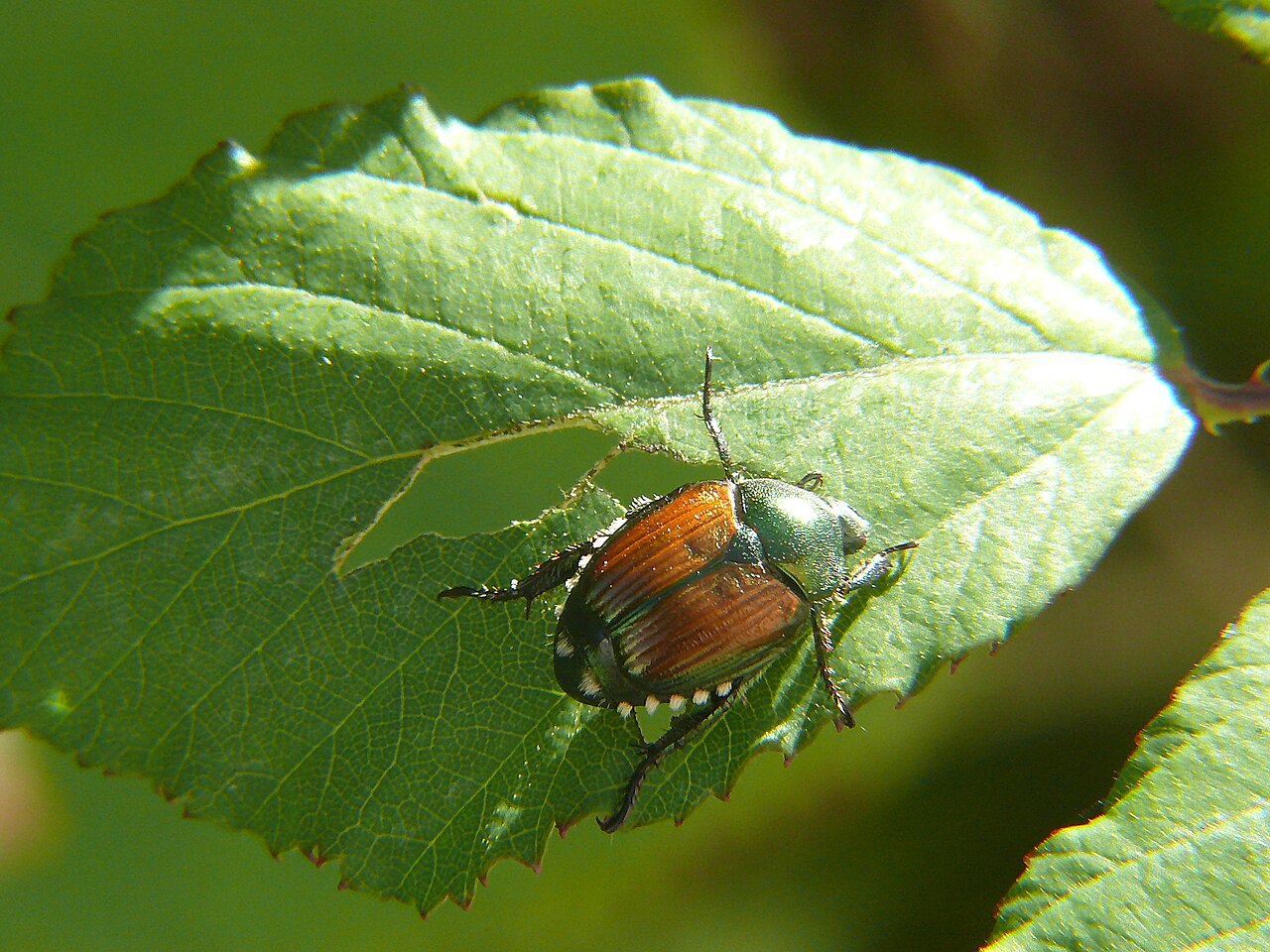
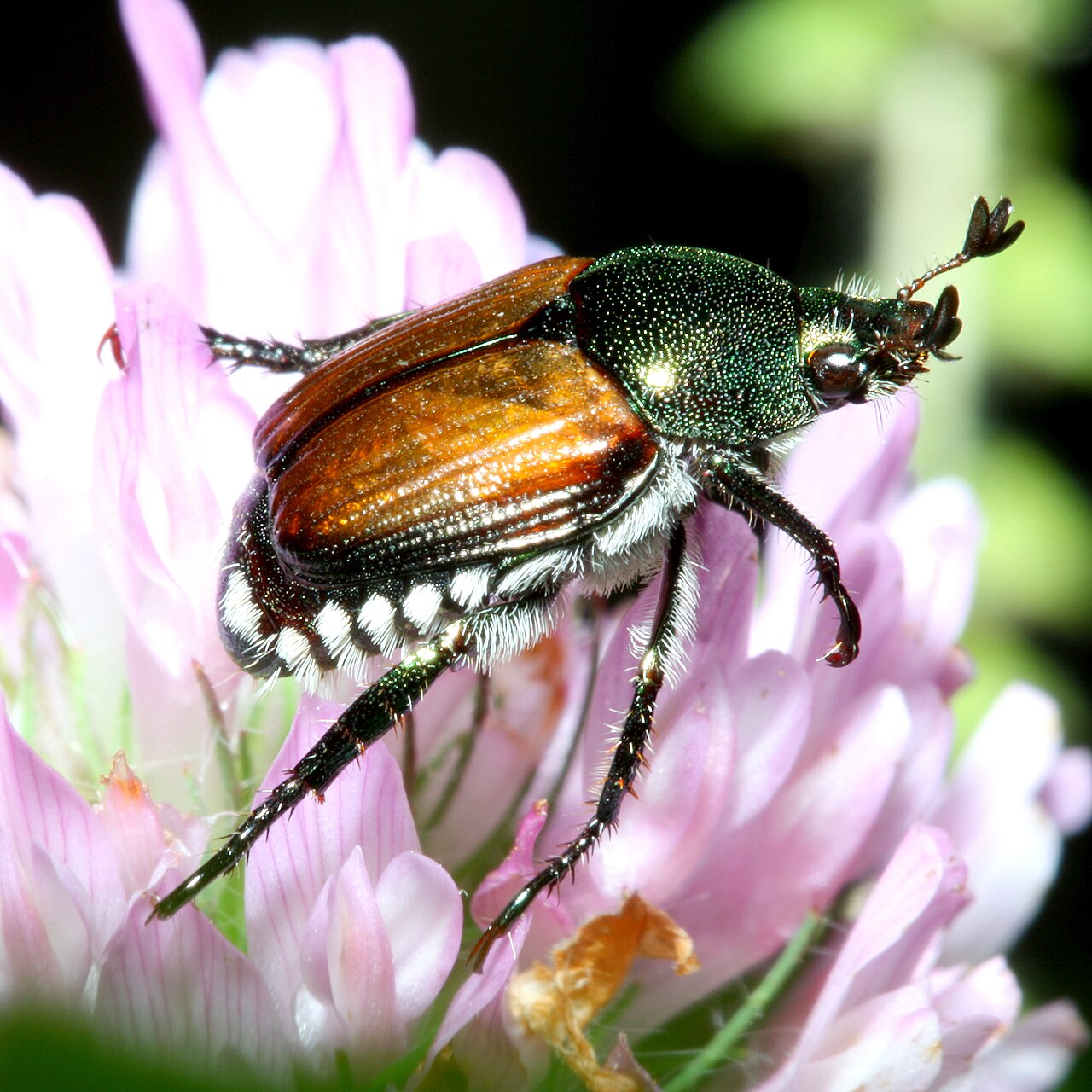
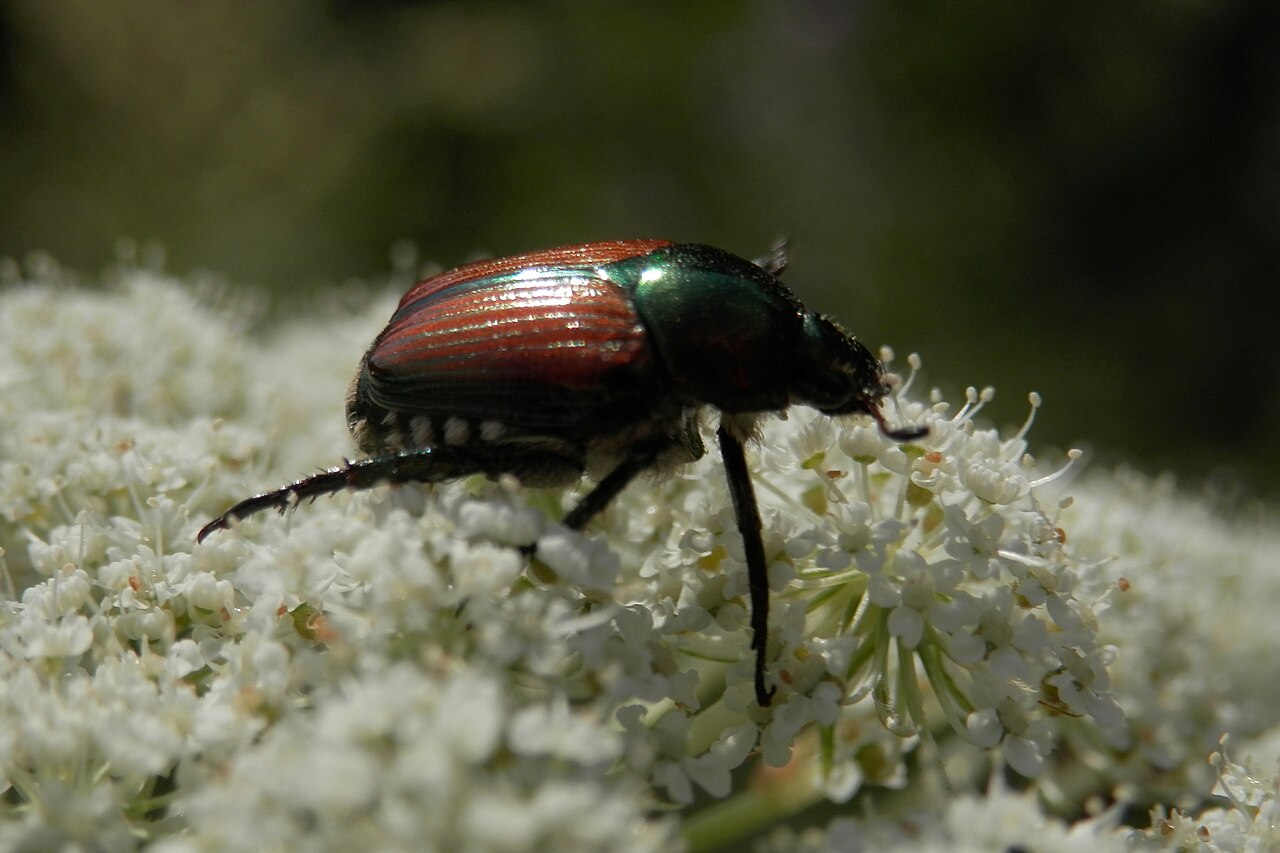
Japanese beetles (Popillia japonica) arrived in New Jersey around 1916 and have since spread across most of the eastern and midwestern United States. Adults are about 0.5 in with metallic green bodies and copper wing covers, plus five tufts of white hair along each side of the abdomen, which distinguishes them from similar-looking native beetles.
Adults emerge in early summer and feed for roughly six to eight weeks, skeletonizing leaves by eating the tissue between the veins and leaving a lace-like remnant. They feed in groups because damaged leaves release volatile compounds that attract more beetles, which is why an infestation seems to appear all at once and concentrates on a few plants.
That aggregation behavior shapes every effective control strategy. Removing beetles early reduces the chemical signal that recruits more, so acting in the first days of an outbreak accomplishes more than the same effort three weeks later. Waiting until the damage is obvious means the recruitment cycle is already running.
Hand-Picking: The Method That Works
Go out between 7 and 9 in the morning while temperatures are still low and the beetles are sluggish. Hold a bucket of soapy water under the foliage and tap or shake the branch, and the beetles drop straight in rather than flying off, which is exactly what they do later in the day.
Plain water with a squirt of dish soap is all that is needed, since the soap breaks surface tension so the beetles sink rather than crawling out. Empty the bucket well away from the garden. Do not crush beetles on the plant, because damaged beetles release the same aggregation signal that draws in more.
Consistency beats intensity. Daily collection through the six to eight week flight period keeps populations manageable on a typical home garden, and the effort drops off sharply after the first two weeks if you start early. It is tedious, it is free, and it does not harm bees, and for most home gardeners it outperforms everything sold in a bottle.
Why Japanese Beetle Traps Make Things Worse
Commercial traps combine a floral scent that attracts both sexes with a sex pheromone that attracts males, and the combination is extraordinarily effective at pulling beetles in from a wide area, sometimes several hundred yards. That part works. The problem is that a substantial fraction of the beetles drawn in never reach the trap.
Research at multiple land-grant universities has found that plants near traps sustain more damage than plants on properties without traps. The beetles arrive, encounter foliage on the way, and settle to feed instead. Placing a trap in a garden is effectively advertising the garden to every beetle in the neighborhood.
There are two narrow exceptions. Traps have a role in large-scale monitoring and survey work, where the goal is detection rather than control, and they can help if placed far from anything you value, meaning at least 200 ft away and downwind, ideally at the far edge of a large property. For a typical suburban yard, no such placement exists, and the honest advice is not to buy them.
Neem Oil and Other Sprays
Neem oil containing azadirachtin gives moderate results. It works as a feeding deterrent and disrupts development rather than killing on contact, so it will not clear an active infestation immediately, and it needs reapplication every five to seven days and after rain. Applied consistently through the flight period, it reduces damage noticeably.
Timing protects pollinators and is not optional. Spray in the evening after bees have stopped foraging, never on open flowers, and never during the day. Neem is toxic to bees while wet, and Japanese beetles concentrate on exactly the flowering plants bees visit, so careless application does real harm.
Stronger insecticides exist and carry real costs. Carbaryl and pyrethroids kill adults on contact but also kill pollinators, predatory insects, and parasitoid wasps, and they often trigger secondary outbreaks of spider mites by removing the predators that controlled them, including the beetles described in our guide to what ladybugs eat. Systemic neonicotinoids move into pollen and nectar and should not be used on flowering plants at all. Insecticidal soap and diatomaceous earth are largely ineffective against an insect this heavily armored, and homemade sprays that circulate online have no evidence behind them. The broader problem with broad-spectrum spraying shows up across pest control, as our guide to getting rid of earwigs covers.
Treating the Grubs in Your Lawn
The larval stage lives underground, feeding on grass roots and producing brown patches that peel up like carpet. Adults lay eggs in irrigated turf through mid to late summer, grubs feed through autumn, overwinter deep in the soil, and return to feed briefly in spring before pupating.
Beneficial nematodes, specifically Heterorhabditis bacteriophora, are the most reliable biological option. Apply them in late summer when grubs are small, water thoroughly before and after application, and apply in the evening because ultraviolet light kills them. They need consistently moist soil to move and infect, so a dry lawn wastes the application entirely.
Milky spore is widely sold and disappoints most buyers. The bacterium takes years to establish, works poorly in cooler northern soils, and independent trials have found inconsistent results against Japanese beetle grubs specifically. It is not the reliable long-term fix that marketing suggests. A simpler alternative is to stop irrigating the lawn during the egg-laying weeks of July and August, since eggs and newly hatched grubs die in dry soil. Accepting a dormant brown lawn for a few weeks reduces the next generation substantially.
Row Covers and Physical Barriers
Floating row covers give complete protection where they can be used. Lightweight fabric over hoops physically excludes beetles from vegetables, small fruit, and ornamental foliage, and it costs nothing beyond the material once installed.
The limitation is pollination. Anything that needs insect pollination cannot stay covered while flowering, so row covers suit leafy crops, herbs, and young plants rather than squash, cucumbers, or fruiting shrubs. Some gardeners cover during peak beetle weeks and uncover for a few hours in the morning for pollination, which is labor-intensive but workable on a small scale.
Fine mesh netting works for individual valuable plants such as a favorite rose or a young fruit tree, though it needs sealing at the base since beetles land and crawl upward. Covers must go on before beetles arrive in late June, because installing them over already-infested plants simply traps the beetles inside with the foliage.
Plants They Love and Plants They Avoid
Japanese beetles feed on more than 300 plant species, but they show clear preferences, and a handful of favorites draw the heaviest damage. Roses, grapes, lindens, Japanese maples, birches, crabapples, cherries, plums, raspberries, hollyhocks, and hibiscus sit at the top of the list, and beetles will strip these while ignoring plants a few feet away.
Some plants are consistently avoided. Lilac, forsythia, boxwood, dogwood, red maple, oak, magnolia, yew, arborvitae, holly, rhododendron, and most conifers rarely sustain meaningful damage, along with garden herbs including rosemary, thyme, and chives.
Plant selection is the only permanent solution available to a home gardener. Replacing a repeatedly destroyed linden or Japanese maple with a red maple or an oak ends the problem for that plant permanently, whereas every other method has to be repeated every summer. Where a favorite plant is worth defending, concentrate hand-picking on it and accept damage elsewhere.
Japanese Beetles in the House
Japanese beetles do not overwinter indoors, and this is a common misidentification. They spend winter as grubs in soil, and any beetle appearing in your house in autumn or winter is something else, most often an Asian lady beetle, a carpet beetle, or a ground beetle that wandered in.
The distinction matters because the fixes differ. Asian lady beetles aggregate on sun-warmed walls in autumn and enter through gaps, which our guide to the Asian lady beetle covers, while carpet beetles breed indoors on natural fibers and stored food, described in our guide to carpet beetle bites. Neither responds to Japanese beetle measures.
A genuine Japanese beetle indoors in summer flew in through an open window or door and is a stray rather than an infestation. Collect it and put it outside, or vacuum it up. If beetles are entering in numbers, check screens and door sweeps, and consider whether outdoor lighting near an entrance is drawing them. Identifying what you actually have is the first step, and our guide to the black beetle helps with the dark-shelled species people confuse most often.
Realistic Expectations
You cannot eliminate Japanese beetles from a property. Adults fly considerable distances, and beetles from surrounding yards, fields, and roadsides continually recolonize any area you clear, so even a perfectly executed grub treatment on your own lawn does not prevent adults arriving from elsewhere.
The realistic goal is damage reduction on the plants you care about. A combination of daily hand-picking during the flight period, evening neem applications on high-value plants, row covers where practical, and no irrigation during egg-laying weeks brings most home gardens to a tolerable level.
Populations also fluctuate substantially year to year, driven by rainfall during egg-laying and by natural enemies including parasitic wasps and tachinid flies. A severe year is often followed by a milder one, and avoiding broad-spectrum insecticides preserves the natural enemies that drive that decline. Neighborhood-scale coordination on grub treatment works better than any individual effort, which is worth raising if several nearby properties have the same problem.
Frequently Asked Questions
What is the best way to get rid of Japanese beetles?
Hand-picking into soapy water between 7 and 9 in the morning, when cool temperatures make the beetles sluggish. Extension programs rank it as the most reliable method for home gardens, it costs nothing, and it does not harm pollinators. Daily collection through the six to eight week flight period keeps populations manageable.
Do Japanese beetle traps work?
They attract far more beetles than they catch, and research at multiple universities has found that plants near traps sustain more damage than plants on properties without them. For a typical suburban yard there is no placement far enough away to help, so the practical advice is not to use them.
Does neem oil kill Japanese beetles?
Neem works as a feeding deterrent and development disruptor rather than a contact killer, so it reduces damage over time rather than clearing an infestation. Reapply every five to seven days and after rain, and spray only in the evening, never on open flowers, because neem is toxic to bees while wet.
How do I get rid of Japanese beetle grubs?
Apply beneficial nematodes, Heterorhabditis bacteriophora, in late summer while grubs are small, watering before and after and applying in the evening. Milky spore is widely sold but works slowly and unreliably, especially in northern soils. Withholding lawn irrigation during July and August also kills eggs and young grubs.
What plants do Japanese beetles avoid?
Lilac, forsythia, boxwood, dogwood, red maple, oak, magnolia, yew, arborvitae, holly, rhododendron, most conifers, and herbs including rosemary, thyme, and chives. Replacing a repeatedly destroyed favorite such as linden or Japanese maple with a resistant species is the only permanent solution.
Why are Japanese beetles in my house?
They are probably not Japanese beetles. This species overwinters as grubs in soil and never overwinters indoors, so autumn and winter beetles in a house are usually Asian lady beetles, carpet beetles, or ground beetles. A Japanese beetle indoors in summer is a stray that flew through an open window.
Will Japanese beetles kill my plants?
Rarely. Adults skeletonize leaves, which looks severe, but established trees and shrubs usually recover, and damage late in the season has little effect since the plant has already stored energy for the year. Young plants, newly planted trees, and repeatedly defoliated shrubs are the ones genuinely at risk.