Tomato Frog: Care, Species, and the Sticky Defense
Tomato frogs are round, bright orange-red amphibians from Madagascar, named for looking like a ripe tomato when inflated. Females reach 3 to 4 in and are considerably more colorful than males, they live 6 to 10 years in captivity, and they spend most of their time buried in substrate waiting for something edible to walk past.
Their defense is worth knowing before handling one. A threatened tomato frog inflates its body and secretes a thick white glue-like substance through the skin that is sticky enough to gum up a predator’s mouth and causes allergic reactions in some people. This guide covers the three species and which one you probably have, enclosure setup, feeding, the handling question, and the conservation issue behind the trade.
| Quick Facts | Tomato Frog |
|---|---|
| Origin | Madagascar |
| Size | Females 3 to 4 in, males 2 to 3 in |
| Lifespan | 6 to 10 years, sometimes longer |
| Enclosure | 10 to 20 gallons for one adult, floor space over height |
| Temperature | Roughly 75 to 80 F day, cooler at night |
| Handling | Minimal, secretion irritates skin |
Which Species You Actually Have
Three species share the name and the distinction matters legally rather than practically. Dyscophus antongilii is the true tomato frog, the largest and most intensely red, and it is listed under CITES Appendix I with export from Madagascar tightly restricted.
Dyscophus guineti, the false tomato frog, is the species almost everyone in the pet trade actually keeps. It is slightly smaller and typically more orange-brown than fire red, and it breeds readily in captivity, which is why it dominates the market.
Dyscophus insularis is smaller again, duller, and rare in collections. Care requirements are essentially identical across all three, so a keeper does not need to worry about husbandry differences, but anyone told they are buying D. antongilii should ask hard questions about paperwork, since legitimate captive-bred stock of that species is uncommon.
Appearance and Sexing
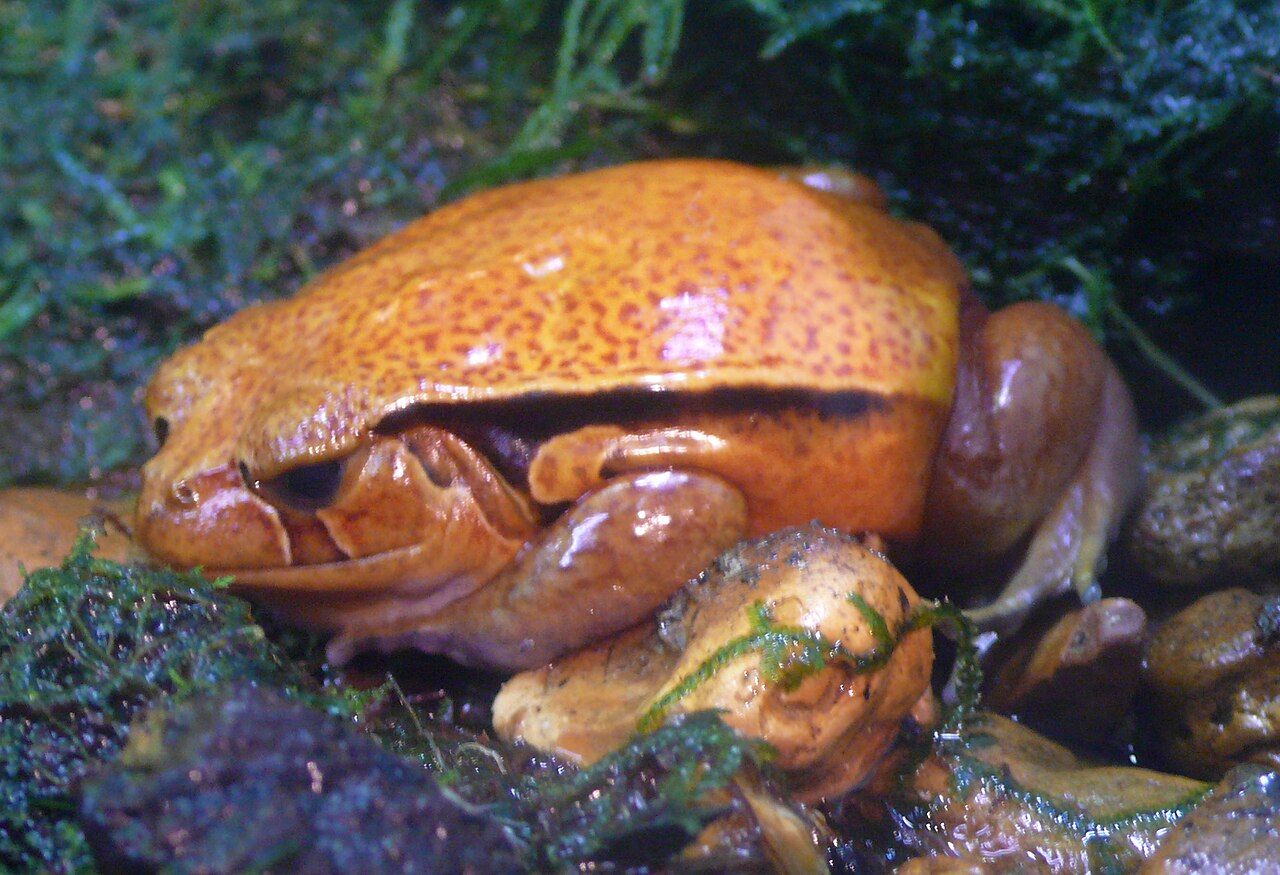
Females are the showpiece: larger at 3 to 4 in, rounder, and considerably brighter, ranging from deep orange to genuine red, with a paler cream or yellowish belly. A well-fed adult female is close to spherical.
Males are noticeably smaller at 2 to 3 in, slimmer, and duller, usually a brownish orange or yellow-orange. That size and color difference is the practical sexing method and becomes clear once the animals are mature at around a year.
Color develops with age. Juveniles are brownish and unremarkable, and the adult coloration comes in gradually over the first year or so, which means a young frog bought for its color may take time to deliver. Diet influences intensity, and carotenoid supplementation is used by some keepers to support it.
The White Secretion
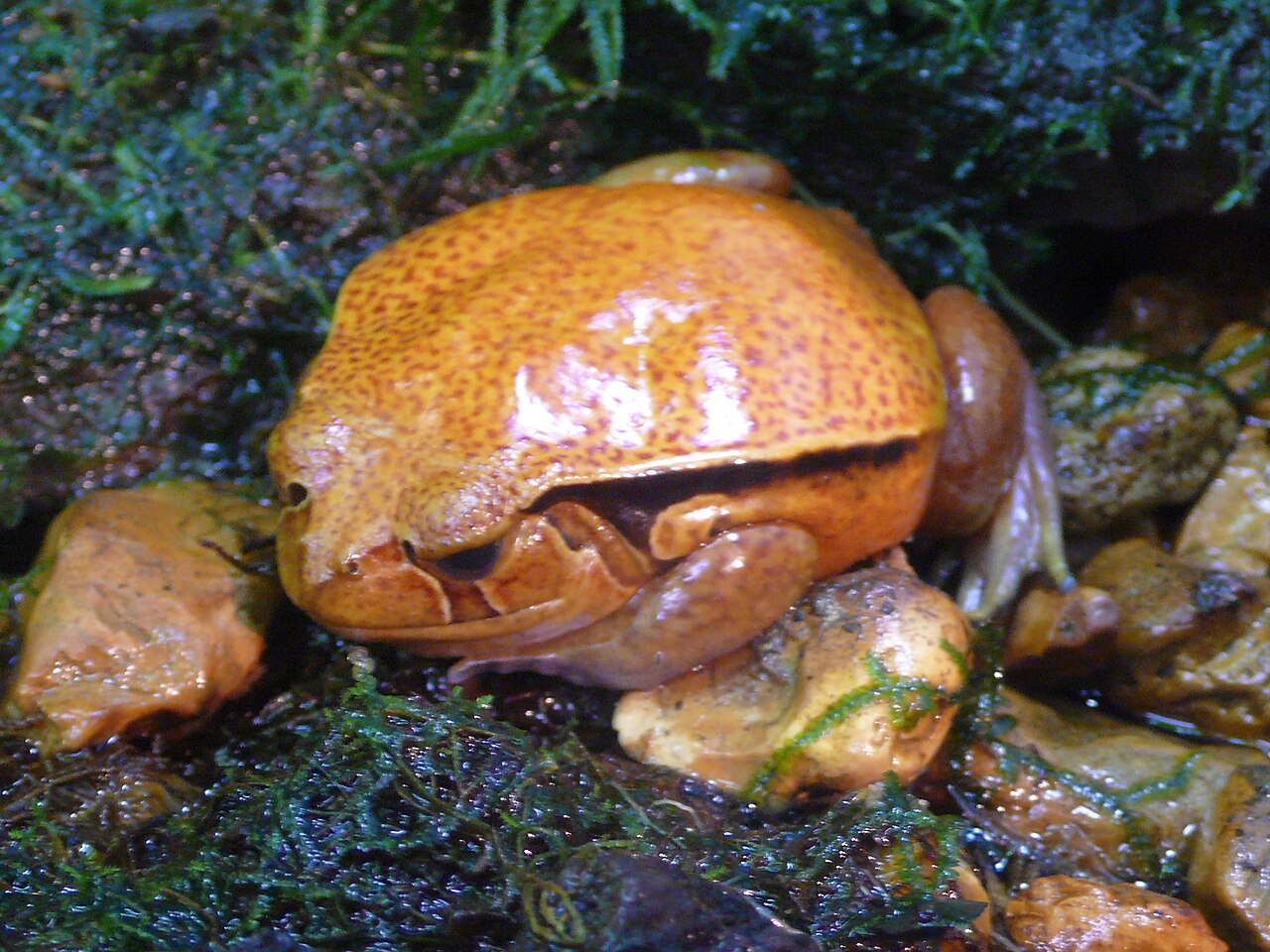
This is the defining defensive behavior and the main reason handling should be minimal. A threatened tomato frog first inflates its body substantially, making itself hard to swallow and displaying the warning coloration, and if that fails it secretes a thick white substance through the skin.
The secretion is a glue rather than a toxin in the usual sense. It is sticky enough to gum up the mouth of a snake or small predator, and the animal typically drops the frog and spends some time trying to clear it, which is exactly the outcome the frog needs.
For people it is an irritant. Contact causes allergic skin reactions in some individuals, and it should be kept well away from eyes and mucous membranes. Wash thoroughly with plain water after any contact, and if a frog has secreted, gently rinse the animal too, since the material is metabolically expensive to produce and being coated in it is not good for the frog either.
Enclosure Setup
Floor space beats height, since these are terrestrial burrowers rather than climbers. A 10 gallon tank suits one adult and a 20 gallon long is better, with a front-opening terrarium being kinder than a top-opening tank because reaching down over an animal that hides for a living causes needless stress.
Substrate depth is the critical parameter. Provide at least 3 to 4 in of loose, moisture-holding material such as coconut fiber, peat-free soil mix, or sphagnum-based substrate, because tomato frogs bury themselves for much of the day and a shallow layer leaves them exposed and stressed.
Furnish for cover rather than climbing. Cork bark, leaf litter, hides at ground level, and low broad-leaved plants all get used, while branches and vertical decor largely do not. Include a shallow water dish large enough to sit in with easy access, since these frogs absorb water through the skin rather than drinking, and change it daily because they defecate in it.
Temperature, Humidity, and Water
Temperature is undemanding by reptile standards. Aim for roughly 75 to 80 F during the day with a drop into the high 60s or low 70s at night, which most homes achieve without additional heating. Sustained temperatures above the mid-80s are dangerous.
Humidity should sit around 65 to 80 percent, maintained by misting and by keeping the substrate damp rather than wet. Waterlogged substrate causes bacterial and fungal skin infections, so the target is substrate that holds together when squeezed but releases no water, and good ventilation matters as much as the moisture itself.
Water quality is the point where inexperienced keepers cause harm without noticing. Amphibian skin absorbs whatever it contacts, so chlorine and chloramine in tap water are genuinely toxic, and every drop entering the enclosure must be dechlorinated or filtered. That applies to the water dish, the misting bottle, and anything used for cleaning, the same principle our guide to the white tree frog sets out.
Feeding
Tomato frogs are ambush predators with substantial appetites and poor judgment about portion size. Adults should eat two to four appropriately sized insects two or three times a week, and juveniles daily or every other day while growing.
Crickets and dubia roaches form the staple, with earthworms, silkworms, hornworms, and black soldier fly larvae adding variety. Prey should be no wider than the space between the frog’s eyes, since these animals will attempt to swallow items that are too large and can be injured doing so. Waxworms and mealworms are too fatty for regular use.
Supplementation matters as much as the prey. Dust feeders with calcium at most feedings and a multivitamin every few weeks, and gut-load the insects beforehand, as our guide to what crickets eat describes. Obesity is a genuine problem in this species precisely because they always look hungry and never signal fullness.
Burrowing and Behavior
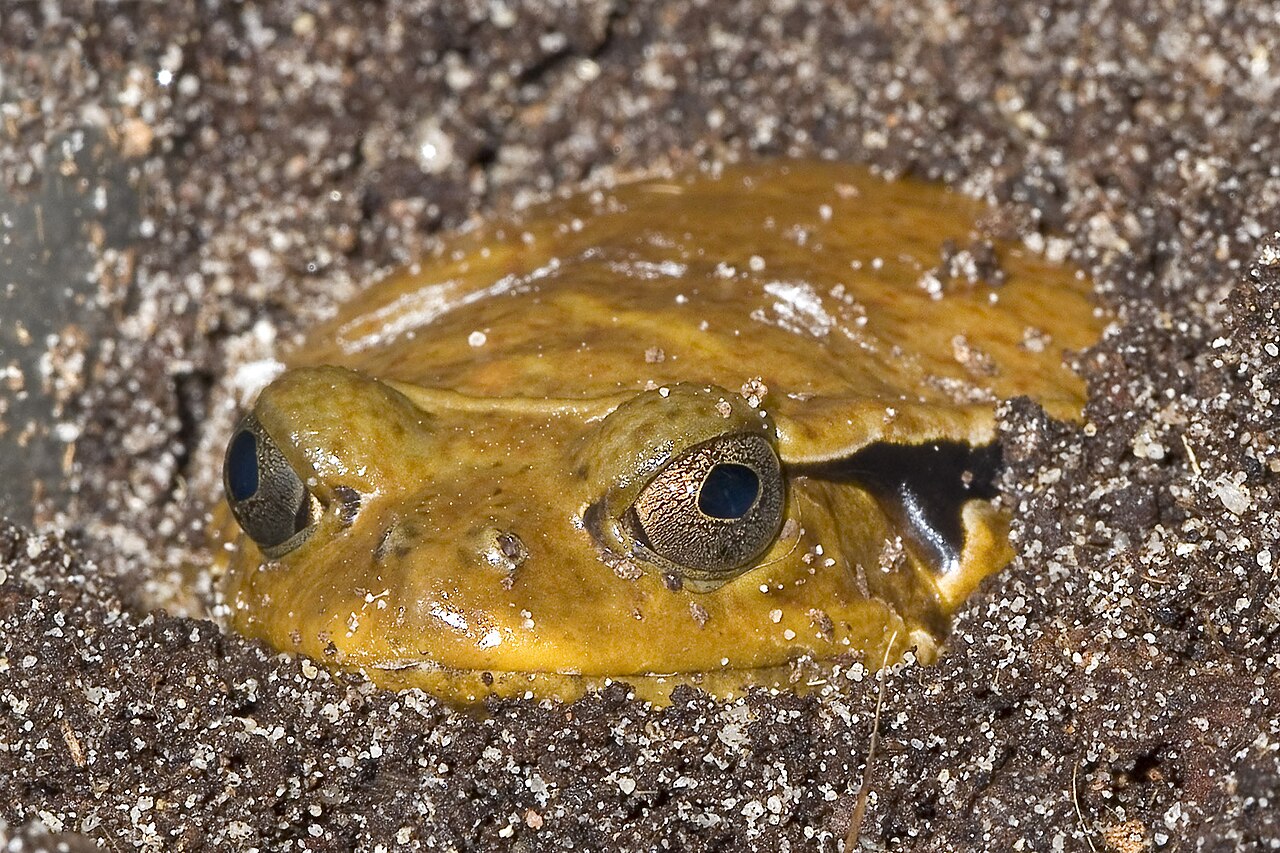
Expect to see very little of the animal. Tomato frogs are nocturnal and spend daylight hours buried with only the eyes and snout exposed, or entirely submerged in substrate, and this is normal rather than a sign of stress or illness.
Hunting is passive. They wait for prey to come within range and then lunge, using a sticky tongue, and they have no interest in chasing anything. A frog that emerges at feeding time and then buries itself again is behaving exactly as it should.
They can also aestivate. In dry conditions tomato frogs burrow deeply and become inactive for extended periods, and while a captive animal with correct humidity should not need to, a frog that buries itself for a week or two without feeding is not necessarily in trouble. Persistent refusal combined with weight loss is a different matter and warrants a reptile and amphibian veterinarian.
Handling and Health
Handle as little as possible. Beyond the secretion, amphibian skin is permeable and absorbs oils, soaps, lotions, and residues directly into the bloodstream, so any necessary handling requires hands washed with plain water and rinsed completely, wetted first to protect the mucus layer.
The common health problems are husbandry problems. Metabolic bone disease follows inadequate calcium supplementation, showing as a soft jaw, tremors, and difficulty moving. Red leg syndrome, a bacterial infection appearing as reddening on the underside, follows poor water quality or a dirty enclosure and needs veterinary treatment.
Impaction from swallowed substrate is the other frequent cause of death, and it is prevented by feeding from a dish or with tongs rather than releasing insects onto loose substrate. Chytrid fungus is a devastating amphibian disease globally, which is another reason never to release a captive amphibian or introduce wild-caught animals to a collection, as our guide to the baby frog explains.
Conservation and Sourcing
Madagascar’s amphibians face substantial pressure from habitat loss, and the true tomato frog was listed on CITES Appendix I partly in response to collection for the pet trade. That listing is the reason D. guineti dominates the market.
Buy captive-bred without exception. Captive-bred animals arrive healthier, carry fewer parasites, adapt better to enclosure life, and create no collection pressure on wild populations, and D. guineti breeds readily enough that captive-bred stock is widely available at reasonable prices.
Ask specific questions. A seller should be able to say which species they are selling, whether it was captive-bred and by whom, and roughly how old the animal is. Wild-caught amphibians frequently arrive stressed and parasitized, and the initial saving disappears into veterinary bills. Anyone comparing terrestrial amphibian options will find useful contrast in our guides to the Pacman frog and the African bullfrog, both of which are larger and considerably more demanding.
Frequently Asked Questions
Are tomato frogs poisonous?
Not in the usual sense. When threatened they inflate and secrete a thick white glue-like substance that gums up a predator’s mouth. It irritates human skin and causes allergic reactions in some people, so wash thoroughly after contact and keep it away from eyes.
Which tomato frog species is in the pet trade?
Almost always Dyscophus guineti, the false tomato frog, which breeds readily in captivity. The true tomato frog, D. antongilii, is CITES Appendix I listed with tightly restricted export, so claims of selling that species warrant hard questions about paperwork.
How big do tomato frogs get?
Females reach 3 to 4 in and are rounder and much brighter, ranging from deep orange to red. Males are smaller at 2 to 3 in and duller. Color develops over the first year, so juveniles are brownish and unremarkable.
Can you handle a tomato frog?
Minimally. Handling triggers the inflation and secretion response, and amphibian skin absorbs oils, soaps, and lotions directly. Move them with a container rather than by hand, and if you must handle one, use hands washed with plain water and wetted first.
Why is my tomato frog always buried?
Because that is normal. They are nocturnal ambush predators that spend daylight buried with only the eyes exposed, and they may stay under for extended periods in dry conditions. Persistent refusal to feed combined with weight loss is a different matter and needs a vet.
How often should I feed a tomato frog?
Adults two to four appropriately sized insects two or three times weekly, juveniles daily or every other day. Prey should be no wider than the space between the eyes. They never signal fullness, so obesity is a genuine problem in this species.
What substrate do tomato frogs need?
At least 3 to 4 in of loose moisture-holding material such as coconut fiber or a peat-free soil mix, since they bury themselves for much of the day. Keep it damp but never waterlogged, and feed from a dish or tongs to avoid substrate impaction.