What Is a Group of Vultures Called? Kettle, Committee, Wake
A group of vultures is called a kettle when the birds are circling in flight, a committee when they are perched together, and a wake when they are feeding on a carcass. This three-term system is one of the few sets of collective nouns that birders genuinely use, because each word describes a distinct and easily recognized situation. Kettle in particular is standard vocabulary at hawk watch sites across North America, applied to any raptor spiraling on a thermal.
The terms are also useful because vultures are among the most reliably social large birds in North America. Turkey vultures and black vultures roost communally in groups of dozens to hundreds, soar together in kettles that can hold thousands during migration, and gather at carcasses in numbers. Unlike the parliament of owls, which names a group that does not exist, the vulture terms describe things you can drive out and watch. This guide covers each term, its origin, and the behavior behind it.
A group of vultures is called a kettle when circling in flight, a committee when perched, and a wake when feeding on a carcass. All three are used by birders. Kettle is the most common and refers to any raptors spiraling on a thermal, from the resemblance to something boiling in a pot. Communal roosts can hold hundreds of birds.
| Situation | Term |
|---|---|
| Circling in flight | Kettle |
| Perched together | Committee |
| Feeding on a carcass | Wake |
| Nighttime gathering | Roost |
| Typical roost size | Dozens to several hundred |
| US species | Turkey vulture, black vulture, California condor |
| Legal status | Protected under the Migratory Bird Treaty Act |
Why Is a Group of Vultures Called a Kettle?
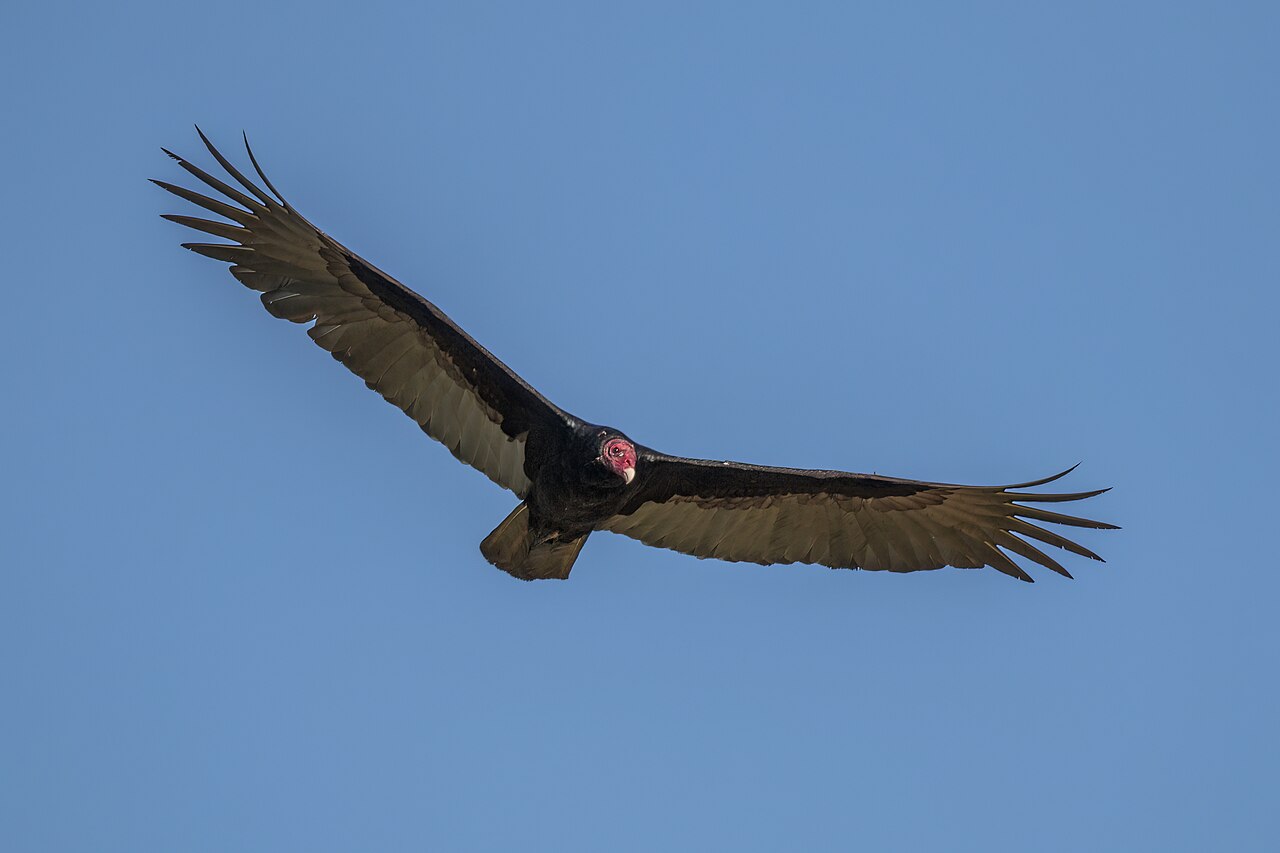
A group of circling vultures is called a kettle because the birds spiraling upward inside a column of rising air resemble something boiling and churning in a pot. The comparison is to the rolling motion of water at a boil, with individuals rising, drifting, and circling within a loosely defined column. Once you have seen a kettle from below, the name explains itself.
Kettle is real working vocabulary rather than trivia, and it is used at hawk watch sites for any raptor species riding a thermal, not only vultures. Broad-winged hawks form the most dramatic kettles in North America, with single kettles during September migration occasionally holding thousands of birds, and counts at sites such as Hawk Mountain in Pennsylvania and Corpus Christi in Texas record hundreds of thousands over a season.
The behavior behind the word is thermal soaring. Vultures have enormous wing area relative to their body weight, and rather than flapping they locate columns of warm rising air, circle within them to gain altitude, then glide down and forward to the next thermal. A turkey vulture can travel two hundred miles in a day on almost no muscular effort using this technique, which is why they rarely take flight before mid-morning: the ground has to warm enough for thermals to form.
What Is a Committee of Vultures?
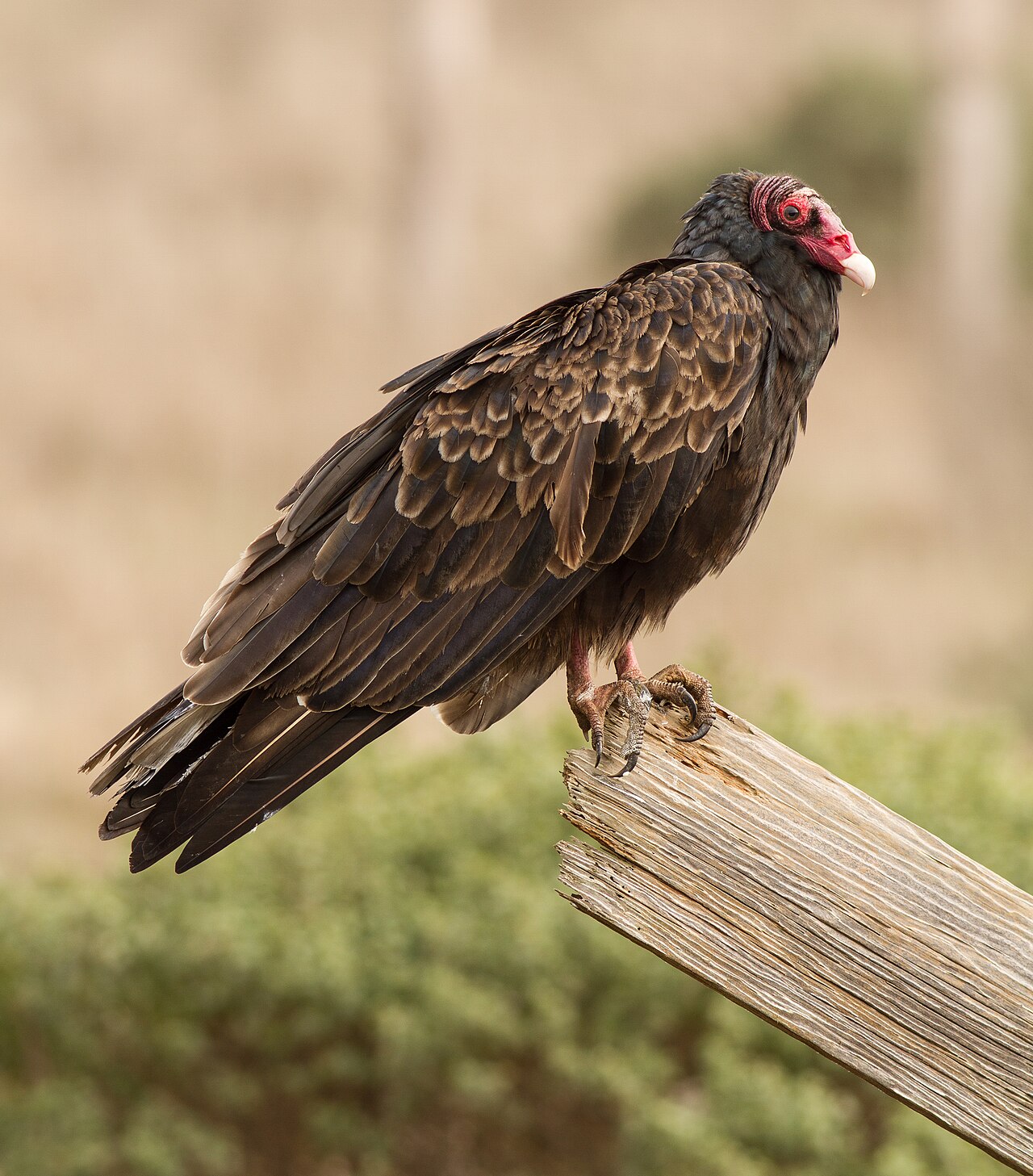
A committee of vultures is a group of vultures perched together, typically on a roof, a dead tree, a communications tower, or a fence line. The term is a joke at the expense of committees, implying a group of hunched, black-clad figures sitting around accomplishing nothing, and it has stuck because the image is so apt. Vultures perched in a row on a roofline genuinely do look like they are deliberating.
The behavior is largely thermoregulation. Vultures perch for long periods in the morning with wings spread wide in a posture called horaltic, which serves to warm the body after a cold night, dry dew from the feathers, and possibly kill bacteria on the plumage with ultraviolet light. Because they cannot soar until thermals develop, a morning committee may sit for two or three hours before the day’s first kettle forms.
Roof-perching brings vultures into conflict with people, particularly black vultures, which are more aggressive than turkey vultures and cause real damage. They pull at rubber roofing, window caulking, pool covers, and vehicle wiper blades, apparently attracted to soft rubber and vinyl. Because both species are protected under the Migratory Bird Treaty Act, harming or killing them requires a federal permit, and the legal approach is harassment with pyrotechnics, lasers, or effigies. The types of vultures guide covers the differences between the species.
What Is a Wake of Vultures?
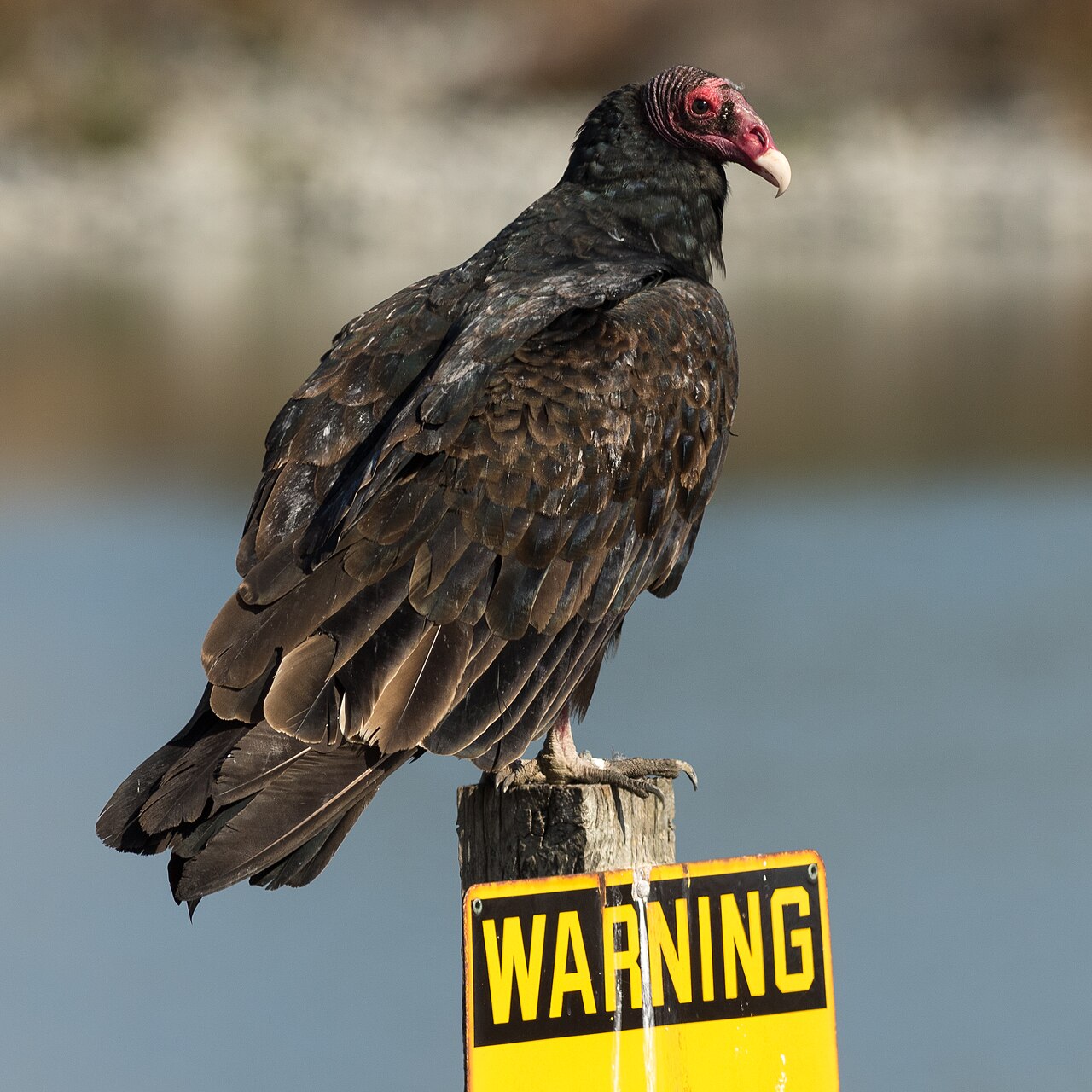
A wake of vultures is a group of vultures feeding on a carcass, borrowing the term for a gathering held over a dead body. It is the darkest of the three terms and the most obviously literary, but it names a genuine and highly structured event. Vultures at a carcass are not a disorganized mob; there is a clear dominance order, and access to the best parts is contested.
Black vultures dominate turkey vultures at carcasses despite being slightly smaller, because they arrive in larger family-based groups and are more aggressive. Turkey vultures find the food and black vultures often follow them to it, a relationship that works because turkey vultures have an extraordinary sense of smell and black vultures largely do not. The turkey vulture’s olfactory bulb is among the largest of any bird, and it can detect the gases of early decomposition from over a mile away, even through forest canopy.
Feeding is fast. A group of vultures can strip a deer-sized carcass in a few hours, and this is a genuine ecosystem service: by consuming carrion quickly, vultures remove reservoirs of anthrax, botulism, rabies, and other pathogens before they can spread. Their stomach acid is extraordinarily corrosive, with a pH near 1, which destroys most bacteria and viruses that would kill other animals. The collapse of vulture populations in India, where the veterinary drug diclofenac killed over 95 percent of three species in a decade, was followed by surges in feral dog numbers and associated rabies cases.
Is a Group of Vultures Called a Venue?
Yes, a venue of vultures appears in some collective noun lists, along with a volt and a colony, though these are far less common than kettle, committee, and wake. Venue plays on the alliteration and on the idea of a place where something happens, and volt appears to be a corruption or a variant of the same impulse. Neither is used by birders.
The three main terms are the ones that matter because each is tied to an observable situation, and using the right one is a genuine shorthand among birders. Saying you saw a kettle of thirty over the ridge tells another birder that the birds were thermalling and probably migrating. Saying you saw a committee on a barn roof tells them the birds were roosting or warming. The distinction carries real information.
The medieval collective noun lists gave vultures very little, since European vultures were not game and the birds were largely outside the world the terms of venery described. Most of the vulture vocabulary is American and relatively recent, developed by birders and hawk watchers in the twentieth century, which is exactly why it is more accurate than the fanciful medieval terms. The group of owls guide covers the opposite case, a term invented for birds that never gather.
How Large Do Vulture Groups Get?
Vulture roosts commonly hold dozens to several hundred birds, and traditional roosts used for many years can hold well over a thousand. Turkey vultures and black vultures often share roosts, gathering at dusk in dead trees, on transmission towers, and on tall structures, a habit shared with the winter crow roosts that form in the same regions, then departing in waves through the morning as thermals develop. Roost sites are used year after year and are well known to local residents, usually because of the noise, the mess, and the smell.
Migration produces the largest concentrations. Turkey vultures from the northern United States and Canada migrate to the southern states, Mexico, and South America, and at bottlenecks where the birds funnel around geography the numbers are staggering. The count at Veracruz, Mexico, known as the River of Raptors, regularly records over two million turkey vultures in a season, along with millions of broad-winged and Swainson’s hawks, as birds concentrate along the narrow coastal plain between the mountains and the Gulf.
Not all populations migrate. Turkey vultures in the southern United States are year-round residents, and black vultures are largely non-migratory and have been expanding steadily northward over recent decades, now breeding well into the mid-Atlantic and New England where they were absent fifty years ago. Milder winters and abundant roadkill are the usual explanations for the expansion.
Do Vultures Circle Over Dying Animals?
Mostly no, and this is the most persistent myth about vultures. A kettle of circling vultures is almost always birds gaining altitude on a thermal, which they do constantly as a means of travel, and has nothing to do with anything on the ground below. The image of vultures circling patiently over a dying animal comes from Westerns and cartoons rather than from observation.
Vultures do descend and circle lower over a carcass they have detected, and they will wait nearby if a larger scavenger is feeding or if they are uncertain whether an animal is dead. Turkey vultures locate food by smell rather than by watching for weakness, and the gases they detect, principally ethyl mercaptan, are produced by decomposition, meaning the animal has already been dead for some time. A vulture cannot smell an animal that is merely sick.
Black vultures are the partial exception and are known to attack live prey, particularly newborn calves, lambs, and afterbirth during calving season, which makes them a genuine agricultural problem in parts of the southeastern United States. Livestock producers can obtain federal depredation permits, and the U.S. Fish and Wildlife Service (fws.gov) administers the permitting process. This behavior is not typical of turkey vultures, which are almost entirely carrion feeders.
Why Do Vultures Roost Together?
Vultures roost communally for warmth, safety, and information. Sharing a roost reduces heat loss on cold nights for birds that cannot afford to burn energy, and a group in one tree has many more eyes watching for great horned owls and other nocturnal predators than a single bird would. The roost also functions as an information center, and this last function is the most interesting.
Carrion is unpredictable in both time and place, and a vulture that failed to find food yesterday improves its odds by following a bird that succeeded. Studies of communal roosts have found that unsuccessful birds do follow successful ones out of the roost in the morning, effectively using the group as a food-finding network. This same logic explains communal roosting in ravens and several other species that exploit scattered, ephemeral food.
Black vultures add a kinship dimension. They maintain long-term family bonds, and family groups feed and roost together, with related birds supporting each other in disputes at carcasses. Black vultures also show remarkable social intolerance toward unrelated individuals, driving them off food. This family-based social structure is unusual among birds and is one reason black vultures outcompete turkey vultures at shared resources despite the size difference. The buzzard vs vulture guide covers a related point of confusion, since buzzard means a hawk in Britain and a vulture in America.
Collective Nouns for Vultures and Other Raptors
Raptor collective nouns divide sharply into terms that describe real behavior and terms that do not. Kettle is used for any thermalling raptors and is universally understood at hawk watches. A cast of hawks refers to two birds released together in falconry and has a genuine technical origin. A wake of vultures describes an actual feeding assembly. These all survive because they earn their keep.
The rest are ornamental. Eagles get a convocation or an aerie, hawks a boil or a spiraling in some lists, falcons a cast or a bazaar, and owls a parliament. Eagles and most hawks are territorial and solitary outside of migration and concentrated food sources, so terms implying assemblies are inventions. Bald eagles are the exception, congregating in hundreds at salmon runs and open water in winter, which is a genuine aggregation without a genuine name.
What makes the vulture terms unusually good is that they were coined by people watching the birds rather than by writers compiling lists. Kettle, committee, and wake each map onto a specific behavior, and switching between them communicates something real. That is closer to how collective nouns presumably worked before they became a parlor game, and it is why the vulture set has outlasted so many prettier inventions. The group of ravens guide covers another scavenger whose collective noun everyone gets wrong, and the hawk vs eagle comparison sorts out the large soaring birds most often confused with vultures overhead.
Frequently Asked Questions
What is a group of vultures called?
A group of vultures is called a kettle when circling in flight, a committee when perched together, and a wake when feeding on a carcass. All three terms are used by birders, and kettle is the most common.
Why is it called a kettle of vultures?
Because vultures spiraling upward inside a thermal resemble something boiling and churning in a pot. The term applies to any raptors riding a thermal and is standard vocabulary at hawk watch sites.
What is a bunch of buzzards called?
The same terms apply, since buzzard is the common American name for a vulture: a kettle in flight, a committee perched, a wake at a carcass. In Britain, buzzard means a hawk rather than a vulture.
Do vultures circle over dying animals?
Almost never. Circling vultures are gaining altitude on thermals, which is simply how they travel. Turkey vultures find food by smelling decomposition gases, so an animal they detect has already been dead for some time.
What is a group of vultures at a carcass called?
A wake. Feeding assemblies are structured rather than chaotic, with black vultures dominating turkey vultures despite being slightly smaller, because they arrive in larger family groups and are more aggressive.
How many vultures roost together?
Communal roosts typically hold dozens to several hundred birds, and long-established roosts can exceed a thousand. Migration concentrations are far larger, with over two million turkey vultures counted in a season at Veracruz, Mexico.
Why do vultures roost in groups?
For warmth, predator detection, and information. Birds that failed to find food follow successful ones out of the roost in the morning, using the group as a network for locating unpredictable carrion.