Birds That Eat Flies: Which Species and How to Attract Them
The birds that eat the most flies are the aerial insectivores: barn swallows, tree swallows, purple martins, eastern phoebes, and other flycatchers, along with chimney swifts and nighthawks. These species catch flying insects on the wing and consume them in enormous numbers, with a single barn swallow taking hundreds of insects a day and a purple martin colony clearing thousands. Bluebirds, wrens, and warblers also take flies regularly, and many other birds eat them opportunistically.
The practical question behind most searches on this topic is whether attracting these birds will reduce a fly problem, and the honest answer is that it helps but does not solve it. Aerial insectivores hunt what is flying past, not what is breeding in a specific spot, so eliminating the source matters more. This guide covers which birds actually eat flies, how much they take, how to attract them, and what a realistic expectation looks like.
The main fly-eating birds are swallows, purple martins, flycatchers such as the eastern phoebe, chimney swifts, and nighthawks, all of which catch insects in flight. Bluebirds, wrens, and warblers take flies regularly too. Attracting them helps but does not replace removing what the flies are breeding in, since aerial insectivores catch whatever passes rather than targeting a source.
| Bird | How It Hunts Flies |
|---|---|
| Barn swallow | Continuous low aerial pursuit |
| Purple martin | High aerial foraging, colonial |
| Tree swallow | Aerial, often over water |
| Eastern phoebe | Sallies from a perch and returns |
| Chimney swift | Nonstop aerial feeding all day |
| Common nighthawk | Aerial at dusk and dawn |
| Eastern bluebird | Drops from a perch to ground and air |
Which Birds Eat the Most Flies?
Swallows are the most effective fly predators in most of North America. Barn swallows hunt continuously through daylight hours, coursing low over fields, water, and lawns and taking flies, midges, mosquitoes, and other small flying insects almost exclusively; flies make up a large share of their diet by frequency. A breeding pair feeding a brood makes hundreds of foraging trips a day.
Purple martins are the largest North American swallow and hunt higher, taking dragonflies, beetles, moths, and flies. They are colonial and readily use human-provided housing, which is why martin houses are a fixture across the eastern United States. Tree swallows, cliff swallows, and northern rough-winged swallows all fill similar roles in different habitats, and the types of swallows guide covers the species and where each hunts.
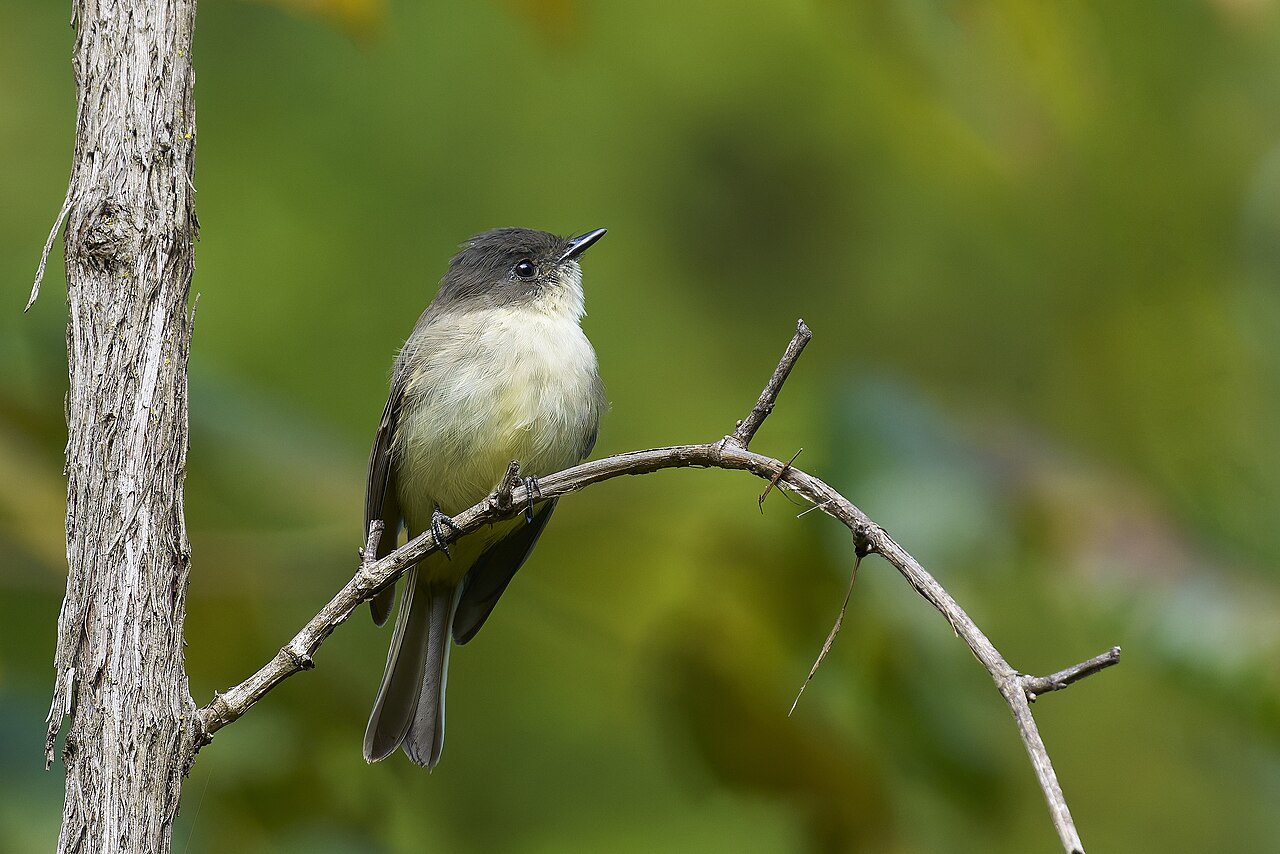
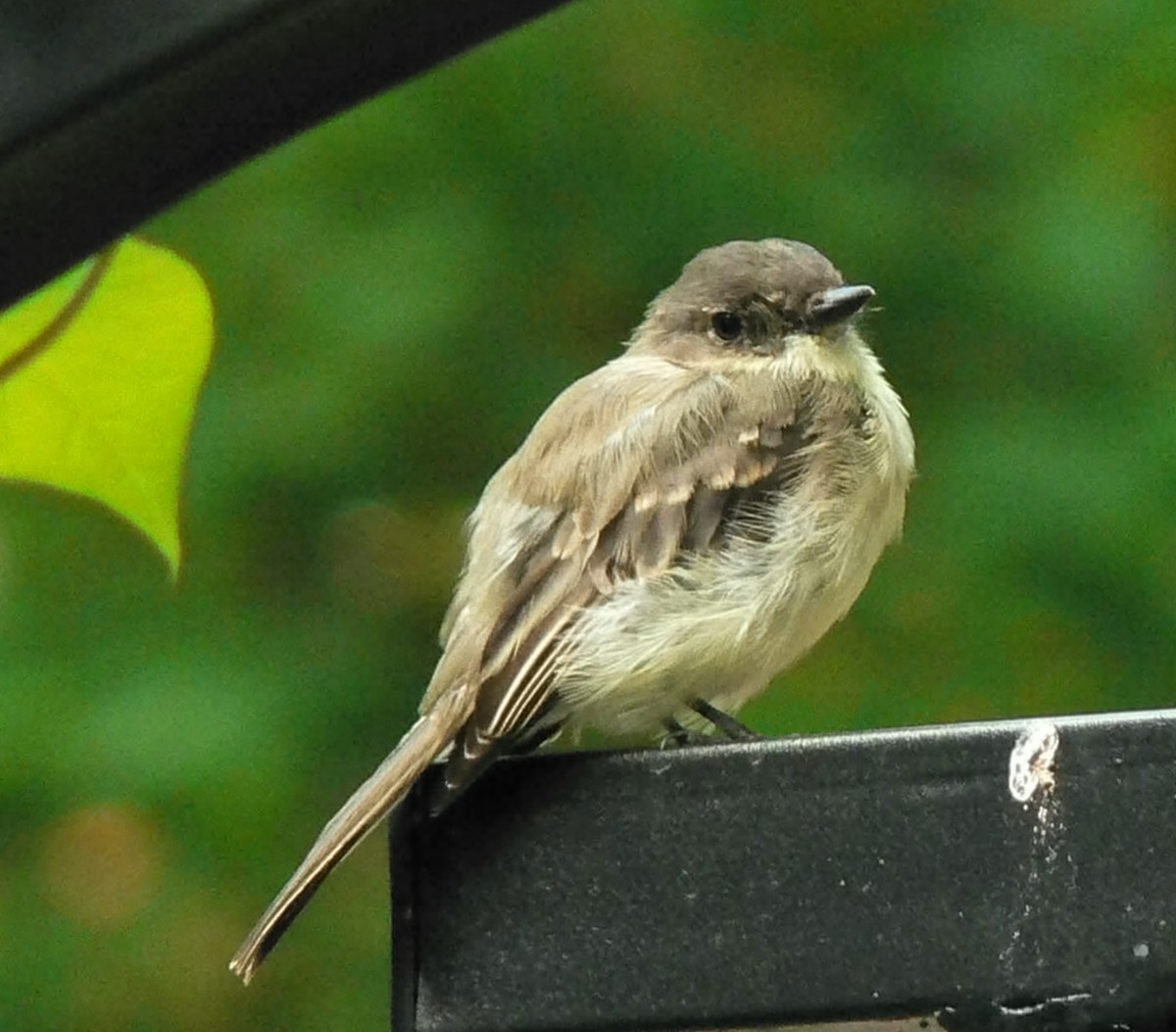
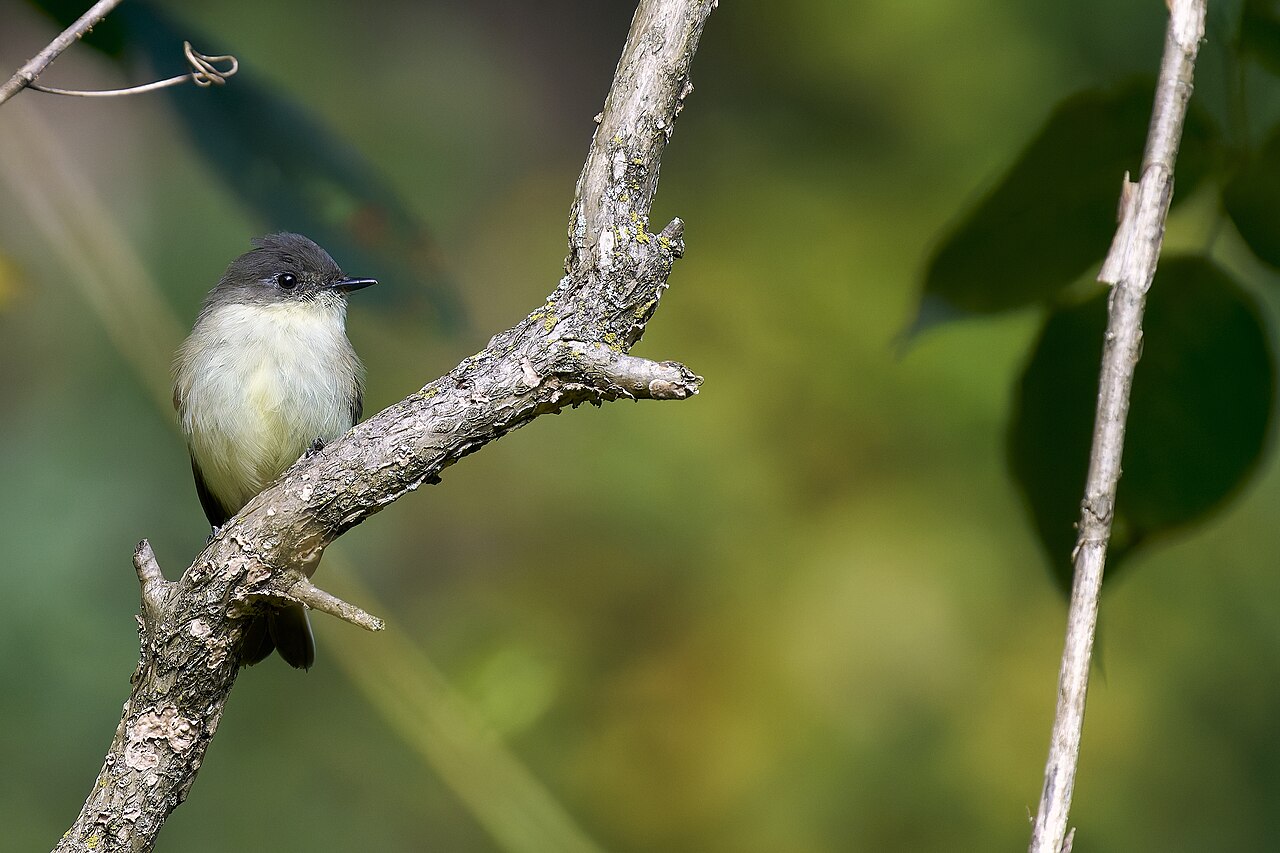
Flycatchers use a different technique. An eastern phoebe perches on a low branch, fence, or railing, watches, then sallies out to snatch a passing insect and returns to the same perch, a behavior called hawking. Phoebes are exceptionally tolerant of buildings and frequently nest under eaves, porches, and bridges, making them one of the easiest fly-eating birds to host. The eastern phoebe guide covers the species in detail.
How Many Flies Can a Bird Eat?
The numbers are substantial but frequently exaggerated online. A barn swallow eats roughly 60 insects an hour while actively foraging, which over a long summer day amounts to many hundreds, and a pair feeding nestlings delivers around 400 feeding visits daily, each carrying multiple insects. Over a breeding season one pair and their broods can account for tens of thousands of insects.
Purple martin claims deserve particular scepticism. The widely repeated figure that a martin eats 2,000 mosquitoes a day originated in marketing for martin houses and has been directly refuted by the Purple Martin Conservation Association, which notes that martins forage too high to encounter many mosquitoes and that mosquitoes form a negligible part of their diet. Martins do eat large numbers of flies and other insects; they are simply not mosquito control.
Chimney swifts feed continuously in flight from dawn to dusk and consume roughly a third of their body weight in insects daily. Nighthawks feed at dusk and dawn with a wide gape that funnels insects in, and a single nighthawk stomach examined by researchers contained several hundred mosquitoes and, in one documented case, over 2,000 flying ants. The capacity is real; the specificity to flies varies by species and by what is available.
Do Birds Actually Control Fly Populations?
Partially, and understanding the limitation matters. Aerial insectivores eat whatever flying insects pass through their hunting area, and they do not target a specific breeding site. A barn full of swallows will have fewer flies in the air than an identical barn without them, but the flies breeding in manure, compost, or a dead animal will keep producing regardless.
Research in agricultural settings does show measurable effects. Studies of swallows nesting in dairy and livestock operations have found reduced fly abundance in the surrounding airspace, and European work on birds in orchards and vineyards has documented meaningful reductions in pest insects. The effect is real and worth having, but it operates on the adult flying population rather than the reproductive source.
Source elimination remains the primary control. Removing manure, cleaning up pet waste, sealing compost, emptying standing water, fixing drainage, and managing garbage does more for a fly problem than any number of birds. The sensible approach is both: eliminate breeding sites and host the birds that take the adults. The birds that eat mosquitoes guide makes the same point about a related problem and covers why bats are often more effective there.
How Do You Attract Fly-Eating Birds?
Housing is the single most effective lever, because most aerial insectivores are cavity or ledge nesters facing a housing shortage. Purple martins in eastern North America nest almost exclusively in human-provided housing and will not colonize without it. Martin houses need open space, at least 40 feet from buildings and trees, mounted 12 to 20 feet up, and they require active management to exclude house sparrows and starlings, which will otherwise take over.
Tree swallows and bluebirds use standard nest boxes, and putting up pairs of boxes 15 to 20 feet apart lets a tree swallow pair and a bluebird pair coexist, since both will tolerate a different species nearby but not their own kind. Boxes need a 1.5-inch entrance hole for bluebirds, no perch, and predator guards on the pole. The bluebird nest box guide covers the specifications.
Barn swallows and phoebes need ledges and open structures rather than boxes. An open shed, barn, carport, or porch with a sheltered ledge, and an entrance left open, is what they require, and a simple shelf mounted under an eave is often adopted. Both build mud nests, and providing a patch of wet mud in dry weather genuinely helps. The bluebird house guide covers box selection for the cavity nesters.
What Else Do Fly-Eating Birds Need?
Insects, which means avoiding insecticides. Broad-spectrum spraying removes exactly the food supply that keeps aerial insectivores in an area, and a yard treated for mosquitoes will not support swallows or phoebes. This is the most common reason people put up housing and get no birds.
Open flight space matters as much as nesting sites. Swallows and martins hunt over open ground, water, and pasture, and a heavily wooded yard will not attract them regardless of housing. Flycatchers are less demanding and use woodland edges and gardens, which makes phoebes and other flycatchers more realistic targets for a typical suburban lot than martins.
Water helps. Swallows drink and bathe on the wing, skimming the surface of a pond or a pool, and a water feature increases the chance of birds passing through regularly. Mud for nest building is a genuine limiting factor in dry weather, and keeping a shallow muddy patch damp through the spring nesting period is a small, effective intervention.
Which Other Birds Take Flies?
A great many birds eat flies opportunistically without specializing in them. Eastern bluebirds drop from low perches to take insects on the ground and in the air, and flies form part of a diet dominated by beetles, grasshoppers, and caterpillars. House wrens and Carolina wrens glean insects including flies from foliage, bark, and structures, and both readily use nest boxes.
Warblers take enormous numbers of small insects during migration and breeding, though most are woodland birds rather than yard visitors. Chickadees, titmice, and nuthatches take flies and larvae from bark. Even birds thought of as seed eaters feed insects to their young: nearly all songbird nestlings are raised on insects regardless of what the adults eat, which is why insect availability matters for far more species than the specialists.
Poultry deserve a mention because they are genuinely effective against fly larvae rather than adults. Chickens, ducks, and especially guinea fowl scratch through manure, compost, and litter and consume maggots directly, attacking the reproductive stage that birds in the air cannot reach. In livestock operations, running poultry through the same areas is a recognized fly management technique. The guinea fowl guide covers the species most often kept for pest control.
Why Are Aerial Insectivores Declining?
Aerial insectivores are declining faster than almost any other bird group in North America, and the pattern is consistent across swallows, swifts, nighthawks, and flycatchers. Data from the North American Breeding Bird Survey, run by the U.S. Geological Survey (usgs.gov), show chimney swift populations down by over 60 percent since 1970, common nighthawks and purple martins have declined substantially, and barn swallow numbers are down sharply across much of the range.
Insect decline is the leading explanation. Studies documenting large reductions in flying insect biomass, including a widely cited German study reporting a 75 percent decline over 27 years in protected areas, point to a shrinking food supply for birds that eat nothing else. Pesticide use, particularly neonicotinoids, habitat loss, and agricultural intensification are all implicated.
Nesting sites are the second pressure. Chimney swifts lost most of their nesting habitat when open masonry chimneys were capped or replaced with metal liners, purple martins depend entirely on human housing in the east, and barn swallows need open structures that modern farm buildings no longer provide. Putting up housing, leaving a shed open, and not spraying are three genuinely useful interventions, and they are the same things that reduce flies. The birds that eat ants guide covers the wider insect-eating community.
Frequently Asked Questions
What birds eat the most flies?
Swallows, purple martins, flycatchers such as the eastern phoebe, chimney swifts, and nighthawks. All catch flying insects on the wing. A barn swallow takes roughly 60 insects an hour while foraging.
Do birds control fly populations?
Partially. They reduce the adult flies in the air but do not affect what is breeding in manure, compost, or garbage. Source elimination matters more, and the two approaches work best together.
How do you attract birds that eat flies?
Provide nesting sites: martin houses in open areas, nest boxes for tree swallows and bluebirds, and open sheds or ledges for barn swallows and phoebes. Avoid insecticides, which remove the food supply entirely.
Do purple martins eat 2,000 mosquitoes a day?
No. That figure came from martin house marketing and has been refuted by the Purple Martin Conservation Association. Martins forage too high to encounter many mosquitoes, though they do eat large numbers of flies and other insects.
Do chickens eat flies?
Yes, and more usefully they eat fly larvae. Chickens, ducks, and guinea fowl scratch through manure and compost and consume maggots directly, attacking the breeding stage that aerial insectivores cannot reach.
What is a fly’s natural enemy?
Many: aerial insectivorous birds, bats, dragonflies, robber flies, spiders, and parasitic wasps that lay eggs in fly pupae. In practice, parasitic wasps and larval predators do more to suppress populations than adult-catching predators.
Do bluebirds eat flies?
Yes, though not as a specialty. Bluebirds drop from low perches to take insects on the ground and in the air, with a diet dominated by beetles, grasshoppers, and caterpillars alongside flies.