Frog Sounds: What Each Call Means and Who Makes It
Frogs make far more sounds than the ribbit most people expect, including peeps, trills, clucks, banjo twangs, snores, quacks, grunts, barks, and screams. Ribbit belongs to one species, the Pacific tree frog of the American west coast, and it became the universal frog sound because Hollywood recorded it and used it in film soundtracks for decades regardless of where the scene was set.
Every species has its own call, which is why frogs can be identified by ear more reliably than by sight in most of North America. Males do nearly all of the calling, inflating a vocal sac to amplify the sound, and the chorus that starts on the first warm wet nights of spring is one of the clearest seasonal markers there is. This guide covers the main calls, what each means, the frog scream, and how to identify what you are hearing.
Frog sounds include peeps, trills, croaks, snores, clucks, banjo-like twangs, quacks, and screams, and each species has a distinct call. Ribbit belongs to the Pacific tree frog and spread through Hollywood soundtracks. Males call to attract females and defend territory, amplifying the sound with an inflatable vocal sac.
| Sound | Likely Species |
|---|---|
| Ribbit | Pacific tree frog (west coast only) |
| High shrill peep | Spring peeper |
| Deep jug-o-rum | American bullfrog |
| Banjo string pluck | Green frog |
| Long musical trill | American toad |
| Duck-like quack | Wood frog |
| Sudden loud scream | Any frog seized by a predator |
What Sound Does a Frog Make?
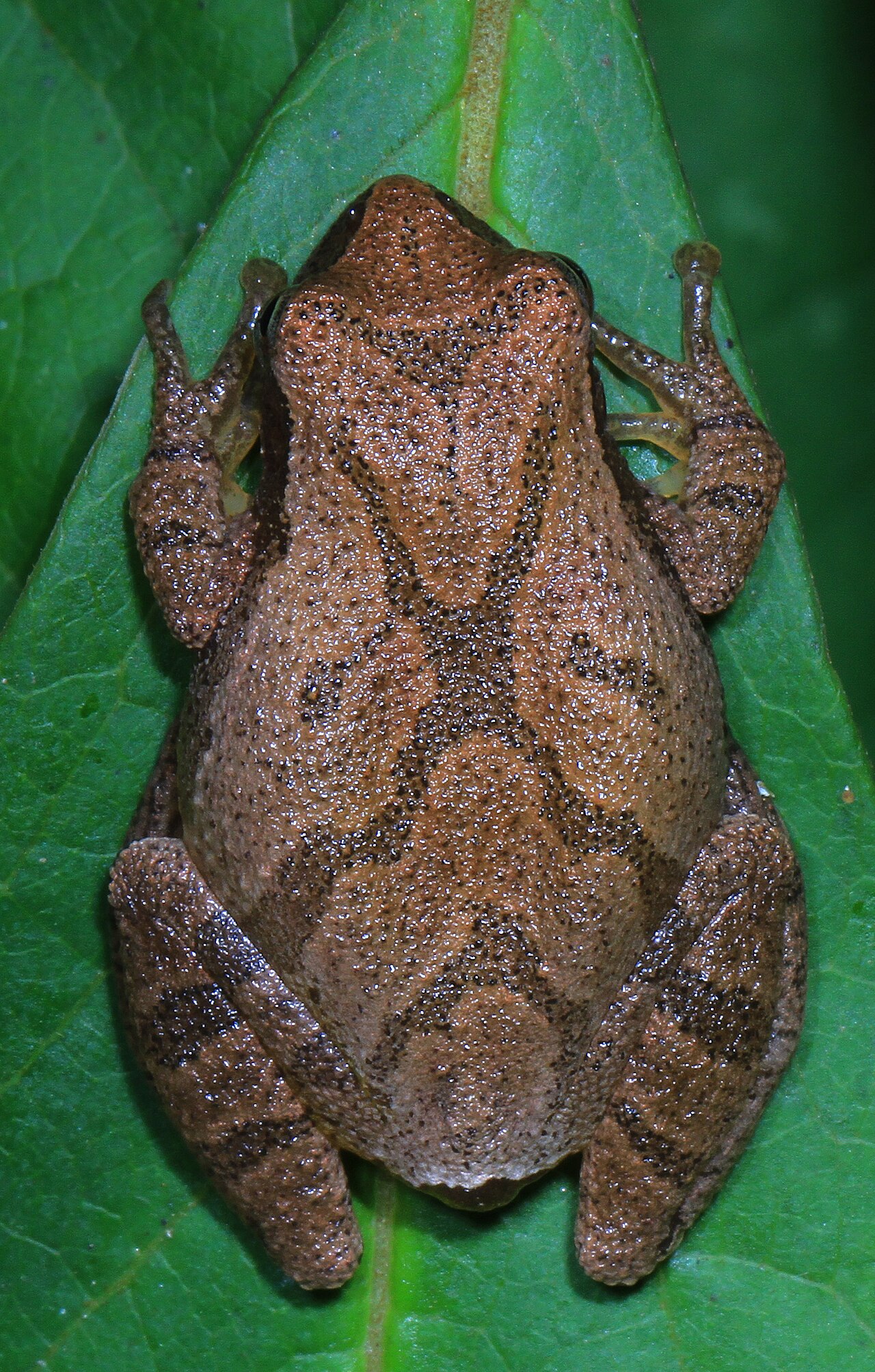
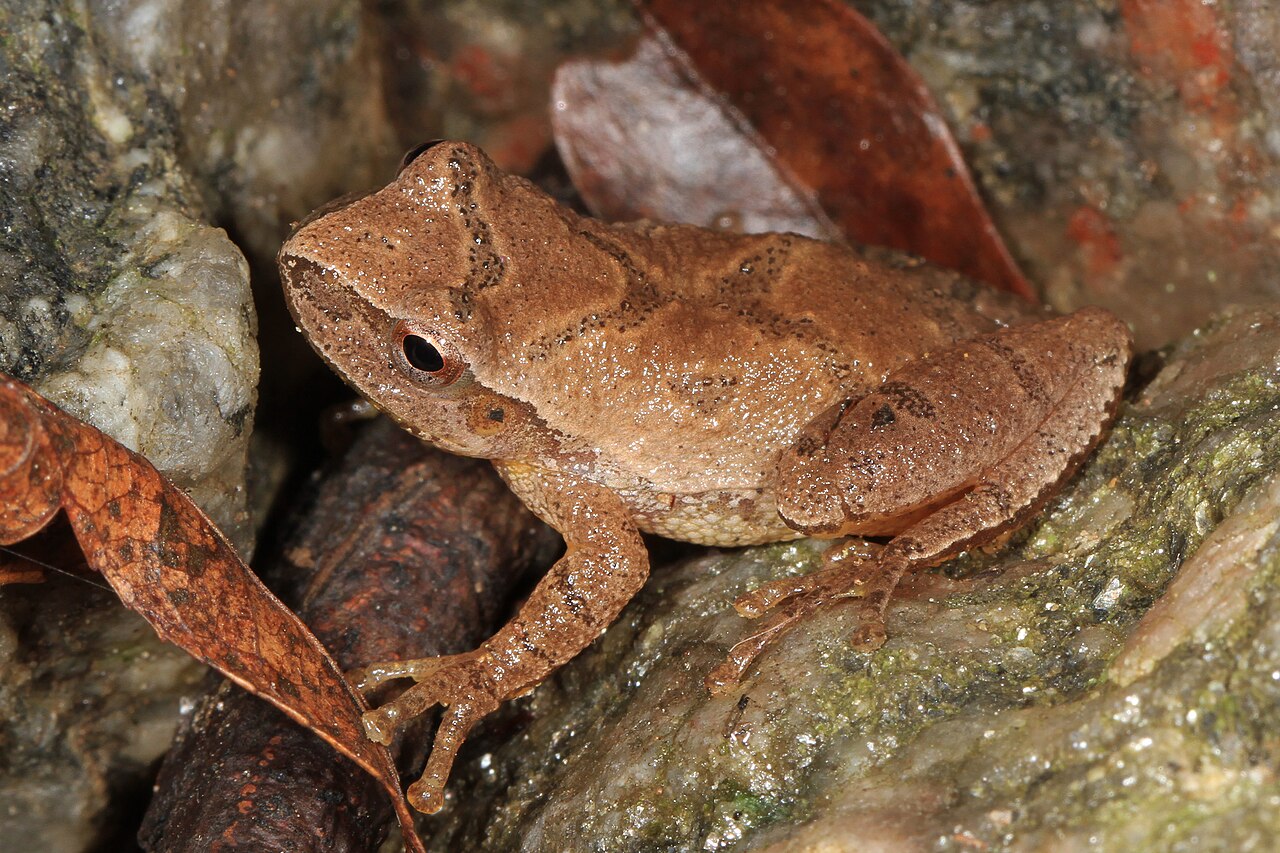
It depends entirely on the species, and the range is wider than most people expect. Spring peepers produce a piercing single peep repeated over and over, so loud from a small frog that a full chorus is painful at close range. American toads give a long, sustained, musical trill lasting up to thirty seconds. Green frogs sound like a plucked banjo string.
American bullfrogs produce the deep resonant jug-o-rum or a low bwoom that carries a quarter of a mile across water. Wood frogs cluck and quack like a distant flock of ducks. Grey tree frogs give a short birdlike trill, leopard frogs a long snore followed by chuckles, and cricket frogs a sound like two pebbles clicked together.
What almost none of them say is ribbit. That call belongs to the Pacific tree frog, a small species of the west coast, and it entered the general vocabulary through Hollywood sound libraries recorded in southern California. Frogs in films set in Louisiana, Africa, or medieval Europe have been ribbiting for eighty years. The baby frog guide covers the silent stage before any of this starts, and the African bullfrog guide covers one of the loudest species kept in captivity.
Why Do Frogs Call?
Mostly to attract mates. Male frogs produce the advertisement call, which announces species identity, location, and fitness to females and simultaneously warns rival males off a calling site. Females of most species do not call at all, and where they do it is usually a quiet reciprocal note.
Several other calls exist alongside it. A release call is given by a male grabbed by another male in a breeding scrum, essentially a signal meaning wrong species or wrong sex, and it produces immediate release. Territorial calls warn off close rivals, and encounter calls are exchanged between neighbouring males adjusting their spacing.
Chorus dynamics are worth listening for. Males in dense breeding aggregations alternate rather than overlap, since a call buried in another male’s is wasted, and they often synchronise into waves. A chorus falls silent instantly when a light, a footstep, or a predator arrives, then rebuilds from one bold individual over the following minute.
How Do Frogs Make Sound?
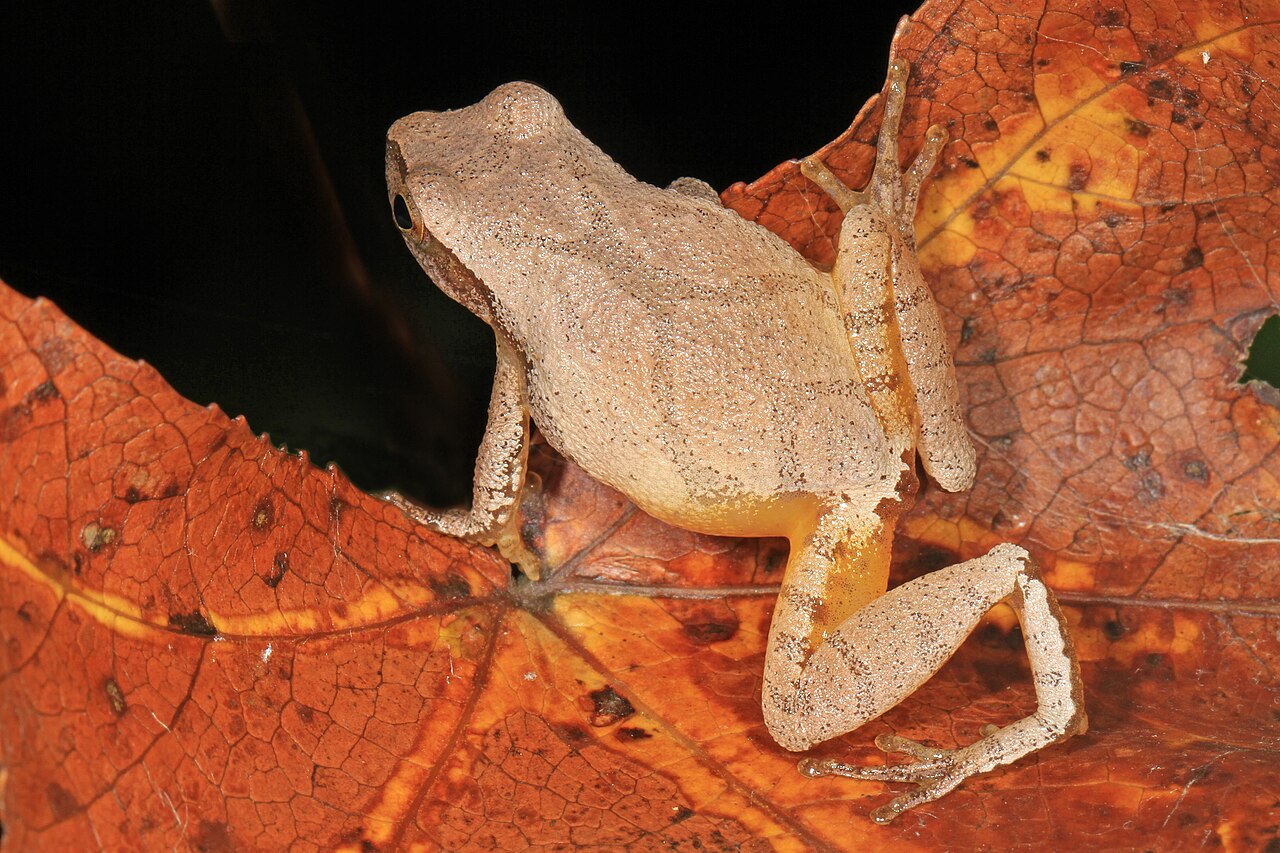
Frogs push air from the lungs across vocal cords in the larynx and into a vocal sac, a thin elastic pouch of skin under the chin or on the sides of the head that inflates like a balloon. The sac acts as a resonator, amplifying the call and radiating it outward, which is why small frogs are far louder than their size suggests.
Most of the air is recycled rather than expelled. The frog shuttles the same lungful back and forth between the lungs and the vocal sac, which lets it call continuously with its mouth and nostrils closed, and means many species can call while floating or partly submerged.
Sac shape varies and helps with identification. Some species have a single round sac under the chin, others a pair on the sides, and a few, including several tailed frogs and torrent-dwelling species, have no sac and are effectively silent because calling would be useless against the noise of rushing water. Those species communicate by touch and by chemical signals instead.
Do Frogs Scream?
Yes, and it is startling. Many frogs give a distress call when seized by a predator, a sudden loud open-mouthed scream that in larger species sounds disturbingly like a small child or a cat. It is produced with the mouth open, unlike normal calls, and both sexes make it.
The function is thought to be startling the predator into loosening its grip, and possibly attracting a larger predator that might interrupt the attack. It works often enough to persist: a snake or bird that hesitates for half a second may lose the frog entirely.
People most often hear it when a frog is caught by a cat or a snake in a garden at night, and it is the single most common reason for calls to wildlife agencies about a screaming animal. A frog that screams when picked up is not injured, it is frightened, and putting it down ends the display immediately.
When Do Frogs Start Calling?
Calling season follows temperature and rainfall, and different species come in at different points, so the chorus changes composition through spring and summer. Wood frogs and spring peepers are the earliest in most of the eastern United States, often calling in late February or March on the first warm rainy night, sometimes with ice still on parts of the pond.
Toads, chorus frogs, and leopard frogs follow through April, grey tree frogs and green frogs in May and June, and bullfrogs latest of all, with their deep calls running through the summer heat. In the south the season starts earlier and runs longer, and in the southeast some species call in almost every month.
Warm, humid, still nights after rain produce the strongest choruses, and calling usually peaks in the first few hours after dark. Cold snaps shut the chorus down completely and it resumes when temperatures rise, which is why the spring soundscape advances and retreats rather than building steadily.
How Do You Identify a Frog by Sound?
Start with rhythm rather than pitch. Ask whether the call is a single repeated note, a continuous trill, an irregular series, or a one-off, because that separates the main groups immediately. A repeated single high peep is a peeper; a long unbroken musical trill is a toad; a short birdlike trill in bursts is a grey tree frog.
Then use season and habitat to narrow it. Frogs calling in March from a shallow woodland pool are a short list; the same pool in July holds a different one. Species calling from open water, from vegetation at the edge, and from high in trees are largely different sets, and the height of the sound is a real clue.
Reference recordings settle the rest. The U.S. Geological Survey (usgs.gov) hosts the North American Amphibian Monitoring Program call library, and most state herpetological societies publish regional call guides. Once a handful of local species are learned, identifying a spring chorus by ear takes seconds. The cricket sounds guide covers the insects that share the same night soundscape.
What Is the Frog Sound Called?
The general terms are croak and croaking, and the calls themselves are called vocalisations or, in a breeding context, advertisement calls. A group of frogs calling together is a chorus, and the mass gathering that produces it is a breeding aggregation.
Individual species calls have their own descriptive names in field guides: peeping, trilling, chuckling, snoring, clucking, and grunting all appear as standard descriptions. Ribbit is not a technical term at all and does not appear in scientific literature except as a note about the Pacific tree frog.
Different languages settle on different imitations, which reveals how loose all of these words are. English uses ribbit and croak, German quak, Japanese kero kero, Spanish croac, and Thai ob ob. None of them are wrong, and none of them describe most frogs.
Why Do Frogs Suddenly Go Quiet?
Almost always a predator or a disturbance. A chorus drops instantly when a raccoon, heron, snake, or person approaches, and the silence spreads outward from the point of disturbance. It rebuilds within a minute or two once nothing further happens, starting with one male and filling in.
Weather shuts choruses down too. A drop in temperature, a rising wind, or a bright moon all reduce calling, the last probably because visibility increases predation risk. Frogs also stop calling once breeding is over for a species, which is why a pond that was deafening in April can be silent in June while a different pond nearby is not.
A pond that has gone permanently quiet across a whole season is worth noticing. Amphibians are declining globally, and the chytrid fungus Batrachochytrium dendrobatidis has caused catastrophic losses in many regions, alongside habitat loss, road mortality, and pesticide runoff. Frog choruses are a genuinely useful indicator of local wetland health. The frog poop guide covers the other signs of a frog population in a yard.
What Frogs Sound Like Something Else?
Several are regularly misidentified as birds or mammals. Grey tree frogs sound enough like a bird that people search for a nesting species in a tree that holds a frog. Barking tree frogs sound like a small dog. Carpenter frogs sound like two carpenters hammering nails, which is where the name comes from.
Wood frogs quacking in early spring get reported as ducks on a woodland pool with no ducks on it, and a chorus of them at a distance sounds convincingly like a flock. Pig frogs grunt like their namesake, and the distress scream of a large frog is reported as a cat or a child.
Working the other direction, several things get mistaken for frogs. Insects are the main culprits, with mole crickets, katydids, and some cicadas producing calls that sound amphibian, and a few birds including screech owls and woodcocks produce sounds people file as frogs. Time of year usually settles it, since insects peak long after the spring frog chorus is over. The katydid sounds guide covers the insect chorus that replaces the frogs in late summer.
Related reading: Tree Frog Sounds.
Frequently Asked Questions
What sound does a frog make?
It varies by species: peeps, trills, croaks, snores, clucks, quacks, and banjo-like twangs. Ribbit belongs only to the Pacific tree frog and spread worldwide through Hollywood sound libraries.
Do frogs ribbit or croak?
Croak is the general English term and covers all species loosely. Ribbit is the specific call of the Pacific tree frog of the American west coast and is not what most frogs sound like.
Why do frogs call?
Males call to attract females and warn off rival males. Other calls include a release call when the wrong frog is grabbed, territorial calls, and a loud distress scream when a predator seizes them.
Do frogs make a crying sound?
Yes. Many frogs give a sudden loud open-mouthed distress scream when seized, and in larger species it sounds unnervingly like a small child or a cat. It stops as soon as the frog is released.
How do frogs make sound?
Air is pushed from the lungs across vocal cords into an inflatable vocal sac that acts as a resonator. Most of the air is recycled rather than expelled, so frogs can call with mouth and nostrils closed.
When do frogs start calling in spring?
Wood frogs and spring peepers start first, sometimes in late February or March on the first warm rainy night. Toads and leopard frogs follow in April, tree frogs in May, and bullfrogs through summer.
Why did the frogs suddenly stop?
Usually a predator or a person approaching, and the chorus rebuilds within a minute or two. Falling temperature, wind, and bright moonlight also reduce calling, as does the end of a species’ breeding period.