Birds That Eat Snails: Species and Shell-Cracking Methods
The birds that eat snails include song thrushes, blackbirds, robins, starlings, crows, jays, magpies, ducks, chickens, turkeys, and two extreme specialists, the limpkin and the snail kite, which eat almost nothing else. The shell is the obstacle every one of them has to solve, and the solutions range from smashing it on a stone to extracting the animal with a hooked bill without breaking the shell at all.
Snails matter to birds for a second reason that has nothing to do with hunger. Shells are calcium carbonate, and laying females need calcium to form eggshells, so snail consumption rises sharply in the breeding season and in areas with acid soils where calcium is scarce. This guide covers the species, the shell-cracking techniques, the specialists, and what actually controls snails in a garden.
Song thrushes, blackbirds, robins, starlings, crows, jays, ducks, and chickens all eat snails, and limpkins and snail kites are near-total specialists. Thrushes smash shells against a stone anvil; snail kites extract the animal with a hooked bill. Laying females eat shells for calcium, so consumption peaks in the breeding season.
| Bird | Method |
|---|---|
| Song thrush | Smashes shells on a stone anvil |
| Blackbirds and robins | Take small snails whole or break them |
| Crows, jays, gulls | Drop shells from height onto hard ground |
| Limpkin | Extracts apple snails with a curved bill |
| Snail kite | Near-total specialist on apple snails |
| Ducks and chickens | Swallow whole; gizzard crushes the shell |
| Laying females | Eat shells for eggshell calcium |
What Birds Eat Snails?
In gardens, the thrush family does most of the work. Song thrushes are the classic snail eaters in Europe, and in North America American robins, wood thrushes, and hermit thrushes all take them, along with blackbirds, starlings, grackles, catbirds, and brown thrashers working leaf litter and mulch.
Corvids take larger snails and use gravity. Crows, ravens, jays, and magpies carry shells aloft and drop them onto rock, paving, or roads, repeating until the shell breaks, and gulls do the same with marine snails and shellfish. It is one of the more widely observed examples of tool-free problem solving in birds.
Waterfowl and poultry swallow them whole. Ducks, geese, chickens, and turkeys take snails readily and let the muscular gizzard, aided by swallowed grit, crush the shell internally, which removes the whole processing problem. That is why poultry are effective on snails in a way most songbirds are not. The guide to birds that eat slugs covers the shell-free equivalent.
How Do Birds Crack Snail Shells?
The song thrush anvil is the best-known method. A thrush carries a snail to a favoured stone, brick, or paving edge, grips it by the lip of the shell, and swings it down repeatedly until the shell shatters, then picks the animal out and wipes off the mucus. Individual birds reuse the same anvil for weeks.
The evidence is easy to find. A stone surrounded by a scatter of broken shell fragments, often of one or two species, is a thrush anvil, and it is one of the more satisfying garden signs to recognise. Thrushes learn the technique young and improve with practice, and some individuals never master it.
Dropping is the corvid and gull approach, and it is more sophisticated than it appears. Crows adjust drop height to the hardness of the surface below, dropping from lower over rock and higher over grass, and some individuals reduce height on repeat attempts to limit the chance of another bird stealing the prize. Smaller birds simply take small snails whole and let the gizzard do it.
Which Birds Are Snail Specialists?
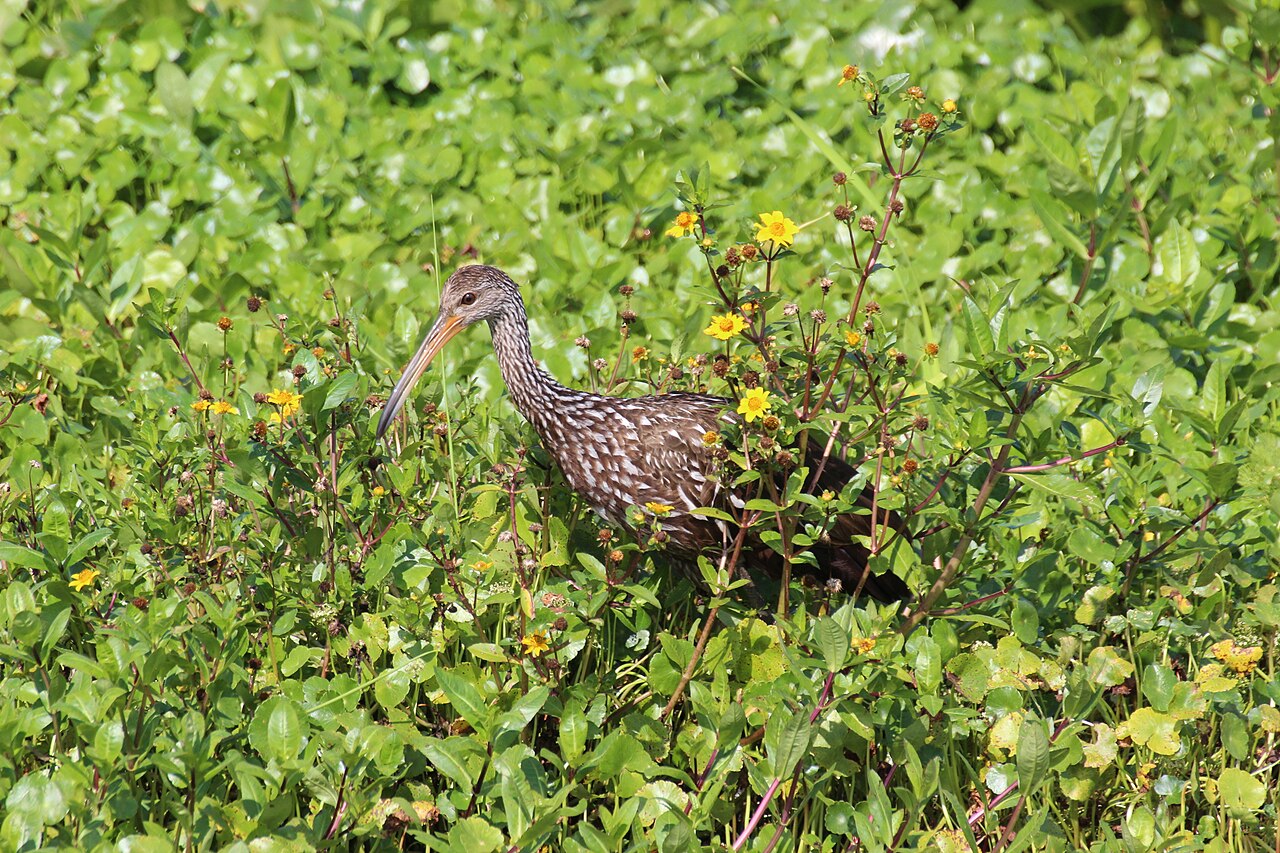
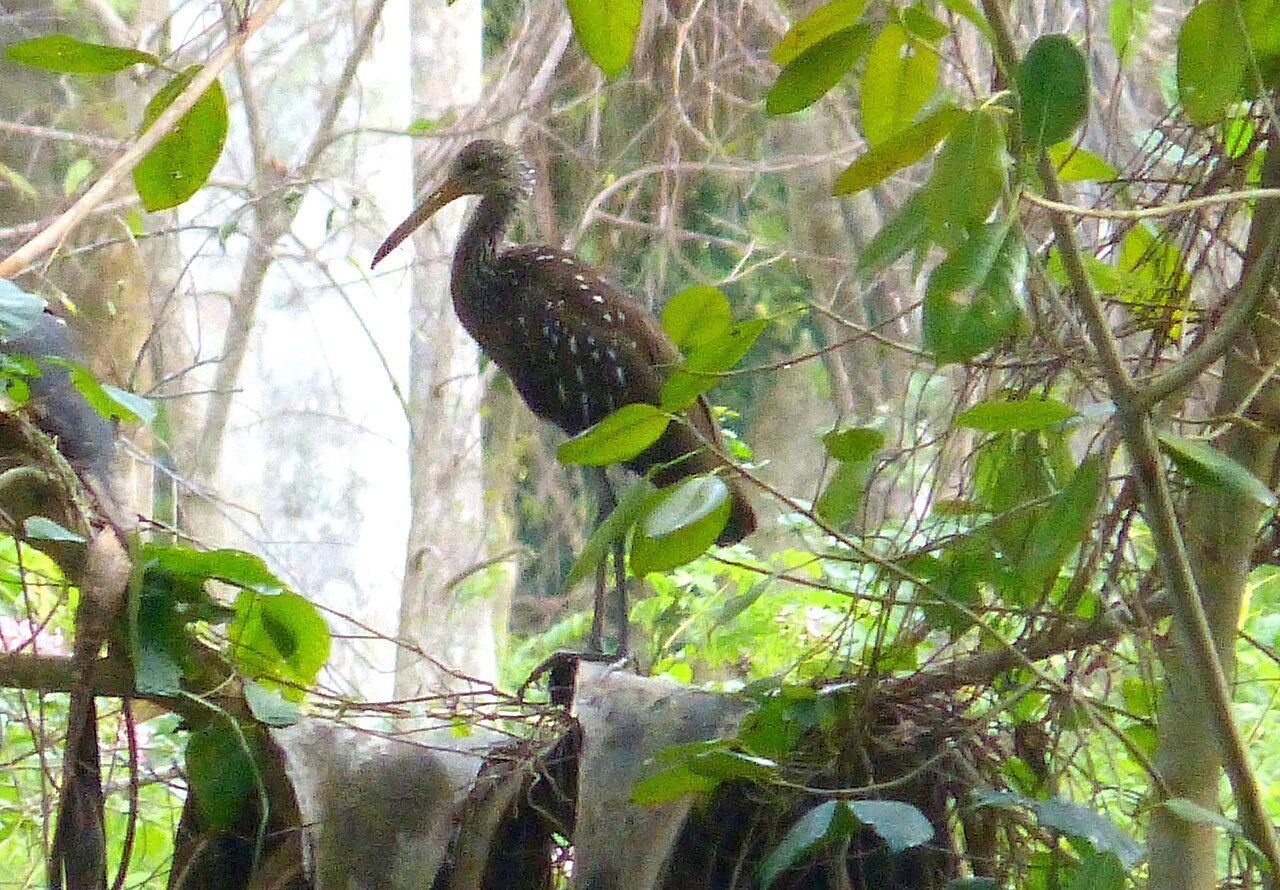
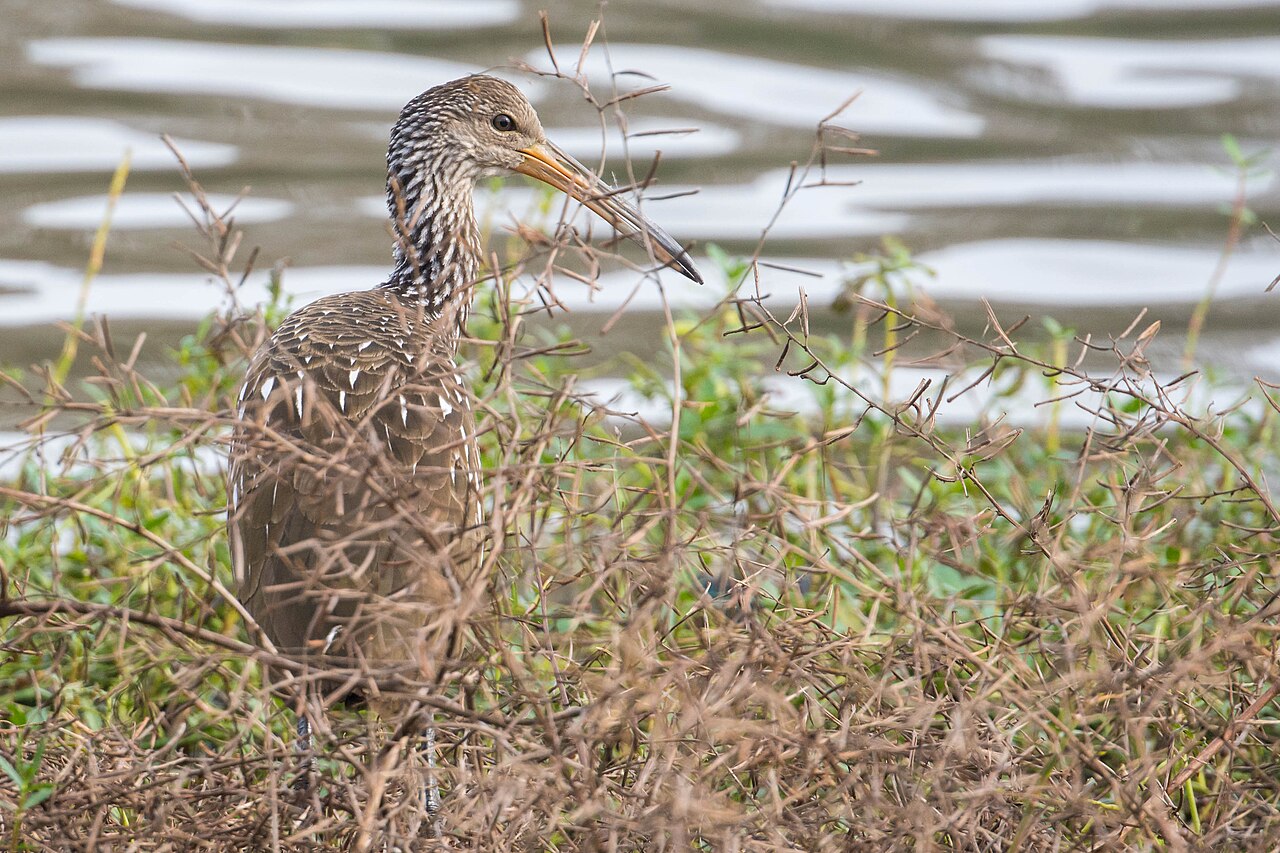
Two, and both are worth knowing. The limpkin is a long-legged brown wading bird of Florida and the American tropics that feeds almost entirely on apple snails, using a curved bill with a slight twist at the tip that fits the shell’s spiral to extract the animal without breaking it.
The snail kite is the other, a raptor of the Florida Everglades and South America with a slender deeply hooked bill built for exactly one job. It hunts apple snails from low flight over marsh, carries them to a perch, waits for the snail to relax its muscle, and extracts the body cleanly, leaving intact shells piled beneath favoured perches.
That specialisation is a vulnerability. The Everglade snail kite is federally endangered, and its population tracks water levels in the Everglades directly, since drought reduces the native apple snail. The introduced island apple snail complicated things: it is larger and harder for young kites to handle, but has also expanded the food supply in some areas, and kite bill size has been observed shifting in response.
Why Do Birds Eat Snail Shells?
For calcium. Forming an eggshell requires more calcium than a female bird can hold in her skeleton, so laying birds must take it in during the laying period, and snail shells are the most concentrated natural source available to woodland and garden birds.
The effect shows up in population data. In areas with acid soils where snails are scarce, birds including great tits have been found laying thin-shelled or defective eggs, and acid rain reducing snail populations was linked to eggshell defects in European forest birds. Adding calcium to those areas measurably improved breeding success.
This is why crushed eggshell and oyster shell put out in spring get taken so readily, and why they are worth offering. Bake and crush eggshells before putting them out, and offer them separately from seed on a flat surface. Poultry keepers make the same provision for the same reason. The guide to what bluebirds eat covers the seasonal diet shifts this sits within.
What Are Snails’ Biggest Predators?
Ground beetles and their larvae take an enormous number, along with firefly larvae, which are dedicated snail hunters that inject digestive enzymes into prey far larger than themselves. Marsh flies in the family Sciomyzidae parasitise snails almost exclusively.
Among vertebrates, besides birds, the list includes hedgehogs in Europe, shrews, mice, rats, opossums, raccoons, toads, frogs, salamanders, lizards, and several snakes, some of which are snail specialists with asymmetric jaws for extracting the animal from a right-coiling shell.
Predation pressure explains a good deal of snail biology. Thick shells, tight apertures, ribbing, and the ability to withdraw fully and seal the opening with a membrane are all anti-predator features, and species living where shell-crushing predators are common tend to have heavier shells than related species that are not. Shell colour and banding patterns in the grove snail vary geographically in ways long studied as a response to thrush predation.
Other molluscs prey on snails too. Decollate snails were introduced to California for biological control of brown garden snails and are effective enough to be regulated, since they also eat native molluscs. The rosy wolfsnail introduced to Pacific islands for the same purpose caused catastrophic extinctions among native land snails, and it is a standard cautionary example in invasion biology. The guide to what snails eat covers the animals from the other direction.
Can Birds Control Snails in a Garden?
Ducks and chickens can make a real difference; wild birds provide useful pressure but not control. Snails reproduce prolifically, hide during the day under pots, boards, and vegetation, and are largely nocturnal, which limits how much daytime bird activity can reach.
Where wild birds help most is on juveniles. Small snails in leaf litter are taken in large numbers by thrushes, blackbirds, and starlings, and that suppresses the population that reaches damaging size. A garden with a healthy ground-foraging bird population carries fewer snails than an identical one without, in the same way it carries fewer of the insects covered in the caterpillar guide.
Combining approaches works better than any single one. Encourage ground beetles and toads with cover and no pesticides, put out an anvil stone, collect under boards in the morning, water in the morning so surfaces are dry overnight, and use copper barriers on the few plants worth protecting. Skip metaldehyde pellets, which are toxic to birds, mammals, and pets alike.
Why Do Snails Suddenly Appear?
Moisture. Snails are inactive in dry conditions, sealing themselves against a surface with a membrane and waiting, sometimes for weeks, and they emerge as soon as conditions turn wet. A garden that appeared snail-free through a dry spell can be covered in them the night after rain.
New arrivals also come in on plants. Nursery pots, particularly the soil and the underside of the rim, carry snails and eggs, and a new bed planted from bought stock often brings its own population. Checking pot bases before planting takes seconds and prevents it.
Snail eggs are laid in clusters of small pearly white spheres in the top inch of soil or under debris, and a single snail can produce several hundred a year. Turning the top of soil in autumn exposes them to birds and frost, which is one of the few interventions that reduces next season’s numbers directly. University extension programmes such as UC IPM (ucanr.edu) publish regional identification and control guidance.
Are Snails Worth Having?
Most species are harmless, and a minority cause the damage. In North America and Europe, introduced species such as the brown garden snail do the bulk of garden damage, while many native snails feed on decaying material, fungi, and algae and are important recyclers.
They are also a keystone food. Snails are the calcium source underpinning eggshell formation for a wide range of woodland birds, and the food base for the specialists covered above. A snail-free garden is a garden with a nutritional gap in it, whatever else it has.
Land snails are also among the most threatened animal groups on the planet, with a very high proportion of documented modern extinctions being land snails, mostly on islands and mostly caused by introduced predators. The gap between garden pest and conservation priority is unusually wide in this group. The guide to birds that eat spiders covers the wider garden food web.
Frequently Asked Questions
What birds eat snails?
Song thrushes, blackbirds, robins, starlings, grackles, crows, jays, magpies, gulls, ducks, chickens, and turkeys, plus two specialists: the limpkin and the endangered snail kite.
How do birds crack snail shells?
Thrushes smash them against a favoured stone called an anvil. Crows and gulls drop shells from height onto hard ground, adjusting the drop height to the surface. Poultry swallow them whole and crush them in the gizzard.
Which birds eat only snails?
The limpkin and the snail kite come closest. The snail kite has a deeply hooked bill for extracting apple snails intact, and its population tracks Everglades water levels because of that dependence.
Why do birds eat snail shells?
For calcium to form eggshells. Laying females cannot store enough in their skeletons, and in acid-soil areas where snails are scarce, birds have been found laying thin or defective eggs.
What are snails’ biggest predators?
Ground beetles, firefly larvae, and marsh flies among invertebrates; birds, hedgehogs, shrews, toads, and some specialised snakes among vertebrates. Predatory snails also hunt them.
Can birds control snails in a garden?
Ducks and chickens can; wild birds provide useful pressure on juveniles but not control. Snails are nocturnal, hide by day, and reproduce fast enough to outpace daytime bird activity.
Why do I suddenly have snails?
Rain after a dry spell, since snails seal themselves up and wait out drought. New plants from nurseries also arrive with snails and eggs under the pot rim and in the soil.

Similar Posts
Why Do Birds Fly in a V Formation? The Science
Birds fly in a V to save energy and stay in contact. Here is the aerodynamics behind the V, which birds use it, and why they take turns in front.
Birds That Eat Grasshoppers: Natural Pest Control
Kestrels, shrikes, burrowing owls and turkeys eat grasshoppers heavily, and Swainson’s hawks migrate to follow them. Why almost nothing eats toxic lubbers, and what helps.
Northern Saw-whet Owl: Identification, Sounds, and Facts
The Northern Saw-whet Owl is one of North America’s smallest and cutest owls, named for its tooting call. Here is how to identify it, its migration, and why it is so hard to find.
Hanging Bird Feeders: The Complete Guide to Hardware, Placement & Setup
A hanging bird feeder is the most versatile feeder design, it works from a tree branch, a shepherd’s hook, an eave bracket, or a deck overhang, and adapts to almost any yard. The catch is that hanging feeders fail in specific ways that pole-mounted feeders don’t: they swing in wind, they’re vulnerable to climbing predators…
Blue Jay Nest: Building, Eggs, and Lifecycle
What a blue jay nest looks like, where jays build, the color and number of eggs, the hatching timeline, and who raises the young.
Buzzard vs Vulture: Why the Answer Depends on Where You Are
In America a buzzard is a turkey vulture. In Britain it is a hawk. Here is how to tell every bird apart and why vultures matter more than you think.