Betta Fish Water Temp: The Ideal Range and Why It Matters
Betta fish need water between 76 and 82 degrees Fahrenheit (24 to 28 Celsius), with 78 degrees a safe daily target. Bettas are tropical fish native to warm, slow-moving waters in Southeast Asia, and room temperature in most homes, typically 68 to 72 degrees, sits well below what they need, which is the single most common and most overlooked cause of a sluggish, sickly betta.
A heater is not optional equipment for a betta kept below about 75 degrees year-round, it is the difference between a fish that eats, swims, and builds bubble nests normally and one running a slowed metabolism that leaves it vulnerable to illness. This guide covers the ideal range, how to tell if your betta is too cold, what counts as too hot, and how to keep temperature stable.
Betta fish need water between 76 and 82°F (24-28°C), with 78°F a reliable daily target. Below 74°F their metabolism and immune system slow noticeably; above 84°F stress and reduced dissolved oxygen become concerns. A heater with a thermostat and a separate thermometer are required unless the room stays reliably in range, which most homes do not.
| Temperature | Condition |
|---|---|
| Below 74°F (23°C) | Too cold; lethargy, slowed digestion, weakened immunity |
| 76-82°F (24-28°C) | Ideal range |
| 78°F (26°C) | Safe daily target within the range |
| Above 84°F (29°C) | Too hot; stress, lower dissolved oxygen |
| Room temperature (68-72°F) | Too cold for most homes without a heater |
What Is the Ideal Betta Fish Water Temperature?
76 to 82°F (24 to 28°C), with most experienced keepers settling around 78°F as a stable daily target. This range mirrors the warm, shallow, slow-moving rice paddies, floodplains, and drainage ditches of Thailand and neighboring countries where bettas evolved.
Consistency inside that range matters more than hitting an exact number, since bettas tolerate small stable variation far better than swings from one end of the range to the other. A tank that holds steady at 77°F is in better shape than one that drifts between 74 and 82°F over the course of a day.
FishBase, the scientific fish database maintained with support from researchers at the University of British Columbia, lists Betta splendens as a tropical species from warm freshwater habitats, consistent with the aquarium temperature range keepers use in practice.
Is Room Temperature Water OK for a Betta?
Rarely, and only in consistently warm climates. Most homes maintain indoor temperatures between 68 and 72°F for human comfort, which sits several degrees below even the low end of a betta’s needed range, and a betta kept at unheated room temperature long-term will generally survive but will not thrive.
The exception is a home that naturally stays at 76°F or warmer year-round without air conditioning bringing it down, which describes some climates but very few typical households, especially once heating or cooling systems run seasonally. Testing with an actual thermometer over several days, not a guess, is the only reliable way to know.
Assuming room temperature is fine because the fish is still swimming is a common mistake, since a cold betta does not necessarily die quickly, it simply operates at reduced capacity indefinitely, which is a welfare problem even when it is not an immediately fatal one. Appetite is the easiest daily check, and the guide to what fish eat covers feeding basics that apply across most aquarium species.
How Do You Tell If Your Betta Is Cold?
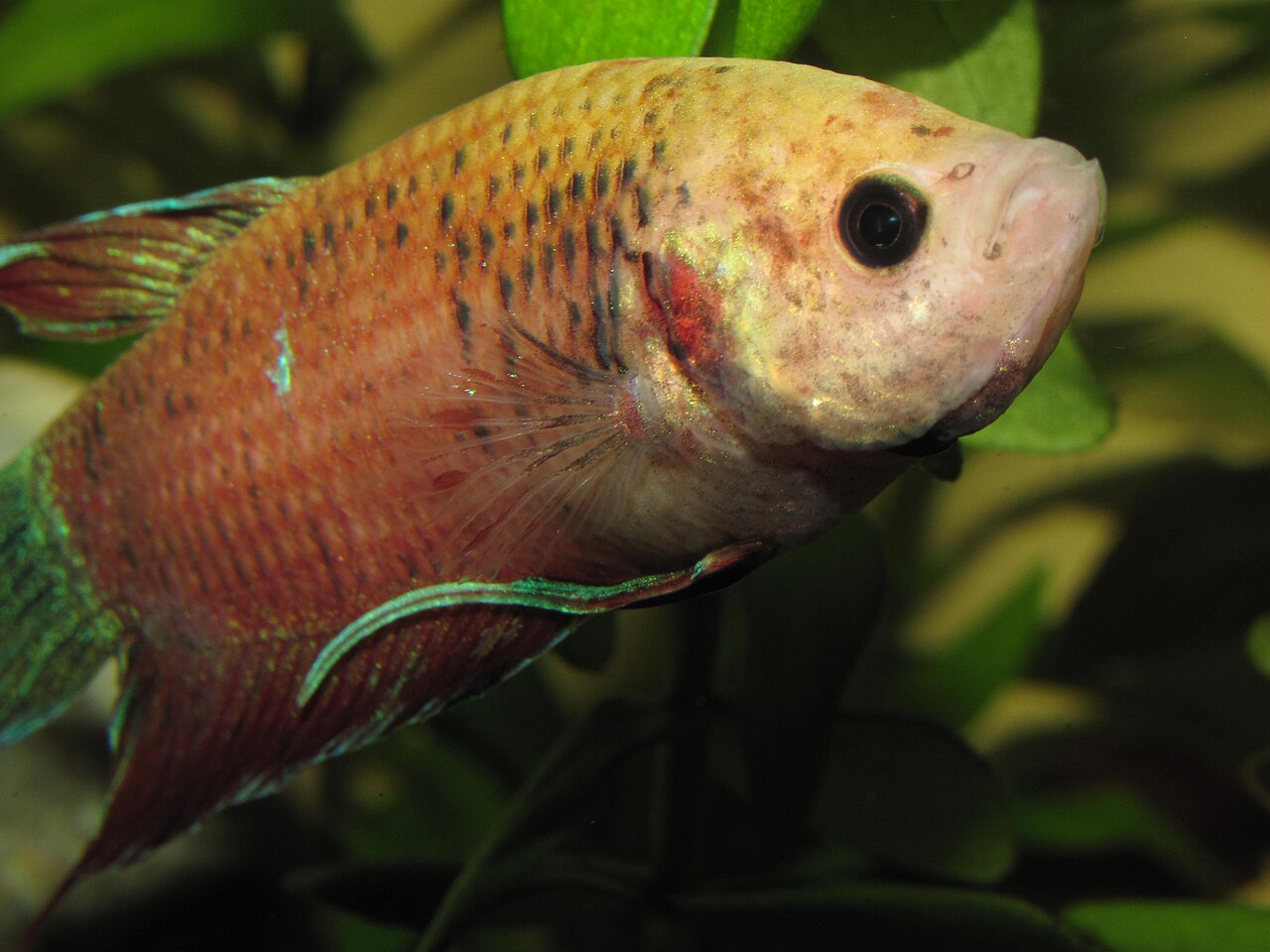
Lethargy is the clearest sign: a cold betta rests near the bottom or in one spot for extended periods, swims sluggishly when it does move, and shows far less interest in food than usual. Bettas are normally active, curious fish, so a sudden drop in activity is a meaningful signal.
Clamped fins, where the fins are held close to the body rather than flared, and faded color are secondary signs, though both can also indicate stress or illness unrelated to temperature, so they are supporting evidence rather than proof on their own. A thermometer reading is the only way to confirm temperature is the cause.
Reduced or absent bubble nest building is another indicator specific to male bettas, since nest building is tied to feeling secure and physiologically active, both of which drop off when water runs cold. A male that built nests regularly and stops is worth checking against a thermometer.
Is 82 Degrees Too Hot for a Betta?
No, 82°F (28°C) sits at the upper end of the ideal range rather than beyond it, and many betta keepers in warm climates run tanks at this temperature without issue. It becomes a concern mainly in combination with poor aeration, since warmer water holds less dissolved oxygen.
Above 82°F, into the mid-80s, metabolism speeds up further, the fish burns through energy faster, and dissolved oxygen drops enough that supplemental aeration, such as a sponge filter or air stone, becomes more important than at cooler settings. This is a management issue rather than an immediate danger at 82 to 84°F specifically.
Sustained heat above the mid-80s is where real risk starts, through a combination of oxygen deprivation and metabolic stress, which is covered next, and the same oxygen-demand logic applies to other small tropical tank fish such as those in the molly fish care guide. A single warm day is very different from a heater malfunctioning and holding a tank at 88°F for a week.
Can Bettas Survive in 85 Degree Water?
Briefly, yes, but it is stressful and not sustainable long-term. At 85°F (29°C) a betta’s metabolism runs elevated, oxygen demand rises while dissolved oxygen in the water falls, and the combination puts a strain on the fish that shows up over days to weeks rather than immediately.
Short-term exposure, such as a heater briefly overshooting during a malfunction, is generally survivable if caught and corrected promptly, and increasing surface agitation with a filter or air stone helps offset the reduced oxygen while temperature is brought back down gradually rather than suddenly.
Sustained heat in this range, over many days, is a different situation and raises real risk of stress-related illness, since a fish running at elevated metabolism continuously depletes energy reserves and becomes more susceptible to opportunistic infections. A reliable heater with a built-in thermostat, checked periodically against an independent thermometer, prevents this from happening in the first place.
Do You Need a Heater and Thermometer?
Yes, for almost every home setup. A submersible heater with an adjustable thermostat, sized to the tank volume, is the only reliable way to hold a stable temperature through daily fluctuations in room temperature, especially overnight when homes cool down and heating or air conditioning cycles run.
A separate thermometer, either a stick-on strip or a digital probe, is necessary because heater dials are frequently inaccurate by several degrees, and the only way to know actual water temperature is to measure it independently rather than trust the heater’s setting. Checking weekly catches drift before it becomes a problem.
Tank size affects heater choice directly. Small tanks under 5 gallons lose and gain heat faster than larger volumes, which means temperature swings happen more quickly in a small unheated bowl, and it is exactly these smaller setups, common as a first betta tank, where an unmonitored temperature problem develops fastest. The betta fish care guide covers full tank setup including filtration and size.
How Does Temperature Affect Behavior and Health?
Metabolism, digestion, and immune function all run on temperature in fish, unlike in warm-blooded animals, so a betta held too cold digests food slowly, which can contribute to bloating and constipation, and mounts a weaker immune response to common pathogens including ich and fin rot.
Activity level is the most visible effect. A betta in ideal temperature water is an active, inquisitive fish that responds to movement outside the tank, explores, and for males regularly builds bubble nests; a chronically cold betta becomes still, disinterested in food, and stops nest-building, changes that are frequently misread as a personality trait rather than an environmental problem.
Ich, a common parasitic infection causing white spots, is specifically more likely to take hold in a stressed, cold betta with reduced immune function, which is part of why sudden temperature drops, such as a heater failing overnight, are a recognized trigger for disease outbreaks in aquarium fish generally.
What Else Stresses Out a Betta Fish?
Temperature swings are one stressor among several, and water quality is arguably the more common issue in practice. Ammonia and nitrite from an uncycled or overstocked tank, infrequent water changes, and a tank too small for adequate stable conditions all produce the same lethargy and clamped fins that cold water does.
Tank mates and space matter too. Bettas are territorial, particularly males, and housing two males together or crowding a small tank causes constant low-grade stress even with perfect temperature and water quality, showing up as aggression, hiding, or the same withdrawn behavior seen with cold water.
Strong current from an oversized filter outlet is a less obvious stressor, since bettas evolved in slow-moving water and are not strong swimmers relative to many aquarium fish; a filter that constantly pushes them around the tank produces visible fin damage and exhaustion over time, addressed by baffling the outflow rather than removing filtration entirely.
How Do You Tell If a Betta Is Happy?
An active, responsive fish that swims through the whole tank rather than staying in one spot, eats readily at feeding time, and for males, regularly builds bubble nests at the surface, which signals both good water conditions and a sense of security rather than stress.
Color is a secondary indicator. A content, healthy betta typically shows fuller, brighter color and flared fins during normal activity, though color can also change with mood, lighting, and age independent of overall welfare, so it supports other signs rather than standing alone.
Curiosity toward the world outside the tank, following a finger or reacting to movement nearby, is often cited by keepers as a sign of engagement, and while it is not a formal welfare metric, a betta that has stopped responding to its surroundings entirely is worth checking against temperature, water quality, and tank mates in that order. The female betta fish guide covers behavior differences between males and females, and the betta lifespan guide covers what changes to expect with age.
What Temperature Swings Should You Avoid?
Anything faster than about 2 to 3 degrees Fahrenheit per hour, since rapid temperature change is more stressful to fish than a stable temperature at either end of their tolerable range. This applies to water changes as much as to heater malfunctions.
Cold tap water added directly during a water change is a common source of exactly this kind of shock, so replacement water should be brought close to tank temperature before adding it, either by letting it sit or by mixing warm and cold tap water to match a thermometer reading rather than guessing.
Seasonal transitions, particularly when heating systems switch on for the first time in autumn or off in spring, are worth an extra temperature check that week specifically, since ambient room temperature can shift several degrees within days even though the tank heater is doing its job, and a heater sized for a warm room can occasionally struggle to keep pace during a sudden cold snap.
Frequently Asked Questions
What temperature should betta fish water be?
Between 76 and 82°F (24-28°C), with 78°F a safe daily target. A heater with a thermostat is needed in most homes to maintain this consistently.
Is room temperature water OK for a betta?
Usually not. Most homes run 68 to 72°F, which is below what bettas need, so a heater is required unless the room naturally stays above 76°F year-round.
How can you tell if your betta is too cold?
Lethargy, sluggish swimming, reduced interest in food, clamped fins, and for males, stopping bubble nest building. Confirm with a thermometer rather than guessing from behavior alone.
Is 82 degrees too hot for a betta?
No, it is within the ideal range. Concerns start above the mid-80s, where dissolved oxygen drops and metabolism runs elevated for extended periods.
Can bettas survive in 85 degree water?
Briefly, yes, but sustained exposure is stressful and raises disease risk through reduced dissolved oxygen and elevated metabolism. Correct it gradually rather than with a sudden drop.
Do you really need a heater for a betta?
In almost every home, yes. Room temperature typically runs several degrees below what bettas need, and a heater with an independent thermometer is the reliable way to hold a stable range.