Jaguar vs Leopard: How to Tell Them Apart
Jaguars and leopards look similar at a glance, both are large spotted cats with rosette markings, but they never naturally encounter each other in the wild: jaguars live only in the Americas, while leopards range across Africa and Asia. The clearest visual difference is the rosette pattern itself, jaguar rosettes have a distinctive dot in the center, while leopard rosettes are simpler open circles without one.
Beyond the spots, jaguars are stockier and more powerfully built, with a noticeably more muscular head and jaw adapted for a hunting style leopards don’t use, biting directly through skulls and shells rather than the throat-clamping method most big cats favor. This guide covers how to tell them apart, which is genuinely bigger and stronger, and why black panthers can be either species.
Jaguars and leopards are separated by geography, jaguars in the Americas, leopards in Africa and Asia, and never meet in the wild. Jaguar rosettes have a central dot; leopard rosettes are open circles without one. Jaguars are stockier, more muscular, and have a proportionally stronger bite adapted for crushing skulls and shells, while leopards are leaner and more agile climbers.
| Feature | Jaguar | Leopard |
|---|---|---|
| Range | Central and South America | Africa and Asia |
| Rosette pattern | Open circles with a central dot | Open circles, no central dot |
| Build | Stockier, more muscular | Leaner, more agile |
| Bite force (relative) | Proportionally stronger | Strong, but less so relatively |
| Preferred kill method | Skull or shell bite | Throat clamp |
| Swimming | Excellent, frequent | Capable, less inclined |
Jaguar vs Leopard: Key Differences at a Glance
Geography is the single most reliable distinguishing fact: jaguars are found exclusively in the Americas, from the southwestern United States border region down through Central and South America, while leopards range across sub-Saharan Africa and parts of Asia. The two species have never shared a natural habitat.
Build differs noticeably to a trained eye. Jaguars are shorter-legged, stockier, and more heavily muscled, particularly around the head and jaw, while leopards have a leaner, more elongated build suited to their more frequent tree-climbing behavior, which jaguars engage in less often.
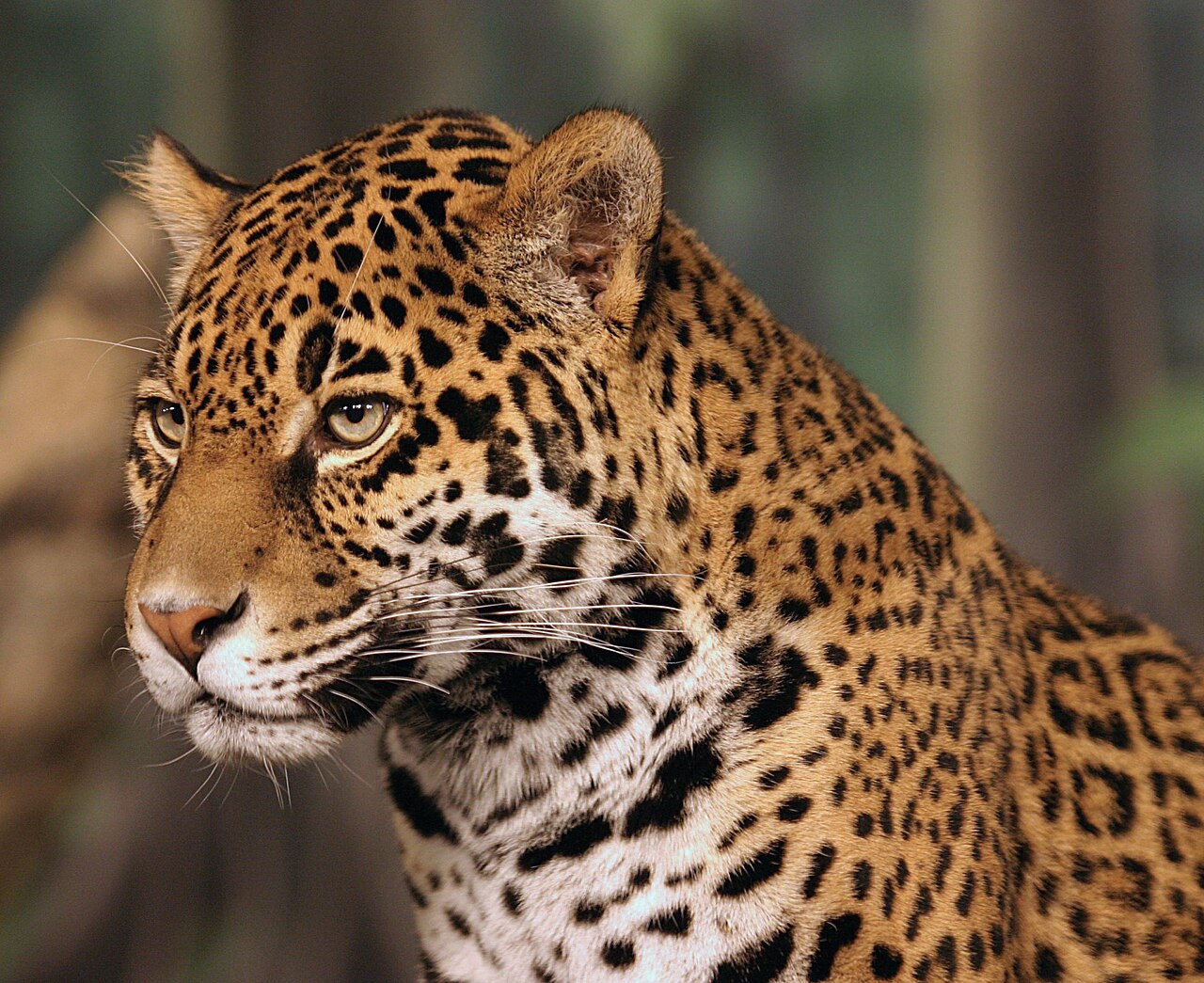
The rosette pattern offers the clearest visual test at close range or in a good photograph: a jaguar’s rosettes typically enclose one or more small central dots, while a leopard’s rosettes are simpler, open circular clusters without that central marking.
How Do You Tell Them Apart by Their Spots?
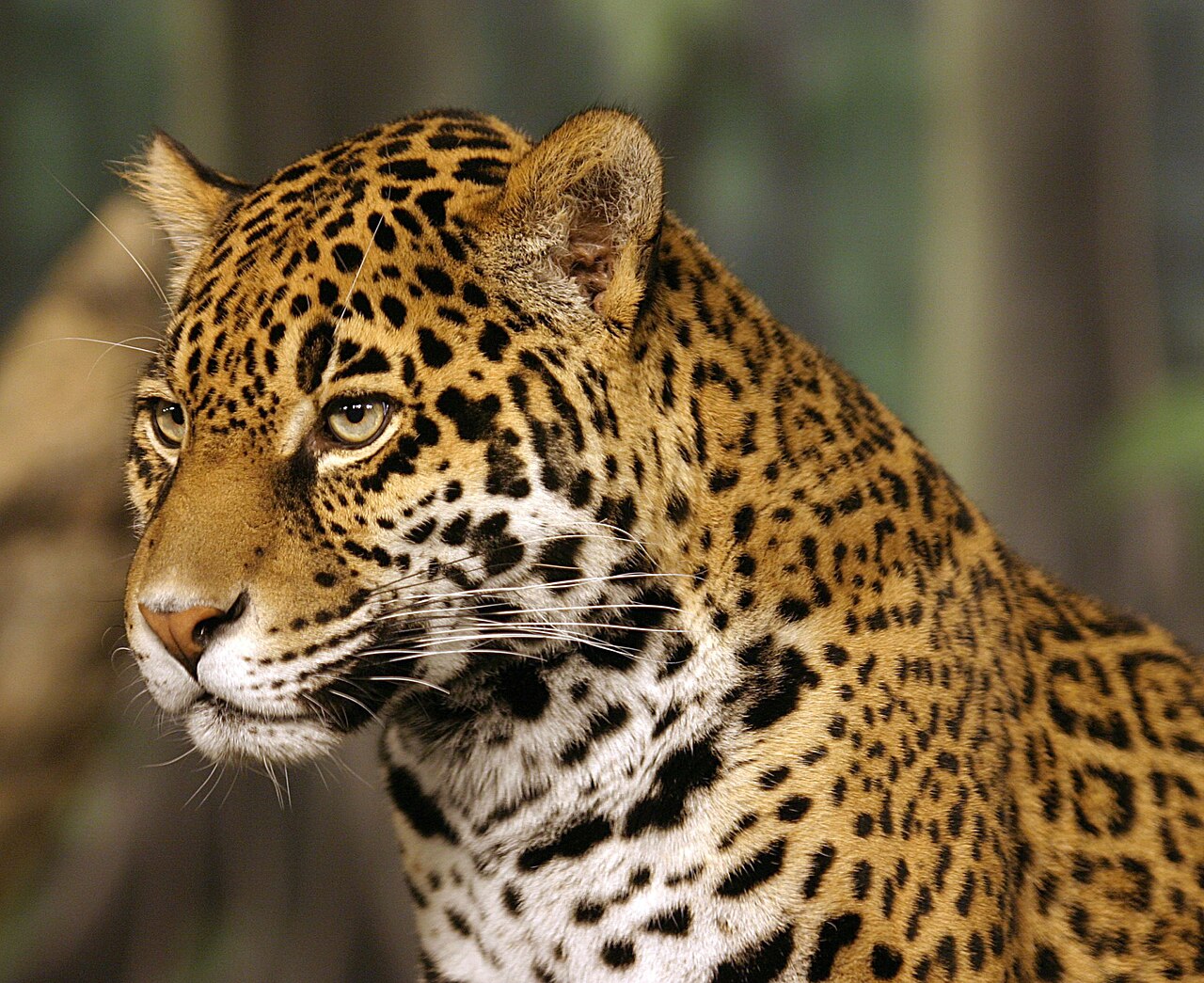
Look for the central dot inside each rosette. Jaguar rosettes are larger and more complex, often containing one or several small black dots within the open rosette shape, which is the single most reliable feature for distinguishing the two species from a photograph or in the field.
Leopard rosettes lack this central dot entirely, appearing as simpler rings or clusters of solid spots without any internal marking, and leopard spots also tend to be somewhat smaller and more densely packed across the body compared to a jaguar’s coat.
Base coat color also differs subtly: jaguars tend toward a slightly more golden or tawny background, while leopards vary more widely by region, including some populations with a paler, more yellowish coat, though this variation is less reliable than rosette pattern for a definitive identification.
Which Is Bigger, a Jaguar or a Leopard?
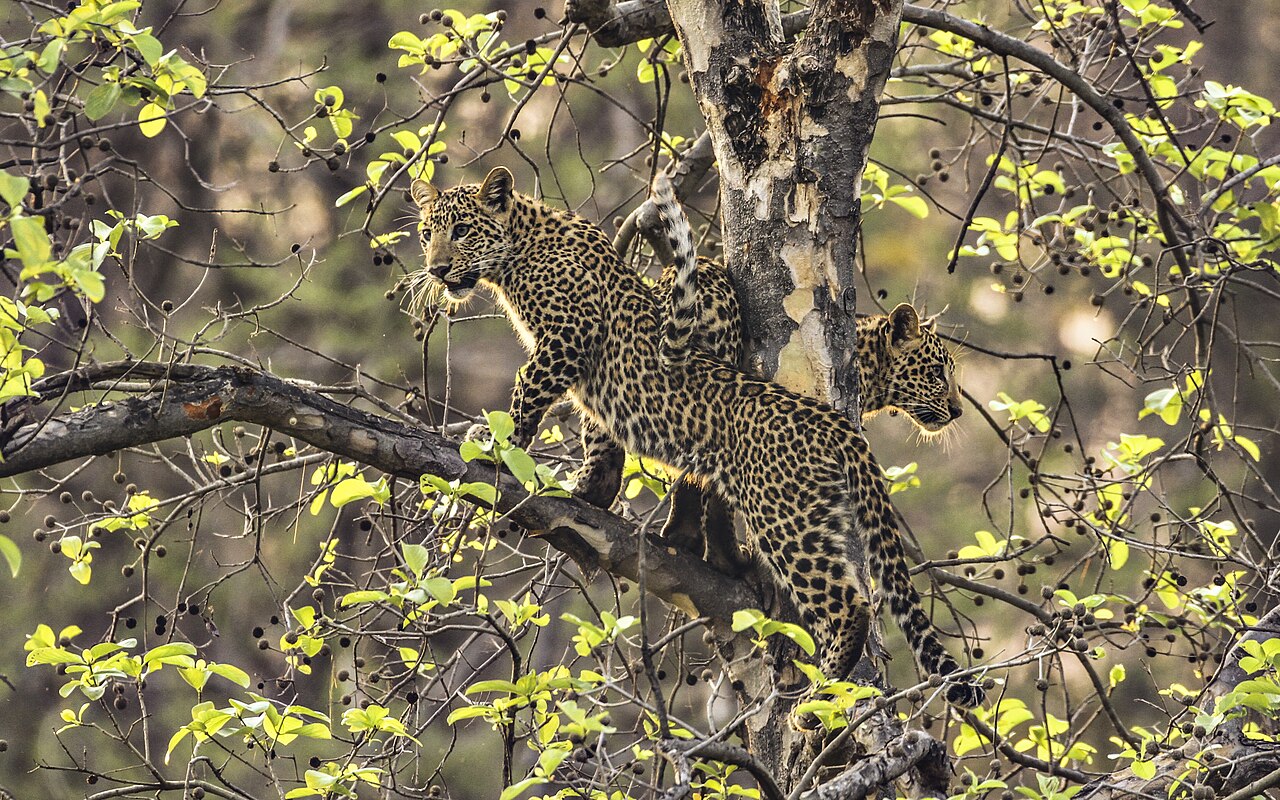
Jaguars are generally larger and heavier. An adult male jaguar typically weighs between 120 and 210 pounds, occasionally more in exceptional individuals, while an adult male leopard usually weighs between 80 and 165 pounds, making jaguars the heavier and more robustly built of the two species on average.
Body length is more comparable between the species, with substantial overlap, but the jaguar’s stockier frame, shorter and thicker limbs, and broader head give it a noticeably bulkier overall appearance even at similar lengths, which is part of why jaguars read as the more powerful-looking animal in side-by-side comparisons.
Leopards compensate for their smaller size with greater agility and climbing ability, frequently hauling prey, sometimes heavier than themselves, up into trees to protect it from scavengers, a behavior jaguars engage in far less often given their different hunting habitat and style.
Is a Jaguar Stronger Than a Leopard?
Proportionally, yes, particularly in bite force. Jaguars have the strongest bite force relative to body size of any big cat, an adaptation that lets them puncture turtle shells and crocodilian skulls directly, a hunting method essentially unique among cats and driven by their skull and jaw muscle structure.
Leopards have a strong bite too, sufficient to kill prey their own size or larger through the more typical big cat method of a suffocating throat bite, but they lack the specialized skull-crushing capability that defines jaguar hunting behavior specifically.
This difference reflects diet and habitat rather than a simple hierarchy of toughness: jaguars evolved alongside armored prey like caimans and turtles in wetland habitats, while leopards hunt a broader range of prey across more varied terrain without that same specific pressure favoring an extreme bite adaptation.
Can a Black Panther Be Either a Jaguar or a Leopard?
Yes, “black panther” is not a distinct species but a common name for any big cat with melanism, an excess of dark pigment that produces a black or near-black coat, and this occurs in both jaguars and leopards, meaning a black panther could genuinely be either species depending on where it’s found.
A melanistic jaguar or leopard still shows the underlying rosette pattern under close inspection or in strong light, the spots are simply harder to see against the dark background rather than truly absent, a phenomenon sometimes called “ghost spotting.”
Geography again resolves which species a specific black panther actually is: a melanistic big cat photographed in Central or South America is a black jaguar, while one photographed in Africa or Asia is a black leopard, since the species themselves remain separated by the same natural ranges regardless of coat color.
Where Do Jaguars and Leopards Live?
Jaguars occupy a range stretching from the southwestern United States border region through Mexico, Central America, and much of South America, favoring dense rainforest, wetlands, and riverine habitat where their swimming ability and preference for aquatic prey like caimans give them a real advantage. Within that same US border region, the mountain lion and bobcat are the wild cats actually native there, since jaguar presence in the US is rare and marginal.
Leopards have a considerably broader range, found across most of sub-Saharan Africa and in fragmented populations through parts of the Middle East, South Asia, and East Asia, adapting to habitats ranging from dense rainforest to semi-arid scrubland and even areas close to human settlement.
This total geographic separation is the underlying reason the two species never compete or interact naturally, and any comparison between them is necessarily hypothetical rather than based on observed real-world encounters, since their evolutionary paths diverged in entirely separate continents. The cheetah vs leopard guide covers a comparison between two species that do share African range.
Do Jaguars and Leopards Swim?
Jaguars are exceptional swimmers and readily enter water to hunt, cross rivers, or cool off, a trait closely tied to their preference for wetland and riverine habitat where prey like caimans, turtles, and fish are readily available and swimming ability offers a real hunting advantage.
Leopards are capable swimmers too and will cross water when necessary, but they show far less inclination to enter water voluntarily compared to jaguars, generally preferring to hunt and travel on land or in trees rather than seeking out aquatic environments.
This behavioral difference tracks directly with each species’ typical habitat: jaguar range includes extensive wetlands and river systems in South America, while leopard habitat, even where it includes water sources, does not create the same evolutionary pressure toward strong swimming ability.
What Do They Hunt?
Jaguars have an unusually broad diet for a big cat, including caimans, turtles, capybaras, deer, and peccaries, with their skull-crushing bite giving them access to armored prey most predators cannot exploit, making them opportunistic apex predators across a wide range of prey types.
Leopards are similarly opportunistic and adaptable, hunting everything from small rodents and birds to antelope and, occasionally, prey considerably larger than themselves, and are known for hauling kills into trees to protect them from lions, hyenas, and other scavengers in their shared habitat.
Both species are solitary hunters relying on stealth and a close-range ambush rather than sustained pursuit, a hunting style common to most big cats and distinct from pack-hunting predators that rely on cooperation and endurance rather than a single powerful strike.
Are Jaguars or Leopards Endangered?
Jaguars are classified as Near Threatened, with populations declining due to habitat loss, fragmentation, and human-wildlife conflict across much of their range, though they remain more numerous in protected areas of the Amazon basin than in more developed parts of their historical range.
Leopards are also classified as Vulnerable overall, though conservation status varies considerably by subspecies and region, with some populations, such as the Amur leopard in the Russian Far East, critically endangered with only a small number of individuals remaining in the wild.
Both species face broadly similar pressures, habitat loss from agricultural expansion and development, prey depletion, and conflict with livestock farmers, making habitat protection and human-wildlife conflict mitigation central to conservation efforts for each species across their respective ranges. The bobcat identification guide and mountain lion scat guide cover tracking signs for North America’s own resident wild cats.
How Are Conservation Efforts Tracked for Each Species?
The International Union for Conservation of Nature maintains the Red List, the global standard reference for species conservation status, and both jaguars and leopards are formally assessed there, with population trends, range maps, and threat analysis updated periodically as new field data comes in from researchers across their respective ranges. In the United States specifically, the U.S. Fish and Wildlife Service tracks the small, marginal jaguar presence along the Arizona and New Mexico border region as part of federal endangered species recovery planning.
Camera trap surveys are the primary tool for estimating population size and distribution for both species, since their elusive, largely nocturnal behavior makes direct sighting-based counts unreliable, and long-term camera trap data has been central to tracking range contraction over recent decades for both cats.
Protected area networks, along with wildlife corridors connecting fragmented habitat, are the main conservation strategy for both species, since isolated populations face higher extinction risk from reduced genetic diversity and limited ability to recover from local declines, a pattern conservation biologists see repeated across large predator species worldwide.
Frequently Asked Questions
How do you tell a jaguar from a leopard?
Check the rosette pattern first: jaguar rosettes have a central dot, leopard rosettes don’t. Jaguars are also stockier and more muscular overall.
Is a jaguar bigger than a leopard?
Generally yes. Adult male jaguars typically weigh 120 to 210 pounds versus 80 to 165 pounds for leopards, and jaguars have a stockier, more robust build.
Is a jaguar stronger than a leopard?
Proportionally, yes, especially in bite force. Jaguars have the strongest relative bite of any big cat, adapted for crushing turtle shells and crocodilian skulls.
Can a black panther be a jaguar or a leopard?
Yes, both. Black panther describes melanistic individuals of either species; which one it is depends entirely on where it was found.
Do jaguars and leopards live in the same place?
No. Jaguars live only in the Americas; leopards live in Africa and Asia. The two species never naturally encounter each other in the wild.
Which is a better swimmer, a jaguar or a leopard?
Jaguars, by a wide margin. They readily enter water to hunt aquatic prey like caimans and turtles, while leopards swim only when necessary.

Similar Posts
Red Butterfly: Which Species Are Actually Red
Most red butterflies are really orange. The red admiral comes closest in North America. Which species qualify, why true red is rare, and what a sighting means.
What Do Moose Eat? Twigs, Water Plants, and Winter
Moose eat 40 to 60 pounds of twigs and water plants a day, and dive 20 feet for sodium. Here is the seasonal diet and why feeding them kills.
Clover Mite: Why They Appear and How to Stop Them
Tiny red mites that swarm sunny walls in spring and autumn, do not bite, and stain when crushed. Why vacuuming beats squashing and the one measure that actually works.
Black Snake: Species, Identification, and Whether to Worry
Eastern racer, black rat snake, or black kingsnake. All harmless, all beneficial. How to tell them apart and what actually attracts them.
Dragonfly Tattoo Meaning: Transformation and Living Fully Now
Dragonfly tattoo meaning centers on transformation, drawn from the insect’s life cycle. Native American, Japanese, and modern symbolism explained in full.
Bobcat Poop: Identification and How It Differs From Coyote
Bobcat poop is segmented with blunt ends and packed with fur. How to tell it from coyote, house cat and raccoon droppings, why bobcats leave it on rocks, and the toxoplasmosis risk.