Garter Snake: Identification, Diet, and Whether It’s Dangerous
Garter snakes are the most commonly encountered snakes across most of North America, recognizable by the three light stripes running lengthwise down a darker body. They are harmless to people: while they do produce a mild saliva toxin that helps subdue small prey, they are not dangerously venomous and their bite causes little more than minor irritation and bleeding.
Finding one in a garden is generally good news rather than a problem, since garter snakes eat slugs, worms, insects, and small rodents, providing free pest control without any of the risk associated with the venomous species people usually worry about. This guide covers identification, whether they’re actually dangerous, what attracts them, and what to do if you find one.
Garter snakes are harmless to humans, identifiable by three light stripes running lengthwise down a darker body. They produce a mild saliva toxin to subdue prey but are not dangerously venomous; a bite causes minor irritation at most. They eat slugs, worms, amphibians, and small rodents, making them beneficial garden residents, and they’re drawn to yards with cover, moisture, and prey.
| Feature | Garter Snake |
|---|---|
| Size | Typically 18 to 26 inches; some reach 4 feet |
| Markings | Three light stripes on a darker body |
| Danger to humans | Harmless; mild saliva toxin only |
| Diet | Slugs, worms, amphibians, small rodents, fish |
| Habitat | Gardens, meadows, near water, under cover |
| Defense | Musk release, rarely bites |
What Is a Garter Snake?
Garter snakes belong to the genus Thamnophis, a widespread group of North American snakes found from Canada through Central America, and they are the snake most people encounter in backyards, gardens, and parks across the continent, making them the default answer to “what snake did I just see?”
The identifying feature is the striping pattern: typically three light-colored stripes, one down the spine and one along each side, running the length of a darker brown, green, or black body, though color and pattern intensity vary considerably between species and individuals across their broad range.
Size is modest for a snake, with most adults measuring 18 to 26 inches, though some individuals of certain species reach up to four feet, making them notably smaller and slimmer than the large constrictors or venomous pit vipers people often fear when spotting a snake.
Are Garter Snakes Harmless?
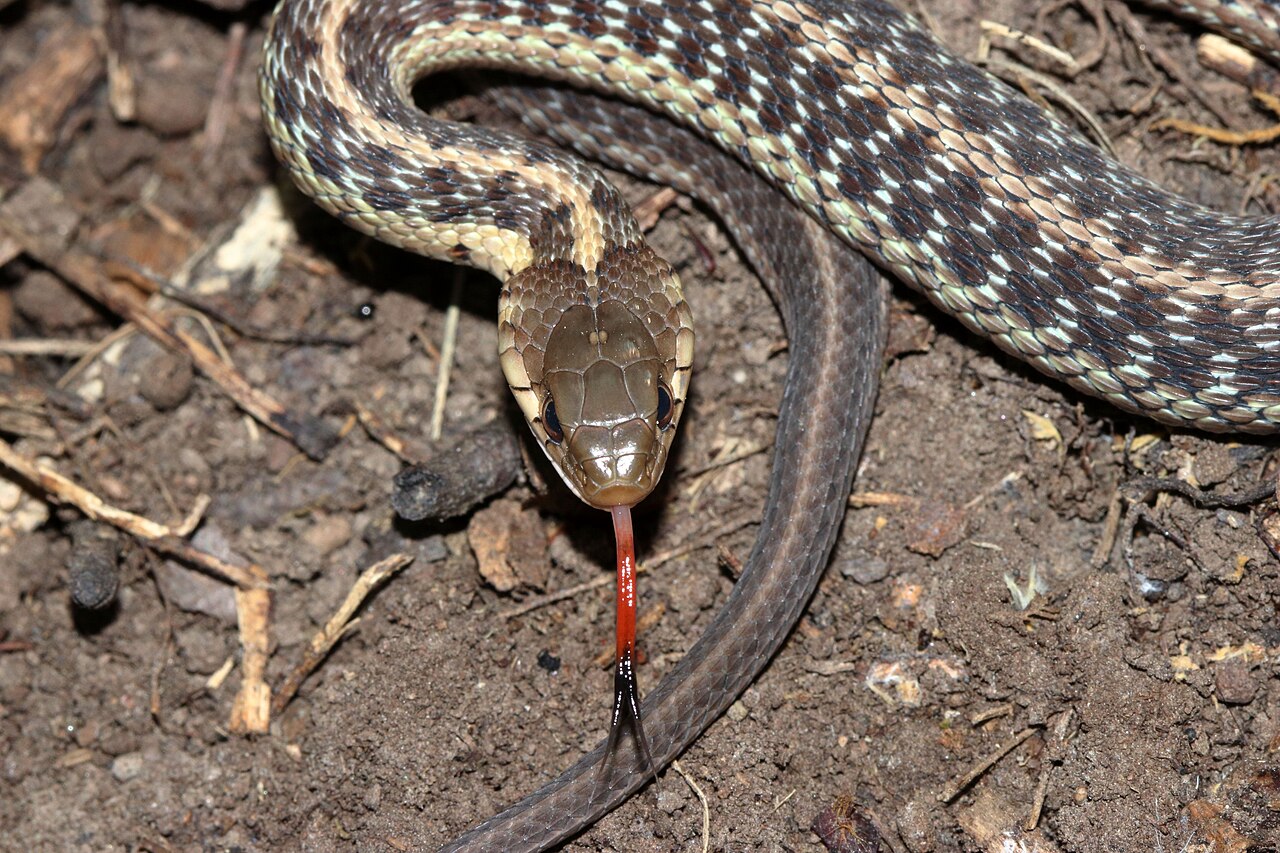
To people, yes, essentially harmless. Garter snakes have no fangs and no venom delivery system comparable to a rattlesnake or copperhead, and their small teeth are adapted for gripping soft-bodied prey rather than delivering a medically significant bite to a large animal.
A garter snake bite, which is uncommon since they prefer to flee or release musk rather than bite, typically produces minor scratches, slight bleeding, and occasionally mild localized irritation or swelling from the saliva compounds, resolving on its own without medical treatment in most cases.
Basic wound care, washing the area and monitoring for signs of infection, is all that’s typically needed, the same as for any minor scratch from an animal, and there is no antivenom or specialized treatment required for a garter snake bite. The garter snake bite guide covers the reaction in more detail.
How Venomous Is a Garter Snake?
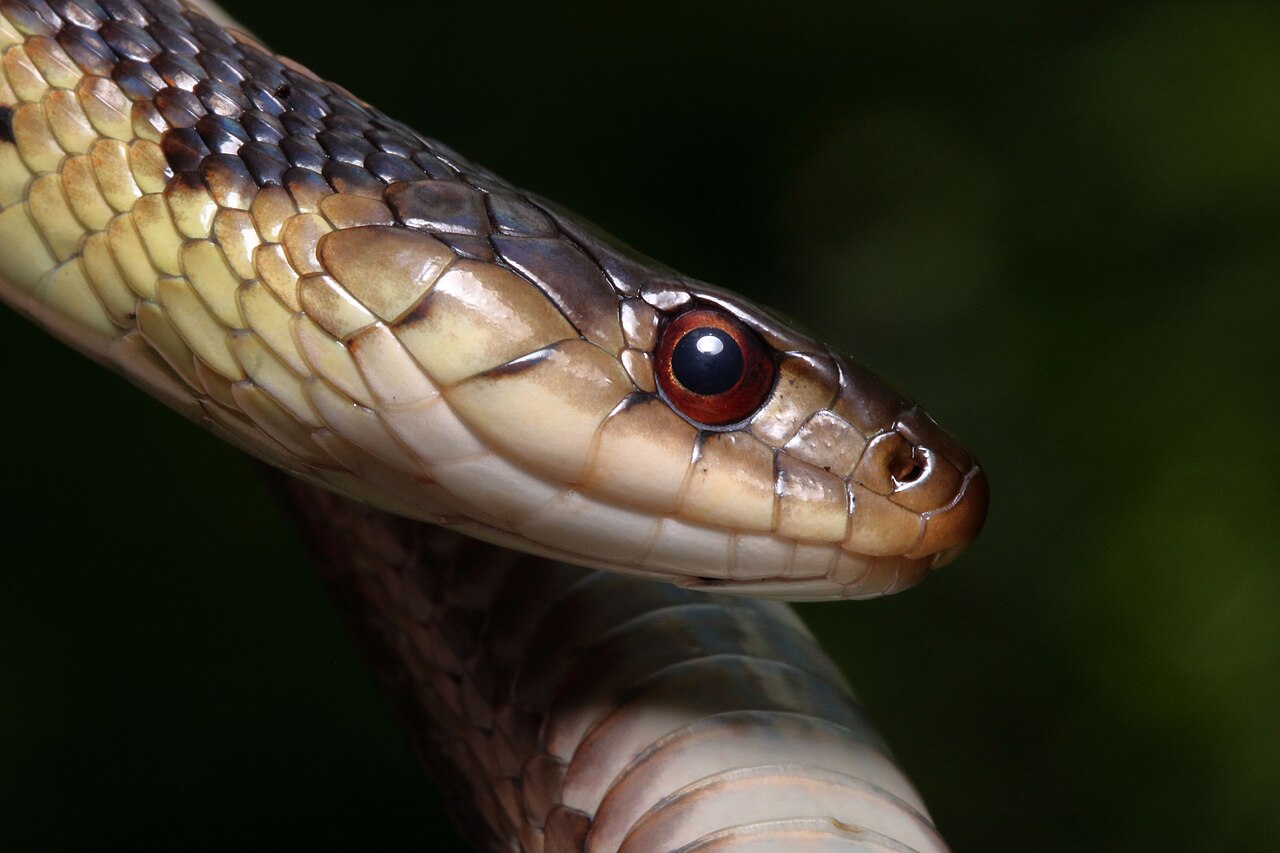
Technically, garter snakes produce a mild toxin in their saliva that helps subdue small prey like frogs and worms, and research has confirmed the presence of these compounds, which is why the older claim that garter snakes are entirely non-venomous has been revised somewhat in recent decades.
Practically, this makes no meaningful difference to a person. The toxin is weak, the snake lacks an efficient delivery mechanism like hollow fangs, and the amount that could enter a human wound during a defensive bite is far too small to cause anything beyond minor local irritation.
The comparison people should have in mind is not rattlesnake versus garter snake but rather a garter snake bite versus a scratch from a house cat, with the garter snake bite being the less consequential of the two in most cases. The baby garter snake guide covers juveniles, which are equally harmless.
What Do Garter Snakes Eat?
Garter snakes have an unusually varied diet for a small snake, taking earthworms, slugs, insects, amphibians including frogs and toads, small fish, and occasionally small rodents, adjusting to whatever prey is locally abundant rather than specializing narrowly. For a closely related question, see our guide to black and yellow snake. For a closely related question, see our guide to red and black snake.
Slugs and earthworms are the staple in many garden settings, which is exactly why a garter snake in a vegetable patch is a genuine asset, quietly removing the soft-bodied pests that damage plants without any of the trade-offs that come with chemical slug control. The snake poop identification guide covers how this diet shows up in droppings.
Some garter snake populations have evolved resistance to the toxins in rough-skinned newts, a genuinely remarkable adaptation where the snake can consume prey lethal to almost any other predator, and this predator-prey arms race is a well-documented example of coevolution in North American wildlife.
What Attracts Garter Snakes to Your Yard?
Cover, moisture, and prey, in roughly that order. Woodpiles, rock piles, dense ground cover, tall grass, and gaps under sheds or decks all provide the sheltered hiding spots garter snakes need to feel secure, and a yard with plenty of these features supports them far better than an open, manicured lawn.
Water sources matter too, since garter snakes are often found near ponds, streams, and damp areas where amphibians and their preferred prey concentrate, and even a garden pond or persistently damp corner can be enough to make a yard appealing.
An abundant slug, worm, and insect population is the underlying draw, meaning a healthy garden with active soil life is precisely the environment garter snakes favor. Reducing that population to discourage snakes generally means reducing the same soil health that benefits the garden itself.
What Should You Do If You See One?
Leave it alone and give it space. A garter snake that notices a person will almost always retreat toward the nearest cover on its own, and simply stepping back and letting it move away resolves nearly every encounter without any intervention needed.
Avoid attempting to pick it up, since handling is the main circumstance that triggers a defensive response, either a bite or the release of a foul-smelling musk that is genuinely unpleasant and difficult to wash off skin and clothing.
If a garter snake gets into a garage, shed, or basement, opening a door to the outside and giving it a clear path is usually sufficient, and gently guiding it with a broom from a distance works if it needs encouragement, without any need to trap or harm it.
What Smell Do Garter Snakes Hate?
Strong-smelling substances including vinegar, cinnamon, clove oil, and certain commercial snake repellents are commonly cited as deterrents, though the actual effectiveness of scent-based snake repellents is generally weak and short-lived compared to physical habitat modification.
Snakes navigate largely by scent using their forked tongue and a specialized sensory organ, so overwhelming smells can theoretically disrupt that, but a snake genuinely motivated by good shelter and abundant prey will typically tolerate a scent it finds mildly unpleasant rather than abandon a good territory.
Removing cover, cutting tall grass, clearing woodpiles away from the house, and sealing gaps under sheds and foundations does considerably more than any spray or granule product, since it addresses what actually draws the snake rather than trying to override it with an odor.
Does Seeing One Snake Mean There Are More?
Often, yes, particularly with garter snakes, which sometimes gather in numbers, most dramatically during spring emergence from communal winter dens, where dozens or in extreme cases thousands of individuals may congregate in a single hibernaculum before dispersing.
Outside that seasonal gathering, garter snakes are generally solitary during active months, so a single sighting in summer more likely reflects one individual using a good territory rather than an established colony living in the immediate area.
Repeated sightings in the same specific spot suggest a favorable microhabitat, good cover, warmth, and prey, rather than a growing population, and modifying that specific spot is more effective than assuming a broader infestation requiring wider action.
When Are Garter Snakes Most Active?
Spring through early autumn, with peak visible activity in late spring as snakes emerge from winter hibernation and again in early autumn as they feed heavily before returning to a den for the cold months.
Daily activity is largely tied to temperature, since garter snakes are ectothermic and depend on external heat, meaning they’re often seen basking in morning sun on warm rocks, pavement, or open ground, then becoming more secretive during the hottest part of a summer afternoon.
Winter is spent in hibernation, typically in communal dens below the frost line, in rock crevices, old mammal burrows, or building foundations, which is why they seem to disappear entirely from a yard for months before reappearing suddenly in spring. State wildlife agencies publish region-specific activity guidance for local snake species.
Are Garter Snakes Good to Have Around?
Generally yes, from a practical gardening standpoint. Their diet of slugs, worms, insects, and small rodents makes them a genuine asset in a vegetable garden or flower bed, addressing exactly the soft-bodied pests that cause the most visible plant damage.
They pose no meaningful risk to people, pets, or property, unlike some wildlife that damages structures or gardens, and they carry no significant disease risk to humans in ordinary circumstances beyond basic hygiene after any contact with a wild animal.
For households genuinely uncomfortable with snakes regardless of species, habitat modification, clearing cover, mowing regularly, and sealing entry points, is the humane and effective approach, rather than removal or killing, which simply creates a vacancy another snake will eventually fill. The black snake guide covers another common harmless species people encounter.
How Do You Tell a Garter Snake From a Venomous Species?
The striping pattern is the fastest check. Garter snakes have three light stripes running lengthwise along the body, while North America’s venomous species, rattlesnakes, copperheads, cottonmouths, and coral snakes, show blotches, bands, or crossbands rather than continuous lengthwise stripes.
Head shape offers a secondary clue, since pit vipers have a distinctly triangular head noticeably wider than the neck, while garter snakes have a slender head barely wider than the body behind it, though this test is less reliable because harmless snakes can flatten their heads defensively to mimic the shape.
Size and build help too: garter snakes are slim and typically under 26 inches, whereas most adult venomous species in North America are noticeably heavier-bodied. When in doubt, the safe response is the same regardless of species, back away and give the snake room rather than approaching for a closer look. The coral snake vs king snake guide covers a pair where the distinction genuinely matters.
Frequently Asked Questions
Are garter snakes dangerous to humans?
No. They produce a mild saliva toxin for subduing small prey but lack an effective delivery system, and a bite causes at most minor irritation and scratches.
Are garter snakes venomous?
Technically they have mild toxins in their saliva, but not in any medically significant way for people. They are not comparable to rattlesnakes or copperheads.
What do garter snakes eat?
Earthworms, slugs, insects, amphibians, small fish, and occasionally small rodents, adjusting to whatever prey is locally abundant.
What attracts garter snakes to a yard?
Cover like woodpiles and dense ground vegetation, moisture, and an abundant slug, worm, and insect population.
What should you do if you find a garter snake?
Leave it alone and give it space. It will retreat on its own. Avoid handling, which is what triggers a defensive bite or musk release.
Does seeing one garter snake mean there are more?
Sometimes, especially in spring when they emerge from communal winter dens. During summer they’re generally solitary, so one sighting often means one snake.