Can Guinea Pigs Eat Bananas? Portion and Sugar Concerns
Guinea pigs can eat banana, but it belongs at the strict end of the treat category: a slice roughly the width of a finger, once a week at most. Banana is considerably higher in sugar and starch than most fruit guinea pigs are offered, and it provides very little vitamin C, the one nutrient guinea pigs genuinely need from their diet.
That combination, high sugar with low vitamin C, makes banana one of the less useful fruit treats despite most guinea pigs loving it. The peel is technically edible but rarely worth offering. This guide covers portion size, whether the skin is safe, and which fruits actually earn their place in a guinea pig diet.
Guinea pigs can eat a small slice of banana, roughly a finger’s width, once a week at most. Banana is high in sugar and starch and low in vitamin C, making it one of the less useful fruit treats despite being popular with most guinea pigs. The peel is safe if thoroughly washed and unwaxed but offers little benefit. Hay should remain around 80 percent of the diet.
| Aspect | Bananas for Guinea Pigs |
|---|---|
| Safe? | Yes, in small amounts |
| Portion | A slice roughly a finger’s width |
| Frequency | Once a week at most |
| Sugar content | High, relative to other fruit treats |
| Vitamin C | Low; not a useful source |
| Peel | Technically safe if washed and unwaxed; rarely worth it |
Can Guinea Pigs Eat Bananas?
Yes, banana is not toxic to guinea pigs and can be given as an occasional treat, but the portion needs to be smaller and less frequent than for many other fruits due to the sugar and starch content, which is meaningfully higher than in berries or melon.
A slice roughly the width of a finger, offered no more than once a week, is the standard guidance, and this should be a whole-week allowance rather than a daily portion, since banana concentrates more calories into a small volume than most fruit guinea pigs eat.
Most guinea pigs take to banana enthusiastically, which is precisely why portion discipline matters here: eagerness for a food is not a signal that more is appropriate, and banana is one of the easier treats to accidentally overfeed based on the animal’s reaction.
How Much Banana Can a Guinea Pig Have?
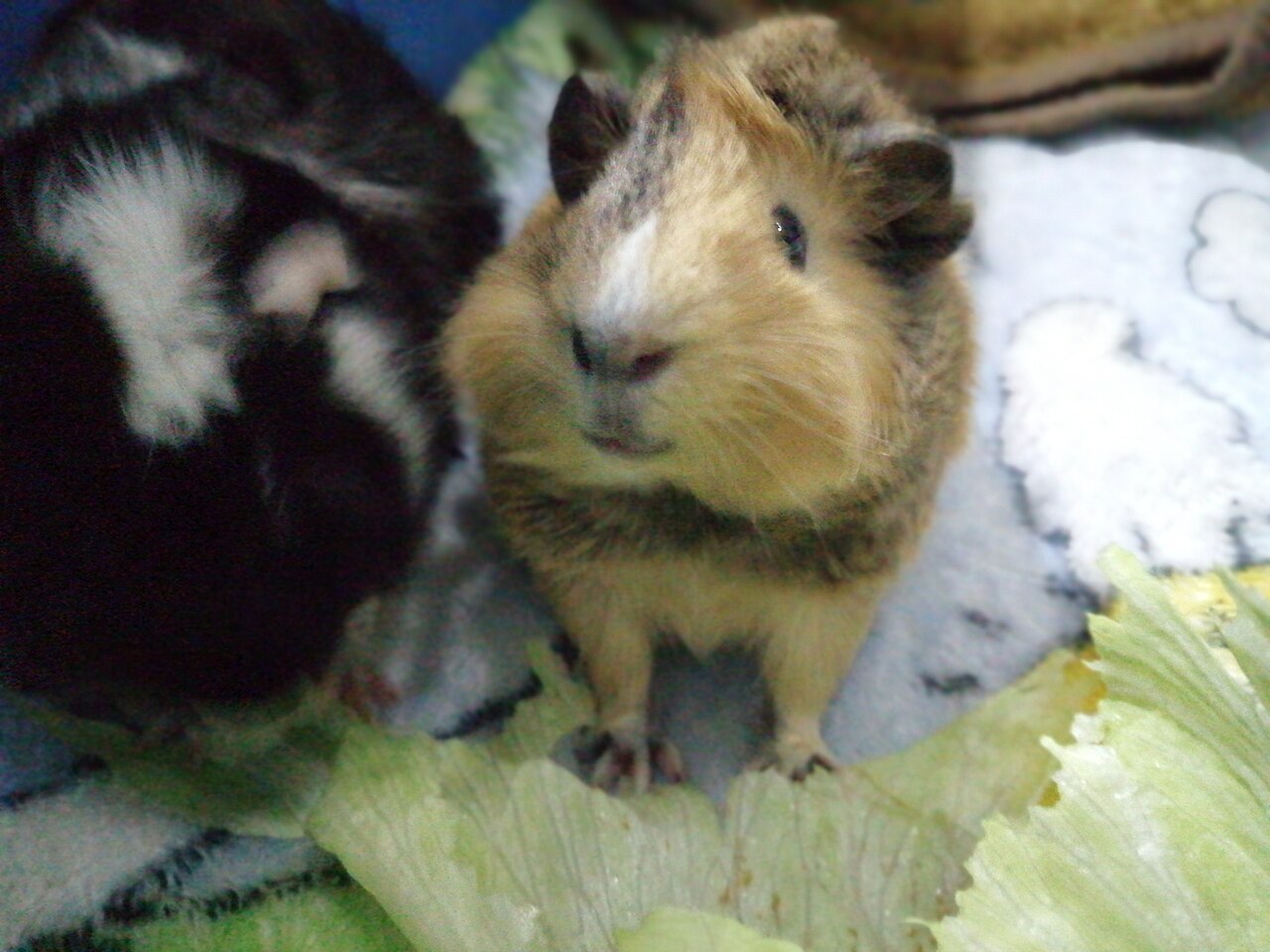
One small slice weekly for an average adult guinea pig, and less for a young or small animal, keeping banana within an overall fruit allowance of roughly one to two tablespoons across all fruit combined per day at most.
The reason for the tighter limit compared to other fruits is straightforward: banana contains substantially more sugar and starch per gram than berries, cucumber, or bell pepper, so an equivalent-looking portion delivers a considerably larger sugar load.
Guinea pigs with existing digestive sensitivity, or those recovering from illness or gut upset, are better off skipping banana entirely in favor of lower-sugar options until their system is stable, since it is among the more disruptive fruits when digestion is already compromised. The guide to blueberries for guinea pigs covers a lower-sugar alternative.
Can Guinea Pigs Eat Banana Peel?
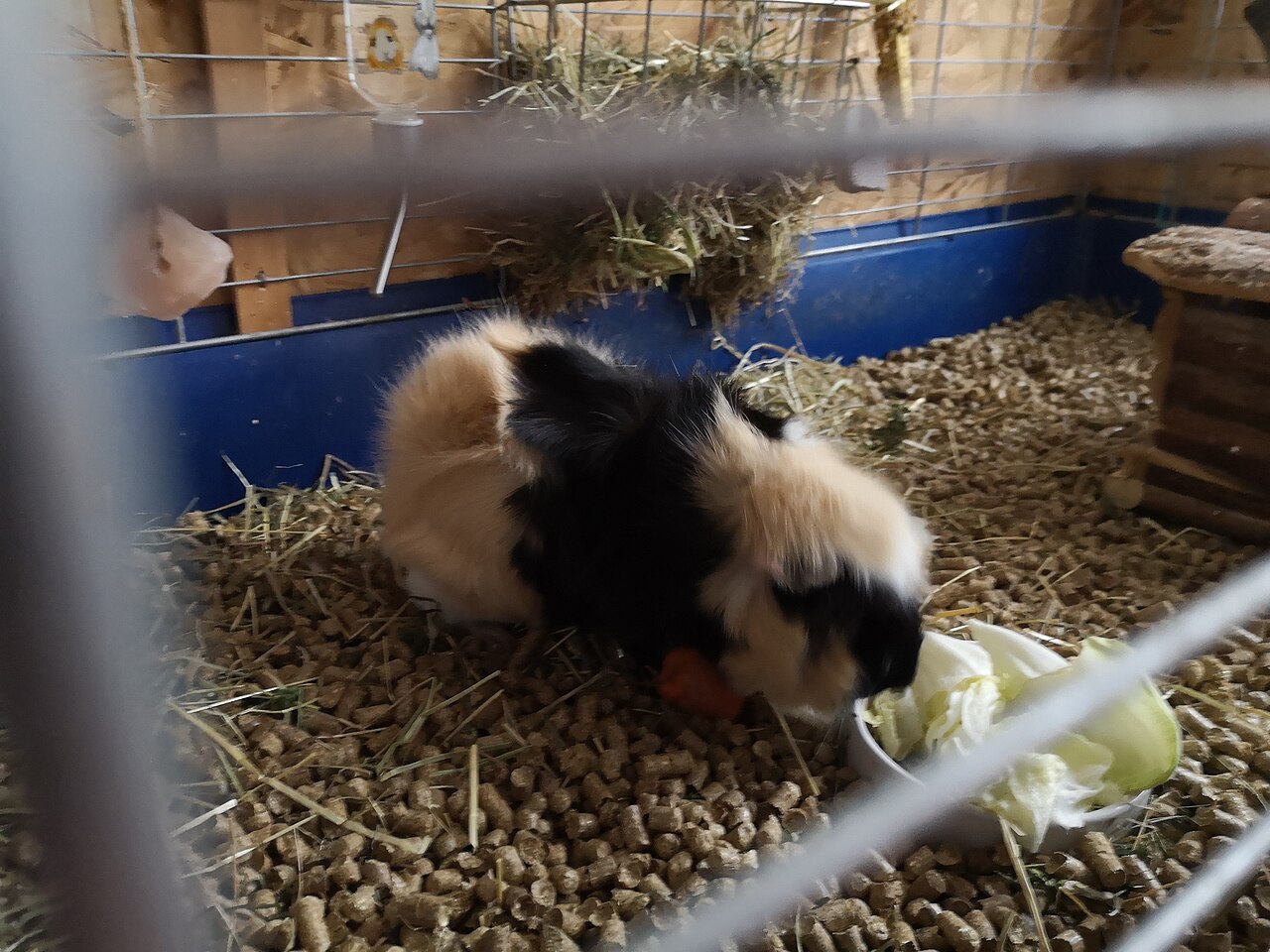
Technically yes, banana peel is not toxic and contains more fiber than the flesh, but it comes with practical caveats that make it rarely worth offering in most households.
Pesticide residue is the main concern, since banana peels are not typically washed before sale and can carry surface residue, and some bananas are treated with wax coatings, meaning any peel offered should be thoroughly washed and ideally from an organic, unwaxed source.
Texture is the second issue: peel is tough and many guinea pigs simply ignore it, so the practical result of offering peel is often uneaten food sitting in the cage rather than any nutritional benefit gained. The flesh alone, in a properly small portion, is the simpler approach.
What Fruit Is Poisonous to Guinea Pigs?
No common fruit is outright toxic in the way avocado is for some other pets, but several carry specific cautions worth knowing. Avocado itself should be avoided due to persin, and while it is botanically a fruit, it does not belong in any guinea pig diet.
Fruit seeds and pits, including apple seeds and stone fruit pits, contain cyanogenic compounds and must be removed before feeding, meaning the flesh may be fine while careless preparation introduces a genuine hazard.
Dried fruit is a separate practical concern rather than a toxicity one, since the drying process concentrates sugar substantially, making a small piece of dried fruit deliver far more sugar than the same volume of the fresh equivalent. The guide to grapes for guinea pigs covers a fruit with a similar sugar caution.
What Is a Guinea Pig’s Favorite Fruit?
Preference varies by individual, but strawberries, banana, and melon tend to be widely popular, all of them relatively sweet, which reflects a general preference for higher-sugar foods rather than any nutritional wisdom on the animal’s part.
The more useful question is which fruits earn their place nutritionally, and there the answer differs: strawberries and kiwi contribute meaningful vitamin C, while banana contributes almost none despite being equally popular.
Bell pepper, though technically a fruit botanically, is the standout for guinea pigs, delivering more vitamin C per gram than any commonly offered sweet fruit while carrying far less sugar, which is why it functions as a daily staple rather than an occasional treat. The guide to strawberries for guinea pigs covers a fruit that balances both.
Why Does Vitamin C Matter So Much?
Guinea pigs cannot synthesize vitamin C internally, unlike most mammals, and require 10 to 30 milligrams daily from diet, making them one of the very few animals besides primates and a handful of other species with this specific dietary requirement.
Deficiency produces scurvy within a matter of weeks, with symptoms including a rough or unkempt coat, swollen and painful joints, reluctance to move, bleeding gums, and reduced appetite, and it progresses to serious illness if uncorrected.
Because banana contributes essentially nothing toward this requirement, it competes for the limited treat allowance without offering the one nutritional benefit that matters most, which is the core argument for keeping it rare rather than routine in the rotation. Veterinary schools and exotic animal medicine programs at universities consistently identify vitamin C deficiency as one of the most common preventable health problems in pet guinea pigs.
What Should Guinea Pigs Eat Daily?
Hay is the foundation and should be available continuously, making up around 80 percent of total intake, doing two jobs nothing else does: providing the long fiber that keeps the gut moving and the abrasive chewing action that wears down continuously growing molars.
Fresh vegetables come next, roughly a cup daily per guinea pig split across several types, with bell pepper, romaine, and other leafy greens forming the reliable base, plus a small measured portion of plain timothy-based pellets fortified with vitamin C.
Fruit sits on top of all that as an occasional addition, not a category with a guaranteed daily slot, and banana specifically occupies the narrow end of even that limited allowance. The guide to tomatoes for guinea pigs covers a vegetable-side option with fewer restrictions.
Why Are Guinea Pigs So Sensitive to Sugar?
Their digestive system is built around continuous fermentation of high-fiber plant material by a specific balance of gut bacteria, and concentrated sugar disrupts that balance by feeding bacteria that would otherwise stay in check, shifting the gut environment away from what supports normal digestion.
This is why the concern with banana is not the calories in isolation but the effect on gut flora, and why a small amount weekly is genuinely different from the same total amount given in one large serving, which delivers a sugar load the gut bacteria cannot absorb gradually.
Guinea pigs also practice caecotrophy, re-ingesting certain droppings to extract nutrients produced by gut fermentation, meaning a disrupted gut flora affects not just digestion but the animal’s ability to obtain nutrients it depends on from this second pass through the system.
What Are Signs of Too Much Fruit?
Soft or loose stool is the first and clearest signal, typically appearing within a day of an oversized fruit portion and resolving quickly once the treat is scaled back or paused entirely.
Reduced hay consumption is the subtler and more concerning sign, since a guinea pig filling up on sweet treats eats less of the fiber that supports gut motility and dental wear, and this shift can produce digestive and dental problems that take longer to develop and longer to reverse.
Weight gain over months is the slowest indicator but worth watching in animals offered generous treats, since obesity in guinea pigs contributes to joint problems, reduced grooming ability, and general health decline independent of any single food’s individual safety.
Is Banana Useful for Giving Medication?
It can be, and this is one context where banana’s downsides matter less. Its soft texture and strong sweetness make it effective for masking the taste of oral medication, and a guinea pig reluctant to take a syringe dose will often accept it mixed into a small amount of mashed banana.
This is a case where a food otherwise limited for sugar reasons earns its place practically, since a short course of medication successfully administered outweighs the minor concern of a slightly larger sugar portion across a few days.
Any medication should be mixed only as directed by the prescribing vet, since some drugs interact with food or lose effectiveness when mixed, and checking before improvising is worth the call rather than assuming a sweet carrier is always safe. The guinea pig sounds guide covers reading whether an animal is distressed during handling.
How Should You Introduce Banana?
Start with a piece smaller than the standard portion, roughly half a normal slice, and watch appetite and droppings over the following day before establishing it as a regular weekly treat for that particular animal.
Guinea pigs vary in individual tolerance, and a food handled fine by one animal in a pair is not automatically guaranteed to suit the other, particularly if one is younger, smaller, or has a history of digestive sensitivity.
Any new food is best introduced alone rather than alongside another new item, so that if a reaction does occur, the cause is identifiable rather than ambiguous between two simultaneous changes to the diet.
Frequently Asked Questions
Can guinea pigs eat bananas?
Yes, a slice roughly a finger’s width, once a week at most. Banana is high in sugar and starch and low in vitamin C, so it needs tighter limits than most fruit.
How much banana can a guinea pig eat?
One small slice weekly for an adult, less for a young or small animal, within an overall fruit allowance of one to two tablespoons daily across all fruit.
Can guinea pigs eat banana peel?
Technically yes if thoroughly washed and unwaxed, but pesticide residue and tough texture mean most guinea pigs ignore it and it is rarely worth offering.
Do bananas provide vitamin C for guinea pigs?
Very little. Bell pepper is the far better source, delivering more vitamin C per gram with much less sugar.
What fruit should guinea pigs avoid?
Avocado due to persin, dried fruit due to concentrated sugar, and any fruit seeds or pits, which contain cyanogenic compounds.
What are signs a guinea pig is getting too much fruit?
Soft stool first, then reduced hay consumption, and gradual weight gain over months. Scaling back the portion usually resolves the first two quickly.