Blue Jay Feather Meaning: Sign or Chance, and Can You Keep It?
As a sign, a found blue jay feather points to clear speech and the courage to say what you think. That is the core blue jay feather meaning, and it holds whether the feather turns up on a trail, a porch step or the living room carpet. The bird behind it, the blue jay (Cyanocitta cristata), is loud, bold and quick to warn the whole yard, and its feather carries that voice.
The second question matters as much as the first. Blue jays are protected under federal law, and so are their feathers. Read the sign, take a photo, and think twice before the feather goes into your pocket.
Symbolically, a blue jay feather stands for speaking up and acting with nerve. A feather on the carpet most likely rode in on a shoe or a pet after a molt, so it is chance and sign at once. Federal law protects blue jay feathers, so photograph yours rather than keep it.
What Does a Blue Jay Feather Mean When You Find One?
A blue jay feather means speak up. As a found object it points to honest words and the nerve to act on them, and it asks you to stop waiting for permission. The blue on the vane is the bird’s signal color, and the find puts that signal in your hand.
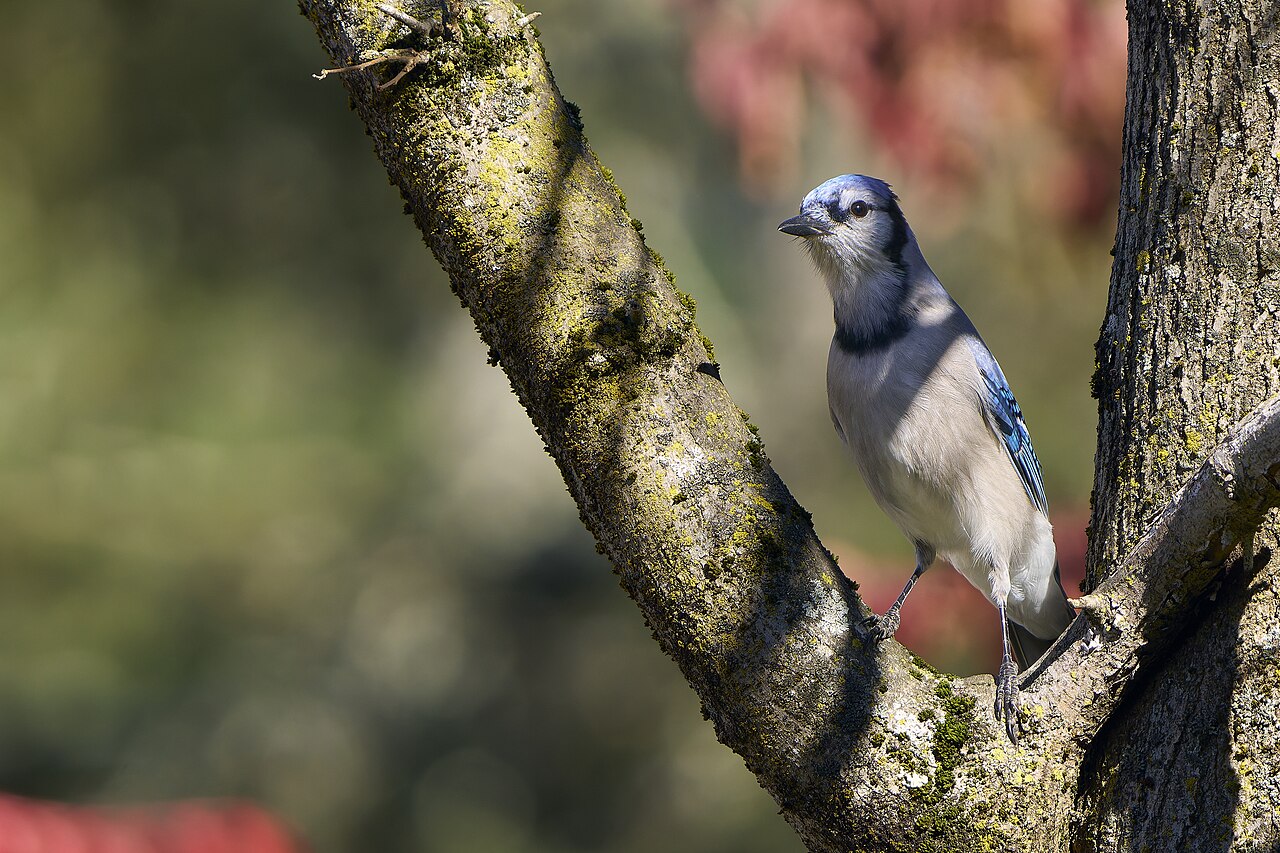
Blue jays are loud, bold and intelligent birds of eastern and central North America. They mimic hawk calls, raise alarms for the whole yard and stash acorns, as the Cornell Lab of Ornithology Blue Jay guide describes. A feather from that bird carries the same character in a smaller form.
The blue jay as a symbol covers honesty, protection and family loyalty in full. The feather borrows from that reading but stays narrower. It is about your voice, right now.
Is Finding a Feather a Good Omen?
Finding a feather is a good omen, and a blue jay feather leans toward courage and honest speech. Place and timing add the detail. A feather on your path before a hard conversation points to that conversation. A feather by your front door points to home and family.
A second find matters more than the first. Two blue jay feathers in a short span point to a message you have not acted on yet. Recall what you were thinking about each time. The overlap is the message.
A blue jay in dreams and omens carries the same theme of voice and nerve on a larger scale. The feather is the quiet version of that visit. It stays with you after the bird has gone.
There is a plain cause too. Blue jays typically molt once a year, after the nesting season, so loose feathers can turn up in yards and parks. A sign and a molt are not opposites. The bird drops the feather, and you are the one who finds it.
What Does It Mean When a Feather Suddenly Appears?
A feather that suddenly appears in an odd place, such as the carpet, a car seat or a windowsill, points to a message close to home. Outdoors a feather is part of the landscape. Indoors it breaks the pattern, and that break is what makes it feel like a sign.
Chance has a short list of routes. Feathers ride in on shoes, pet fur, laundry dried outside and open windows. A blue jay feather on the carpet in a house with a dog has an obvious courier. That does not cancel the reading. It tells you how the feather traveled, not why it caught your eye.
A blue jay crossing your path is a different sign from a found feather. The live bird points to action in the moment. The feather points to something you carry and come back to.
What Does It Mean When Someone Gives You a Feather?
A feather given to you means what the giver’s own tradition says it means, and the giver is the person to ask. A gift feather marks something specific, such as an achievement, a passage or a bond. Asking is respectful. Guessing is not.
An eagle feather is the clearest case. An eagle feather is also the one feather you should not pick up. In ceremony it is a sacred object that honors a person, and its meaning belongs to the nation that gives it.
Eagle feathers also carry strict federal limits. If a tribal member offers you one, ask what it honors and whether federal law lets you hold it before you take it home.
Is It Illegal to Keep a Blue Jay or Eagle Feather?
Yes, keeping a blue jay feather without a federal permit is illegal, because the Migratory Bird Treaty Act protects native migratory birds and their parts, feathers included. The blue jay appears on the protected list in 50 CFR 10.13. Intent does not change that, so a molted feather from your own lawn counts too.
Picking up an eagle feather is illegal because the Bald and Golden Eagle Protection Act bars possession of bald eagle (Haliaeetus leucocephalus) and golden eagle (Aquila chrysaetos) parts without a permit. That law is separate from the Migratory Bird Treaty Act and stricter. Permits for eagle feathers go to enrolled members of federally recognized tribes for religious use.
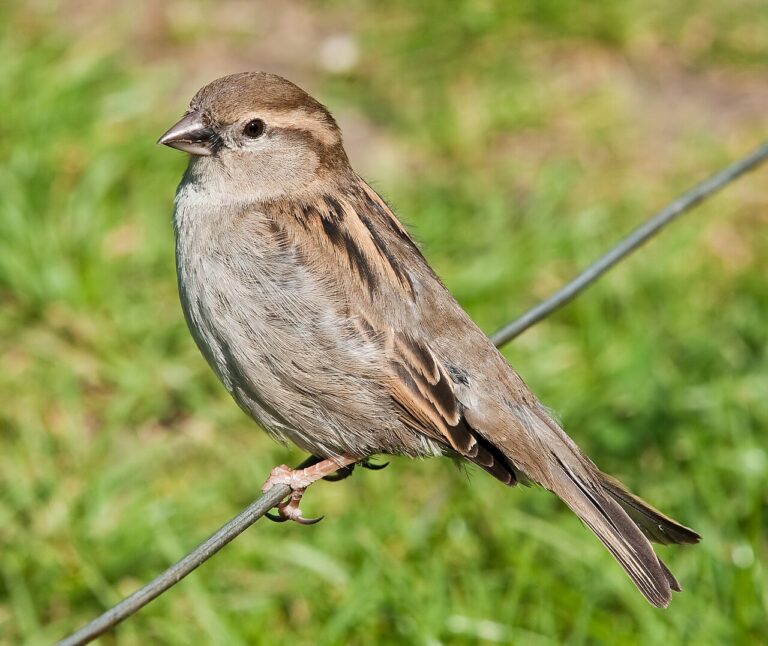
A few species fall outside the Migratory Bird Treaty Act. Rock pigeons (Columba livia), house sparrows (Passer domesticus) and European starlings (Sturnus vulgaris) are non-native and not covered. State or local rules can still apply, so check before you keep any feather.
| Feather you find | Federal status | What to do |
|---|---|---|
| Blue jay | Migratory Bird Treaty Act | Photograph it and leave it |
| Northern cardinal or American robin | Migratory Bird Treaty Act | Photograph it for identification |
| Bald or golden eagle | Bald and Golden Eagle Protection Act | Leave it where it lies |
| Rock pigeon | Not covered, non-native | Keeping it is allowed federally |
| House sparrow or European starling | Not covered, non-native | Check state or local rules first |
| Any feather beside a dead bird | Depends on the species | Do not touch the bird |
Should You Keep or Leave a Feather You Find?
Leave it. Photograph the feather where it lies, note the place and date, and walk away with the picture instead of the feather. The photo keeps the sign and carries no legal risk.
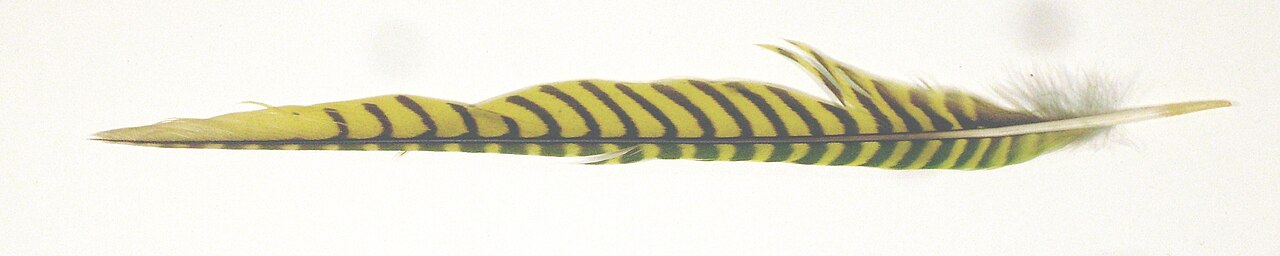
If you already touched it, wash your hands afterward. The CDC West Nile virus page notes that the virus does not spread by touching live animals, but it advises against bare-handed contact with any dead animal. A feather beside a dead bird belongs to that second case. Leave the bird alone.
A dead bird near the feather carries its own meaning of endings and change. Read the two finds apart. The feather speaks to your voice, the bird to a chapter closing.
Bird feathers from blue jays, Steller’s jays (Cyanocitta stelleri), eastern bluebirds (Sialia sialis) and indigo buntings (Passerina cyanea) look alike at a glance. A sharp photo with a coin for scale is enough to name the bird later.
Frequently Asked Questions
Why can you not pick up feathers off the ground?
Federal law protects the feathers of native migratory birds. The Migratory Bird Treaty Act covers the species listed in 50 CFR 10.13, from blue jays to robins, and possessing their feathers needs a permit. Eagle feathers fall under a stricter separate law. Pigeon, house sparrow and starling feathers are exceptions.
Is a blue jay feather really blue?
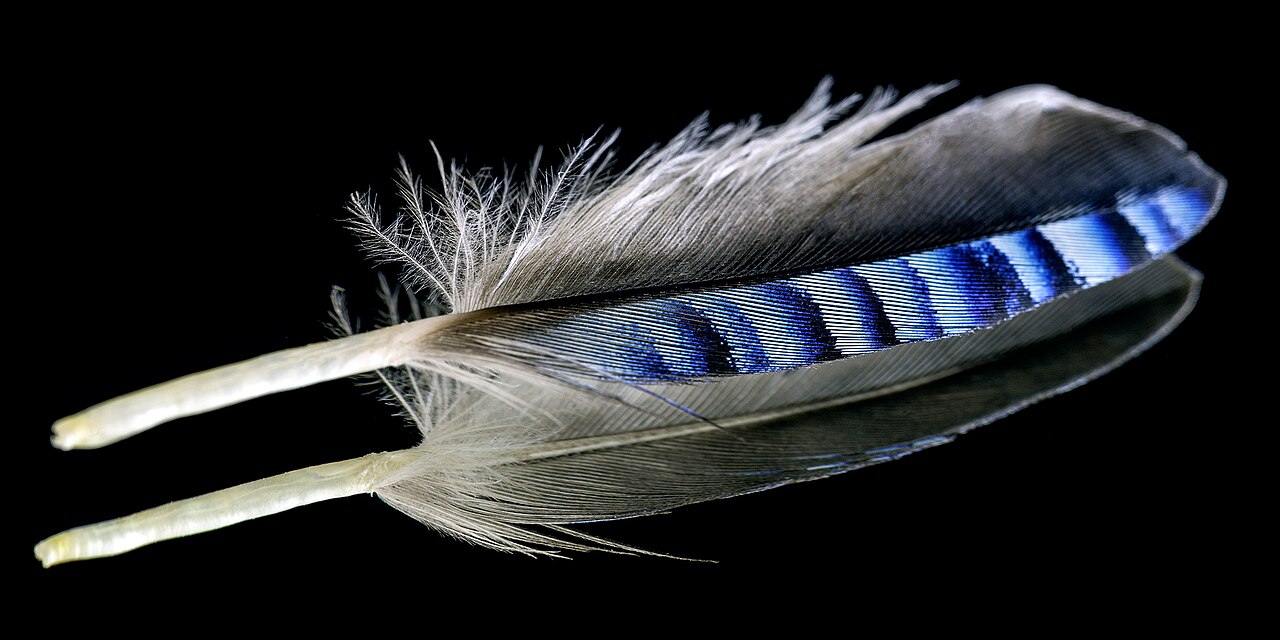
No. A blue jay feather has no blue pigment. The color comes from the structure of the feather barbs, which scatters blue light, and the Cornell Lab notes that the underlying pigment is brown melanin. Crush the feather and the structure breaks, so the blue disappears and the feather looks brown.
How do you tell a blue jay feather from other blue feathers?
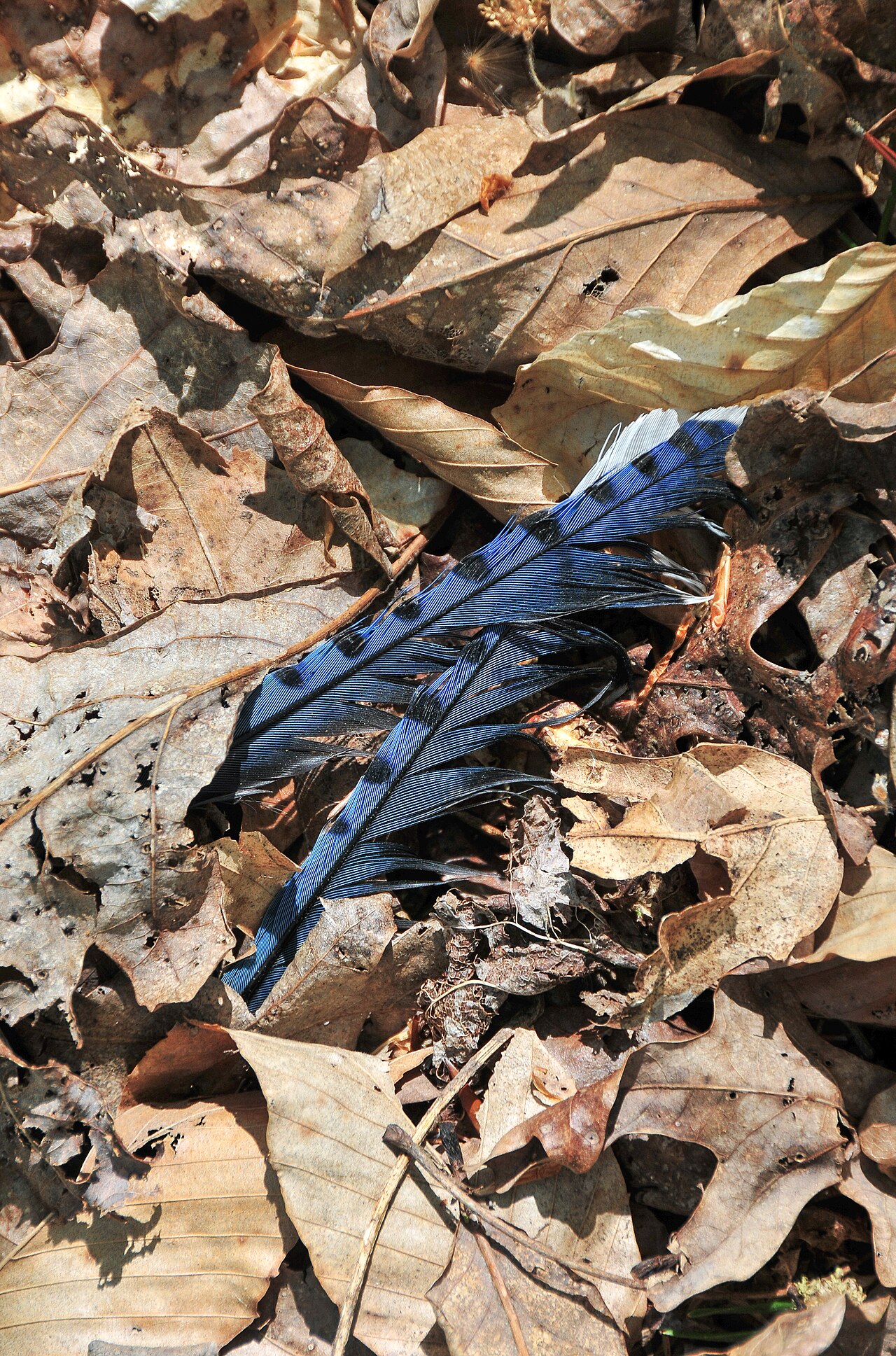
Look for fine black bars across the blue and a white tip or patch. Blue jay wing and tail feathers carry both marks. A bluebird feather is plain blue without barring, and a Steller’s jay feather is darker overall. Compare your photo with a field guide before you name the bird.
How does West Nile virus spread from birds?
Mosquitoes carry it. They pick up West Nile virus when they feed on infected birds, and the bite of an infected mosquito is the most common way people get it. Touching live animals does not spread it. People are dead-end hosts and do not develop enough virus to infect mosquitoes.
What should you do with a dead bird next to a feather?
Leave both where they lie if you can. If you need to remove the bird, the CDC advises gloves or double plastic bags to place the carcass in a garbage can, with no bare-handed contact. Wash your hands afterward, even after wearing gloves.
Sources
- CDC, How West Nile Virus Spreads
- U.S. Fish and Wildlife Service, Migratory Bird Treaty Act of 1918
- eCFR, 50 CFR 10.13 List of Migratory Birds
- U.S. Fish and Wildlife Service, Bald and Golden Eagle Protection Act
- Cornell Lab of Ornithology, Blue Jay Overview