Spiritual Meaning of Cat Staring at You: 7 Messages
The spiritual meaning of cat staring at you starts with attention. In cat folklore, a stare means the cat has singled you out with a message meant for you. Cats have stood between the seen and the unseen world in folklore for as long as people have shared a home with them, and the domestic cat (Felis catus) earned that place by living with us without ever fully belonging to us.
A dog often looks at you to ask for something. A cat’s gaze lands differently, because it holds the look and does not fill the silence. It decides when the moment ends, and people feel weighed by that look.
A cat staring at you carries one of seven messages, namely protection, spirit contact, change ahead, an energy reading, a deceased loved one, trust your intuition, or be present. A calm stare that ends in a slow blink is a good sign, and only hissing or flattened ears turn it into a warning.
What It Means When a Cat Stares at You
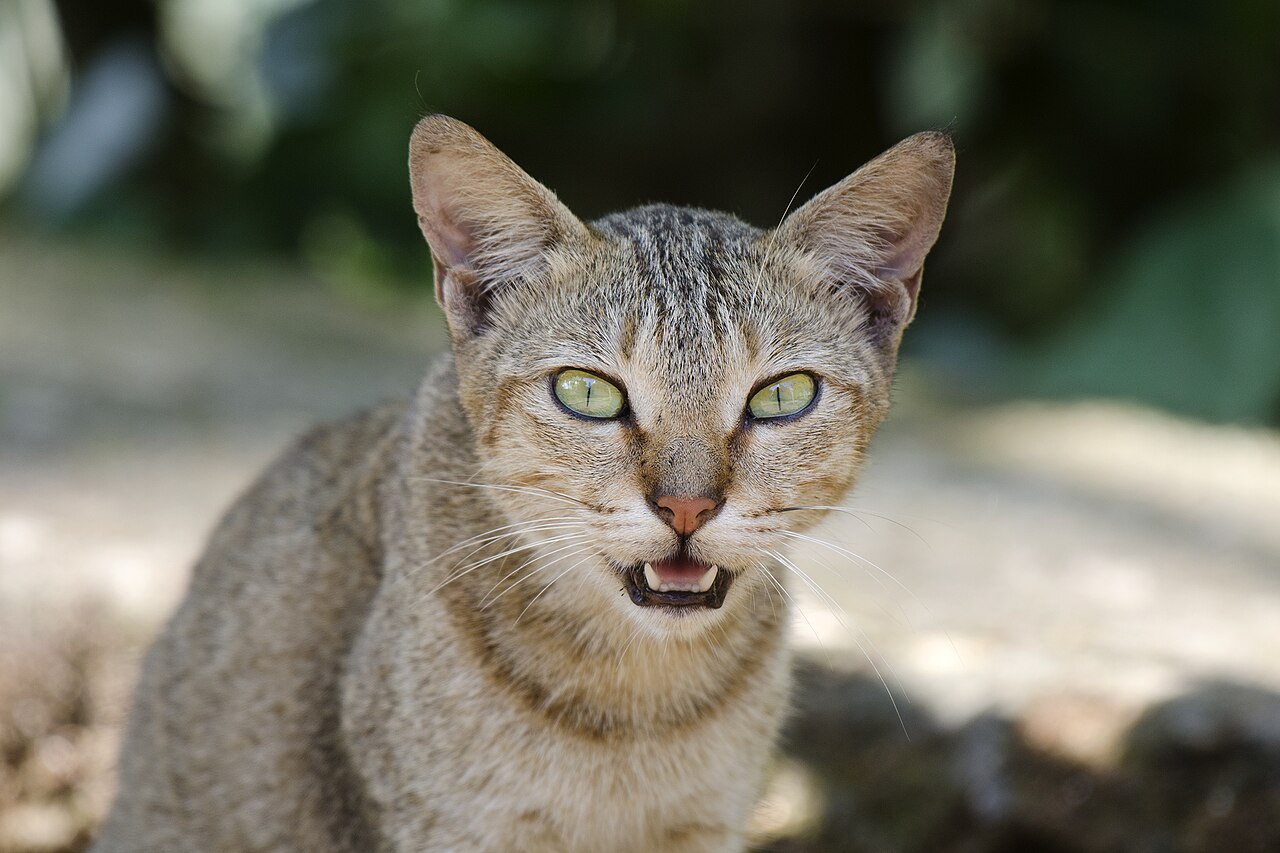
When a cat stares at you, it is directing its attention at you on purpose. A held stare is not random. A cat that stops grooming and fixes its eyes on you has chosen you as the most important thing in the room. That choice is the starting point of every spiritual reading.
Three things decide the meaning. The first is which cat it is, your own pet or a stranger. The second is where it happens, in your bedroom at night or on a sidewalk at noon. The third is your own situation, because a stare during grief carries a different weight than a stare during dinner.
Separate a fixed stare from a soft gaze before you interpret anything. A fixed stare has wide eyes, a still body, and no blinking. A soft gaze has relaxed lids and a loose posture. The first asks for your attention, and the second offers comfort.
7 Spiritual Meanings of a Cat Staring at You
A cat staring at you delivers one of seven messages, and each one has a cue you can spot in the moment. Cats stand for independence and intuition as spirit animals, and the stare is the moment the cat turns both toward you.
1. Protection The cat settles between you and the door and watches you from there. It is standing guard over you.
2. Spirit Contact The cat stares at you, then past you at an empty spot, then back. Something unseen shares the room and means no harm.
3. Change Ahead The stare comes in a week of endings and offers, a new job or a move. The cat marks the threshold and tells you to step through it.
4. Energy Reading The cat checks your mood. This stare shows up when you are stressed or ill, and the cat stays close afterward, sometimes on your chest or lap.
5. A Deceased Loved One A cat tied to a lost person, their old pet or a cat that appears near their home or grave, holds your gaze. The bond did not end with the death.
6. Trust Your Intuition The stare arrives while you avoid a decision. You already know the answer, and the cat refuses to look away until you admit it.
7. Be Present The cat stares while you scroll your phone or spin through worries. It pulls you back into the room and into this minute.
When a Cat Looks You in the Eye: Stare vs. Slow Blink
When a cat looks you in the eye without blinking and holds its body still, it is alert or issuing a challenge. Unbroken eye contact is a serious signal between cats. A cat that stares like this is measuring you, not greeting you. Hold back and let it decide the next move.
A stare that ends in a slow blink means trust. The cat lowers its lids, holds them half closed for a beat, and opens them again. Spiritually, this is acceptance, the cat telling you that you belong in its circle. Half-closed eyes through the whole gaze show relaxation, not a warning.
Pupils change the reading. Wide, round pupils in normal light point to excitement or fear, and in that state the stare is a reaction, not a message. Wait until the eyes soften before you look for meaning.
Where and When the Cat Stares at You
Where and when a cat stares at you matters as much as the stare itself. The same look means one thing at midnight in your bedroom and another on a garden path at noon.
At Night A cat staring at you at night guards your sleep. In Egyptian myth, the Great Cat of Ra kills the serpent Apep, the enemy of the sun, each night, and that image of the cat keeping watch through the dark still shapes the night stare. The cat watches over you during the hours you cannot watch yourself, and waking to that stare is a sign of protection, not threat. Cats are crepuscular and most active at dusk and dawn, so a stare at 4 a.m. falls in the cat’s own busy hours.
A Visiting Cat at Your Home A cat that comes to your home and stares at you is a welcome sign. A cat that walks into your house brings prosperity in Scottish folklore, above all a stranger’s black cat.
Through a Window A cat staring at you through a window brings a message from outside your comfort zone. The glass is the boundary. Something you want waits on the other side of a habit you keep.
On Your Path A cat that walks ahead of you, then stops and turns to stare, asks you to pause. A choice is close, and the cat wants you to make it slowly.
In a Dream A cat staring at you in a dream points to your own intuition and independence.
| Situation | Typical spiritual reading | Likely everyday cause |
|---|---|---|
| While you meditate | Confirmation that you reached a calm, open state | Your stillness and slow breathing invite it closer |
| While you cry | Comfort from a guardian who feels your grief | Unfamiliar sounds and movements draw its attention |
| At a closed door | An opportunity waiting to be opened | It wants out, in, or a look at what is behind it |
| Near a newborn | Protection over a new soul in the home | New smells and sounds catch its curiosity |
| Stares, then leaves | Message delivered, nothing more needed | It checked on you and lost interest |
| Through a mirror | Look at yourself honestly | It notices movement in the reflection |
Does the Cat’s Color Change the Meaning?
Yes, the color shifts the message. A black cat staring at you stands for protection and shadow work, the part of yourself you prefer not to look at. Black cats count as lucky in Britain and Japan, while medieval Europe tied them to witchcraft.
A white cat brings clarity. Its stare signals a fresh start and spiritual purity, a clean page after a confusing stretch. An orange cat carries warmth and confidence. Its stare is a nudge to act on something you keep postponing.
Some modern writers link gray and tabby cats with balance. Their stare offers steady, everyday guidance instead of a dramatic sign. Keep your routine, trust your pace, and stop waiting for a bigger signal than the one in front of you.
Are Cats Spiritual Protectors?
In many traditions, cats are spiritual protectors, and the stare is how they keep watch. A cat that sits near you and stares at a spot just beside you is watching over you. It keeps its eyes on the space you are not watching.
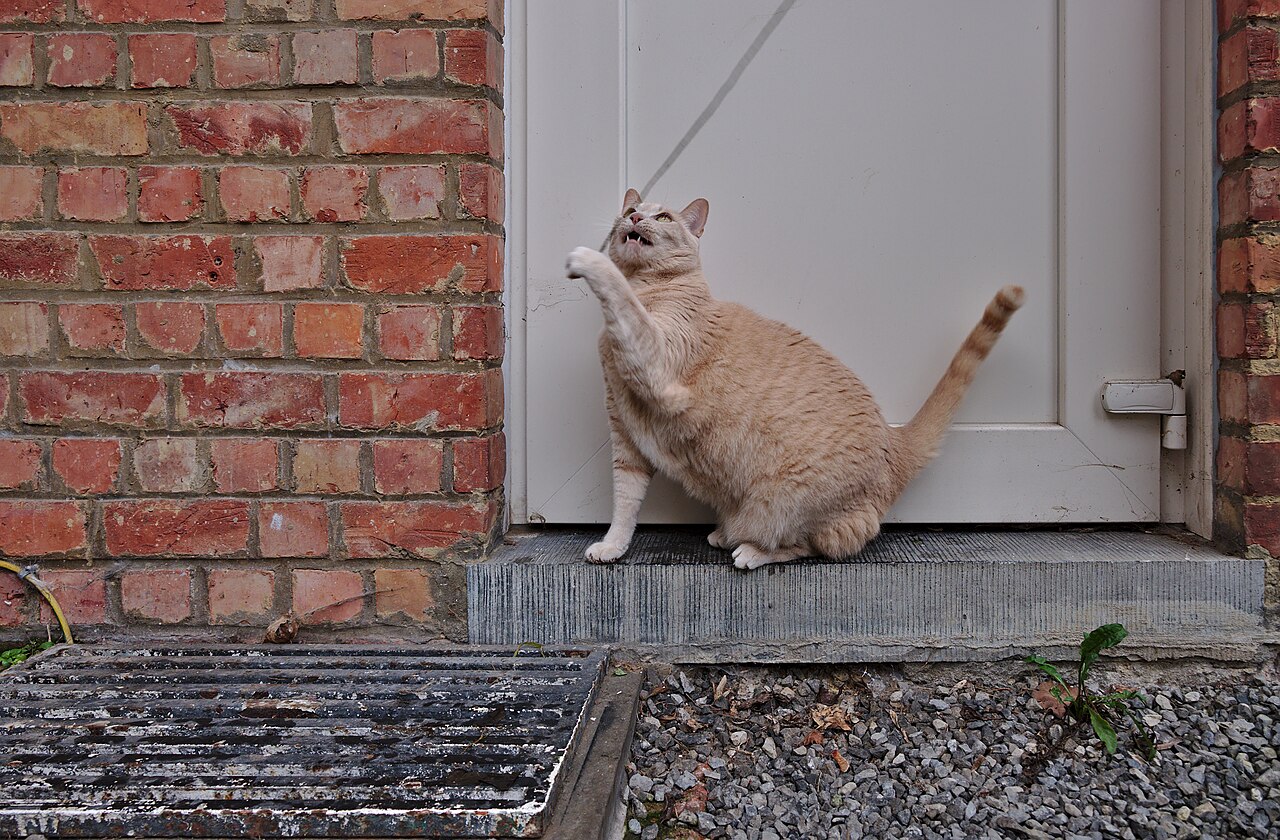
Cats are widely believed to detect evil spirits, and the fixed stare at an empty corner is the classic sign of a presence. The cat also hears what you cannot, such as an insect or a mouse in the wall. A calm, curious stare means the presence is harmless. A cat that hisses at the corner and backs away is warning you, and it places itself between you and the spot.
Black cats count as especially strong protectors. In ancient Egypt, cats belonged to Bastet, goddess of the home and guardian of families. In modern witchcraft, the black cat is the familiar whose dark coat absorbs negative energy before it reaches its household.
Can a Cat Sense a Good Person?
Cats read how a person behaves, and they often approach people who stay calm and let the cat start the contact. Spiritually, the stare plus the approach is approval of your energy: the cat measured you from a distance and may have decided you are safe. A 2021 Kyoto University study found that cats did not avoid people who behaved badly toward their owner, so what the cat judges is how you act toward it.
Cats like calm, patient people most, and the quiet guest who lets the cat come first wins it over while the eager cat lover gets ignored.
A stare without an approach is not rejection. It is assessment. The cat is still reading you, and many cats need several visits before they come close. Give it time and stay where you are.
Is a Cat Staring at You Good Luck or Bad Luck?
A calm cat staring at you is good luck. Japanese tradition links cats with good fortune, which is the meaning of the maneki-neko, the beckoning cat in shop windows, and a relaxed stare carries that same promise.
In the U.S., the bad-luck belief attaches to black cats crossing a path, not to cats staring. A black cat crossing your path carries the old superstition, and the stare does not inherit it. A cat that stops in front of you to look at you is engaging with you, not cursing your road.
A stare with flattened ears is a warning. It is not a curse. It tells you to back off from the cat, and in a spiritual sense, to slow down in a situation where you are pushing too hard.
Your Own Cat vs. a Stranger’s Cat Staring at You
Your own cat’s stare speaks through your bond, and a stranger’s cat speaks as an outside messenger. When your pet stares, the message is comfort or a check-in. It knows your moods and notices when one shifts.

An unknown or stray cat staring at you is a stronger sign. It owes you nothing, has no food bowl waiting with you, and still chose to look. A stray that returns and stares at you again and again is choosing you. Pay attention to the days it shows up.
A neighbor’s cat staring over a fence carries a boundary reading. It sits on the line between its territory and yours and watches what you do. Respect the fence and let the cat cross it on its own terms.
Natural Reasons Cats Stare at You
Cats stare at you for practical reasons too, and hunger leads the list. A stare near feeding time is a reminder that the bowl is empty. Cats learn routines fast and use the stare to enforce them.

A stare with the tail held up or a short chirp is a request for attention or play. A stare from a crouched body with a twitching tail signals fear or aggression, so give that cat space.
A soft stare from a resting cat is affection. None of these needs a spiritual explanation, and each one deserves a check before you look for one.
A stare at an empty wall often tracks a sound. Cats hear well above 60 kHz, more than three times the human limit of 20 kHz, so a mouse in the wall or an insect behind the curtain is loud to the cat and silent to you.
Spiritual Sign or Normal Behavior? How to Tell
Rule out the natural reasons first, then look for a sign. Check the food bowl and the clock. If dinner is late, a toy is under the couch, or a noise just came from the hallway, the stare has its answer.
A sign coincides with a moment that matters. A stare during a hard decision, right after a loss, or in the middle of an emotional evening carries more weight than a stare at 6 p.m. beside the kitchen counter. An unusual cat or an unusual place weighs more than your own cat at dinner.
What to Do When a Cat Stares at You
Return a slow blink and look slightly away. This tells the cat you trust it and pose no threat. A relaxed cat answers with a blink of its own.
Then take a breath and name what is on your mind right now. Say it out loud or write it down. If the stare carries a message, it connects to that thought, and naming it is how you receive it.
Do not reach for a staring stray. According to the CDC, rabies spreads primarily through bites or scratches from an infected animal, and a startled cat bites and scratches fast. Let a visiting cat approach you, not the other way around. Stay at a distance, sit or crouch to the side without staring, and keep your hands to yourself.
Frequently Asked Questions
Do cats see you clearly when they stare at night?
Yes, in dim light. Cats need about one sixth of the light humans need to see, thanks to the tapetum lucidum, a reflective layer behind the retina. A bedroom that looks dark to you is a clear view for the cat.
Does slow blinking back at a cat work?
Yes. In a 2020 University of Sussex study published in Scientific Reports, cats narrowed their eyes back at owners who slow blinked at them, and they approached an unfamiliar researcher more readily after that person slow blinked.
Can a cat recognize you by your voice?
Yes. A 2013 University of Tokyo study in Animal Cognition found that cats told their owner’s voice apart from strangers’ voices and answered mainly with ear and head movements instead of walking over. A stare without an approach fits that same quiet recognition.
Is a stare with a meow meant for you?
Yes. Adult cats rarely meow at other cats and keep the meow mostly for people, so a stare with a meow is aimed at you as a request for food or attention.
Do cats prefer female owners?
No, cats do not clearly prefer one gender. They bond with people who feed and handle them calmly. A man who speaks softly and keeps a steady routine earns the same trust. The cat watches behavior, and the stare is part of that watching.
Do cats realize we aren’t cats?
Yes, at least in how they talk to us: adult cats meow at people far more than at other cats, and they also use signals like the slow blink and the tail-up greeting with humans.
Sources
- Centers for Disease Control and Prevention, About Rabies
- Humphrey et al. 2020, The role of cat eye narrowing movements in cat-human communication, Scientific Reports
- Saito and Shinozuka 2013, Vocal recognition of owners by domestic cats, Animal Cognition
- Chijiiwa et al. 2021, Cats show no avoidance of people who behave negatively to their owner, Animal Behavior and Cognition