Spiritual Meaning of Firefly in House (and Why It Glows)
The spiritual meaning of firefly in house sightings is hope, a small light that finds its way into your home after dark. Fireflies belong to summer lawns, meadows and field edges, so one blinking in a kitchen or bedroom feels like a message delivered on purpose.
A firefly in your house came in through an open door and lost its way in the indoor light while flashing for a mate. Spiritually, many people read its glow as hope, guidance, or a sign from a departed loved one. Cultures differ on whether it is a good or a bad omen.
What a Firefly in Your House Means Spiritually
A firefly in your house means hope has found a way in. Whatever feels heavy right now has an opening. The second meaning is guidance. A firefly that appears during a confusing phase points you back to your own judgment, the quiet light you already carry. Many people also take the visit personally, as a sign from a departed loved one who wants you to know they are near. Timing sharpens the message, and a firefly that arrives on an anniversary or after a hard day feels pointed for a reason.
Many people read a firefly indoors as a good sign, but the traditions disagree. Some Thai and Indonesian beliefs treat it as a warning or a death omen. A firefly found dead on the sill is commonly read as a phase coming to an end, and a live firefly that keeps glowing as luck still arriving. The Bible does not mention fireflies, but some modern readers link the glow to “You are the light of the world” in Matthew 5:14.
A ladybug in the house carries the same good-luck reading.
Why a Firefly Glows in Your House at Night
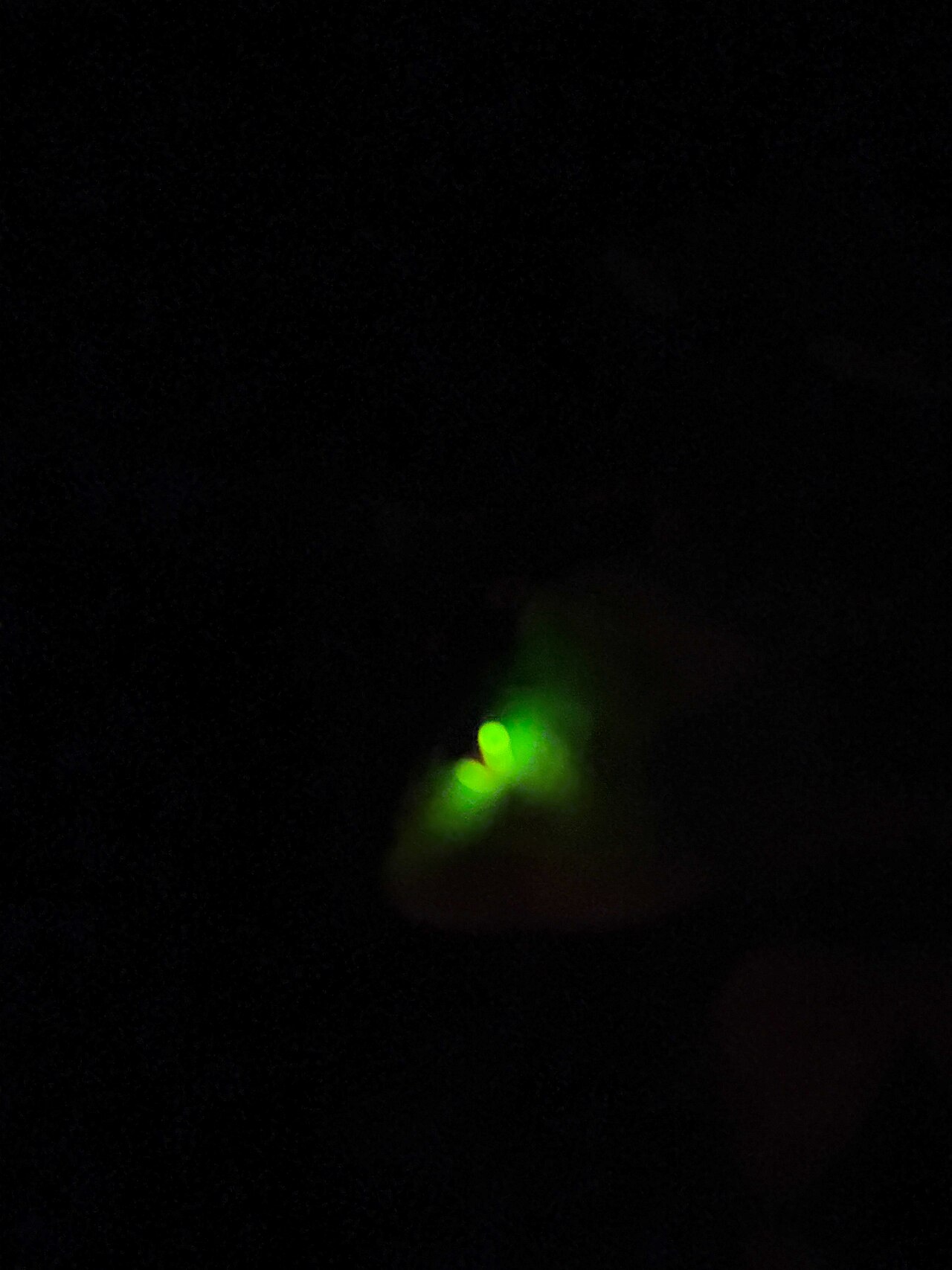
A firefly glows in your house because it is looking for a mate. Fireflies are beetles (family Lampyridae), and as the National Park Service explains for the Great Smoky Mountains, males flash in flight while females answer from below. Each flash is a courtship signal, and every species has its own code.

Lamps, porch lights and open screen doors pull fireflies off course. A firefly drifts in through a door left open on a warm evening, and indoor light swamps the dark it needs for signalling. A fly in the house usually gets in through the same open doors and torn screens.
Once inside, a lone firefly may keep flashing for a partner that never answers. It can also stop flashing and rest. Beetles in the house belong to the same order, Coleoptera, but the kinds that usually turn up indoors do not glow.
Spiritually, a light that keeps searching in the dark means persistence pays. Keep signalling what you want, even when the answer is slow. A firefly you find during the day is resting until dusk, and it brings quieter, low-key encouragement. Gnats in the house also gather around indoor lights on summer evenings, but they give off no glow of their own.
| Where or how you see it | Common spiritual reading | Likely real cause |
|---|---|---|
| On a window | A message waiting to be let in | Drawn to the light behind the glass |
| In the bedroom | Guidance or a visit from a loved one | Came through an open door and lost the dark |
| Landing on you | Personal encouragement | Resting after flying in a closed room |
| Several at once | Abundance and good fortune | Gap in a screen near a busy lawn |
| Dead on the sill | A phase coming to an end | Dried out indoors with no way out |
Firefly Omens in Thailand and Japan
In Thailand, a firefly entering the home is read two ways. Thairath lists it as a warning about insincere friends or deception, and its folk-belief section includes the claim that a firefly in the house foretells a death in the household. Good luck and prosperity is the Chinese reading on the same page.
In Japan, fireflies, called hotaru, are linked in folklore with the souls of the dead, including warriors of the Taira (Heike) and Minamoto (Genji) clans. The Heike firefly (Aquatica lateralis) and the larger Genji firefly (Luciola cruciata) are named after those clans, though the origin of the names is uncertain. Thairath also notes a Japanese reading of fireflies as a sign of coming rain.
Firefly symbolism reaches further than the house, into dreams, totems and love.
Frequently Asked Questions
How rare is it to see a firefly?
Not rare on a warm June or July evening in the eastern United States, but fireflies are getting scarcer. A 2024 Xerces Society and IUCN assessment found about 1 in 7 assessed North American species at risk of extinction. Light pollution, habitat loss and pesticides are the causes most often cited. A firefly inside your home is rarer still, since it needs an open door and a warm night with adults flying outside.
Does a firefly in the house mean someone has died?
No, not in Japanese tradition, where the hotaru carries the soul of someone already gone, so a firefly at home after a loss is read as that person visiting. Some Thai folk belief instead reads a firefly in the house as foretelling a death in the household.
Can a firefly in the house hurt you or your pets?
No, adult fireflies do not bite or sting people, but their bodies hold bitter defensive chemicals (lucibufagins) that are harmful to some animals, especially pet reptiles. A cat or dog that swallows one or two usually shows at most mild stomach upset, but call a vet if it vomits or seems unwell. The lucibufagins are toxic to lizards such as bearded dragons, so keep fireflies away from pet reptiles entirely.
Sources
- National Park Service, Fireflies (Great Smoky Mountains National Park)
- Thairath, Firefly beliefs (Horoscope and Belief)
- The Japan Times, Fireflies set the nights alight
- ASPCA, Bad Bugs and What You Should Do to Keep Your Pets Safe
Explore more: Insect Spiritual Meanings: 15 Bugs and What They Signal