Light Brahma Chicken: Size, Eggs, and Heat Tolerance
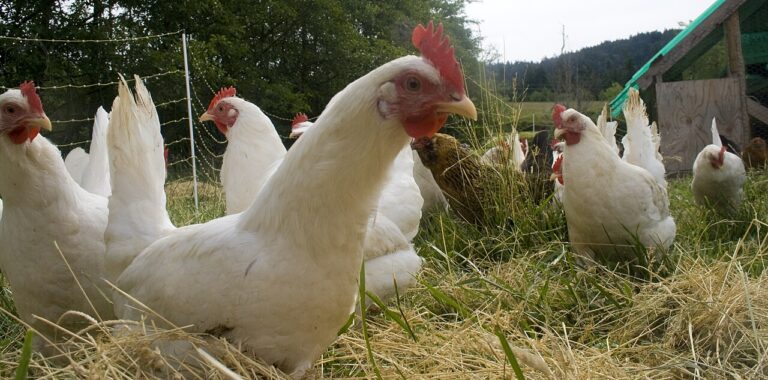
The light Brahma chicken is the white-and-black variety of the heritage Brahma breed, known for brown eggs, a calm temperament, and better tolerance of cold than heat. Its pearl-white body, black-striped neck, and black tail make it easy to pick out of any flock.
Light Brahmas suit backyard keepers who want a gentle, cold-hardy bird and accept slow growth and moderate laying. They are a poor fit for hot, humid climates without shade and airflow, and for muddy yards, because the feathered feet hold moisture.
Light Brahmas are calm heritage chickens. APA standard adults weigh 12 lb (roosters) and 9.5 lb (hens). Cackle estimates 150 to 200 brown eggs yearly and lists unsexed chicks at US$5.19 and started pullets at US$46, excluding shipping. Heat monitoring matters as temperatures approach 85°F (29°C), a general poultry guideline.
What Is a Light Brahma Chicken?
The light Brahma is a white variety of the large heritage Brahma breed, with black neck and tail markings, a pea comb, and feathered legs and feet. According to The Livestock Conservancy, Brahmas were developed in America from large chickens imported through Shanghai, and the Light variety entered the American Standard of Perfection in 1874.
Brahma chickens come in other varieties, including buff and dark, and each has its own color pattern. The light variety is the white one with black hackle and tail, so a buff or dark bird is not a light Brahma even when the body shape matches.
The American Poultry Association standard describes adult color and standard weights. Hatchery production birds can differ from exhibition stock, and chicks have down rather than the finished adult pattern. Ask which type the seller offers and request photographs of the parent flock when adult markings matter.
How Big Do Light Brahma Chickens Get?
Light Brahma chickens get big: a mature standard rooster weighs about 12 lb (5.4 kg) and a hen about 9.5 lb (4.3 kg) under the American Poultry Association standard. Younger birds weigh less, with cockerels listed at about 10 lb (4.5 kg) and pullets at about 8 lb (3.6 kg).
Growth is slow. Light Brahmas typically take longer than lighter breeds to reach full size, so a young bird looks small for months before it fills out. Plan low roosts, wide nest boxes, and generous run space for an adult this heavy.
Bantam chickens include smaller versions of standard breeds, including the light Brahma. The Heritage Poultry Conservancy’s APA-referenced profile lists Brahma bantam standard weights of 38 oz (1.1 kg) for adult roosters and 34 oz (960 g) for adult hens; 30 oz (850 g) is the pullet weight. Bantams still need enough room to forage and avoid other birds.
| Trait | Standard | Bantam |
|---|---|---|
| Rooster weight | 12 lb (5.4 kg) | 38 oz (1.1 kg) |
| Hen weight | 9.5 lb (4.3 kg) | 34 oz (960 g) |
| Cockerel weight | 10 lb (4.5 kg) | Smaller than the rooster |
| Pullet weight | 8 lb (3.6 kg) | Smaller than the hen |
| Egg size | Medium to large | Small |
| Egg color | Brown | Brown |
Light Brahma Chicken Price
As a US price example, Cackle Hatchery lists light Brahma chicks at US$5.19 unsexed, US$6.49 female, and US$4.22 male in its smallest price tier, before shipping. Prices depend on sex, order size, seller, and availability; adult hens do not automatically cost more than every started pullet.
Cackle’s started female light Brahmas are listed at US$46 each at 15 to 22 weeks old, although the listing is currently unavailable. These are pullets, not mature hens. For a fully grown laying hen, request a current seller quote with age and laying status specified; this hatchery listing does not establish an adult-hen price. Compare the total including shipping, which can exceed the bird’s price.
The purchase price is only the start. Large birds typically eat more than small breeds, so include ongoing feed costs when comparing them. Count that before you choose a standard light Brahma over a bantam.
Light Brahma Eggs and Egg Color
Light Brahma hens lay brown eggs, and the eggs run medium to large.
Laying is moderate: Cackle Hatchery estimates 150 to 200 eggs per year for its light Brahmas. Brahmas are known for winter laying, although age, molt, daylight, and broodiness can interrupt production. Leghorn chickens typically produce more eggs than Brahmas and suit keepers whose main priority is egg output.
Black and white chicken breeds include the light Brahma, which earns its place in a flock for looks and temperament more than output. Expect gaps in laying during the molt and when days are shortest, even though Brahmas lay better in winter than many breeds.
Light Brahma Temperament and How Chickens Behave
Light Brahmas are typically calm, friendly birds, and many become comfortable following a familiar keeper. Handling tolerance varies with the individual and its experience; a calm breed reputation does not guarantee a docile rooster.
They handle crowding poorly, so give each bird room to move and a separate feeder in a mixed flock. Cochin chickens are another large, feather-legged breed with similar space needs, which makes them a sensible flock mate.
A friendly bird still needs careful handling: CDC tracks Salmonella outbreaks linked to backyard poultry.
Ten interesting chicken facts help explain everyday flock behavior:
- Hens can lay eggs without a rooster.
- A rooster is needed to fertilize eggs.
- Chickens scratch the ground while foraging.
- They dust-bathe to maintain their plumage.
- Flocks form a pecking order.
- Chickens communicate through calls and body posture.
- They replace feathers during a molt.
- Eggshell color depends on the bird’s genetics.
- Chickens pant to lose heat.
- Broody hens can pause laying while sitting on eggs.
What Temperature Is Too Hot for Light Brahma Chickens?
Monitor light Brahmas closely as temperatures approach 85°F (29°C), especially in humid weather. University of Minnesota Extension reports that poultry begin changing behavior and reducing feed intake as temperatures approach that level; temperatures approaching 100°F (38°C) can be lethal without relief. These are general poultry guidelines, not a measured light Brahma cutoff, and humidity and housing conditions change the risk.
Heat stress shows up as panting, open beaks, wings held away from the body, lethargy, and less eating. A bird showing these signs needs shade and cool water right away. Move it to a cooler spot and call a poultry vet if it does not recover.
Shade, cool fresh water, and airflow through the coop are the basics. Add extra waterers so the heaviest birds do not have to compete, and avoid handling birds at the hottest hours. Cold is the easier problem, since the dense feathering and small pea comb suit freezing weather.
Frequently Asked Questions
How can you tell if chickens love you?
Chickens that voluntarily approach you, remain relaxed nearby, and accept gentle contact are showing comfort and trust. Following can also mean they expect food, and a trusting bird may still dislike being picked up. To say “hi,” approach calmly and use a consistent, gentle voice; chickens have no fixed call equivalent to a human greeting. To say “I love you,” offer predictable care, calm company, and contact the bird chooses rather than trying to imitate a special phrase.
What smells do chickens hate?
Strong smells such as citrus and vinegar are often named as ones chickens avoid, but little evidence backs this up. Clean bedding, dry litter, and regular coop cleaning do more to keep a coop pleasant for hens than any scent. Treat repellent claims as unproven before you spend money.
What chickens lay the prettiest colored eggs?
Breeds that lay blue, green, or olive eggs, such as Ameraucanas and Olive Eggers, are the usual picks for colorful baskets. Light Brahmas lay plain brown eggs, so they add shade variety rather than color. Prettiest is a matter of taste, and a mixed flock gives the widest range.
Are light Brahma chickens good for beginners?
Yes, their calm, friendly nature makes them forgiving birds for new keepers. They need roomy housing, dry ground for their feathered legs, and shade in hot weather. Beginners in hot, humid climates should plan cooling before buying, and anyone short on space should consider the bantam size.
Can light Brahmas handle cold winters?
Yes, light Brahmas are known as cold-hardy birds, thanks to dense feathering and a small pea comb that resists frostbite better than large single combs. Cold still calls for a dry, draft-free coop with unfrozen water. Cold hardiness does not remove the need to monitor birds during freezing weather, and summer shade does not replace suitable winter shelter.
Sources
- CDC, Salmonella: outbreaks linked to backyard poultry
- CDC, About Campylobacter
- CDC, About Psittacosis