Bugs That Look Like Earwigs: 7 Lookalikes, 1 Quick Tell
Most bugs that look like earwigs are rove beetles, silverfish or cockroach nymphs, and the tail end tells them apart. A long, dark bug with a pointed rear in the bathroom or under a flowerpot raises one quick question: earwig or something else?
The bugs mistaken for earwigs are rove beetles, silverfish, springtails, cockroach nymphs, centipedes, ants and termites. Among the bugs on this list, only an earwig carries forceps-like pincers at its tail tip. Rove beetles raise a bare, pointed abdomen, silverfish trail thin bristles, and centipedes show legs along the whole body.
What an Earwig Looks Like, Starting With the Rear End
An earwig is the bug with forceps at its tail. The pincers are called cerci. Eyeless, wingless forcepstails (japygid diplurans) also have pincer-like cerci, but they are rare finds in soil. The European earwig (Forficula auricularia) is the species most Americans find, and its body is flat, glossy and reddish brown. Short wing covers sit behind the head and leave most of the abdomen bare.
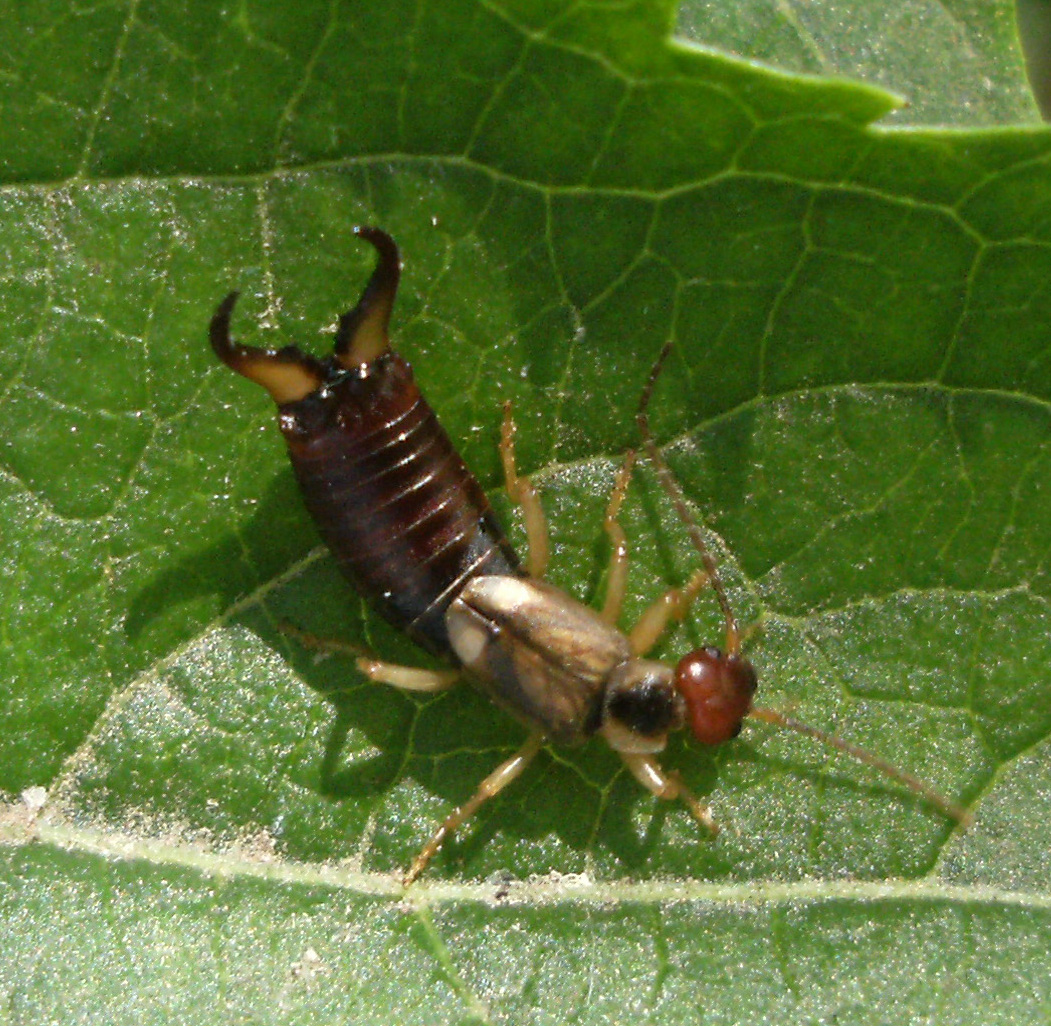
The pincers also tell you the sex. Males carry curved pincers that bow outward like calipers. Females carry straight ones that nearly touch at the tips. People also call the earwig a pincher bug, and both names mean the same insect.
Earwig nymphs look like smaller, paler adults, and they already carry pincers. Earwigs are active at night and hide by day in damp gaps under boards, pots and mulch. Females lay about 30 to 60 eggs in a soil burrow in late winter and guard both eggs and young nymphs, a rare habit among insects. Nymphs molt four times and reach adult size by summer, with one generation a year in most of the US.
7 Bugs That Look Like Earwigs and the One Tell for Each
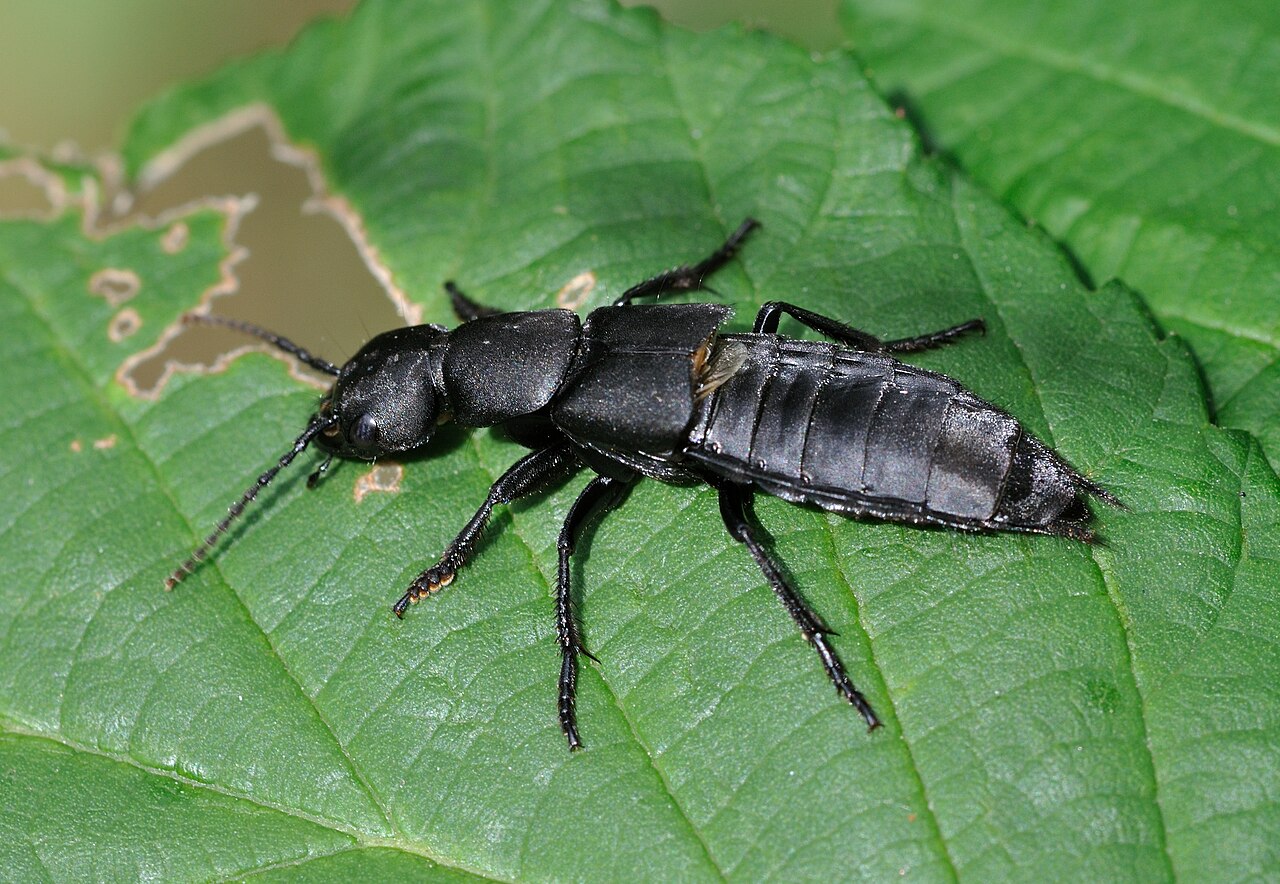
Rove beetles (family Staphylinidae) are the closest match. They have short wing covers and a long, flexible abdomen just like an earwig, but the tail ends in a point, not pincers. The devil’s coach horse (Ocypus olens) curls that tail over its back when disturbed, a threat display with no forceps behind it.
Silverfish (Lepisma saccharinum) and springtails (Collembola) turn up in the same damp bathrooms and basements. A silverfish is silver gray, wingless and tapered, and it trails thin bristles from its tail. Springtails are tiny and jump when touched, which no earwig does. The house centipede (Scutigera coleoptrata) carries a pair of legs on nearly every body segment, so it looks like a moving fringe.
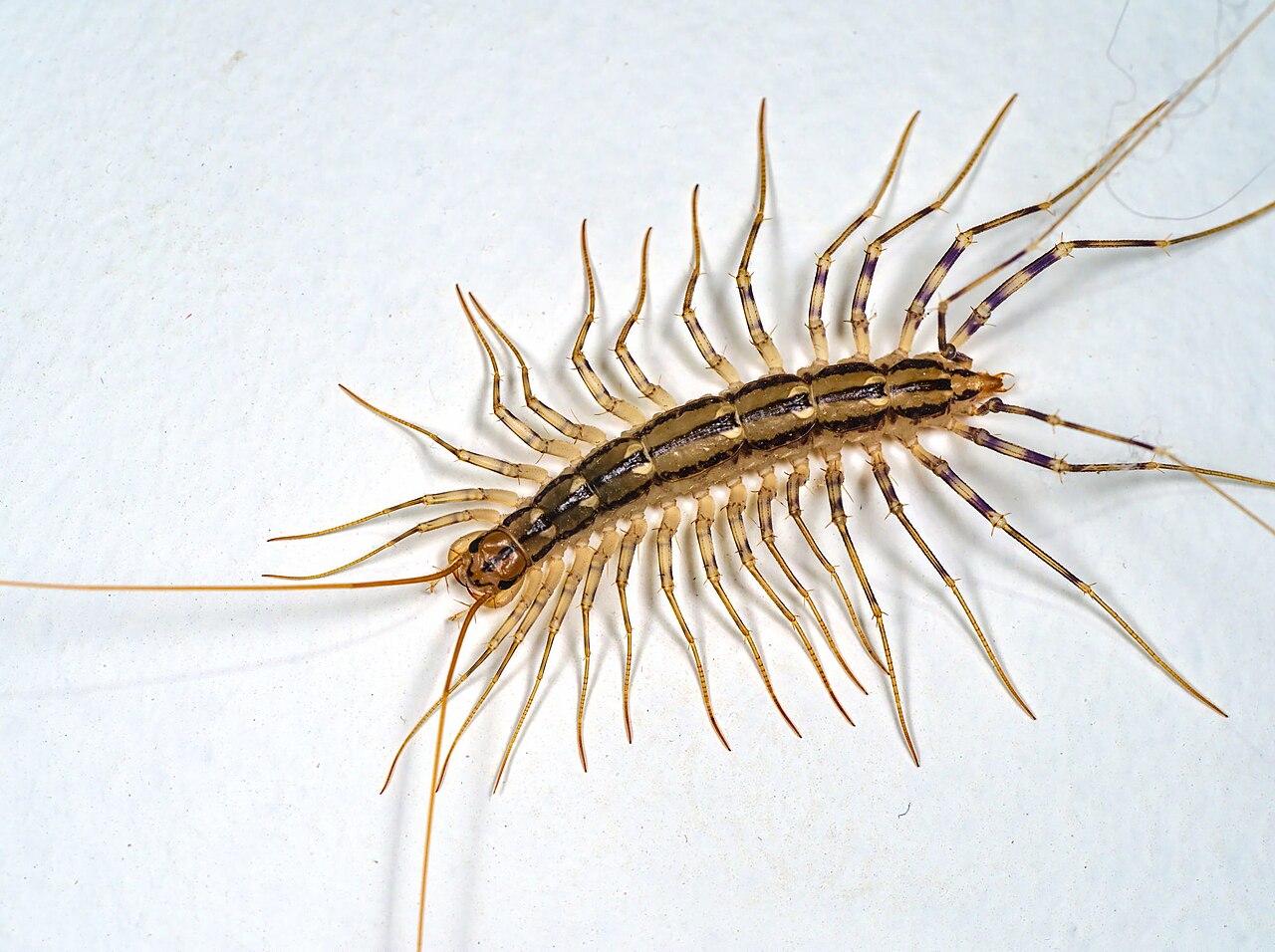
The last three lookalikes get confused with young earwigs. Baby earwigs are pale and soft, and so are termites, cockroach nymphs and ants. A German cockroach nymph (Blattella germanica) has long, threadlike antennae and two short stubs at the tail, not pincers. Termites such as the eastern subterranean termite (Reticulitermes flavipes) have a thick waist and stay hidden in wood or mud tubes. Ants have a pinched waist and elbowed antennae, and they travel in lines instead of hiding alone.
| Bug | Rear end | Wings | Legs and antennae | Usual indoor spot |
|---|---|---|---|---|
| Earwig | Pincers (cerci) | Short covers, hind wings folded beneath | Six legs, long beaded antennae | Bathrooms, under mats and pots |
| Rove beetle | Bare pointed tip, raised | Short covers | Six legs, short antennae | Doorways, damp corners |
| Silverfish | Thin trailing bristles | None | Six legs, long antennae | Bathrooms, closets, stored paper |
| Springtail | Hidden jumping fork | None | Six legs, short antennae | Sinks, houseplant soil |
| Cockroach nymph | Two short stubs | None yet | Six legs, very long antennae | Kitchens, under appliances |
| House centipede | Long trailing legs | None | Many long legs, long antennae | Basements, bathtubs |
| Ant | Rounded abdomen | Workers wingless | Six legs, elbowed antennae | Counters, along trails |
| Termite | Blunt rounded tip | Workers wingless, swarmers with long wings | Six legs, straight beaded antennae | Inside wood, window sills |
Are Earwigs in the House Harmful?
One earwig indoors means little, and it poses no danger to people. An earwig pinch comes only from handling the insect, and earwigs carry no venom. The story that earwigs crawl into human ears is folklore, and it is linked to the insect’s name, which comes from Old English ēare (ear) and wicga (insect). Earwigs do not damage wood, fabric or stored food. Termites are the one lookalike on this list that harms the house, so a pale, thick-waisted bug inside wood calls for an inspection.
Moisture is the main draw. Earwigs follow damp soil, outdoor lights and mulch piled against walls, and from there they slip under doors and through gaps around pipes. Earwigs in the house are typically outdoor insects that wandered in, not a colony living in the walls. Penn State Extension describes the European earwig as an outdoor pest that enters homes from damp soil and mulch.
How to Get Rid of Earwig Bugs
Prevention comes down to keeping the house dry and closed. Run a fan or dehumidifier in damp rooms, fit sweeps to door gaps, and pull mulch back from the foundation. A single stray can go out on a sheet of paper or into the vacuum. For several a night, lay a rolled, damp newspaper by the entry point at dusk and shake it into soapy water in the morning. If dozens keep showing up after the rooms are dry and the gaps sealed, a pest control service can treat the foundation perimeter. Getting rid of earwigs for good starts with finding that damp entry point.
Frequently Asked Questions
Where did earwigs originate?
Europe. The European earwig reached North America in the early 1900s and now lives in gardens and homes across much of the US. In Florida the ringlegged earwig, also introduced, is the dominant species. Other earwig species are native to other continents, but the one most Americans find in bathrooms is this import.
Can earwigs crawl in your bed?
Yes, a stray can climb into a bed at night, but unlike bed bugs it does not bite, feed on blood or nest in bedding. One in a bed came in from a damp floor or window nearby.
What is the difference between a silverfish and an earwig?
Three tail bristles against two pincers. A silverfish wears silver scales and eats starch in paper, glue and fabric, while an earwig feeds mostly on decaying plants and small insects.
Sources
- Penn State Extension, European Earwigs
- University of Florida IFAS EDIS, Earwigs (IN875)
- CSIRO, Australian National Insect Collection, Diplura (two-pronged bristletails)