Goat Symbolism: Bible Meaning, Spirit Animal and Signs
A goat stands for independence and provision on the farm, and for sin carried away and judgment in the Bible.
Goats symbolize independence, sure-footed ambition and provision. In the Bible the goat carries sin away as the scapegoat of Leviticus 16 and stands for those Jesus separates from the sheep at the final judgment in Matthew 25. The spirit animal reading keeps the climber, slow and certain steps toward a hard goal.
What Does a Goat Symbolize?
A goat symbolizes ambition and steady progress, because it climbs narrow ledges one tested foothold at a time. A domestic goat (Capra aegagrus hircus) checks each hold on a rock pile, commits, then looks for the next one. That measured climb is the heart of the goat’s meaning, hard goals reached without hurry.
The second meaning is resourcefulness. A goat browses thorn, bark and scrub where other stock would go hungry, so it stands for making do with little. The third is independence inside community. Goats live in herds, yet a single animal will wander off to test a fence line. Mountain breeds like the Alpine goat were bred on exactly that kind of ground.
Horns and headbutting add determination, and determination tips into stubbornness when the animal refuses to be led. Milk and hair add provision and quiet abundance.
Goats in the Bible: What They Symbolize
Goats in the Bible appear as wealth, food, offering and an image of judgment, in both Testaments. A flock was property, an altar goat was a gift to God, and a goat in a vision was a figure for a kingdom. No law in the Bible condemns the goat as an animal, even though the people on the left in Matthew 25 are called cursed.
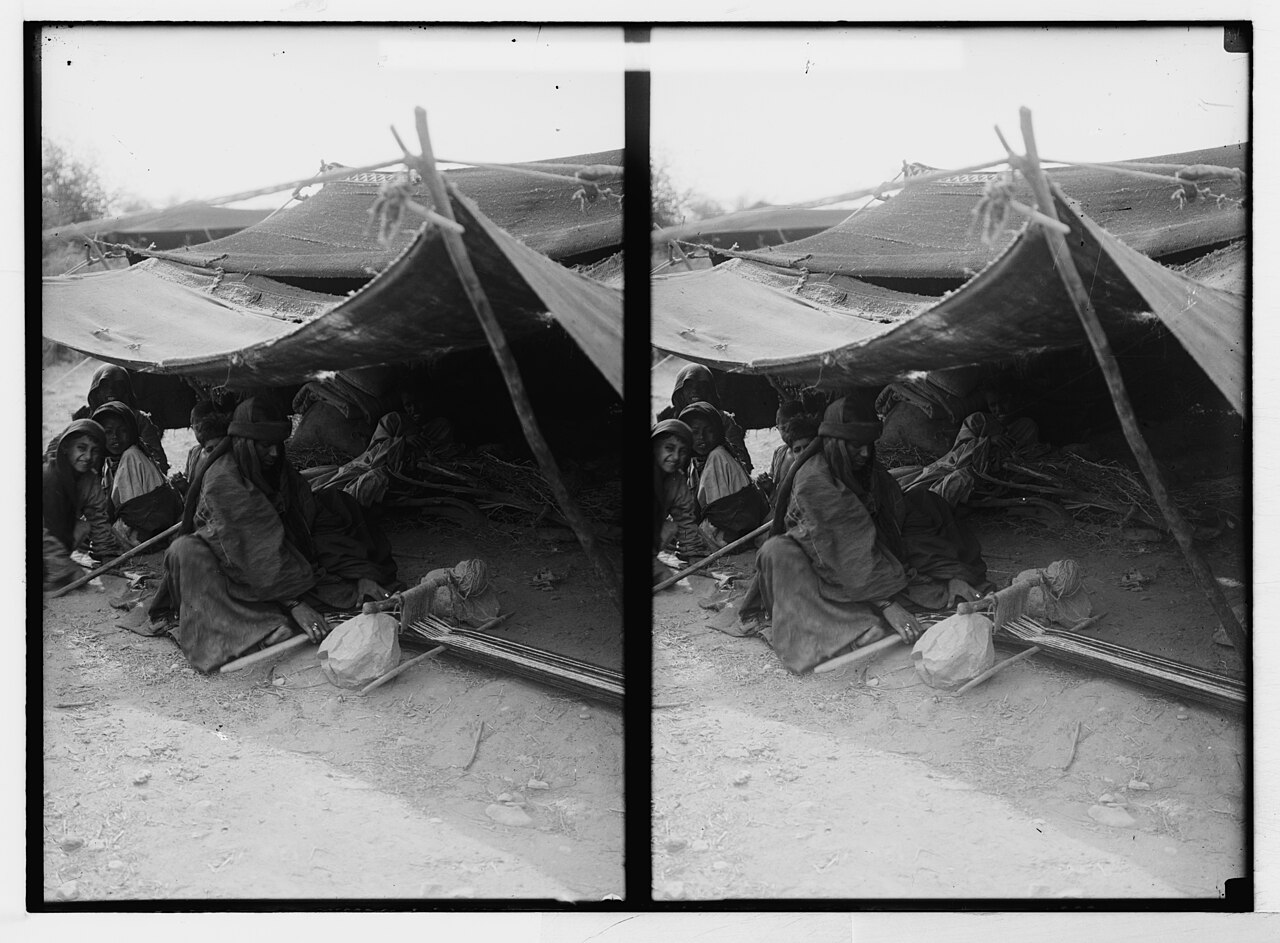
Exodus 26, verse 7, orders curtains of goat hair to cover the tabernacle, the tent where God dwelt among Israel. Proverbs 27, verse 27, promises goats’ milk enough for a household’s food. Dairy breeds like the Saanen goat still fill that role today.
Deuteronomy 14, verse 4, lists the goat with the ox and the sheep among the clean animals fit to eat, and Leviticus names it again and again as an offering. That places the goat on the same side of the law as the lamb.
| Bible verse | Goat appears as | What it signals |
|---|---|---|
| Genesis 30, verse 32 | Speckled and spotted goats as Jacob’s wages | Earned wealth, a shepherd’s livelihood |
| Numbers 7, verse 17 | Five male goats in a tribal leader’s peace offering | Gift and fellowship with God |
| Proverbs 30, verse 31 | The he-goat among things stately in their stride | Dignity and confident movement |
| Isaiah 11, verse 6 | The leopard lying down with the young goat | Peace in the coming kingdom |
| Luke 15, verse 29 | The elder brother never given a young goat for a feast | Celebration withheld, resentment |
The Scapegoat: Leviticus 16 Explained
The scapegoat is the goat that carries Israel’s sins out of the camp on the Day of Atonement. Leviticus 16, verses 7 to 10, describe the high priest taking two goats and casting lots over them. One lot falls for the Lord, and that goat is sacrificed. The other lot falls for Azazel, and that goat is presented alive before the Lord and sent into the wilderness.

Scholars still debate what Azazel means. Some read it as a place in the wilderness, some as a word for the goat that goes away, some as the name of a desert spirit. The text does settle the ritual. In verse 21 the high priest lays both hands on the live goat’s head and confesses over it all the sins of Israel.
Verse 22 says the goat carries all their sins on itself to a remote place in the wilderness. Guilt is removed and carried off, not punished on the spot. Later Jewish tradition in the Mishnah, tractate Yoma, adds that the goat was led to a cliff, and that a strip of crimson wool tied at the Temple turned white once it reached the wilderness, a sign taken from Isaiah 1, verse 18, where sins as red as scarlet become as white as snow.
Sheep and Goats: What Jesus Said in Matthew 25
Jesus said the Son of Man will separate the nations as a shepherd separates sheep from goats, with the sheep on his right and the goats on his left. That is Matthew 25, verses 32 and 33, the opening of the judgment scene. The split is about people, not about how goats behave.
The goats failed a practical test. In verses 42 and 43 the king tells them he was hungry and they gave him nothing to eat, a stranger and they did not take him in, sick and in prison and they did not visit him. The key line is verse 45. Whatever they failed to do for the least of these, they failed to do for Christ.
The verdict in verse 46 is eternal punishment for the goats and eternal life for the righteous. In verse 41 the king calls those on his left cursed, so the text itself makes the goats an image of the damned. The verdict is narrow in one way. The goats are condemned for walking past a need in front of them, not for any named crime.
What Sin Does a Goat Represent?
A goat represents no single named sin in the Bible. The goat carries sin rather than embodying one. Leviticus 4, verse 23, names a male goat as the offering for a leader’s sin, and verse 28 names a female goat for a common person’s sin.
The New Testament reads those offerings forward. Hebrews 10, verse 4, says the blood of bulls and goats cannot take away sins. In Christian reading the altar goat points toward a once-for-all atonement.
Scripture never depicts Satan as a goat. The closest link is Leviticus 17, verse 7, where Israel must stop sacrificing to the se’irim, a Hebrew word for hairy goat-like wilderness spirits that the ESV renders “goat demons.” Medieval artists then gave the devil the horns, hooves and beard of the Greek god Pan, and the occultist Eliphas Levi drew the goat-headed Baphomet in the 1850s. Neither image comes from the Bible.
Goat vs Sheep Symbolism: Why the Bible Contrasts Them
The Bible never says why the goats stand on the left. Sheep and goats grazed in one mixed flock, so the shepherd’s sorting was a picture every listener knew. Later commentators read the sheep as trusting and the goat as self-willed. Ezekiel 34, verse 17, has God judging between rams and goats inside one flock, which only makes sense if the two were kept together.
John 10, verse 27, gives the sheep their meaning: “My sheep listen to my voice; I know them, and they follow me.” The sheep stands for trust. In later Christian reading the goat stands for self-will, the animal that hears the call and goes to check the fence first. Goats browse shrubs while sheep graze grass, so the goat’s head is up and looking for something better.
That reading concerns character, not worth. Goats stay valued animals in every book of the Law, and the different types of goats are kept for the same milk, fiber and meat the Bible prized.
The Goat in Daniel’s Vision and Old Testament Stories
In Daniel’s vision the goat is a conqueror. Daniel 8, verse 5, describes a goat with one prominent horn coming from the west across the whole earth without touching the ground. It charges the ram and shatters both its horns. Verse 21 explains the image. The shaggy goat is the king of Greece, and the great horn is its first king.

Readers of Daniel identify that great horn with Alexander the Great, whose armies crossed from Greece into Persia at speed. The goat here is swift power that rises fast and breaks apart when the horn snaps.
Two Genesis stories use the goat for deception. In Genesis 27, verse 16, Rebekah covers Jacob’s hands and neck with goatskins so blind Isaac mistakes him for hairy Esau. In Genesis 37, verse 31, Joseph’s brothers dip his robe in goat blood to convince Jacob that his son is dead.
Goat Spirit Animal and Totem Meaning
The goat spirit animal means goals reached by small, sure steps. It finishes long projects that others abandon.
The goat shows up before a hard climb, a career change, a move to a new city, a long project with no quick reward. Its message is to test the next hold and commit. People with a goat totem are self-reliant and curious. They are slow to trust, and loyal once they have committed.
The shadow side is stubbornness, the refusal to accept help on a dangerous ledge. Where the goat climbs alone, bison symbolism centers on strength drawn from the herd.
What Does a Goat Mean in Love?
In love the goat begins as a compliment. Song of Songs 4, verse 1, and 6, verse 5, tell the beloved that her hair is like a flock of goats descending from Gilead. The image is a dark herd pouring down a hillside, beauty and life in motion.
The love reading built on the animal follows its character. A goat partner commits slowly, tests the ground and then stays. Early distance is caution, not coldness. That makes the goat a sign of a relationship that starts carefully and lasts.
Goat as a Metaphor: From Scapegoat to GOAT
The goat as a metaphor stretches from blame to greatness. Scapegoat is the oldest and still the most used, one person blamed for a group’s failures, straight out of Leviticus 16.
Stubborn as a goat turns the climber’s persistence into obstinacy. Old goat is a mild insult for an older man, built on the animal’s beard and its reputation for appetite. To get someone’s goat means to annoy them; the origin of the phrase is unknown. Small breeds like the pygmy goat earned the stubborn label by testing every fence.
Sports flipped the word entirely. GOAT is an acronym for greatest of all time, and calling an athlete the GOAT is pure praise.
Goats in Myth and Culture
In Greek myth the goat belongs to Pan, the goat-legged god of shepherds and wild places. The Homeric Hymn to Pan describes him with goat’s feet and two horns, roaming the wooded hills of Arcadia. He is the source of the goat’s link to appetite.
Crete gives the gentler Greek goat. In some versions of the story the goat Amalthea nursed the infant Zeus in a cave while his mother hid him from Cronus. One of Amalthea’s horns is linked to the cornucopia, the horn of plenty that fills with whatever its owner wishes.
Norse tradition gives the goat to Thor. The Prose Edda names his two goats Tanngrisnir and Tanngnjóstr, who pull his chariot. In Gylfaginning Thor kills and cooks them at a farmer’s house, then blesses the goatskins with his hammer the next morning and they stand up alive again. One goat is lame in a hind leg, because the farmer’s son Thjalfi split a leg bone for the marrow. Here the goat stands for renewal, as long as the bones are treated with respect.
Picasso kept a pet goat, Esmeralda, at his villa in Cannes. His 1950 sculpture She-Goat, built from a wicker basket, a palm frond and scrap and later cast in bronze, is in the collection of the Museum of Modern Art in New York.
Where You See a Goat: Sightings, Dreams and Colors
A goat sighting reads differently on a trail, in a dream or at a petting farm.
Goat crossing your path. A goat crossing your path is a nudge to keep climbing.
Goat in a dream. A climbing goat means progress on a goal that felt out of reach. A charging goat means a conflict you have been stepping around. A grazing goat means security and enough.
Goat at a farm or petting zoo. This is the lightest message, playfulness and curiosity. Kids leap for no reason and test everything with their mouths.
Black vs white goat. A black goat stands for shadow and hidden things, the parts of a question you have not looked at yet. A white goat stands for purity and gentleness.
Related reading: Sheep Symbolism.
Frequently Asked Questions
Is goat symbolism the same as ram symbolism?
No. In Genesis 22, verse 13, a ram, not a goat, is caught in the thicket and takes Isaac’s place on the altar, so the ram carries substitution and rescue. The goat’s own substitution role comes later, in the two goats of Leviticus 16.
What does the Capricorn goat symbolize?
Capricorn is drawn as a sea-goat, half goat and half fish, and astrology reads the sign as discipline and ambition. The goat half climbs toward a distant summit without hurry. The fish half adds depth and feeling beneath the hard work.
What does the goat mean in the Chinese zodiac?
The goat is the eighth sign of the twelve-year Chinese zodiac. The Chinese word yang covers goat, sheep and ram, so the same year appears in English as Year of the Goat, Sheep or Ram. People born under it are described as gentle, creative and peace-seeking, the softer side of the goat.
What do wild goats mean in the Bible?
Wild goats in the Bible stand for God’s care over untamed places. Psalm 104, verse 18, gives the high mountains to the wild goats as their refuge, cliffs no farmer tends and no flock reaches. In Job 39, verse 1, God asks Job whether he knows when the wild goats of the rock give birth, so the wild goat also stands for what only God sees.
Is the scapegoat a symbol of Jesus?
Yes, in Christian reading. Hebrews 13, verses 11 and 12, compare the sin offerings burned outside the camp with Jesus suffering outside the city gate. The Epistle of Barnabas, chapter 7, an early second-century text, reads both goats of Leviticus 16 as pictures of Christ.
Why is the goat seen as a satanic symbol?
Not because of any Bible verse. The nearest text is Leviticus 17, verse 7, which bans sacrifices to the goat-like wilderness spirits the ESV calls goat demons. The horned, hoofed devil comes from medieval art borrowing the shape of Pan, and the goat-headed Baphomet was drawn by Eliphas Levi in the 1850s.
Sources
- University of Michigan Library, King James Bible (full text)
- Bible Gateway, Leviticus 16 (ESV)
- Bible Gateway, Matthew 25 (ESV)
- Bible Gateway, Daniel 8 (ESV)